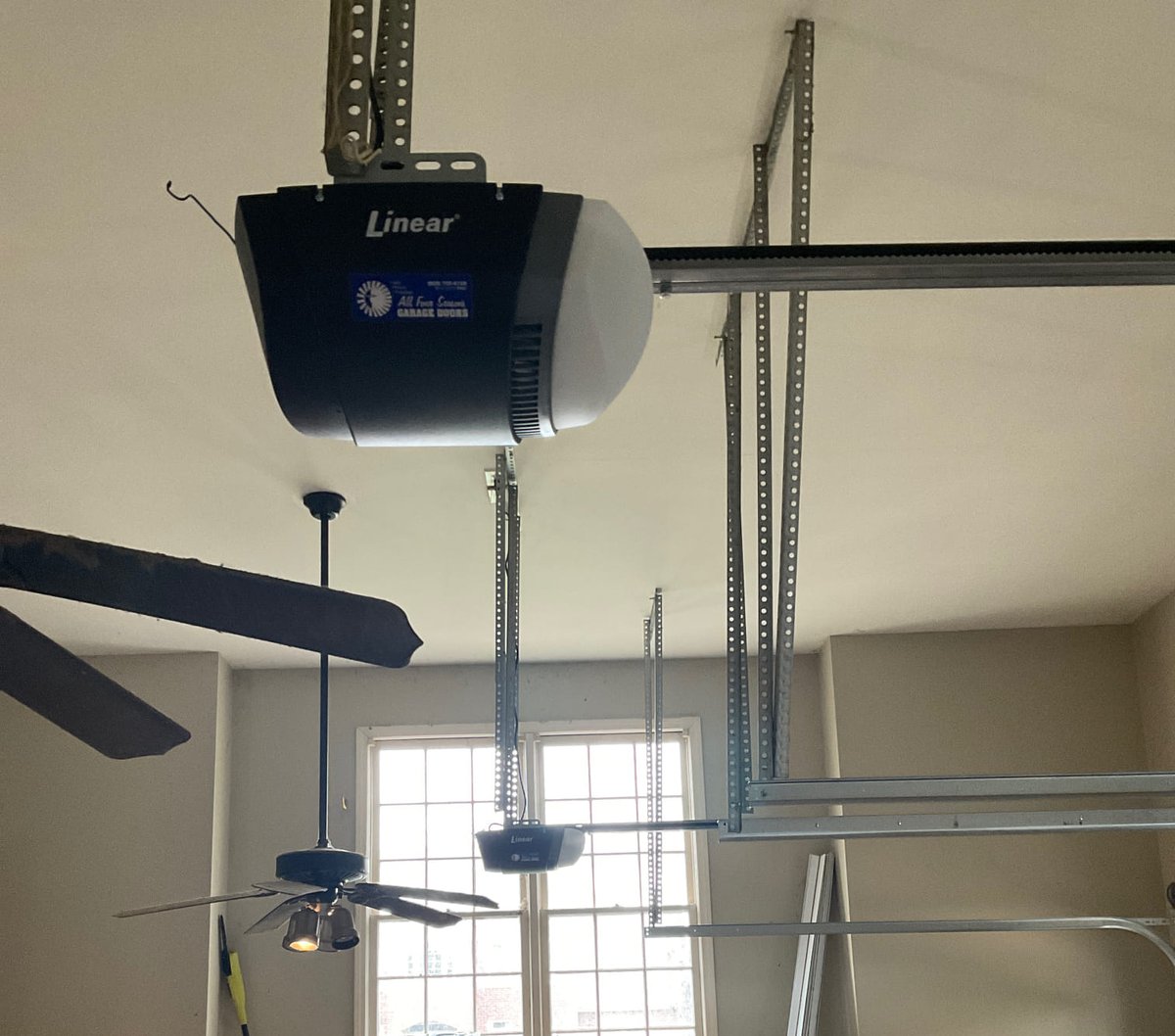
Normal use wears moving parts. A heavy, binding or stuck garage door makes the opener work harder each time you press the button. Keep the door moving freely, test both reversing systems monthly, and follow your opener’s manual for lubrication.
What makes the opener work harder?
A garage door’s springs counterbalance its weight. On a ceiling-mounted opener, the motor moves a part called the trolley along the opener rail. The trolley moves the door through a connecting arm. When the door gets heavy or sticks, that drive system has to pull against extra resistance. You can hear the strain at the motor even when the trouble starts at the door.
Think about where in the trip you first notice the change. A door that hesitates as it lifts off the floor is doing something different from one that catches at the same point halfway up. Note whether the door is opening or closing and where it slows down. That observation gives you more to work with than another press of the button.
| What you notice | What to check first | What to do next |
|---|---|---|
| The door starts with a jerk, moves unevenly or catches at the same spot | Look from the floor for a visible obstruction, a bent track or a roller out of place | If the door binds or appears damaged, stop using it and book service |
| The motor hums and the door barely moves | Look for a gap in the spring above the door, a loose cable or an engaged manual door lock | Stop pressing the button. Keep clear and call if you see damage or the door is stuck |
| A chain starts slapping the rail or the opener shakes | From the floor, note where the noise or movement starts | Have the drive and mounting checked if the change persists |
| A Genie screw drive skips or grinds as the door moves | Note whether the sound comes from the opener rail or from the door | Have the screw and carriage checked. Find your model’s lubrication instructions |
| The door opens smoothly but backs up on closing and a sensor light has changed | Look for something in the beam, dirty lenses or a bumped sensor | Clear the beam and follow the sensor test in your manual. Stop using the opener if a safety test fails |
Door balance and friction
A door that feels heavy by hand needs attention even if the opener still lifts it. The springs support the weight of the door through its travel. A heavy door, one that drops or rises sharply, and one that sticks partway all give you a reason to check the door before replacing any opener parts. Chamberlain also warns that an unbalanced door can fail to reverse as required.
Rollers guide the door along the side tracks. Hinges let the sections bend as the rollers follow the curve overhead. Dry rollers and hinges add friction. A bent track or an out-of-place roller calls for service. If your door feels different from the last time you moved it by hand, see what makes a garage door feel heavy.
A door that can’t move
Check for a physical lock if the motor hums and the door stays put. Chamberlain identifies an engaged manual lock as a possible cause of mechanical stoppage. If the lock keeps getting engaged on an automatic door, ask a technician how it should be set up with your opener. Some wall-mounted models come with their own automatic lock, so check the model before changing anything.
When the bottom seal is frozen to the floor, leave the opener off while you deal with the ice. See the Metro Atlanta winter garage door guide for what to do with a stuck seal. If a door has stopped and you cannot see why, leave it where it is and arrange an inspection. Back-to-back runs can also overheat a motor, as Chamberlain notes when several cycles are run in a row during service.
Wear in the drive
On a chain-drive opener, the chain runs over a toothed wheel called a sprocket. Some openers have an internal gear that turns the sprocket. A change in sound gives you a reason to check the door and drive before ordering parts. Chain tension, mounting and the door hardware are all places a technician can look for the source of a new noise.
On some Genie screw drives, the carriage has teeth that grip the threaded drive screw. Genie notes that poor door balance can wear those teeth early. Ask for a balance check along with a drive check if you hear the carriage start to skip or grind.
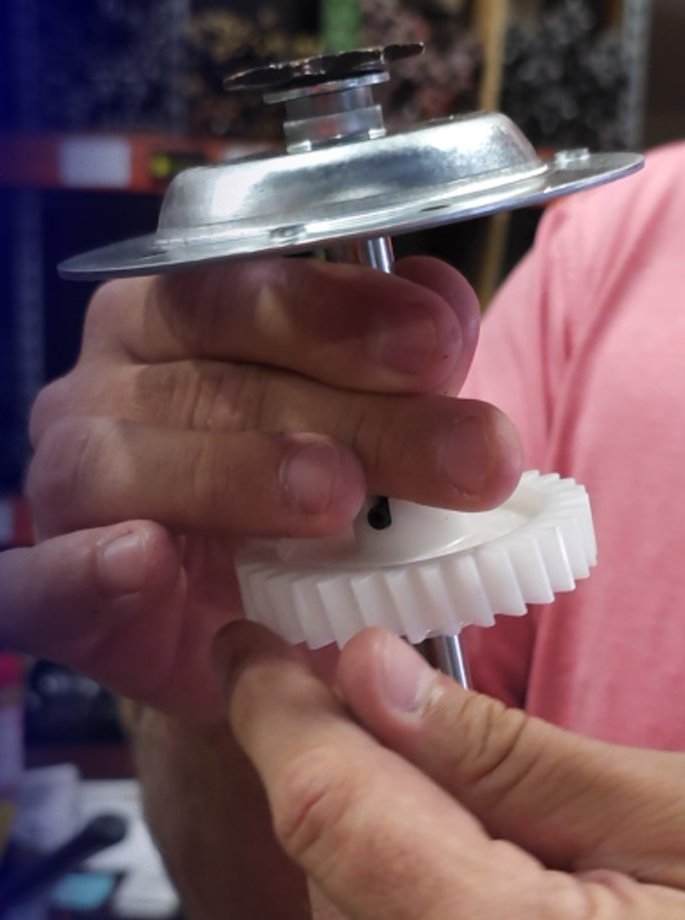
This drive gear and sprocket assembly came from our own opener video. It shows the parts inside some openers. If the motor already runs while the door stays put, use our guide to an opener that makes noise but won’t open the door.
Start with a look from the floor
Look over the door with it fully closed and still. Along the sides, look for frayed or hanging cables, rollers out of line and bent tracks. Look up for a visible gap in the tightly wound spring above the door. On a ceiling-mounted opener, look for a rail or hanger that has shifted, or a door arm that sits at a new angle. Check the visible power cord and sensor wires for damage. Stop using the opener if the power cord is damaged. Leave wiring, loose mounts and spring hardware to a technician.
If the door looks sound and has been moving normally, stand at the wall control with the whole opening in view. Clear the path and watch one ordinary open-and-close cycle. Listen for changes at the start, along the track and when the door reaches the floor. Watch for jerking, an uneven bottom edge or the opener rail moving when the door stops. Keep everyone clear of the opening while the door moves.
Skip operating and balance tests if the door is crooked, a spring or cable looks damaged, or the door is binding. Keep clear of a door that is stuck partway open. An open door can drop when it’s released. Leave springs, cables, drums and bottom corner brackets alone. The brackets and drums connect to the cables and are under spring tension.
Check balance when the door is sound
- Start with the door fully closed. Use the manual release as your opener’s manual shows. The direction you pull and the way you reconnect vary by model.
- Move the door by its handle. Stand clear of the opening and keep your fingers away from the joints between sections. Use the door handle to lift it. Stop if the door feels heavy, catches or needs a hard pull.
- Check how the door holds partway open. Follow your manufacturer’s test position. A balanced door is easy to guide and holds roughly in place as the springs support it. If it drops or rises sharply, keep clear and call a technician.
- Lower the door and reconnect it according to the manual if it passed. Confirm it responds normally from the wall control with everyone clear. If it failed, leave the opener out of service and get the door checked.
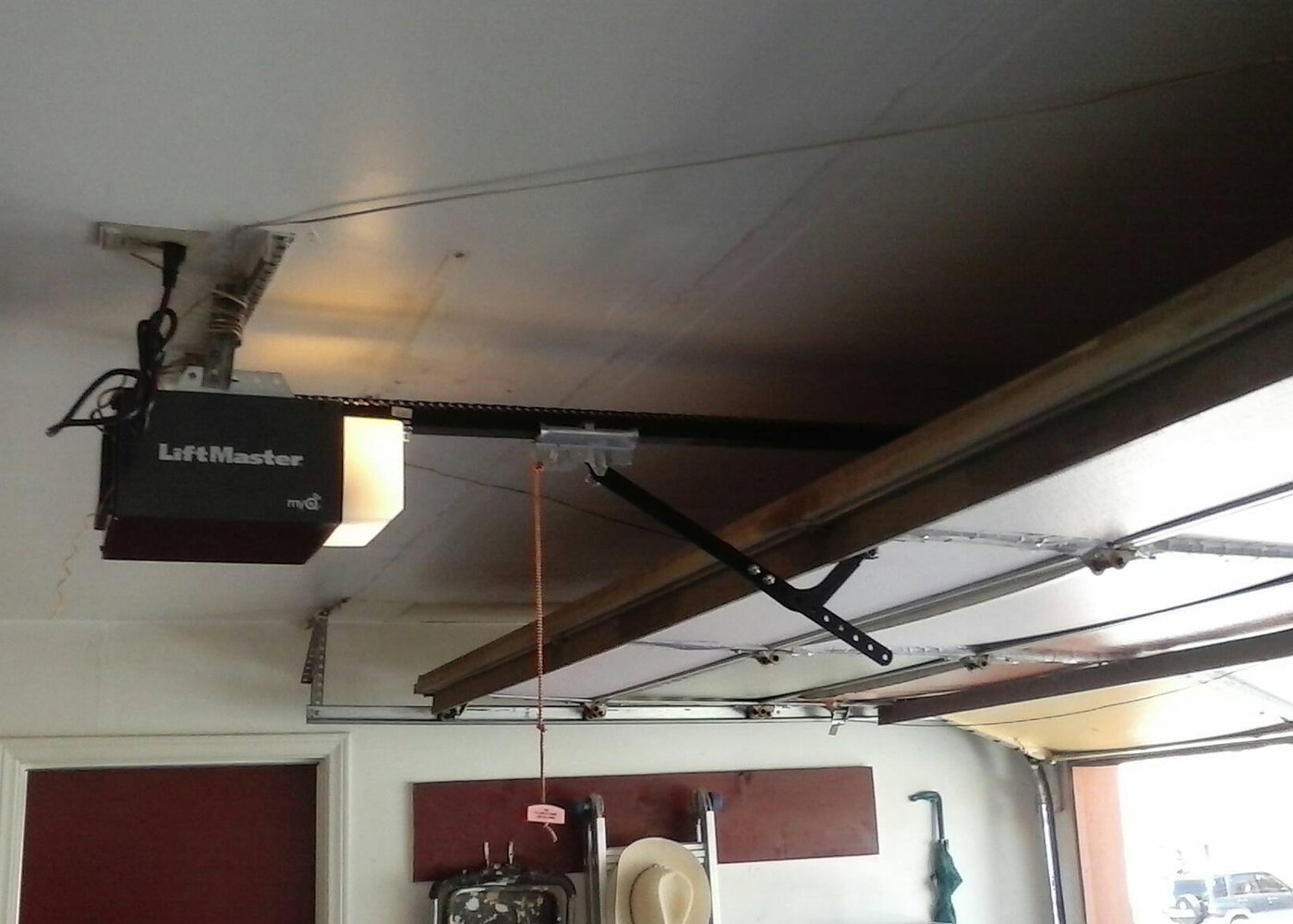
The release handle in the photo disconnects the trolley. Follow the steps for your model in our guide to opening a garage door manually. If you are unsure about judging the door’s weight or holding it safely, have a technician check its balance.
Test both reversing systems every month
Run these tests only after the visual check, with a door that travels smoothly and no one in the opening. Start with the instructions for your model. The photo-eyes use a beam across the opening near the floor. The contact reverse test checks what happens when the door actually touches a low obstruction.
Test the photo-eyes
- With the door still, look for boxes, tools or leaves between the lenses. Wipe dusty lenses gently with a soft cloth and check the indicator lights against your manual.
- Use the beam-test procedure in the manual. Chamberlain’s general guidance calls for starting a close from the wall control, then interrupting the beam near a sensor with a small object kept outside the door’s travel path. Stay to the side and keep hands and feet out of the opening.
- Watch for the door to stop and reverse when the beam breaks. If it keeps closing, stop using the opener and arrange service.
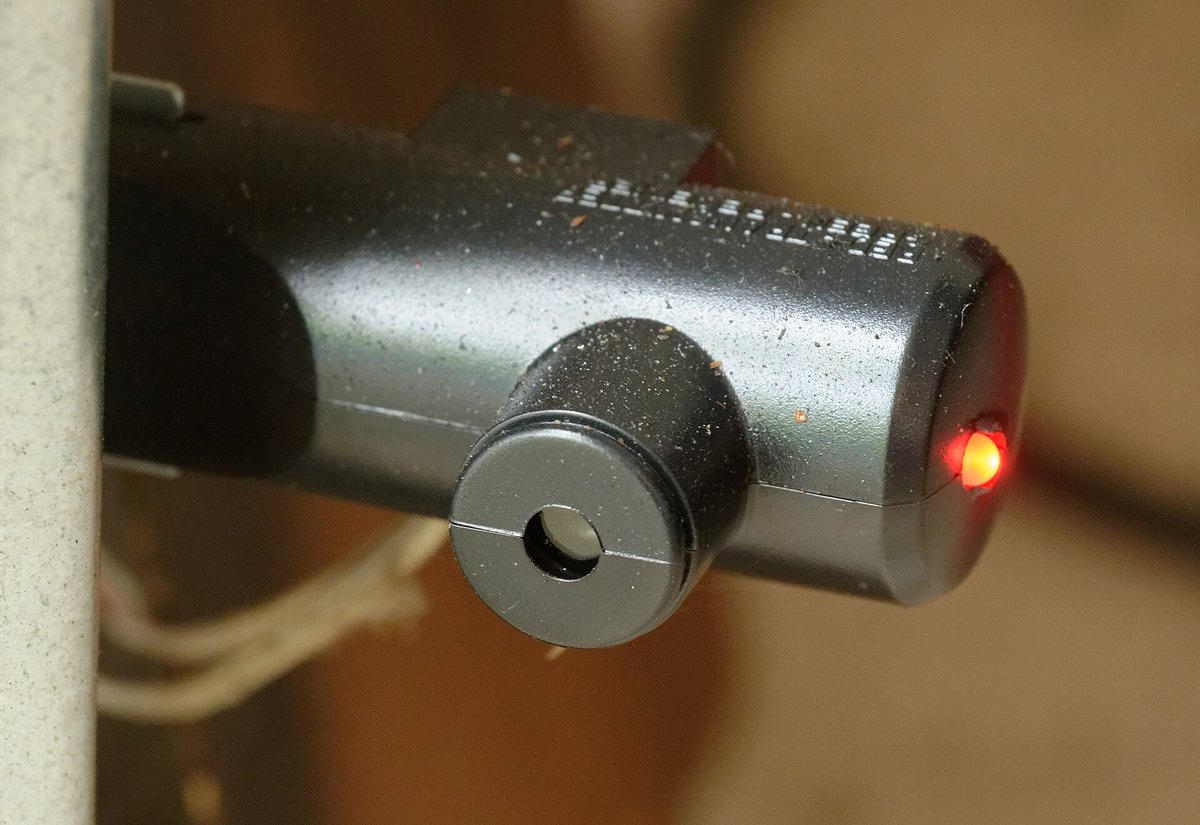
Photo by Jud McCranie via Wikimedia Commons, resized (original photo, CC BY-SA 4.0).

A blinking light or a door that opens but won’t stay closed gives you a reason to check the beam first. If a sensor still shows a fault after you clear the opening, see our garage door sensor guide.
Test contact reversal with a flat 2x4
- Open the door all the way and let it come to a stop. Place a 2x4 flat on the floor in the center of the door’s closing path. A board laid flat gives the test the 1½-inch height Chamberlain specifies.
- Step clear and close the door from the wall control. The bottom edge should touch the board, then reverse.
- If the door stops on the board or presses against it without reversing, stop using the opener and call for service. Keep clear of the door and leave the board in place if removing it would put you under the door.
A pass on one test still leaves the other to check. Keep both tests on the same monthly reminder. If the door is struggling or fails a safety test, have a technician check the door’s movement and balance before adjusting opener force or travel.
Match lubrication to the part and model
Find the model number on the opener and use it to pull up the owner’s manual. The opener rail runs from the overhead motor toward the door and carries the trolley. The door tracks run along each side and guide the rollers. Keep those tracks clear of loose debris and free of grease. Where the door maker calls for lubricant, apply it sparingly to the specified moving parts, such as approved roller bearings and hinge pivots, and wipe away excess.
For hands-on upkeep, close the door and switch off power to the opener as directed by the manual. If it has battery backup, follow the manual’s instructions for disabling that power source too. Leave work on the rail, drive and opener housing to a technician.
| Opener type | What the maker’s instructions cover | What you can do from the floor |
|---|---|---|
| LiftMaster or Chamberlain chain drive | The chain tension depends on the rail design. Some chain droop with the door closed is normal on the models Chamberlain describes | Note new slapping or scraping and whether it happens while the door moves |
| Belt drive | Tension and rail lubrication instructions are model-specific. Chamberlain specifies a thin coat of white lithium grease on the trolley’s contact area only for rails that require it | Look for obvious belt damage or a change in how the belt runs, and have it checked |
| Genie screw drive | Genie calls for cleaning off old excess lubricant and applying Genie screw-drive lubricant yearly on the older models listed in its winter guide | Look up your model and report any skipping or grinding. Give the model number to the technician |
| Wall-mount opener | Models such as the LiftMaster 8500W turn the door’s torsion shaft from beside the door. Use the maintenance instructions for that unit and its safety equipment | Look and listen from the floor. Leave the shaft hardware and cables alone |
A little slack when a chain is at rest tells you less than a new slap or a chain rubbing the rail in motion. Chamberlain says both too much and too little chain tension can make the sprocket noisy. Give the technician the model and tell them what changed. That is more useful than tightening the chain by eye or spraying lubricant at the sound.
Keep the batteries on separate checks
Remote and wireless keypad. If the door still operates from the wall control but one remote or keypad is unreliable, start with that accessory. If it takes a replaceable battery, use the type and orientation in its instructions. Test it with the door in view. If it still won’t respond, follow our garage door remote programming guide and the model instructions.
Opener backup battery. If your opener has one, test it on your manual’s schedule. Chamberlain recommends a yearly check. Genie describes unplugging the opener from the outlet, testing it from the wall control or remote, then checking its status lights. Restore wall power after the test. Beeps and indicator colors vary by model. Check what the signal means before you buy a battery.
What you can do and when to book service
| Do yourself when the door is working safely | Leave to a garage door technician |
|---|---|
| Look over the door, tracks, visible wiring and opener mounts from the floor | Repair damaged wiring, loose mounts or opener rail hardware |
| Clear objects from the opening, wipe photo-eye lenses and perform the manual’s safety tests | Diagnose a failed reverse test or adjust opener force and travel |
| Check the balance on a sound door using the manual | Adjust springs, cables, drums or bottom brackets, or handle a crooked or jammed door |
| Change accessible remote or keypad batteries and test the backup as directed | Diagnose persistent grinding, jerking, belt damage or a shifting rail |
Keep a short note with the opener model, the date, the results of both safety tests and anything you noticed in motion. If a problem returns, tell the technician whether it happened on opening or closing and at which point. Record a blinking light or beep pattern if it’s visible or audible from a safe spot. You’ll have the details even if the fault disappears before the visit.
All Four Seasons serves Metro Atlanta and is an authorized LiftMaster dealer. A garage door tune-up covers door balance, hardware and opener safety checks. For a door that keeps binding, a failed safety test or an opener that shakes on its mounts, call (678) 271-8918 or book a service visit. If a technician has already identified a failed opener part, see how to decide whether to repair or replace the opener. For the rest of the door, use our garage door maintenance checklist.
Frequently asked questions
Can a heavy garage door wear out the opener?
Yes. The opener has to work against more resistance when the door is out of balance or binds in its tracks. A door that feels heavy by hand or moves unevenly needs a door check. Leave the springs and cable adjustments to a technician.
How often should I check my garage door opener?
Look over the door and opener once a month and test both reversing systems on that schedule. Use the manual for lubrication, balance and battery backup checks. Put the monthly check on a calendar so that a new sound or change in travel stands out.
Should I spray silicone on the opener rail or belt?
Use only the product and application point named in your opener’s manual. Some Chamberlain rails call for white lithium grease where the trolley slides. Some older Genie screw drives call for Genie screw-drive lubricant. Leave the drive and rail work to a technician.
Is a little sag in the chain a problem?
Some Chamberlain chain-drive models show normal droop with the door fully closed. If the chain starts slapping or scraping while the door travels, have the tension and sprocket checked. The correct tension depends on the rail and model.
Why is the garage door opener beeping if the door still moves?
If the opener has backup power, a beep can mean it’s running on the battery or that the battery needs attention. Check the indicator and look up that pattern for your model. Other features can also make the opener beep, so use the model guide before replacing anything.
What should I do if the door fails the 2x4 test?
Stop using the opener. The door should reverse after contacting the flat board. If it stops on the wood or presses down without reversing, keep people clear and have a technician check the safety reversal system before using the opener again.