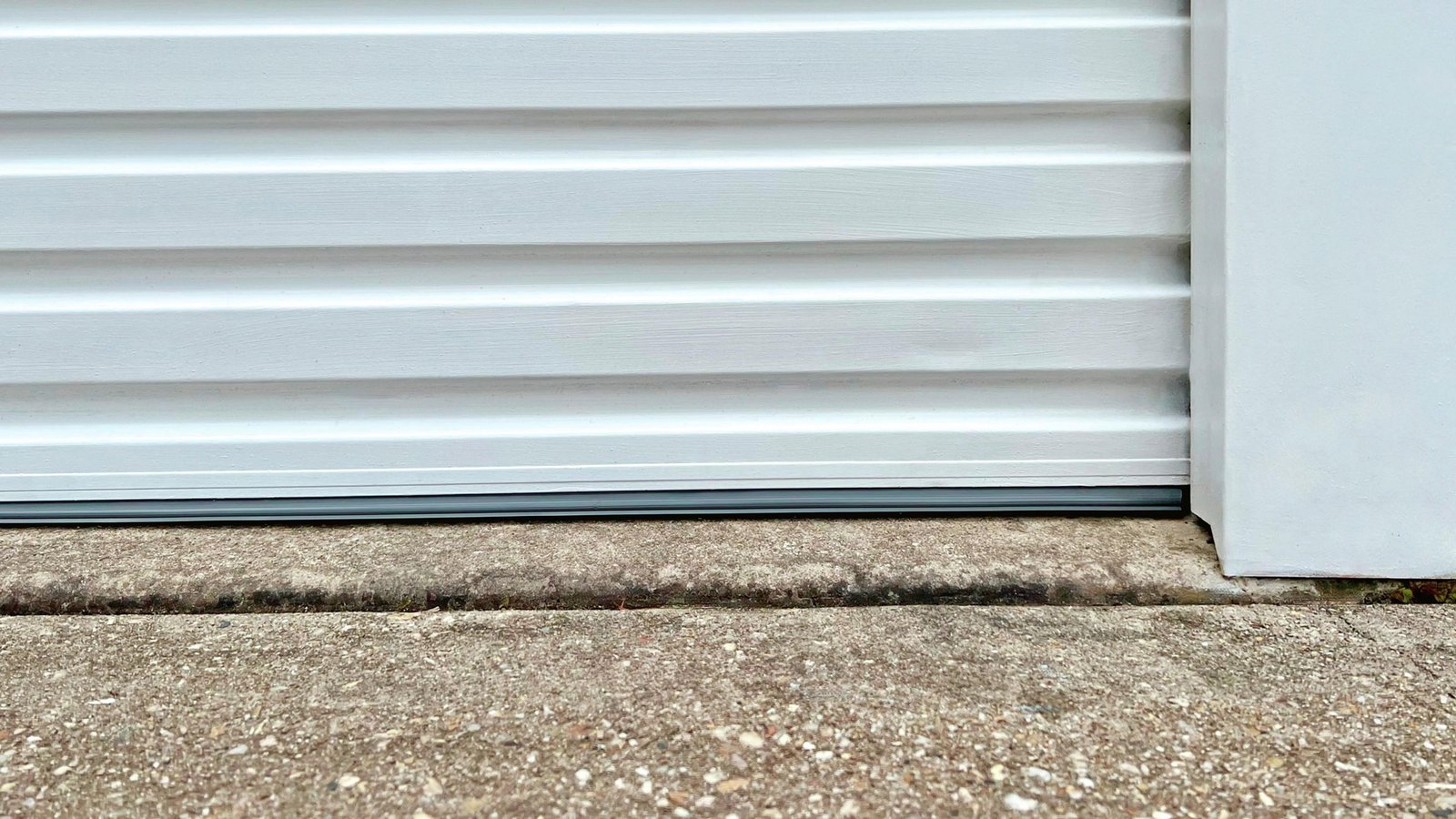
An Atlanta winter is mostly cold nights, not deep snow: about 36 nights a year drop to freezing, then thaw by afternoon. That cycle freezes the bottom seal to the slab, stiffens grease and rubber, and makes the opener and springs work harder. A fall check of seals, lubrication, the opener and the balance prevents most winter calls.
Below: what a Georgia winter does to a door, how to free one frozen shut, which seals to replace, and a pre-winter checklist.
What an Atlanta winter actually does to a garage door
Atlanta doesn't get many deep freezes, and that's the trap. Under the 1991–2020 climate normals from NOAA, Atlanta's airport station averages:
| Measure (NOAA 1991–2020 normals, Atlanta Hartsfield) | Average |
|---|---|
| Nights with a low of 32°F or colder | about 36 a year, about 30 of them December to February |
| Nights at 20°F or colder | about 4 a year |
| Days when the high stays at or below freezing | about 1 a year |
| Average winter (December–February) low | 37.6°F |
| Snowfall | 2.2 inches a year, and fewer than 1 day a year with an inch or more |
The National Weather Service puts Atlanta's average first freeze around November 13. The pattern is clear: it freezes at night and thaws by day. Water runs under the door in the afternoon and refreezes overnight. That cycle glues the bottom seal to the concrete, cracks old rubber, and leaves the opener and springs fighting stiff parts on cold mornings.
The rare storms are the ones people remember:
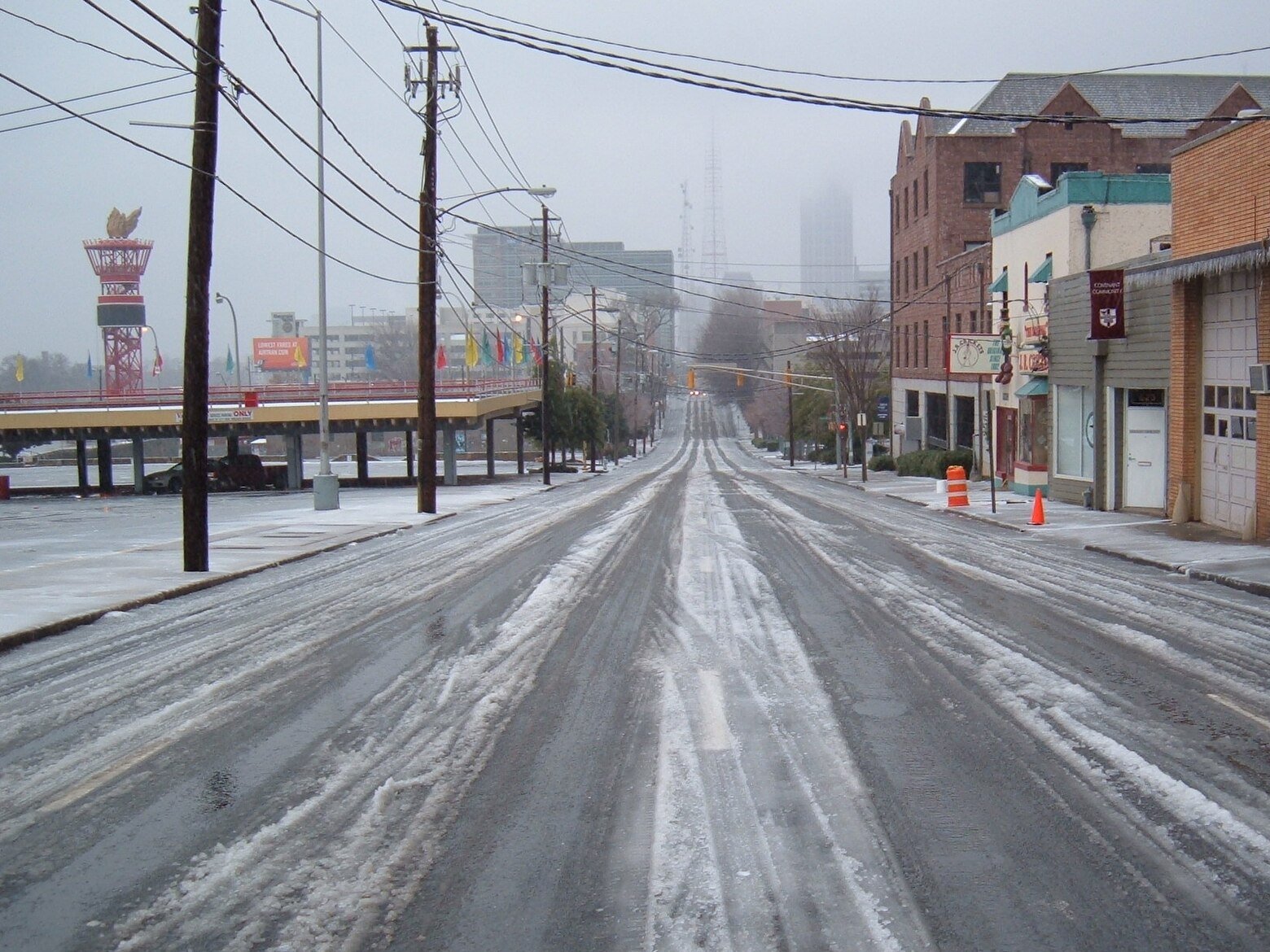
- January 28, 2014: the NWS recorded 1 to 3 inches of snow over parts of metro Atlanta, with temperatures below freezing across the area. Thousands of drivers were stranded, some for more than 20 hours.
- February 11–13, 2014: two weeks later, a second storm left ice accumulations of 1/4 to over 1/2 inch near Atlanta, according to the NWS.
- January 10, 2025: Atlanta set a 24-hour snowfall record of 2.10 inches, and 1/10 to 1/3 inch of freezing rain built up across most of north Georgia. On January 21 another 1.10 inches fell, a record for the date.
Ice storms also bring power outages, and an opener without backup power stops with them.
Garage door frozen to the ground: how to free it safely
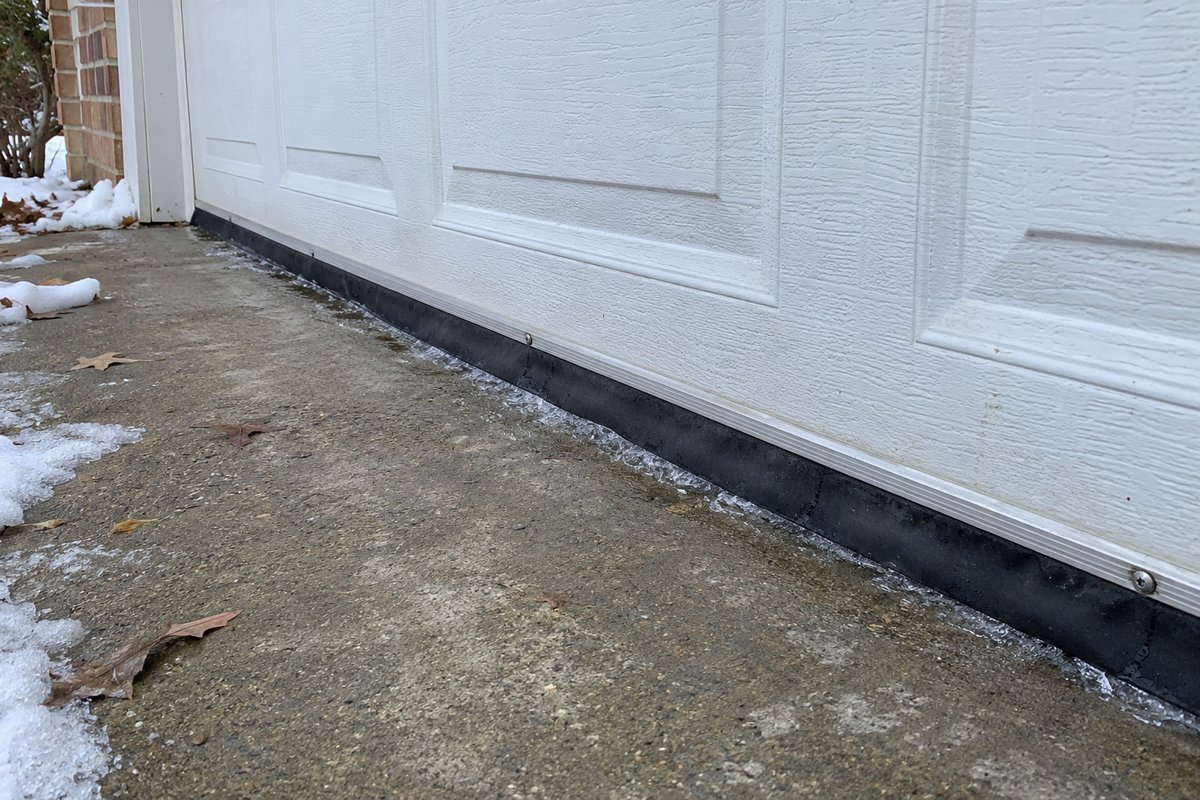
What you'll notice: you press the button on a cold morning and the opener strains, the door lifts an inch and reverses, or the motor hums and nothing moves. Outside, the rubber bottom seal is stuck to the driveway.
Why it happens: water along the seal line freezes and holds the door like a lock; our garage door won't open guide treats it the same way.
What to do:
- Stop pressing the button. Garaga, a garage door manufacturer, says not to use the opener while the door is stuck in ice. It tears the seal or wears the opener's drive gear, as our post on an opener making noise but not opening explains.
- Pull the red emergency release cord, with the door closed, so the opener lets go of the door. Unplug the opener while you work.
- Open any side lock on the inside of the door.
- Look at the springs and cables before you lift. If a spring has a gap in it or a cable hangs loose, stop here. That's no longer a frozen seal; see springs and cables below.
- Free the seal. Warm the seal line with a hair dryer, moving it along the door so you don't overheat one spot. Garaga also suggests tapping the bottom of the door gently with a hammer against a piece of 2x4 to crack the bond. Don't strike the steel with the hammer directly, and don't pry under the seal with a shovel or ice chopper; that's how seals get torn.
- Lift the door by hand once it lets go. A balanced door lifts with moderate effort and stays put about halfway up.
- Scrape the remaining ice off the threshold and dry the area, so the seal doesn't refreeze when you close the door.
- Reconnect the opener. Close the door, plug the opener back in and run it; the trolley reconnects on most models.
Garaga also lists hot water. We'd skip it: unless the concrete is dried straight after, it refreezes.
How to keep it from happening again:
- Sweep or shovel slush away from the door line before the evening freeze.
- Wipe a silicone-based lubricant onto the rubber bottom seal before a cold snap; Garaga recommends it to keep the seal from sticking. Don't use WD-40 on the door. Clopay warns it causes problems in cold weather and softens plastic and rubber parts.
- Replace a flattened or torn bottom seal; water pools and freezes in the low spots.
Weatherstripping: the four seals and how to replace each
Weatherstripping keeps out cold air, rain, mice and insects. A garage door has up to four kinds of seal.
| Seal | Where it is | What it does | DIY? |
|---|---|---|---|
| Bottom seal (sometimes called an astragal) | A rubber or vinyl strip in an aluminum retainer along the bottom of the door | Closes the gap between the door and the floor | Yes, on most steel doors |
| Threshold seal | A raised rubber strip glued to the garage floor under the door | Fills a dip in the slab and blocks water running in | Yes |
| Perimeter stop molding | Strips nailed to the two side jambs and the header, with a soft flap | Seals the sides and top of the door | Yes, with care |
| Panel (section) seals | Between the door sections on some insulated doors | Stops drafts through the joints | Usually a manufacturer or tech part |
Bottom seal
Most steel doors hold the bottom seal in an aluminum retainer with two channels, and the seal slides in from the end. Seals come in profiles that match the retainer: T-type and J-type ends, bulb and bead shapes. Match the profile to your retainer before you buy. Clopay's own replacement seal instructions name the retainer shape the seal fits, because a seal for one retainer won't slide into another.
- Raise the door to about waist height and keep it there by clamping locking pliers onto the track just below a roller on each side. Unplug the opener first.
- Pull the old seal out of the channels. If the retainer is crimped or screwed at the ends, open or remove those first.
- Clean the channels. A little soapy water or silicone spray makes the new seal slide.
- Feed the new seal into both channels from one end and pull it through. Trim it long by about an inch on each side; rubber shrinks in the cold.
- Close the door and look from inside. The seal should touch the floor along its whole length.
- Plug the opener back in and run the safety reverse test (see the opener section). A taller seal changes where the door stops.
Wood doors use a flat seal nailed to the door instead; our post on how to install and remove garage door weatherstripping covers both versions step by step.
Threshold seal
A threshold seal is glued to the floor where the door lands, useful when the slab has sunk or rain runs toward the garage. Clean and dry the concrete, set the seal under the center of the door, and glue it with the kit's adhesive on a dry day above freezing. Then run the safety reverse test, since the door now lands higher.
Perimeter stop molding
The stop molding on the jambs and header is usually a rigid vinyl strip with a soft, flexible flap. Clopay's specifications describe it as placed in "moderate contact" with the outside of the door. That's the target: the flap touches the door lightly. Too tight and the door drags and the opener works harder; too loose and you see daylight.
- Close the door. Pry off the old molding and pull any nails left in the jamb.
- Cut the header piece first, then the two side pieces, so the sides tuck under the header at the corners.
- Hold each piece against the door so the flap is lightly compressed, and nail it to the jamb with corrosion-resistant nails, starting at the top.
- Open and close the door to check that it doesn't rub.
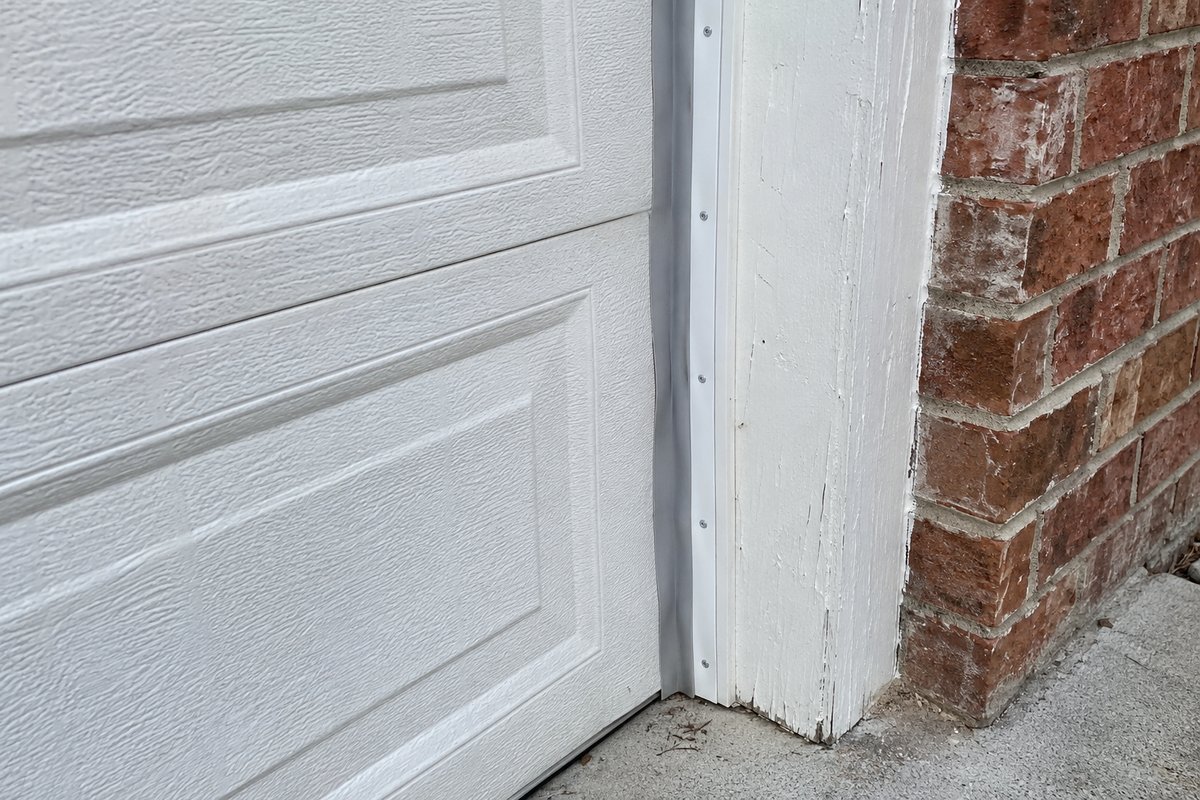
If the wood jamb is soft or rotted, repair it first; the molding needs something to hold.
Panel seals
Some insulated doors have a full-length seal tape in the joints between sections (Clopay specifies one on some models). It's model-specific and not a hardware-store part, so call the manufacturer or us if air comes through the joints.
Want it done for you? We replace bottom seals, threshold seals and stop molding as a weather seal replacement visit.
The opener in the cold: force, travel and backup power
Cold thickens grease and stiffens seals, so the opener works harder. Modern openers measure that effort, and when it passes the force setting they stop or reverse: to the opener, a stiff door looks like a door hitting something.
What to check:
- If the door reverses only on cold mornings, lubricate it first (see below) and check that nothing binds. LiftMaster's manuals note that weather can call for minor force and travel adjustments.
- Don't turn the force up to push through a sticking door. Sears PartsDirect's opener maintenance guide says force settings shouldn't be used to make up for a sticking door. The force setting is what makes the door reverse on a person, a pet or a car.
- After any force or travel change, repeat the safety reverse test. LiftMaster's manuals say so in the adjustment steps. Lay a piece of wood flat on the floor under the door and close it: the door must reverse when it touches the wood. Genie gives a 2-second limit for that reverse.
- Check the photo-eyes. Clean the lenses and wave something through the beam while the door closes; it should reverse.
- Replace remote and keypad batteries. Genie notes that cold drains them faster, and suggests new remote batteries at least every 2 to 3 years.
Battery backup for outages. A battery backup keeps the opener running for a limited number of cycles when the power is out. Chamberlain notes that battery backup is available only on openers with DC motors, and that the battery lasts about 1 to 2 years with normal use. On LiftMaster and Chamberlain belt-drive models, the yearly maintenance list includes testing the backup: unplug the opener and run it on battery. An orange light means it's running on battery, and a red light with a beep means the battery no longer holds a charge.
No backup? With the door closed, pull the release cord and run a balanced door by hand until the power returns. Shopping for a new opener? We're an authorized LiftMaster dealer; see opener repair and new openers.
Springs: why they break on cold mornings
The torsion spring, the tightly wound spring on the bar above the door, carries the door's weight. The opener only guides it. Every time the door opens and closes, the spring winds and unwinds, and like any steel part flexed over and over, it eventually fatigues and breaks.
Cold doesn't break a healthy spring by itself. It adds load:
- Genie notes that cold makes metal parts contract, leading to squeaky hinges, misaligned tracks or a sluggish door.
- Thickened grease on rollers and hinges adds drag.
- A bottom seal frozen to the slab, with the opener pulling against it, puts the most strain of all on the spring and cables.
So a worn spring tends to let go on a cold morning, often with a loud bang. If that happens, don't use the opener and don't lift the door; it can drop. Genie says untrained people shouldn't work on springs, and we agree: the stored tension is what makes them dangerous.
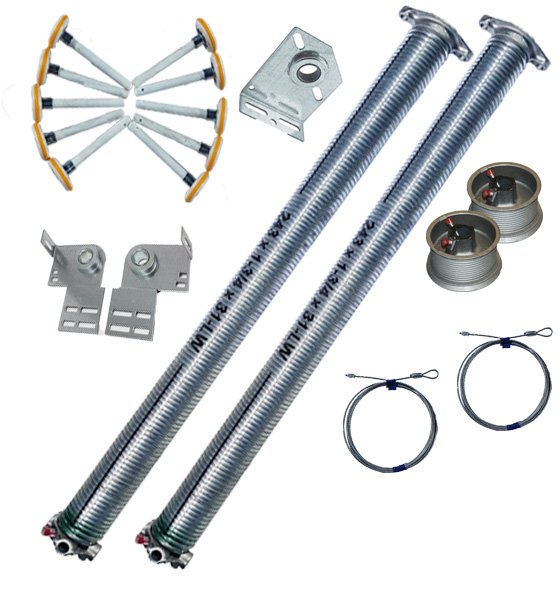
Spring replacement is a technician job. We replace torsion and extension springs and back new ones with our written warranty: 3 years on torsion springs and 5 years on extension springs (see the warranty). If the bang came with a crooked door or a loose cable, read what to do when your garage door cables are off track before anyone touches it.
Check the balance before winter. With the door closed, pull the release cord and lift the door by hand to about halfway. A balanced door stays there. Genie's balance check uses 3 to 4 feet: if the door drops or shoots up from there, it's out of balance, and a dealer should adjust it. An unbalanced door wears out the spring, the opener and the opener's gear faster, and cold weather is when it shows.
Lubrication: what to oil, and what to leave dry
A fall lubrication is a small job that helps a cold door run smoothly. The manufacturers agree on what to oil and what not to touch.
| Part | Lubricate? | What the manufacturer says |
|---|---|---|
| Hinges | Yes | Chamberlain lists door rollers, bearings and hinges for yearly oiling |
| Steel rollers (bearings) | Yes | Same Chamberlain list; Genie suggests a lightweight silicone-based grease on moving parts |
| Torsion spring coils | Yes, a light coat | Clopay's lubrication guide names hinges, rollers and springs as the key parts |
| Nylon rollers | No | Clopay says not to lubricate nylon rollers (usually white or black) |
| Tracks | No grease | Chamberlain says not to grease the door tracks. Wipe them clean instead |
| Opener rail, chain or belt | Generally no | Chamberlain's belt-drive guides say the opener needs no additional lubrication; follow your opener's manual |
| Screw-drive opener rod | Yes, with the right lube | Genie calls for its low-temperature screw-drive lubricant in winter |
| Rubber bottom seal | Silicone only | Garaga recommends silicone on the bottom seal to stop it sticking to the ground |
Use a garage door lubricant, or the product your door's manual names; Genie specifies a lightweight silicone-based grease. Skip WD-40: it's a water-displacing penetrating oil, and Clopay says it softens plastic, nylon and rubber parts. Wipe off the excess, since a heavy coat collects grit, and grease in the tracks makes the rollers slide instead of roll.
If the rollers are cracked, wobbling or grinding even after lubrication, lubricant won't help. They need replacing.
Insulation and R-value: what the numbers mean
An insulated door keeps an attached garage, and the rooms next to it, warmer. ENERGY STAR defines R-value as a measure of insulation's ability to resist heat traveling through it: the higher the number, the better it insulates.
One caution: the door makers' trade group, DASMA, explains in its technical data sheet 163 that a garage door's R-value is calculated at the center of one section, leaving out joints, edges and seals, while its U-factor is tested on the whole door. The two can't be compared. DASMA's example: a door calculated at R-17.66 tested at a U-factor of 0.094, about R-10.6 for the whole door. For U-factor, lower is better.
What that means for you:
- Treat R-values as section values, not whole-door values, and compare doors calculated the same way.
- Do the weatherstripping first. An insulated door with gaps at the floor and jambs still leaks cold air.
- Seal the wall between the garage and the house. The U.S. Department of Energy's Building America guidance calls for an air barrier between an attached garage and the living space, with gaps sealed with caulk or foam. Weatherstrip the house door that opens into the garage, too.
If you use the garage as a workshop or gym, see our guide to insulated garage doors in Marietta. Our post on whether leaving the garage door open makes the house hotter covers the same physics in summer.
Winter safety in the garage: carbon monoxide and space heaters
Running the car to warm it up. The CDC says never to run a car or truck inside a garage attached to a house, even with the garage door open. The EPA lists exhaust from attached garages as a source of carbon monoxide in homes and says not to idle a car inside the garage. Back the car out first, then let it warm up outside. The same goes for a generator during an outage: the U.S. Consumer Product Safety Commission (CPSC) says never to run a portable generator in a garage, even with the door open, and to keep it at least 20 feet from the house.
Carbon monoxide (CO) has no smell or color, and the CDC notes its symptoms (headache, dizziness, weakness, nausea, confusion) are often mistaken for the flu. The CPSC recommends CO alarms on every level of the home and outside sleeping areas, and says to get outside and call 911 if one sounds.
Space heaters in the garage. The CPSC's winter safety advice:
- Keep all sides of the heater at least 3 feet from anything that can burn: boxes, rags, gas cans, the car.
- Plug it straight into a wall outlet, never into a power strip.
- Never leave a heater running unattended in a confined space.
Your pre-winter garage door checklist
Do this in October or November, before the first freeze.
| Check | How | If it fails |
|---|---|---|
| Bottom seal | Close the door and look for daylight along the floor; look for flattened, cracked or torn rubber | Replace it (DIY on most steel doors) |
| Side and top seals | Look for daylight around the closed door from inside | Replace the stop molding |
| Balance | Release the opener, lift the door halfway; it should stay put | Call a tech to adjust the springs |
| Springs and cables | Look, don't touch: gaps in the spring, frayed or loose cables | Call a tech; don't use the door |
| Rollers and hinges | Watch the door run; listen for grinding | Lubricate; replace worn rollers |
| Lubrication | Hinges, steel rollers, bearings; not nylon rollers or tracks | Garage door lubricant, wipe off excess |
| Safety reverse and photo-eyes | Close the door on a flat piece of wood; wave an object through the beam | It must reverse both times. If not, stop using the opener and call |
| Remote and keypad batteries | Test from the driveway | Replace |
| Battery backup | Unplug the opener and run it | Replace the backup battery |
| CO alarm | Press the test button | Replace batteries or the alarm |
A yearly tune-up covers the balance, springs, cables, rollers, lubrication and opener settings in one visit, and fall is the right time for it.
DIY or call a technician?
| Safe to do yourself | Leave to a technician |
|---|---|
| Free a frozen bottom seal with the opener released | Broken or stretched springs |
| Replace a bottom seal, threshold seal or stop molding | Cables off the drum, frayed or snapped |
| Lubricate hinges, steel rollers and bearings | A door that's crooked, off track or bent |
| Clean and align photo-eyes | Adjusting spring tension to fix the balance |
| Replace remote, keypad and backup batteries | An opener that won't reverse, hums or grinds |
When to call us
Call us if a spring has broken, a cable is loose, the door hangs crooked, or the opener won't reverse. We have repaired garage doors across Metro Atlanta since 1999, we're rated 4.9 on Google with Over 4,000 Five-Star Reviews, and our office is open seven days a week, 7 AM to 8 PM.
Call (678) 271-8918 or book a visit online. You'll get a written price before we start. If the door is stuck open on a freezing night and won't close, see emergency garage door repair.
Frequently asked questions
Why won't my garage door open when it's cold?
Most often the bottom seal has frozen to the floor. Other causes: thick grease making the opener reverse, dead remote batteries, or a broken spring. Stop pressing the button, release the opener and check the seal and springs.
How do I unfreeze a garage door stuck to the ground?
Pull the release cord with the door closed and unplug the opener. Warm the seal line with a hair dryer or tap the bottom of the door gently with a hammer against a 2x4, then lift by hand. Scrape and dry the threshold before you close it again.
Can cold weather break garage door springs?
Cold doesn't break a healthy spring by itself. Springs wear out from use, and cold adds load through stiff grease, stiff seals and a frozen bottom edge. A spring near the end of its life often breaks on a cold morning. If one breaks, don't use the opener; spring replacement is a technician job.
Why does my garage door reverse when it's cold?
The opener senses extra effort and treats it as an obstruction. Lubricate the hinges and steel rollers, check that nothing binds, then make a small force adjustment per the manual if needed. Don't turn the force up to push through a sticking door, and repeat the safety reverse test after any change.
What lubricant should I use on a garage door in winter?
A garage door lubricant or a lightweight silicone-based grease, as Genie recommends, on hinges, steel rollers and bearings. Don't use WD-40, don't lubricate nylon rollers, and don't grease the tracks. Screw-drive openers take a low-temperature screw-drive lubricant.
Is it safe to warm up my car in the garage with the door open?
No. The CDC says never to run a car inside a garage attached to a house, even with the door open. Carbon monoxide builds up and can seep into the house. Back the car out and let it warm up outside.