A frayed, snapped or slack garage door cable means the door's lifting system is failing, so stop using the door. The cables are under spring tension at all times. Look, take photos, keep people clear, and leave the cable, drums and bottom brackets to a technician.
This guide covers what each kind of cable damage looks like, why cables fail, why some keep coming off after a repair, and what a proper cable replacement includes.
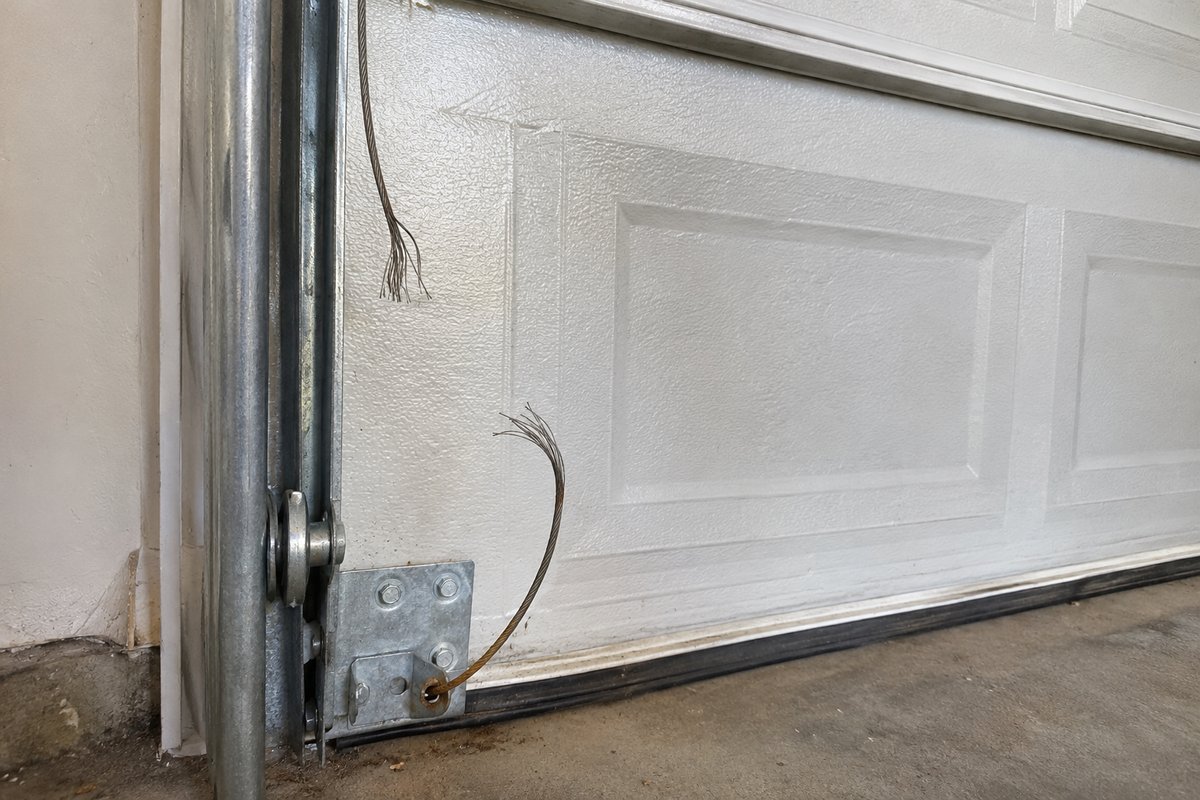
First: can you still use the door?
No, not with a cable that's frayed, snapped, slack or off its drum. The cables carry the door's weight from the springs to the bottom corners. When one is damaged, the door is held up unevenly or not at all.
- Don't press the opener button or lift the door by hand. Chamberlain, the maker of LiftMaster openers, says not to operate a door by hand if the springs, cables or rollers look damaged, and warns that a door with broken springs can fall without warning.
- Unplug the opener so nobody starts it with a remote.
- Keep children, pets and cars out from under the door.
- Don't pull the red emergency release. It disconnects the door from the opener, which leaves nothing holding a damaged door in place.
If a cable has come off its drum or pulley, our guide on garage door cables that came off track walks through the first steps in order.
What the lift cables do, in one minute
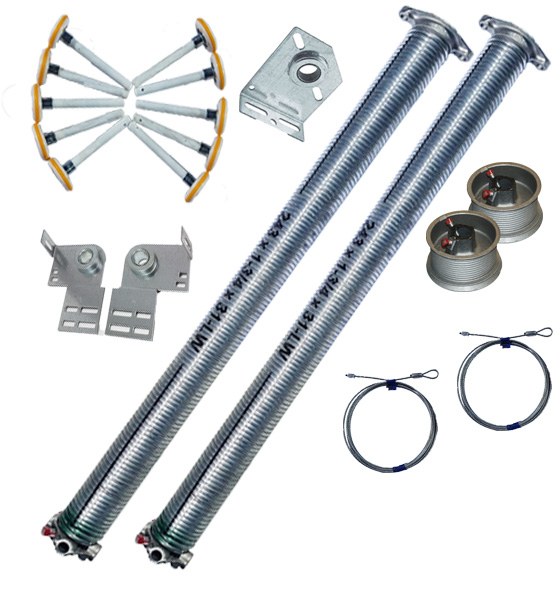
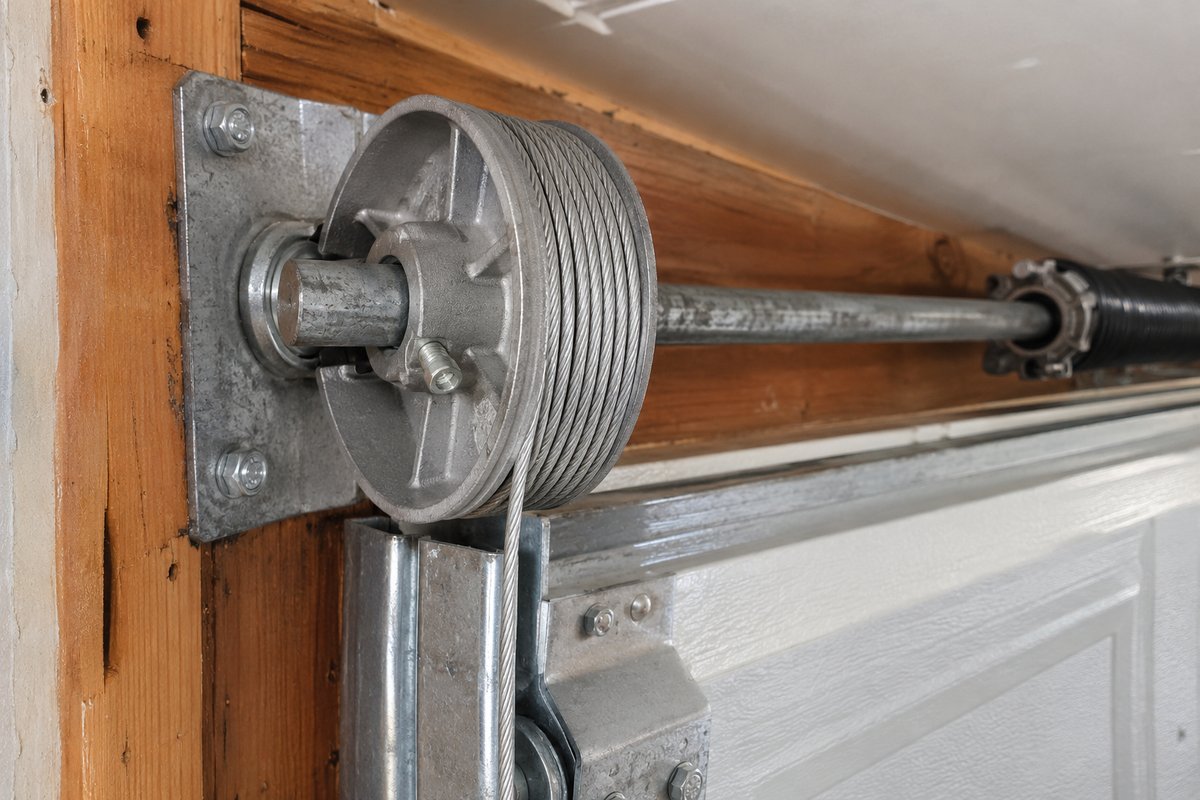
The springs, not the opener, carry a garage door's weight. The lift cables, thin twisted steel wire ropes, connect the springs to the door, one at each bottom corner. The lower end of each cable loops over a pin on the bottom bracket, the steel bracket bolted to the door's bottom corner.
- On a torsion spring door, the top end of each cable is fixed in a cable drum, a grooved spool on the steel shaft above the door. As the door opens, the springs turn the shaft and the drums wind the cables into their grooves.
- On an extension spring door, the cables run over pulleys at the ends of the long springs along the ceiling.
Every part of that chain is under tension. DASMA, the door manufacturers' association, says the bottom brackets are under extreme tension because they're connected to the springs, and should be adjusted or loosened only by a trained technician. More on the two systems: torsion vs. extension springs.
What does your cable look like? Match the sign to the cause
Look from the floor, with the door closed if it will stay closed. Use a flashlight on both bottom corners and both ends of the shaft above the door.
| What you see | What it usually means | What to do |
|---|---|---|
| A few broken wire strands sticking out, a "fuzzy" spot | The cable is fraying. Strands break one by one where the cable rubs | Stop using the door. Book a cable replacement |
| Cable is brown or orange near the bottom bracket | Rust. The steel is losing strength where water reaches it | Book an inspection. Don't wait for it to fray |
| A kink, flat spot or birdcage (strands bulging apart) | The cable was bent or crushed, often when it went slack and wound back on badly | Replace. A kinked cable doesn't straighten out |
| Cable snapped, with frayed ends | It wore through, or broke under a sudden load such as a spring breaking | Don't open the door. Call a technician |
| Cable hangs slack down the side of a closed door | The springs aren't pulling on it. Look up for a gap in the torsion spring | Don't run the door. Call a technician |
| Loose loops of cable at the drum, or cable beside the drum | The cable has unwound or come off the drum | See cables off track |
| Cable fine, but the door hangs crooked | One side has let go somewhere: cable, drum, bracket or track | Stop and call. Don't push it level |
Frayed garage door cable
A frayed cable is a cable in the middle of breaking. Each lift cable is many fine steel wires twisted into strands. When the outer wires snap, the load shifts to the ones left, and those wear faster.
DASMA's safety tips put it plainly: if the cables are frayed or worn, they are in danger of breaking, which can cause injury, and because of the high spring tension they should be replaced only by a trained technician.
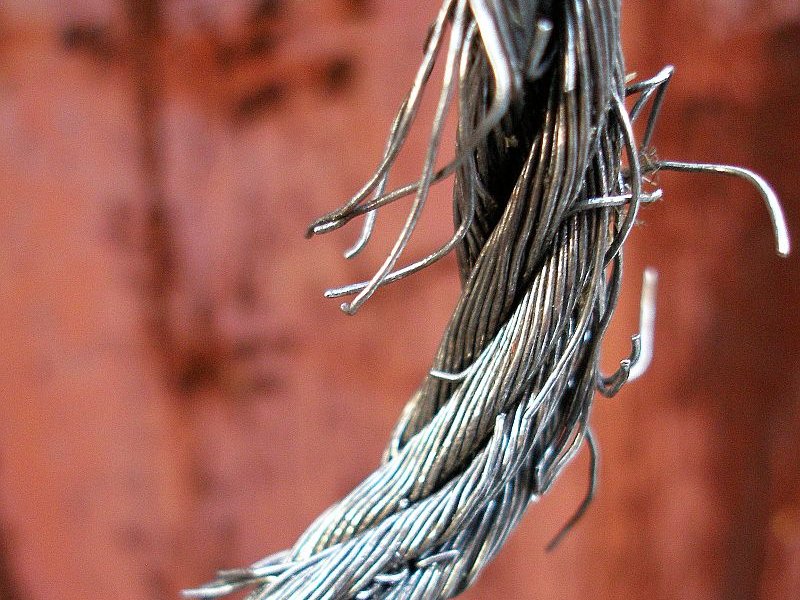
Photo: tanakawho, CC BY 2.0, via Wikimedia Commons. A thicker rope than a garage door cable, but the broken wires look the same.
Where cables usually fray:
- At the bottom bracket, where the cable loop bends around the pin and the door's weight pulls on it every time the door moves.
- Along the side of the door, if the cable rubs on a roller, the track or the edge of the door. Wayne Dalton's installation manual routes the cable between the track rollers and the door jamb so it runs clear.
- At the drum, where the cable wraps on and off the grooves. A drum with worn or chipped grooves wears the cable faster.
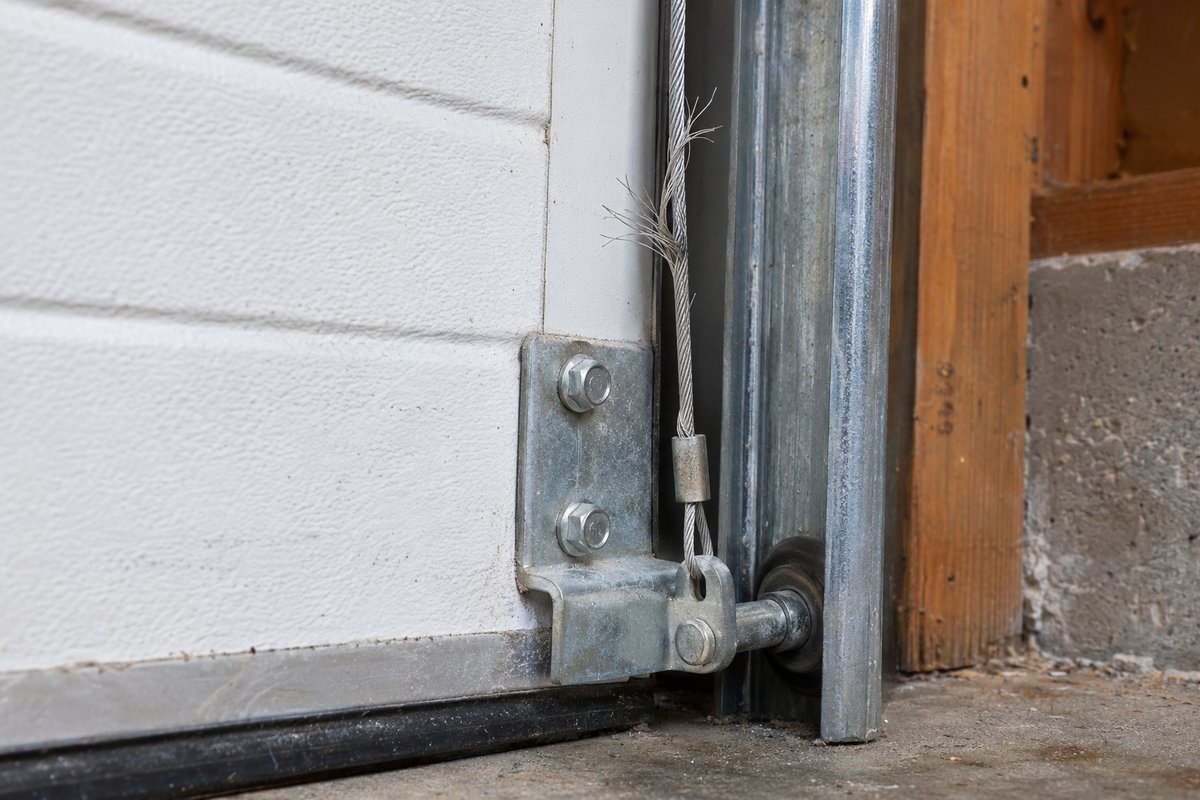
Rusted garage door cable
The bottom of the door is where cables meet the most water: rain blowing in, a wet car, a hosed-down floor. Rust starts there, often at the cable loop on the bottom bracket.
DASMA's technical note on spring life explains how rust weakens steel spring wire: it reduces the amount of steel carrying the load and starts the fatigue cracks that end in a break. Cables are steel wire too, and a rusted cable gives up the same way, from the inside of the strands where you can't see it.
Clopay's maintenance list for its residential doors includes lubricating the lift cables at the bottom bracket button at least twice a year. A light spray there is a reasonable homeowner job. It doesn't mean touching or moving the cable. A cable that's already brown with rust needs replacing, not oiling.
Snapped cable: when you can't open the door
When a cable snaps, the door loses its lift on that side. On a torsion door, the spring is still wound and the other cable still carries its share, so the door is held up on one side only. That's why a door with a snapped cable often won't open, opens crooked, or drops on the broken side.
Don't try to open it. Lifting a door with one cable means lifting much of its weight by hand, unevenly, with a wound spring overhead. Clopay's installation manual notes that large doors can weigh as much as 500 pounds without spring tension, and single-car doors as much as 200.
If your car is shut in or the garage is stuck open to the street, that's the case for our emergency garage door repair service. Otherwise, leave the door as it is and call.
A snapped cable rarely snaps alone. A spring that breaks with a bang jolts the cables, and a worn cable gives way. Look up at the torsion spring above the door. A gap of a few inches in the coil means the spring has broken too.
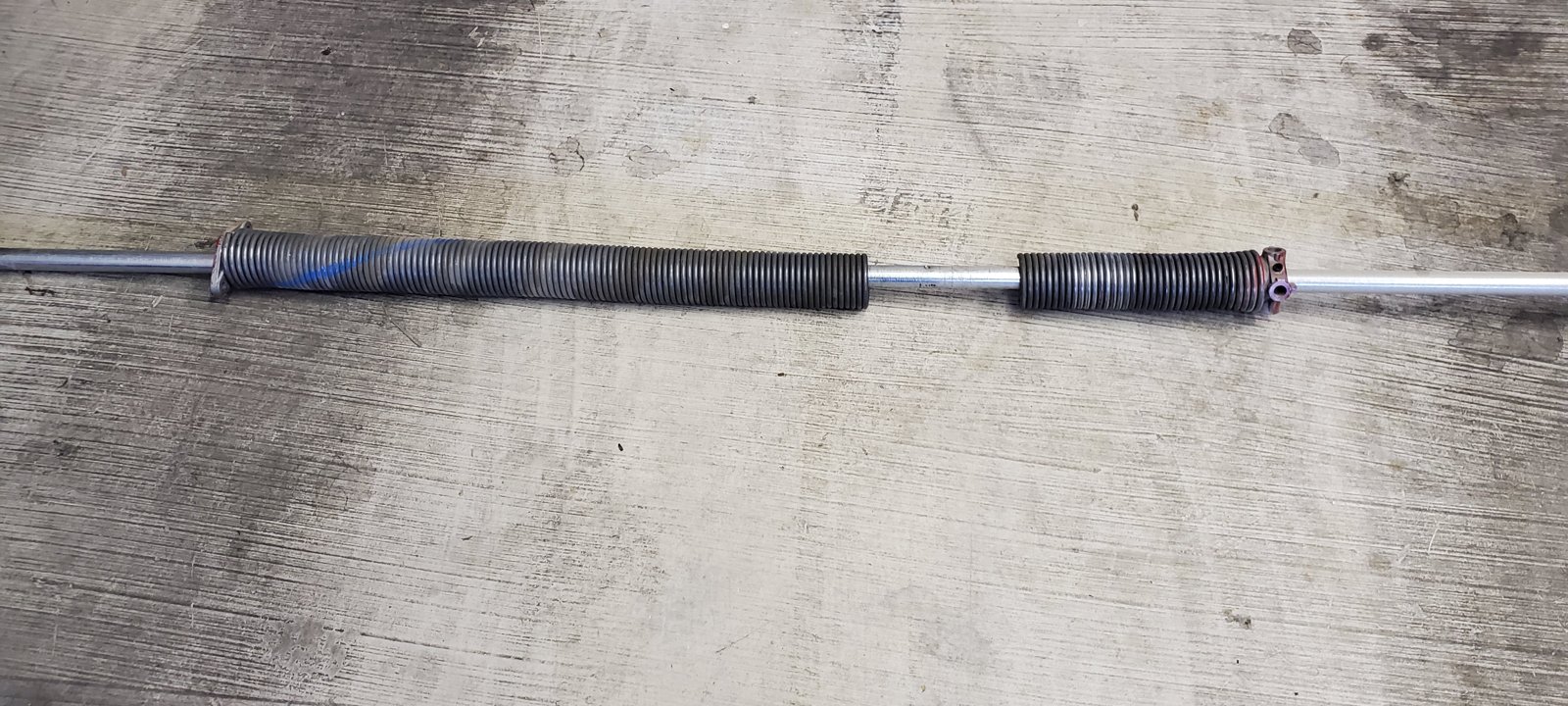
Photo: Garagedoorrepairlasvegas, CC BY-SA 4.0, via Wikimedia Commons.
Garage door cable has too much slack
A lift cable should be taut through the whole of the door's travel. LiftMaster's manual for its wall-mount openers, which mount on the torsion shaft, says exactly that: the cables must have tension through the door's entire travel, and those openers come with a cable tension monitor that reverses the door when it senses slack.
Slack means something has stopped pulling on the cable. The common causes:
- A broken spring. When a torsion spring breaks, the shaft stops turning the drums and both cables lose tension. On an extension spring door, the cable on the broken side drops.
- The door is resting on something. A bin, a bike or a car bumper under a closing door holds the door up while the drum keeps unwinding. The cable on that side goes loose.
- The door is binding. A roller caught in a bent track or a door off its track stops one side, and that cable goes slack while the other carries the load. See garage door off track.
- The springs have too little tension. Springs lose lift with age, and a spring wound with too few turns never had enough. DASMA's note on spring life says a door with too few turns drifts down from the open position.
- The cable has slipped on the drum. A drum whose set screws have loosened lets the cable pay out. The door then sits lower on that side.
Slack cable is a warning, not a fault you can tighten yourself. Adjusting cable tension means locking the shaft, loosening the drum and rewinding the cable under spring load, which is exactly the work the manufacturers reserve for technicians.
Garage door cable unwound or unspooled
An unwound cable is a slack cable that has come out of the drum's grooves and hangs in loops, or has wrapped over itself. Leave it as it is and don't rewind it by hand. Our guide to garage door cables that came off track covers it in detail.
Why garage door cables fail
Cables wear out, but most cable failures have a second cause behind them:
- Wear where the cable bends and rubs: around the drum or pulley, at the bottom bracket loop, and anywhere it touches a roller or the track.
- Rust at the bottom of the door, where water reaches the cable first.
- A spring that broke or lost tension. Slack cables jump the drum grooves, kink when they wind back on, and take a jolt when the door drops. See garage door spring repair.
- A worn drum or a damaged bottom bracket. Chipped or cracked drum grooves don't hold the cable in line, and a bent or rusted bracket wears the cable at the pin. Wayne Dalton's manual warns that a cable loop that comes off the bottom bracket pin can let the door fall. Our drum replacement page shows the signs of a failing drum.
- A door that came off track or hit something, which loads one cable hard and leaves the other slack. If rollers are out of the track, see off-track door repair.
Why does my garage door cable keep coming off?
If a cable has been put back on the drum and it comes off again, the cable was never the real problem. Something is letting it go slack, pulling it sideways or failing to hold it in the grooves. These are the causes a technician works through:
| Cause | What points to it | The fix |
|---|---|---|
| Weak, broken or under-wound spring | Door feels heavy, drifts down, or a spring has a gap | Replace or rewind the springs and balance the door |
| Unequal tension on the two cables | Door sits lower on one side; one cable looser than the other | Reset both cables. Clopay's manual requires equal tension on both |
| Cable not started in the right groove | Cable climbs over its own wraps on the drum | Reseat it. Wayne Dalton specifies the first groove of the drum before the springs are wound |
| Wrong drum, worn grooves or a cracked drum | Grooves chipped or shiny, cable rides off the edge | Replace the drums as a pair. Drums are made in left- and right-hand versions |
| Drum slipping on the shaft | Drum has moved along the shaft, set screws loose | Reset and tighten the drum, check the shaft |
| Shaft sliding side to side | Gap between the drum and its end bearing, knocking noise | Reset the shaft and bearings so the drums stay in line |
| Bent or misaligned track | Door binds or shudders at the same point every time | Straighten or replace the track. See bent garage door tracks |
| Worn rollers | Wobbling rollers, door shakes in the track | Replace the rollers. See roller replacement |
| Cable rubbing or wrongly routed | Shiny wear marks on the track or rollers | Reroute it between the rollers and the jamb |
| Wrong length cables | Too few wraps left on the drum with the door closed | Fit cables made for the door's height and lift type |
| Door hitting something on the way down | Cable comes off after the door has closed on an object | Keep the path clear; check the opener's force and reverse settings |
Clopay's manual tells installers not to cut cables that look too long, but to wind the extra onto the drums. Cable length is matched to the door.
What's safe to check yourself, and what isn't
Our rule is the same for every cable problem: looking is DIY; anything that touches tension is not. Wayne Dalton's manual tells homeowners not to adjust, repair or alter springs, spring brackets, bottom corner brackets, fasteners or counterbalance lift cables, and to have that work done by a trained door systems technician.
| Task | DIY? | Why |
|---|---|---|
| Look at both cables, drums and springs from the floor with a flashlight | Yes | Looking is safe. Clopay recommends a monthly visual check that includes worn or frayed cables |
| Take photos of both bottom corners and both ends of the shaft | Yes | Photos help the technician bring the right cables, drums or springs |
| Spray lubricant on the cable at the bottom bracket button | Yes, on a cable in good shape | Clopay lists it in its twice-a-year maintenance. Don't move or pull the cable |
| Clear the door's path and unplug the opener | Yes | Stops the door from loading a damaged cable |
| Tighten a slack cable | No | It means loosening the drum under spring load |
| Rewind a cable onto the drum | No | Under spring tension, and a wrong wrap brings it straight back off |
| Replace a frayed or broken cable | No | DASMA: cables should be replaced only by a trained technician |
| Loosen or remove a bottom bracket | No | Clopay: don't loosen or remove the bottom bracket with spring tension engaged |
| Adjust or replace a spring | No | Springs store enough energy to cause severe injury |
What a technician does to replace a garage door cable
A proper cable repair is more than a new cable. On a torsion door it follows the same order every time:
- Secure the door. The door is clamped in its track so it can't move during the work.
- Find out why the cable failed. Before anything comes apart, we check the springs, drums, bottom brackets, rollers and tracks. A new cable on a worn drum or a weak spring fails the same way.
- Take the tension off safely. The springs are unwound with proper winding bars, never screwdrivers.
- Replace both cables. We replace lift cables as a pair. Both have the same age and the same number of cycles, and a new cable next to a worn one leaves the door with uneven lift. The cables are matched to the door's height, its lift type and its drums.
- Replace what else has worn. Cracked or worn drums, rusted or bent bottom brackets and wobbling rollers are replaced in the same visit. If a torsion spring has broken, DASMA advises replacing both springs on a two-spring door, even if one isn't broken.
- Seat the cables correctly. Each cable loop goes over the bottom bracket pin, and the top end goes into the drum's notch, starting in the first groove. Both cables are set to equal tension.
- Wind and balance the springs. The springs get the right number of turns for the door, then the door is tested by hand: a balanced door stays put when you let go of it halfway up.
- Test the opener. We check the opener's force and travel settings and run the safety reverse test. The U.S. Consumer Product Safety Commission recommends placing a 2x4 flat in the door's path; the door should reverse when it touches it.
You get a written price before any work starts. New springs come with our written warranty: 3 years on torsion springs and 5 years on extension springs (see the warranty). To book the job, see our garage door cable repair page.
Cable, spring or drum: which repair do you need?
The three parts work together, so they often fail together. This is how the jobs usually split:
| What you found | The repair | Where to read more |
|---|---|---|
| Frayed, rusted, kinked or snapped cable | Cable replacement (both cables) | Garage door cable repair |
| Cable slack or unwound, spring has a gap | Spring replacement, plus cables if damaged | Garage door spring repair |
| Cable keeps coming off, drum grooves worn or cracked | Drum replacement, plus cables | Drum replacement |
| Rollers out of the track, door crooked | Track and roller repair, plus cables if damaged | Off-track door repair |
| Door feels heavy but cables look intact | Spring adjustment or replacement | Why a garage door feels heavy |
Other cables on a garage door
Not every "cable" on a garage door is a lift cable. Two others come up often:
- The emergency release cord. The red cord and handle hanging from the opener's trolley. It isn't under spring tension; it disconnects the door from the opener. If the rope has broken, the handle and rope can be replaced, and your opener's manual shows how. Only pull it with the door closed and the springs and cables intact; see how to open a garage door manually.
- The safety containment cable. On extension spring doors, a cable runs through the middle of each spring to catch it if it breaks. DASMA says to call a dealer for a safety inspection if your extension springs don't have one.
How to make cables last
- Look once a month. DASMA recommends monthly safety checks, and Clopay's monthly checklist includes worn or frayed cables. From the floor, look at both bottom corners and both drums.
- Lubricate at the bottom bracket twice a year, as Clopay's maintenance list suggests, while the cable is still in good shape.
- Check the balance twice a year, but only when the cables and springs look intact. With the door closed, pull the release, lift the door halfway by hand and let go. It should stay put. If it drifts, call for an adjustment.
- Keep the door's path clear. Most slack-cable problems start with a door closing on something.
- Have the door serviced once a year, as DASMA recommends. Our garage door tune-up covers cables, drums, springs and rollers in one visit, and our maintenance checklist lists what to look at in between.
When to call us
Call us if a cable is frayed, rusted, kinked, snapped or slack, if a cable keeps coming off, or if the door hangs crooked. We have repaired garage doors across Metro Atlanta since 1999, we're rated 4.9 on Google with Over 4,000 Five-Star Reviews, and our office is open seven days a week, 7 AM to 8 PM.
Call (678) 271-8918 or book a visit online. You'll get a written price before we start. Read more about the job on our garage door cable repair page.
Frequently asked questions
Can you open a garage door with a broken cable?
No. With one cable broken, the door is held up on one side only, and the spring above it is still wound. Lifting it by hand means lifting much of its weight unevenly. Unplug the opener, leave the door where it is and call a technician. If a car is trapped or the garage is stuck open, call for emergency repair.
Is a frayed garage door cable dangerous?
Yes. DASMA says frayed or worn cables are in danger of breaking, which can cause injury. A frayed cable can let go under load without warning, and the door can drop on that side. Stop using the door and have both cables replaced.
Why does my garage door cable have too much slack?
Something has stopped pulling on it. The most common reason is a broken torsion spring. A door resting on an obstruction, a door binding in its track, springs with too little tension or a drum slipping on the shaft also leave a cable slack. Don't use the door until it's checked.
Why do my garage door cables keep coming off?
Because whatever let them go slack is still there. Common causes are a weak or under-wound spring, unequal tension on the two cables, worn or wrong drums, a drum or shaft that has shifted, a bent track, or cables of the wrong length. A technician finds and fixes the cause, not only the cable.
Should both garage door cables be replaced at the same time?
Yes, that's how we do it. Both cables have the same age and the same number of cycles, so when one has failed the other is worn too. A new cable next to an old one also leaves the door lifting unevenly.
Can I replace a garage door cable myself?
We don't recommend it. Replacing a lift cable means unwinding the springs, removing and refitting the cable at the bottom bracket and drum, and winding the springs back. Clopay, Wayne Dalton and DASMA all say this work belongs to a trained technician because of the spring tension.
How do I know if my garage door cable is bad?
Look for broken wire strands, rust near the bottom bracket, kinks or flattened spots, a cable hanging slack, a cable out of the drum grooves, or a door that hangs crooked. Any one of them means the cable needs a technician's attention.