Commercial garage doors need a schedule because they run far more cycles than a home door. Staff watch the doors daily and test the safety devices monthly. A trained technician services springs, cables and operators every quarter to year, by usage. Fire doors need a documented test every year.
This checklist covers sectional doors, rolling steel (roll-up) doors, high-speed doors and rolling fire doors. It follows what DASMA, the door industry's trade association, the National Fire Protection Association (NFPA) and the door and operator makers publish, and it splits each task into what your staff can do and what needs a technician.
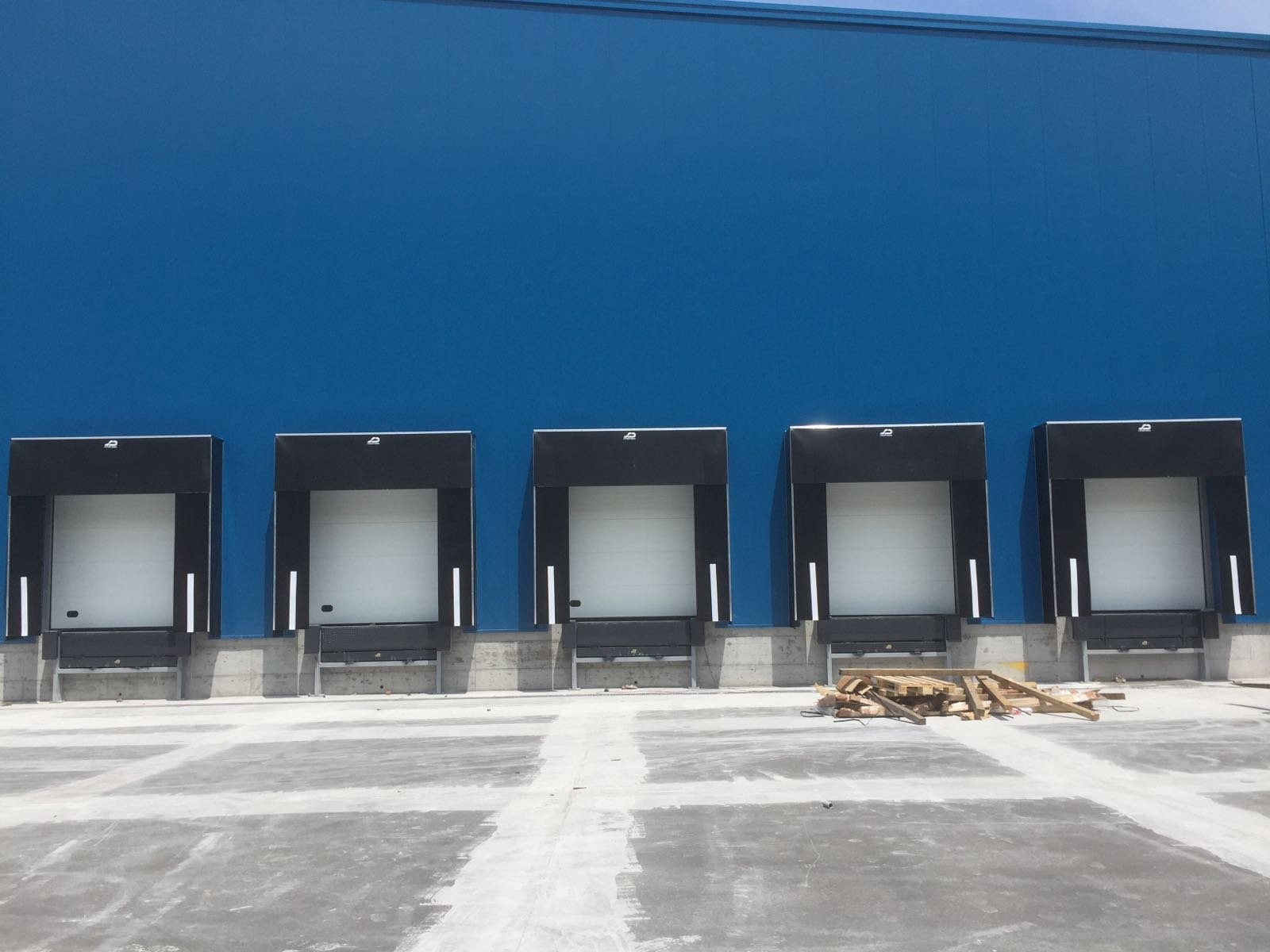
Photo: Davidbbcc, Wikimedia Commons, CC BY-SA 4.0.
Why commercial doors need a written schedule
The door industry measures wear in cycles. One cycle is the door going from closed to fully open and back to closed, as defined in DASMA's sectional door standard (ANSI/DASMA 102). The same standard says residential and commercial sectional doors are designed for at least 10,000 cycles when they're properly selected, installed, operated and maintained.
On a busy business door it doesn't last long:
| Cycles per day | Days to reach 10,000 cycles |
|---|---|
| 5 (a storage or overflow door) | about 2,000 days, roughly 5½ years |
| 20 (a busy service bay) | about 500 days, roughly 16 months |
| 50 (a shipping door on two shifts) | about 200 days, under 7 months |
The springs are usually the first part to reach that limit. That's why commercial door makers sell higher-rated springs: Clopay's commercial springs, for example, are rated for a minimum of 10,000 cycles, and 25,000-, 50,000- and 100,000-cycle springs are available. If your springs keep breaking on the same door, ask whether a higher-cycle spring fits it.
Service intervals follow the same logic. The operator and door makers set them by time or cycles, whichever comes first:
- LiftMaster's Logic 5.0 commercial operator manual lists its maintenance at every month, every 3 months or 5,000 cycles, and every 6 months or 10,000 cycles. The operator has a built-in cycle counter, and its Maintenance Alert System can flash a light on the control station when the next service is due.
- Clopay's commercial door maintenance guidance calls for inspecting springs, cables, rollers and pulleys, and lubricating the moving parts, quarterly or every 5,000 cycles.
- DASMA's rolling door guidance says a trained door systems technician should inspect and maintain rolling doors at least once a year, or as the door's manufacturer recommends.
ANSI/DASMA 102 also requires the door maker to supply a list of the parts that need regular maintenance and how often. Keep that manual for every door. It sets the schedule for your door; the table below is the general version.
The checklist by frequency
Who does each task is in the last column. "Staff" means a trained person on your team with the door closed or clear; "tech" means a trained door systems technician.
| When | Sectional doors | Rolling steel and high-speed doors | Who |
|---|---|---|---|
| Every day, at opening | Door runs smoothly, no new noise, no jerks or pauses. Bottom seal and panels intact. Opening clear of pallets and carts | Curtain runs straight in the guides without rubbing. Bottom bar or breakaway panel seated. Hood secure | Staff (look and listen only) |
| Every week | Wipe photo-eye lenses. Check for impact damage to tracks and the bottom section | Clear debris from the guides and the floor at the sill. Check the bottom edge and seal | Staff |
| Every month | Test the photo-eyes and any sensing edge. Look for loose, worn or broken hardware | Test the photo-eyes and the sensing edge at both ends. Check that the operation is visible from the control station | Staff, then call a tech for anything found |
| Every 3 to 6 months, or 5,000 to 10,000 cycles (per the maker's manual) | Inspect springs, cables, rollers, hinges and pulleys; lubricate as the manufacturer specifies. Operator: drive chain or belt, sprockets, clutch, brake, bearings, fasteners, manual disconnect | Evaluate electric operation and the manual-operation effort. Inspect brackets, bearings, gears or roller chain, sprockets, guides and endlocks; lubricate | Tech |
| Every year, at minimum | Full inspection by a trained technician | Full inspection by a trained technician. Fire doors: inspection and drop test with a signed record | Tech (fire doors: a trained rolling steel fire door systems technician) |
| After a storm, flood or impact | Inspect before normal use | DASMA calls for an immediate evaluation of all door systems after high wind or flooding | Staff look, tech inspects |
Use the manufacturer's interval if it's shorter than the one here. High-speed doors are built for heavy daily traffic, so their makers' own maintenance programs come first; Rytec's specifications, for example, call for a preventive maintenance program that covers lubrication and periodic adjustments.
Monthly safety device test (staff can do this)
Commercial door operators are covered by UL 325, the safety standard for door and gate operators. UL 325 requires every commercial door operator to either close only while someone holds the button, or have a primary external entrapment protection device that the operator monitors: a photo-eye or a sensing edge on the bottom of the door. Listed commercial operators made on or after August 29, 2010 have to confirm the device is working before they'll start the door down. If it isn't, they fall back to hold-to-close, and remotes and timers will only open the door.
That's a safety feature, and it's also a common "the door won't close" call. DASMA's guidance on the 2010 UL 325 changes tells installers to have owners check every month that the safety devices are working. A simple routine:
- Clear the opening and make sure nobody is under the door.
- Photo-eyes: start the door closing and pass a box through the beam. The door should stop and reverse. DASMA's guidance says the primary photo-eyes sit no higher than 6 inches off the floor.
- Sensing edge: on doors with a pressure edge on the bottom, close the door onto a soft object (an empty cardboard box) near one end, then the other. DASMA tells building supervisors to test both ends of the edge.
- Control station: check that the person pressing the button can see the whole door, as DASMA recommends, and that the warning placard is still posted.
- Write it down (see the log below).
If the door doesn't reverse, keep people clear, use it only with hold-to-close, and call for service. Don't tape over a photo-eye or rewire the operator to get around it. Our guide to garage door sensor problems explains the lights on the sensors and how misalignment shows up.
Sectional doors: what to look for
Sectional doors (the panelled doors on most service bays and docks) carry their weight on torsion springs above the opening, with cables running down to the bottom corners. The checks staff can make are visual:
- Hardware: Wayne Dalton's commercial door owner's manual says to check the door and its hardware every month for loose, worn or broken parts, and to have repairs made by a qualified door company.
- Cables: frayed strands, rust, or a cable sitting slack on one side.
- Rollers and tracks: a dent in the track or a roller out of its track. A forklift strike on a track is enough to take a door out of service.
- Balance clues: a door that drifts down when it should stay open, or that the operator strains to lift. DASMA's spring guidance notes that too little spring torque makes a door drift down, and that paint or anything added to a door can push its weight past what the springs were sized for.
Leave the springs, cables, bottom brackets and anything attached to them to a technician. DASMA's inspection checklists are blunt about it: components under spring tension are to be looked at, not touched.
Rolling steel doors: what to look for
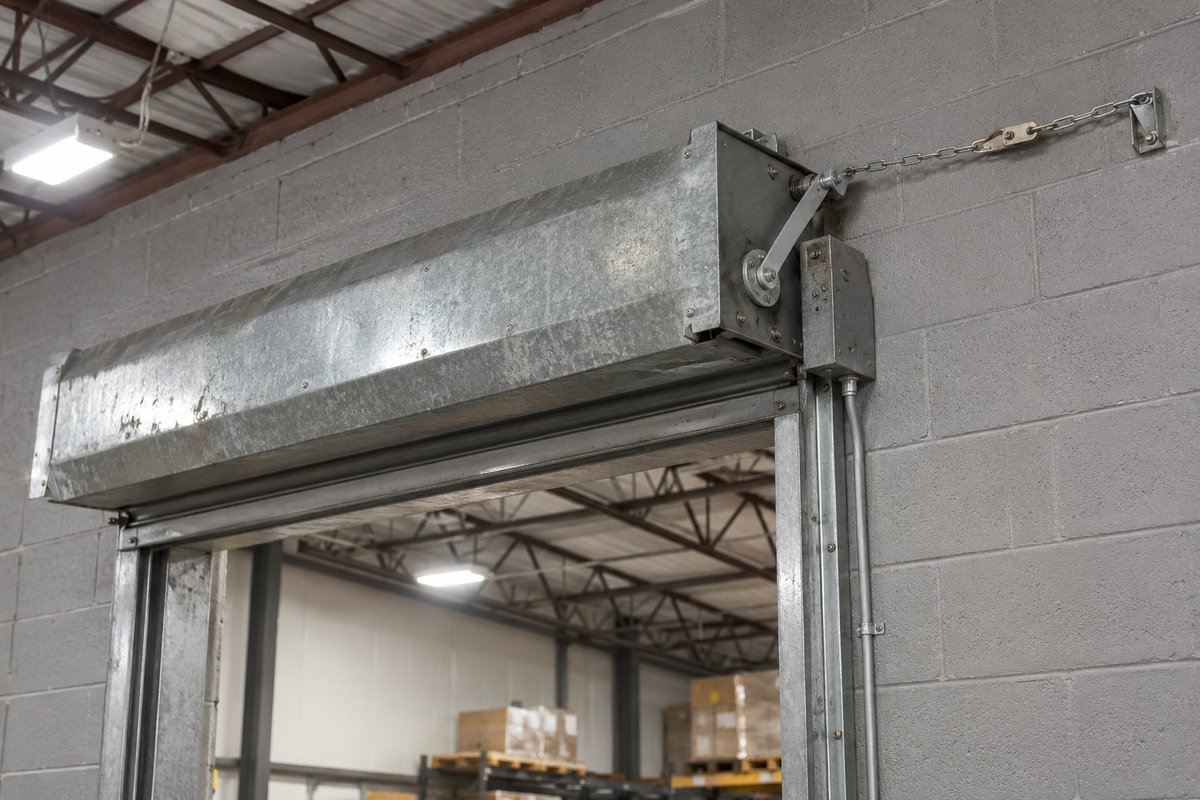
Rolling steel doors (roll-up or coiling doors) wind a curtain of steel slats onto a barrel inside the hood, balanced by springs in the barrel. DASMA's maintenance sheet for building maintenance supervisors gives a clear list of things you can check from the floor:
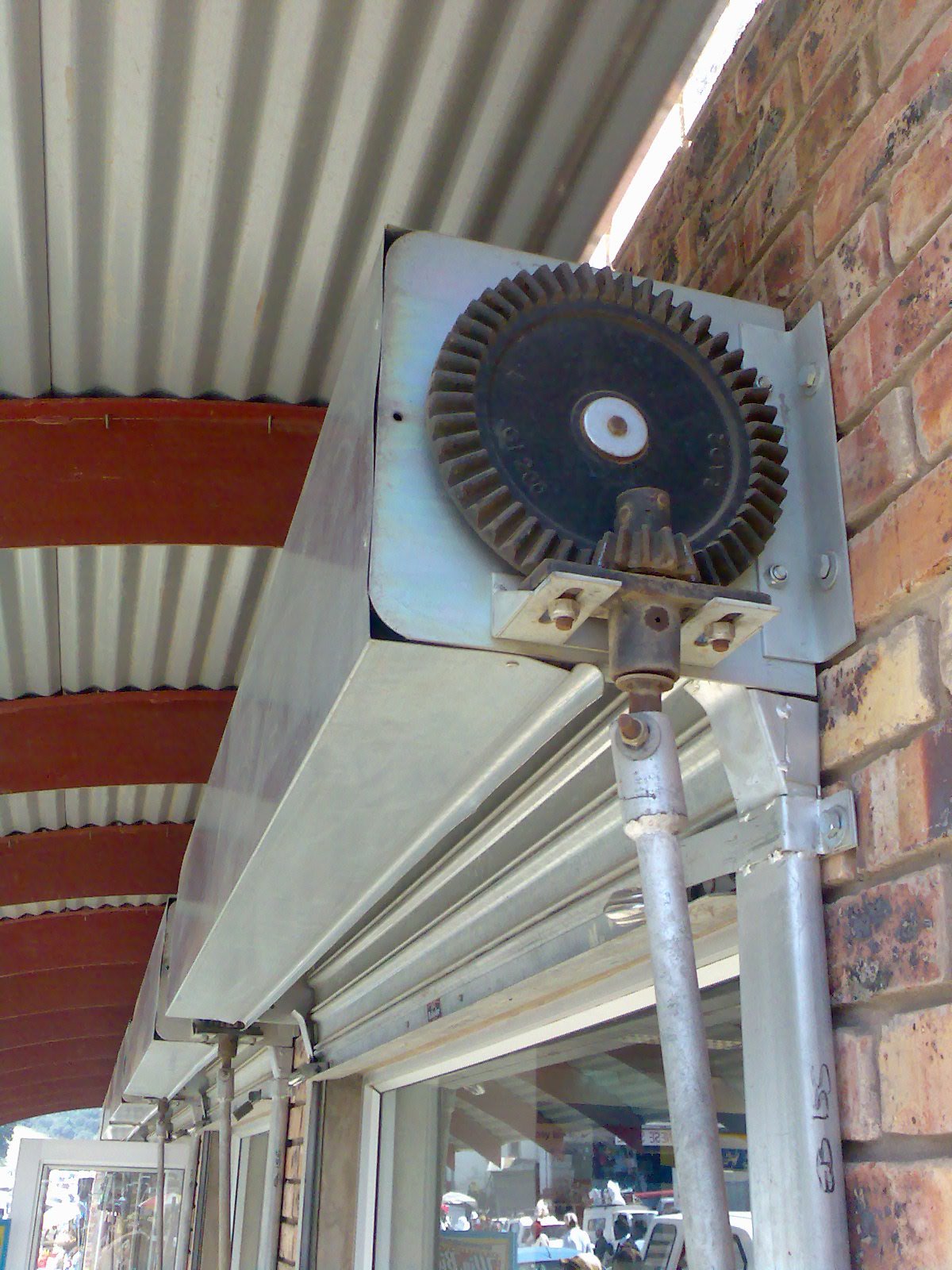
Photo: Gregory David Harington, Wikimedia Commons, CC BY-SA 2.5.
- Tension wheel: on doors with a tension (charge) wheel on the bracket, the wheel and shaft should stay still while the door moves. Never try to adjust it; the spring assembly is under extreme tension all the time.
- Guides: the gap should be even from top to bottom, with every fastener in place and the stops at the top secure.
- Curtain: it should run freely without rubbing the header, and endlocks and windlocks should be tight on the slat ends.
- Hood: secure and not rubbing the curtain.
- Manual effort: on a chain-hoist or crank door, DASMA puts the normal effort at no more than 35 lb on a hand chain or 25 lb on a crank. Much more than that points to a counterbalance problem.
- Electric doors: DASMA says to evaluate them quarterly. If the operator sounds like it's straining, close the door, switch to manual operation and try to raise it a foot or two. If it's hard to lift, call for service.
- Limits: the bottom bar shouldn't jam against the stops at the top, and the curtain shouldn't sag when it's closed.
We cover the door types, sizes and options on our rolling steel doors page.
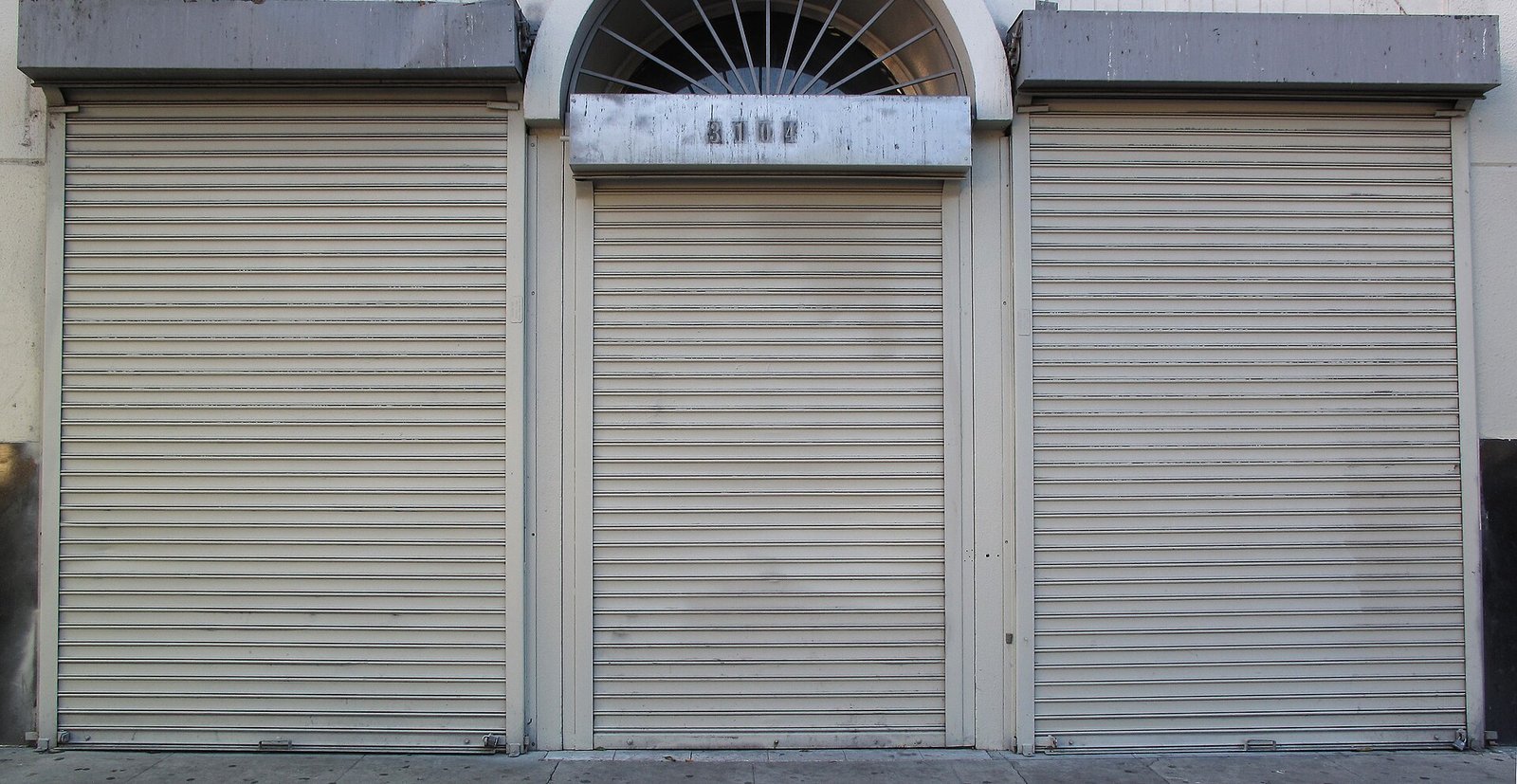
Photo: Downtowngal, Wikimedia Commons, CC BY-SA 4.0.
High-speed doors
High-speed doors, usually fabric or rubber curtains, are used where a door opens all day: food plants, cold storage, production lines. Because they cycle so much, follow the maker's maintenance program closely. Things staff can watch:
- The curtain is seated in both side guides and not torn.
- A breakaway bottom bar that was knocked out has been reset the way the manual shows. On some models it's a button on the control box.
- Photo-eyes, light curtains and motion sensors are clean and unobstructed.
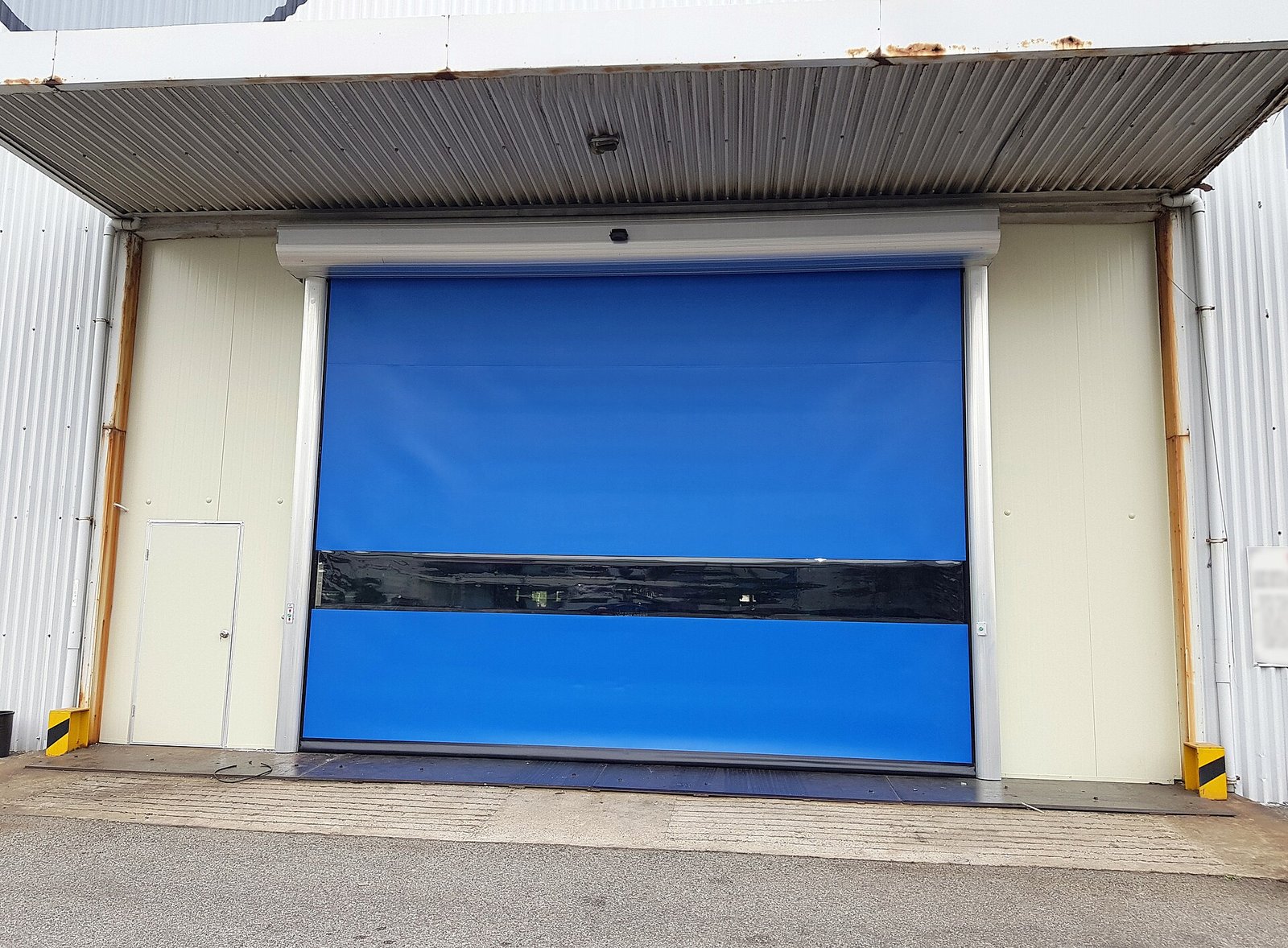
Photo: COAD Thailand, Wikimedia Commons, CC BY-SA 4.0.
Fire doors: NFPA 80 annual inspection and drop testing
Rolling steel fire doors stay open in daily use and close on their own in a fire, usually when a fusible link melts or a detector signals the release. A door that never closes in daily use gives no warning that its release has stopped working, which is why NFPA 80 requires it to be tested. NFPA 80, the Standard for Fire Doors and Other Opening Protectives, sets the rules:
| Requirement | What it means for you |
|---|---|
| Inspected and tested at least once a year | Every rolling steel fire door, including doors that stay closed and never get used, according to DASMA's drop-test guidance |
| By a trained rolling steel fire door systems technician (NFPA 80-2022, 5.2.4.2) | A technician with documented training from a recognized industry organization or the maker of a listed rolling steel fire door (NFPA 80, 3.3.131). Ask to see it before the test |
| Drop tested twice | The door must close fully and rest on the sill, then be reset and dropped again to prove the reset worked. NFPA 80 sets the average closing speed at no less than 6 and no more than 24 inches per second |
| Records kept at least 3 years | The periodic inspection record. The acceptance test record from installation is kept for the life of the door |
| Repairs without delay, with listed or original parts | If the door can't be repaired with listed parts or parts from the original maker, the assembly (or that part) is replaced |
| Nothing attached to the door | No conduit, ducting, lights or ceiling framing fastened to any part of the assembly |
It's the building owner's responsibility. DASMA states that periodic inspection and testing of rolling steel fire doors falls on the owner, and it recommends a service contract for an annual (or more frequent) inspection and drop test. The 2024 International Fire Code also requires annual inspection and testing of rolling steel fire doors by a trained technician, with records kept. Your local fire marshal, the authority having jurisdiction, has the final say on whether a door is acceptable.
Before the visit, staff can help by clearing the area on both sides of the door, moving anything flammable away from the opening, and pulling last year's test record. DASMA's pre-test checklist includes fusible links that aren't painted or coated with dust or grease, a release arm that isn't tied or wedged, and labels that are visible and legible. If a fire door's label is missing, DASMA suggests checking with the local building department, which sometimes holds the permit records.
A part can fail during a drop test through nobody's fault, and DASMA notes that the repair isn't always part of the test price. Plan for it.
Dock equipment basics
Most loading doors sit inside a dock package. You don't need a separate schedule for every piece, but add these to the monthly walk-round:
- Seals and shelters: the pads or curtains around the opening that close the gap to the trailer and keep conditioned air in. Look for tears and flattened pads.
- Bumpers: the blocks below the opening that keep a backing trailer off the dock wall. Replace them before they're worn through.
- Levelers and dockboards: under OSHA's walking-working surfaces rule (29 CFR 1910.26), dockboards have to carry the maximum intended load, portable dockboards have to be secured, and measures such as wheel chocks or sand shoes have to keep the trailer from moving while employees are on the dockboard.
- Vehicle restraints and lights: check that they engage and that the signal lights work.
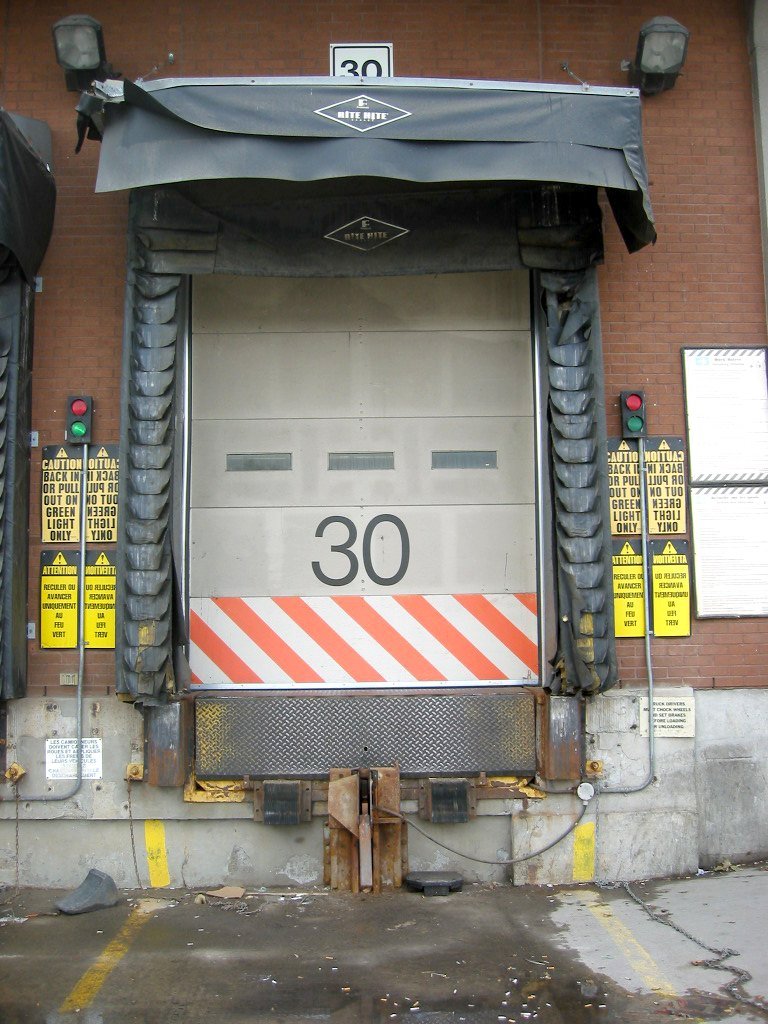
Photo: P199, Wikimedia Commons, public domain.
Keep a door log
A one-page log per door turns maintenance from memory into a record. For fire doors the record is required.
| Column | Example |
|---|---|
| Door ID and location | Dock 3, east wall |
| Type, maker, size, serial (from the label) | Rolling steel, 12 × 14 ft |
| Date and cycle count (from the operator, if it has a counter) | 2026-11-03, 48,210 cycles |
| Check done | Monthly photo-eye and edge test |
| Result | Pass / fail, what was found |
| Action and who | Called service; tech replaced bottom roller |
| Signature | Initials |
Keep the manufacturer's manual, the installation record and any fire door test forms with the log. DASMA publishes a drop-test form (TDS 271) that your technician can use.
Signs a door needs service now
Stop using the door, keep people clear and call for service if you see:
- A loud bang from the springs, a gap in a torsion spring, or a cable hanging loose or off its drum.
- The door hanging crooked, a roller out of the track, or a track bent by an impact.
- A rolling door's tension wheel turning while the door moves, or the curtain jumping out of a guide.
- The operator straining, stopping and reversing, or running with the door not moving.
- The door won't close from the remote and only closes while someone holds the button (the operator has detected a safety device fault).
- A fire door with a tied-up release arm, painted fusible link, or something fastened to the hood or guides.
For a door that's stuck open or won't secure the building, see emergency commercial door repair. Our general emergency garage door repair page covers what to do while you wait.
Downtime and security
A dock door that won't open stops shipping. One that won't close leaves stock, equipment and the building open overnight, and a door forced closed against a broken spring or a misaligned track usually turns a small repair into a bigger one. Most of the failures above give warning first: a new noise, a slow or uneven run, a spring that's been creaking. The point of the schedule is to catch them in a planned visit instead of during a delivery.
What your staff can do and what needs a technician
| Staff can | A trained technician should |
|---|---|
| Look and listen daily; report changes | Adjust, repair or replace springs, cables, drums, bottom brackets and anything under spring tension |
| Keep the opening, guides and sill clear | Adjust a rolling door's tension wheel or counterbalance |
| Wipe photo-eye lenses; test photo-eyes and edges monthly | Rewire, re-align or replace safety devices if they fail the test |
| Reset a high-speed door's breakaway bar as the manual shows | Service the operator: drive, brake, clutch, limits, logic board |
| Check seals, bumpers and dock lights | Inspect and drop test fire doors and sign the record |
| Keep the door log and manuals | Repair track, guide or curtain damage after an impact |
DASMA's sheet for building supervisors, LiftMaster's operator manual and Clopay's commercial guidance all draw the same line: the counterbalance assembly is under extreme tension, and maintenance on it and on the operator is for a trained door systems technician. LiftMaster also says to disconnect power before any adjustment or maintenance on the operator.
Plan service around your business hours
- Group the doors. One visit for every door in a building costs less downtime than separate calls, and it lets the technician compare doors of the same age.
- Pick the quiet window. Early morning before receiving starts, or the day of the week with the fewest shipments. Our office is open seven days a week, 7 AM to 8 PM, so you can book around your schedule.
- Schedule fire door tests ahead. Drop tests close the opening, so plan them for when that area isn't needed, and tell your alarm company if the doors are tied to a detection system.
- Time it with the season. In Metro Atlanta, a visit before summer storm season and another before winter covers the weather that's hardest on seals, operators and doors left open in wind.
- Use the counter. If your operators show a cycle count, schedule by cycles on the busiest doors and by calendar on the rest.
We service commercial garage doors across Metro Atlanta, including commercial overhead door repair and tune-ups and repairs, with local pages for Alpharetta and Canton businesses. For fleets, box truck doors are a different system; see box truck roll-up door repair. For your home garage, use our garage door maintenance checklist instead.
Talk to a commercial tech
We have serviced garage doors across Metro Atlanta since 1999, we're rated 4.9 on Google with Over 4,000 Five-Star Reviews, and we're an authorized LiftMaster dealer. Tell us how many doors you have, what types, and roughly how often each one runs, and we'll set up a maintenance visit around your hours. You'll get a written price before any work starts.
Call (678) 271-8918 or request a commercial estimate.
Frequently asked questions
How often should a commercial garage door be serviced?
At least once a year by a trained technician, and more often on busy doors. Operator and door makers set intervals by time or cycles: LiftMaster lists every 3 months or 5,000 cycles and every 6 months or 10,000 cycles, and Clopay calls for inspection and lubrication quarterly or every 5,000 cycles.
What is a door cycle?
One cycle is the door moving from closed to fully open and back to closed. Standard springs are designed for about 10,000 cycles, so a door that runs 20 times a day reaches that in about 16 months.
Do commercial garage doors need safety sensors?
Yes, unless the door only closes while someone holds the button. UL 325 requires commercial door operators to be either constant-pressure to close or fitted with a monitored external entrapment protection device, such as photo-eyes or a sensing edge. Test them every month.
How often do rolling steel fire doors need to be drop tested?
At least once a year under NFPA 80, plus after installation and after any mechanical repair. The door is dropped twice to prove it closes fully and resets, and the record is kept for at least 3 years.
Who can inspect a fire door?
NFPA 80-2022 requires periodic inspection and testing of rolling steel fire doors by a trained rolling steel fire door systems technician: someone with documented training from a recognized industry organization or the maker of a listed fire door. Your fire marshal decides whether the door is acceptable.
Can my maintenance staff adjust the springs?
No. On sectional and rolling doors the springs, cables and counterbalance are under extreme tension. DASMA and the door and operator makers reserve that work for trained door systems technicians. Staff can inspect, clean, test safety devices and keep the log.
Why does my commercial door only close when I hold the button?
The operator has detected a problem with its monitored safety device, often a blocked or misaligned photo-eye or a damaged edge. Under UL 325 it then falls back to hold-to-close, and remotes and timers will only open the door. Clean and check the sensors, then call for service if it continues.
What should a commercial door maintenance log include?
The door's ID and location, type and maker, the date and cycle count, the check done, the result, the action taken and by whom. Keep the maker's manual, the installation record and fire door test forms with it.