A garage door that has come off its track is not safe to use. Stop pressing the button, unplug the opener, keep people and cars clear, and don't try to push the rollers back in. The door is heavy, it's held up by springs under high tension, and once it's out of its tracks nothing is guiding it.
Below: how the rollers and tracks work, why a door comes off track, what's safe to do yourself (very little) and how a technician puts it right.
What to do right now
Do these six things in order. None of them involve touching the door, rollers, tracks, cables or springs.
- Stop using the door. Don't press the wall button or the remote again, and don't lift or pull the door by hand. Clopay's owner instructions say not to operate a door that is too difficult to move, opens too quickly, or has rollers out of the track.
- Unplug the opener. Pull its plug from the ceiling outlet or switch off the circuit, so nobody in the house starts it with a remote. An opener pushing a door that's out of its track bends the panels and the tracks further.
- Don't pull the red emergency release if the door is open or partly open. The release disconnects the door from the opener. If a spring or cable has failed, the opener is the only thing holding the door, and it drops. Chamberlain, the maker of LiftMaster openers, says to use the release only when the door is fully closed if possible, not to proceed if springs, cables or rollers look damaged, and warns that a door with weak or broken springs can fall rapidly and without warning.
- Keep everyone clear. Keep children, pets and cars out from under the door and away from the tracks. The U.S. Consumer Product Safety Commission (CPSC) warns that a badly unbalanced garage door can crash to the floor and strike someone under it.
- Don't prop it. Don't wedge a ladder, a 2x4 or a jack under a hanging door. A prop can kick out when the door shifts.
- Look, take photos, and call. From a safe spot, photograph the bottom corners of the door, both tracks, and the springs and cables. Photos help the technician bring the right parts.
If the door is stuck open, your garage is open to the street until it's fixed. That's what our emergency garage door repair service is for. Don't try to force the door down.
How the rollers and tracks work
A sectional garage door is a row of hinged panels (sections). It doesn't slide on its own; it rides in two steel tracks, one on each side of the opening, on small wheels called rollers.
- Rollers sit in hinges and brackets on both edges of the door, usually one at every joint between sections plus one at the top and bottom. Each roller is a wheel on a steel stem. The wheel is either steel or nylon, and turns on a bearing.
- The vertical track runs up each side of the opening. It's screwed to the wall or door jamb with track brackets (sometimes called jamb brackets).
- The curved section (the radius) turns the door from vertical to horizontal at the top of the opening.
- The horizontal track runs back along the ceiling. Its far end hangs from the ceiling on a back hang, a steel angle bolted to the ceiling framing. A stop bolt or bumper at the end keeps the top rollers from running out the back.
The springs carry the door's weight; the tracks only guide it. So a door comes off track in two ways: the track bends or moves out of line, or the door is pulled sideways, often by a cable or spring letting go on one side.
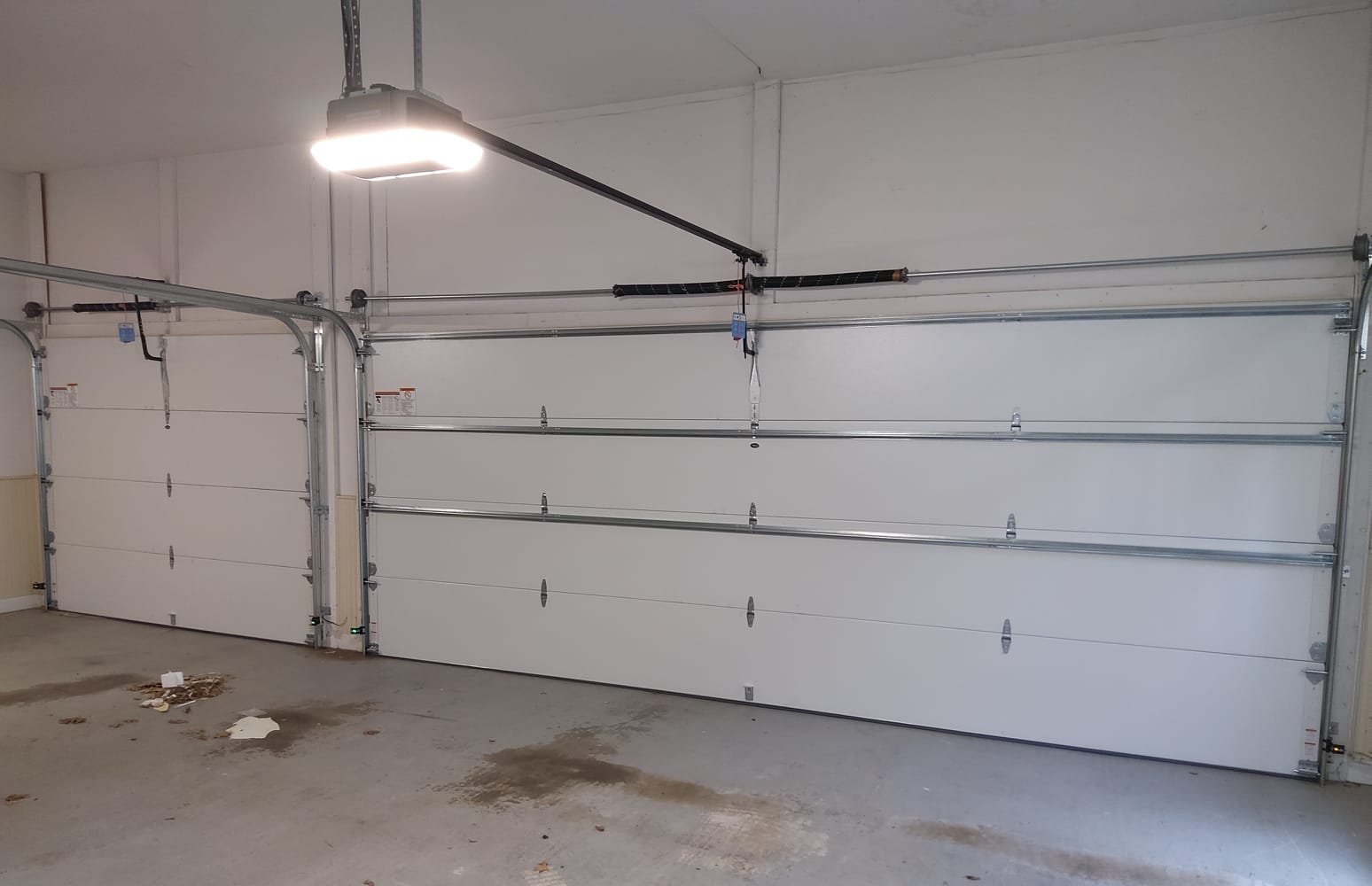
Clopay's installation manual sets the vertical tracks so each roller has only a small amount of side play, about 1/4 inch, and warns that a door can fall out of its track if the track is not aligned correctly. That narrow margin is the reason a small bend or a loose bracket is enough to let a roller pop out. DASMA, the door manufacturers' association, puts it simply: the track and the door sections work together as a system.
Clopay notes that some large doors weigh as much as 500 pounds, and single-car doors as much as 200 pounds, once the spring tension is gone. That's the weight you'd be holding if you tried to wrestle one back into its track.
Is your door off track? Signs and what they mean
Whatever you see, the first step is the same: stop using the door. This table tells you what to say when you call.
| What you see or hear | What it usually means |
|---|---|
| A gap between a roller and the track, or a roller sitting outside the track channel | That roller has come out of the track. Others usually follow if the door moves |
| The door hangs crooked, one side lower than the other | A cable or spring has let go on the low side and dragged the door out of line. Check the cables first |
| The door is stuck partway open or closed and won't go further | A roller has jammed against a bent or misaligned track, or a roller has broken |
| Grinding, scraping or popping as the door moves | Rollers rubbing the edge of the track, a roller about to come out, or a worn roller wheel |
| The door wobbles or shakes as it moves | Worn rollers, or tracks out of line with each other |
| A dent or kink in the track, often at bumper height | The track has been hit. Rollers bind or jump at the dent |
| The track pulls away from the wall at a bracket | Loose or missing bracket screws |
| A panel folded or bowed inward | The opener kept pushing after a roller came out |
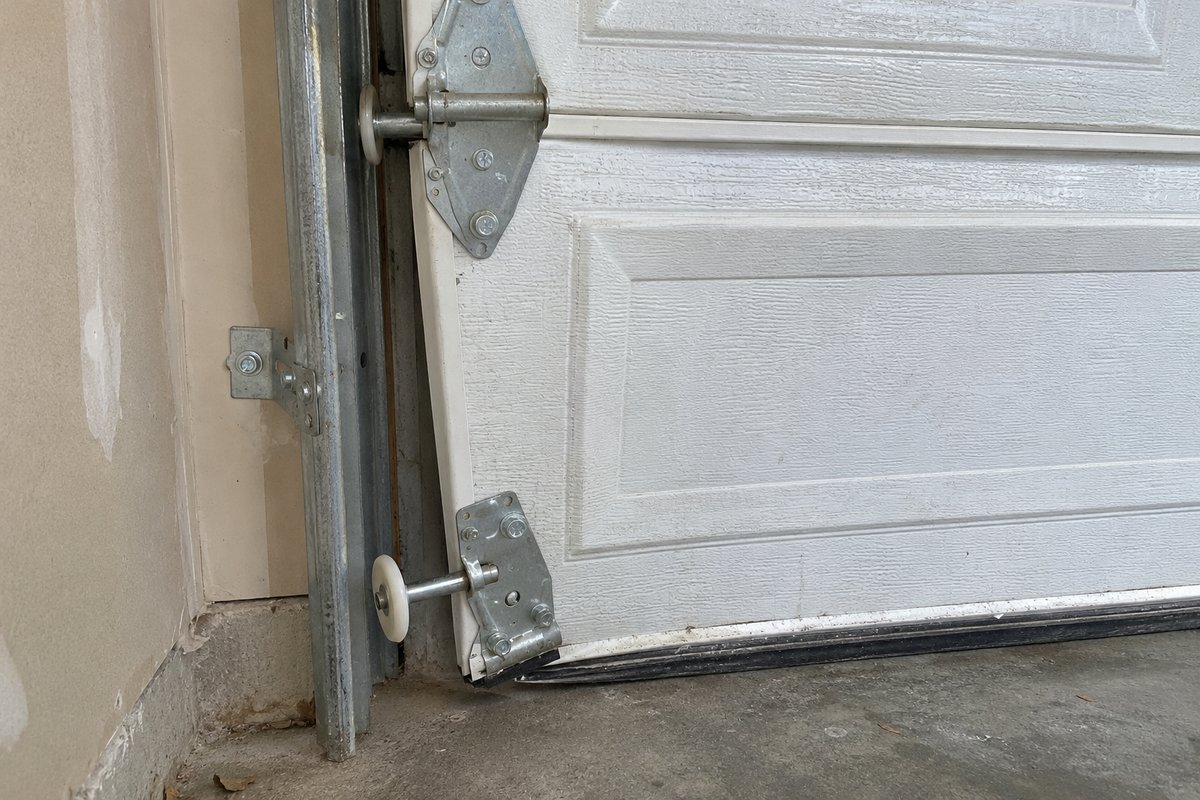
If a cable is hanging loose or unwound from its drum, see what to do when your garage door cables are off track. This guide sticks to the rollers and tracks.
Why garage doors come off track
A door rarely jumps its track for no reason. One of these seven is usually behind it.
1. The car hit the door or the track
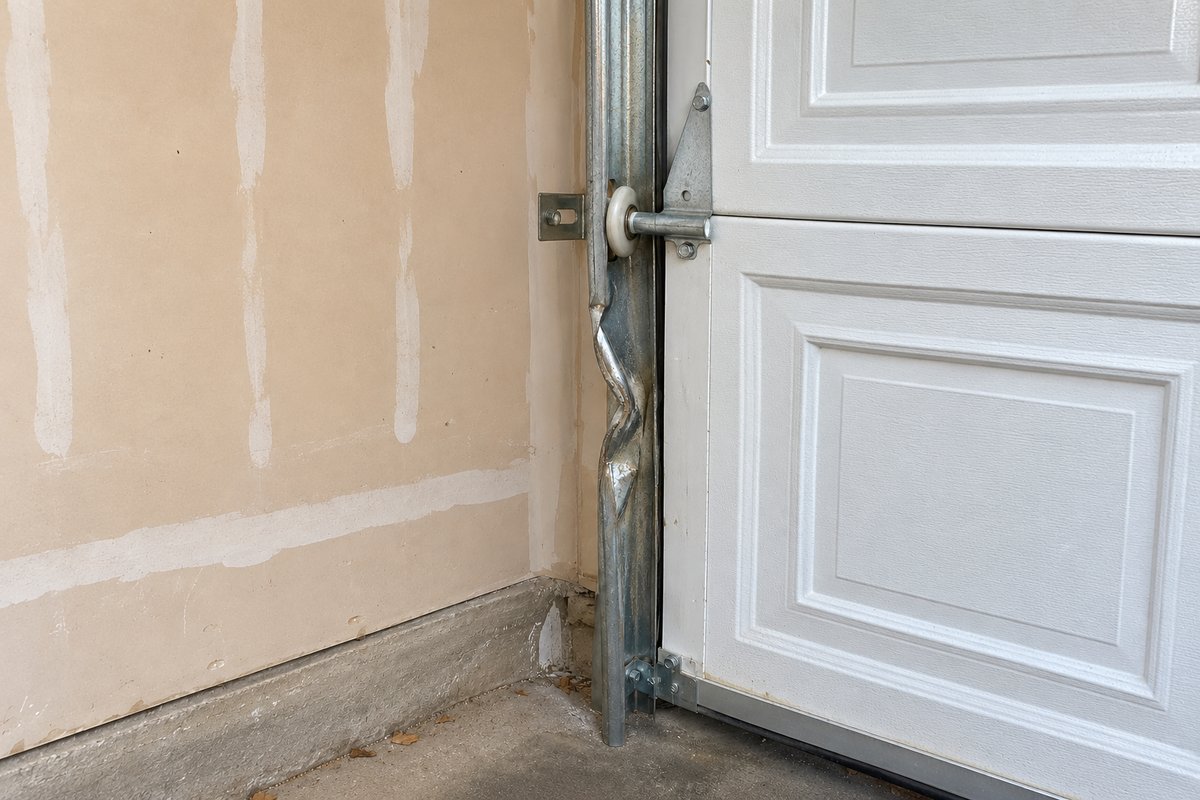
What you'll notice: a dent or kink in the vertical track, usually low down, or a bottom panel pushed in. The door scrapes or sticks at that spot.
Why it happens: backing out before the door is fully open, or pulling in too far, catches the door or the track. A track bent inward pinches the roller; one bent outward lets it slip out. Clopay's monthly checklist includes looking for creases or bends in the track.
What to do: stop using the door. A bent track section is usually replaced rather than hammered straight. See our bent garage door track repair page.
2. A cable or spring broke and one side dropped
What you'll notice: the door hangs crooked, often with a loud bang beforehand. A cable is slack or hanging loose on one side, or there's a gap in the torsion spring above the door.
Why it happens: the springs and cables lift both sides of the door evenly. When a cable snaps or comes off its drum, or a spring breaks, one side loses its lift. The door tilts, and the tilt drags the rollers on the high side out of their track.
What to do: this is the most dangerous case, because the springs and cables are under tension and the door is held up unevenly. Don't touch anything. Spring and cable repairs are technician work; see garage door spring repair and our cables off track guide.
3. A track is bent, twisted or out of line
What you'll notice: the door rubs or binds at the same spot every time, and one side runs higher than the other.
Why it happens: besides car bumps, tracks get bent by things stored against them and by weight hung from the horizontal tracks. Wayne Dalton's owner's manual says never to hang tools, bicycles, hoses, clothing or anything else from the horizontal tracks, because they aren't designed to carry extra weight. A loose back hang lets a horizontal track sag.
What to do: look, take a photo, and call. Realigning a track means loosening its brackets while the door is in it, so it's a track repair for a technician.
4. A roller is worn or broken
What you'll notice: a wobbling or tilted roller, a cracked or chipped wheel, a wheel that doesn't turn, or a grinding sound from one spot on the door.
Why it happens: rollers wear like any wheel. Wheels crack or chip, bearings wear out and stems bend. A roller that no longer turns slides and catches instead of rolling, and a broken one can drop right out of the track. Clopay's monthly checklist lists broken wheels, bent shafts and worn-out bearings on rollers.
What to do: we usually replace worn rollers as a set, so the door runs evenly. The bottom rollers sit in the bottom brackets, which hold the lift cables under spring tension, so those are never a DIY job. Read about garage door roller replacement.
5. The track brackets have worked loose
What you'll notice: the vertical track moves when the door does, a bracket has pulled away from the wall, or screws are missing. The gap between the door and the track is wider at one point than another.
Why it happens: every run shakes the tracks a little, and over the years bracket screws back out, especially in old or soft wood jambs. Once a bracket lets go, the track spreads away from the door and the rollers drop out. Clopay's monthly checklist includes loose or missing bolts, screws or other fasteners on the door or track, and Wayne Dalton's manual asks owners to check that the door hasn't shifted left or right in the opening and to have a trained technician make the repairs if they suspect a problem.
What to do: if the door still runs normally, a technician can tighten and realign the brackets on a routine visit. If a roller has come out, stop using the door.
6. Something got in the way
What you'll notice: the door stopped against a bin, a bike or a bumper, then went crooked or stuck.
Why it happens: if one side of the door is blocked while the other keeps moving, the door twists in the opening. That twist can lift rollers out of the track, and it can let the cable on the blocked side go slack. Wayne Dalton's manual says to operate the door only when it's free from obstructions.
What to do: don't pull the object out if the door is resting on it. Unplug the opener and call.
7. The opener kept forcing a door that was binding
What you'll notice: the opener strained or reversed for a while before the door came off track, sometimes folding a panel.
Why it happens: an opener is strong enough to push a door through a bent track or past a broken roller, and a door that binds a little more each day gets pushed until something gives. LiftMaster's owner's manuals tell homeowners that if the door binds, sticks or is out of balance, they should call a trained door systems technician, and Chamberlain's own troubleshooting guide says that if the door doesn't move smoothly by hand, the problem is likely the door, not the opener.
What to do: the door gets fixed first, then the opener's force and travel settings get checked. If your opener has been making noise or running without moving the door, our guide to an opener making noise but not opening covers the opener side.
Can you fix a garage door that's off track yourself?
For a homeowner, the honest answer is almost never. Videos show people tapping a roller back in with pliers and a mallet; they leave out why the roller came out, and what the door is doing while you work on it.
- The door is heavy and only partly supported. With rollers out of the track, the door isn't guided, and it's held up by springs and cables that are often the reason it came out in the first place.
- The springs, cables and bottom brackets are under high tension. Wayne Dalton's manual tells owners not to attempt any adjustment, repair or alteration to springs, spring brackets, bottom corner brackets, fasteners, lift cables or supports, because of the constant extreme spring tension. DASMA says the same about bottom brackets: adjust or loosen them only if you're a trained door systems technician.
- Putting a roller back doesn't fix the cause. A roller that came out of a bent track, past a loose bracket or because a cable broke comes out again.
The CPSC's advice is that doors that are unbalanced, or that bind or stick, should be serviced by a professional. That's the job of our off-track garage door repair service.
| Task | DIY? | Why |
|---|---|---|
| Stop using the door, unplug the opener, keep people clear | Yes | It's the safest thing you can do |
| Look at the rollers, tracks, cables and springs from a safe spot, and take photos | Yes | Looking is safe, and photos help the technician |
| Clean the tracks, lubricate rollers and hinges (door running normally) | Yes, per your manual | See prevention, below |
| Push or hammer a roller back into the track | No | The door is unsupported and can shift or fall |
| Bend a track back, or loosen its brackets | No | The track is fixed with the door secured |
| Replace bottom rollers or touch the bottom brackets | No | The bottom brackets hold the lift cables under spring tension |
| Rewind a cable or touch the springs | No | Springs and cables store enough energy to cause severe injury |
| Run the opener to "work it back in" | No | It bends the track and folds panels |
How a technician fixes an off-track door
A proper repair follows the same order on every door.
- Secure the door. Before anything else, the technician clamps locking pliers on the track to stop the door from moving, and supports the door where it's hanging. Clopay's instructions call for clamping the track before spring work.
- Find out why it came off. We check the cables, drums, springs and bottom brackets first, because a door pulled out by a broken cable needs the cable side fixed before the track. Then the rollers, every track section, the brackets and the back hangs.
- Take the tension off if needed. If a spring or cable has failed, the springs are unwound or the door is lowered and clamped so the tracks and rollers can be worked on safely.
- Replace what's damaged. Bent track sections, worn rollers and loose fasteners are replaced. A folded panel is checked, and a creased section usually needs replacing.
- Put the door back in its tracks and line them up. The vertical tracks are set plumb and parallel, with the narrow side play the manufacturer specifies, and the horizontal tracks level and secured to their back hangs and stop bolts.
- Balance the door. Springs and cables are set so the door lifts evenly on both sides. A balanced door stays put when you let go of it about halfway up.
- Test the opener. We reconnect the opener, check its force and travel settings and run the safety reverse test. The CPSC recommends placing a 2x4 flat on the floor in the door's path; the door should reverse when it touches the board.
If a spring needs replacing, new springs from us come with our written warranty: 3 years on torsion springs and 5 years on extension springs (see the warranty). You'll get a written price before any work starts. Our off-track garage door repair page has more on the service itself.
Rollers off track or cable off track?
Rollers off track is fixed along the sides and ceiling: rollers, tracks, brackets and back hangs. A cable off track is fixed at the top of the door: springs, drums and cables (see garage door cable repair). A cable that lets go on one side tilts the door and drags its rollers out, so the two are often fixed in the same visit.
How to keep it from happening again
Most off-track doors give warnings first: scraping, a wobble, a hesitation at the same spot.
- Look at the rollers and tracks every month. Both Clopay and Wayne Dalton recommend a monthly visual check. Look for cracked, chipped or wobbling roller wheels, bent stems, creases or dents in the track, loose or missing bracket screws, and a door that has shifted to one side of the opening. Our garage door maintenance checklist walks through the whole monthly check.
- Lubricate the rollers the way your door's manufacturer says, and leave the tracks dry. Clopay's maintenance guide says to lubricate the rollers at the bearing, not the tire, at least twice a year, along with the hinges and springs. Wayne Dalton's manual says to use a non-silicone lubricant on hinges, steel rollers and bearings, and not to lubricate nylon rollers, plastic idler bearings or the door track. Neither manufacturer tells you to grease the tracks; the rollers are meant to roll, not slide. If a roller doesn't turn freely, Wayne Dalton says to clean the tracks of dirt and anything stuck to them.
- Keep weight off the tracks. Don't hang bikes, hoses, ladders or storage hooks from the horizontal tracks, and keep shelves and bins clear of the vertical tracks.
- Check the balance twice a year. With the door closed, pull the release, lift the door halfway and let go. It should stay put. If it drifts down or shoots up, the springs need adjusting; read why a garage door feels heavy.
- Test the safety reverse every month, as the CPSC recommends, and don't let the opener fight a door that's binding.
- Book a yearly tune-up. Wayne Dalton and DASMA both recommend a professional inspection once a year. Our tune-up covers the rollers, tracks, brackets, springs, cables and opener settings in one visit.
When to call us
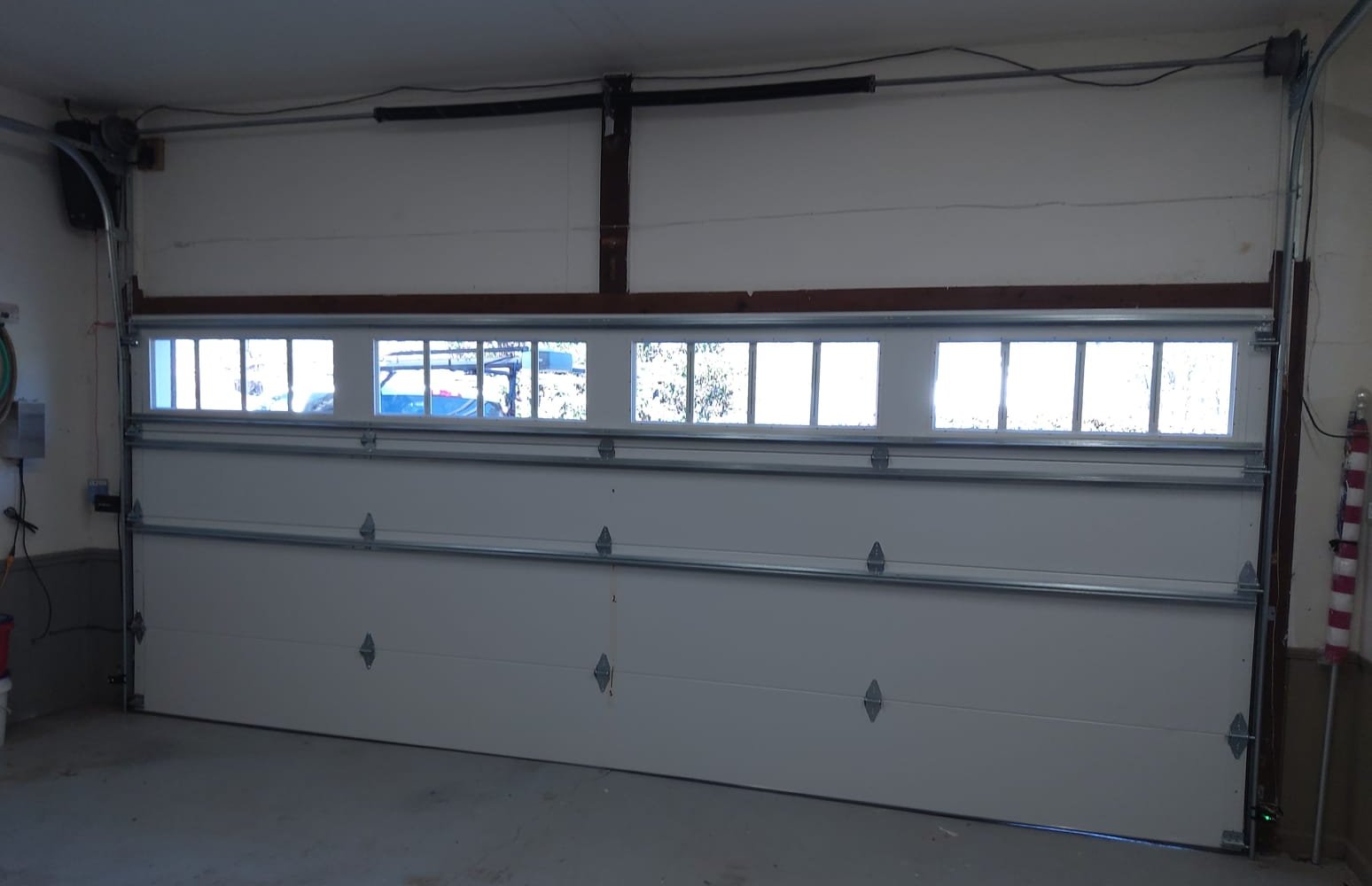
Call us if a roller has come out of the track, if the door is crooked or stuck partway, if a track is bent, or if the door scrapes, wobbles or grinds. We'll put an off-track door back in service and fix whatever pulled it out. We have repaired garage doors across Metro Atlanta since 1999, we're rated 4.9 on Google with Over 4,000 Five-Star Reviews, and our office is open seven days a week, 7 AM to 8 PM.
Call (678) 271-8918 or book a visit online. You'll get a written price before we start. If the door won't open at all and nothing looks out of place, start with our garage door won't open guide. If you need to open the door by hand while you wait, read how to open a garage door manually first, and don't do it if the door is off track.
Frequently asked questions
Is it safe to use a garage door that's off track?
No. Stop using it and unplug the opener. A door with rollers out of the track isn't guided, and if a cable or spring caused it, the door is held up unevenly. Clopay's owner instructions say not to operate a door with rollers out of the track.
Can I put my garage door back on track myself?
We don't recommend it. The door is heavy, the springs, cables and bottom brackets are under high tension, and a roller pushed back in comes out again unless the cause is fixed.
What causes a garage door to come off track?
A car hitting the door or track, a broken cable or spring letting one side drop, a bent track, worn rollers, loose track brackets, an obstruction, or an opener forcing a binding door.
Should I pull the emergency release if my door is off track?
Not if the door is open or partly open. The release disconnects the door from the opener, and if a spring or cable has failed, the door can fall. Chamberlain says to use the release only with the door fully closed if possible, and not to proceed if springs, cables or rollers look damaged.
Why is my garage door crooked?
A crooked door usually means one side has lost its lift: a cable has snapped or come off its drum, or a spring has broken. The tilt then drags rollers out of the track. Check from a distance for a loose cable or a gap in the spring, and call a technician.
Should I lubricate my garage door tracks?
No. Clean the tracks with a cloth instead. Lubricate the rollers and hinges as your door's manual says: Clopay says at the roller bearing, not the tire; Wayne Dalton says steel rollers and bearings, but not nylon rollers or the track.
How do I know if my garage door rollers are bad?
Wobbling or tilted rollers, cracked or chipped wheels, wheels that don't turn, and grinding from one spot all point to worn rollers. Replacing them before one breaks keeps the door in its tracks.