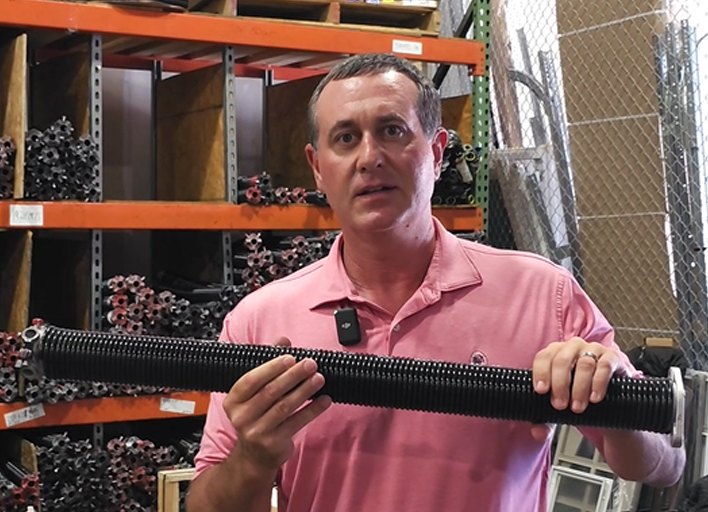
Torsion springs twist on a steel bar above the door; extension springs stretch along the tracks on each side. Both carry the door's weight so you and the opener don't have to. Torsion is the usual choice on two-car doors. Extension springs are common on single-car doors and need a safety cable through each spring.
Below: how each system works, how to tell which you have, what DASMA and the CPSC say about safety, how long springs last, when converting to torsion makes sense, and why spring work belongs to a technician.
Torsion vs extension springs at a glance
| Torsion springs | Extension springs | |
|---|---|---|
| Where they sit | On a steel shaft across the top of the door opening | Above the horizontal tracks on both sides, running toward the back of the garage |
| How they lift | The spring twists. As the door rises, it unwinds and turns cable drums that wind up the lift cables | The spring stretches. Lift cables run over pulleys, and the springs pull the door up as they contract |
| How many | One or more on the shaft | One per side, working as a pair |
| When they hold the most energy | Door closed | Door closed |
| If a spring breaks | It stays on the shaft | It needs a safety cable through its center to keep it from flying loose |
| Headroom needed (Clopay figures) | 12 inches standard | 10 inches standard |
| Common on | Two-car doors | Single-car doors |
| Our written warranty on new springs | 3 years | 5 years |
Both systems are safe when they're sized to the door, installed to the door maker's instructions and kept in good shape.
How torsion springs work
A torsion spring is a tightly wound coil of steel wire that slides over a steel shaft mounted just above the door. DASMA's counterbalance standard (ANSI/DASMA 103) defines a torsion spring system as one that lifts the door "through a torsion spring, a torsion shaft and cable drums, with lift cable attached."
Here's what happens each time the door moves:
- With the door closed, the springs are wound tight. One end of each spring is fixed to a bracket on the wall above the door; the other end is clamped to the shaft by a cast fitting called a winding cone.
- As the door opens, the springs unwind and turn the shaft. Cable drums at each end of the shaft wind up the lift cables, which are attached to the bottom corners of the door.
- As the door closes, its weight pulls the cables back off the drums, turning the shaft and winding the springs again for the next lift.
Torsion springs come in pairs of opposite winds: a left-wound spring and a right-wound spring, one on each side of the center bracket. Clopay's installation manual shows them this way, wound with solid steel winding bars to the number of turns printed on the door's hardware label. DASMA's data sheet on spring life lists winding a spring backwards, or with the wrong number of turns, among the installation mistakes that shorten its life or create a safety risk for the installer.

Each spring is made for a door of a certain weight. Springs carry an identification, like the marking on the spring above, which gives its size and wind ("RW" is right wound). DASMA tells installers to double-check spring identification against the door maker's instructions, because a spring that doesn't match the door's weight shortens its life and can make the door unsafe to operate by hand.
Enclosed torsion systems
Some doors use a variation on the same idea:
- Wayne Dalton TorqueMaster puts the springs inside a steel tube above the door. The U.S. Consumer Product Safety Commission commended Wayne-Dalton in 1998 for a system that "encases potentially dangerous garage door springs in a steel tube." Because the springs are out of sight, you can't look for a gap; a TorqueMaster door that suddenly feels heavy needs a technician to check it. Here's how TorqueMaster Plus is repaired.
- Clopay EZ-SET torsion springs are what Clopay supplies on two-car doors sold through retail chains, according to its FAQ. They are still torsion springs on a shaft above the door, and they still carry the door's full weight.
How extension springs work
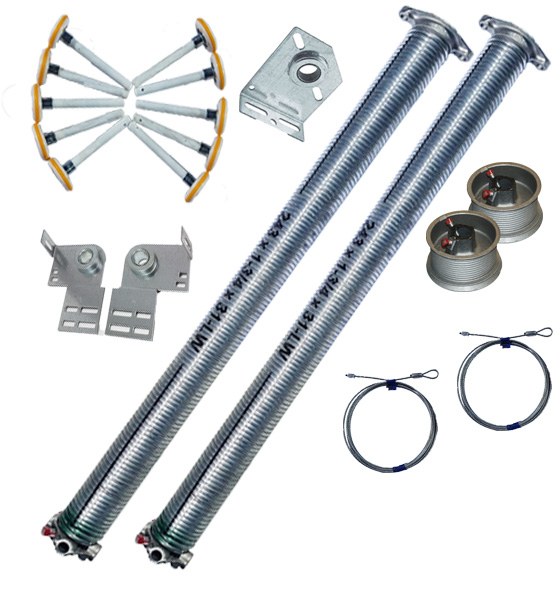
Extension springs are long, lighter springs that run above the horizontal tracks, one on each side of the door. DASMA's standard defines an extension spring system as one that lifts the door "by the stretching of an extension spring using pulleys with lift cables attached."
- With the door closed, the springs are stretched to their longest. DASMA's safety tips put it plainly: "When your garage door is down, extension springs are under high tension."
- As the door opens, the springs contract. A pulley on the front end of each spring pulls a lift cable, and the cable lifts the bottom corner of the door.
- As the door closes, its weight stretches the springs back out.
Each side has its own spring, pulley and cable, so the two sides have to be matched for the door to rise level.
How to tell which springs you have
You can tell from the floor, with the door closed. Don't touch anything; just look up.
| What you see | What you have |
|---|---|
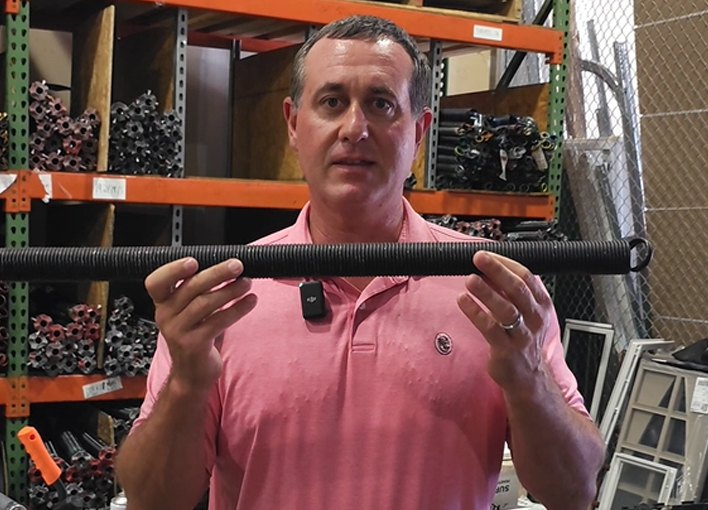
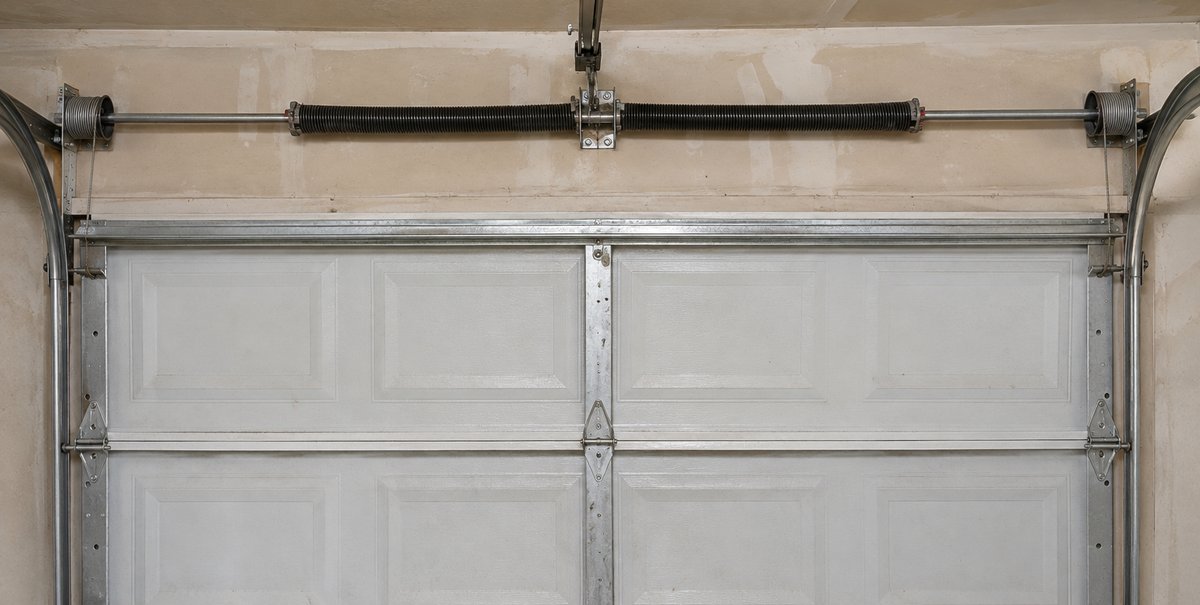
| A round bar across the wall just above the door, with one or two large coiled springs on it and a drum at each end | Torsion springs |
| A metal tube across the top of the door, with no springs visible and a winding unit at the ends | An enclosed torsion system such as Wayne Dalton TorqueMaster |
| Long springs running parallel to the ceiling tracks on both sides, with a pulley at the front end of each | Extension springs |
| Extension springs with no thin cable running through their centers | Extension springs missing their safety cables: call for an inspection |
Genie describes the same two layouts in its maintenance guide: torsion springs "mounted above the door opening on the torsion shaft," and extension springs as "thin, long springs that go along the horizontal part of the door tracks."
Safety: what DASMA and the CPSC say
Springs store enough energy to lift the whole door. Clopay's installation instructions say a large door can weigh up to 500 pounds without its springs, and a single-car door about 200.
DASMA, the Door and Access Systems Manufacturers Association, calls springs "arguably the most important and most dangerous part of your door." Its safety tips say:
- Springs wear out, and spring systems "should be repaired only by trained professionals."
- If your door has two springs, replace both, even if only one is broken.
- The bottom brackets are under extreme tension because they are connected to the springs. Many makers now use tamper-resistant hardware on them.
- Book a yearly visit from a trained door systems technician, and have an older door's springs inspected.
DASMA's counterbalance standard also requires that fasteners on parts under spring tension be red, with warning labels at the bottom corner brackets and the springs telling people not to remove them. If you see red bolts or screws, leave them alone.
The U.S. Consumer Product Safety Commission (CPSC) says a properly operating door is balanced: it stays in place when stopped partway open. Its garage door safety sheet warns that a severely unbalanced door "could unexpectedly crash to the floor," and that doors that aren't balanced, or that bind or stick, "should be serviced by a professional." The CPSC suggests checking the springs, hardware and fittings, and inspecting the door and opener every 30 days.
Containment cables for extension springs
If you have extension springs, this is the most important check in this guide.
A safety cable, also called a containment cable, is a thin steel cable that runs straight through the center of each extension spring and is fixed to the wall or ceiling at each end. DASMA says "If your garage door has extension springs, you need a safety cable that runs through the spring," because "A safety cable can keep that broken spring contained." Without one, a spring that snaps at full stretch can whip across the garage, into a car, a wall or a person.
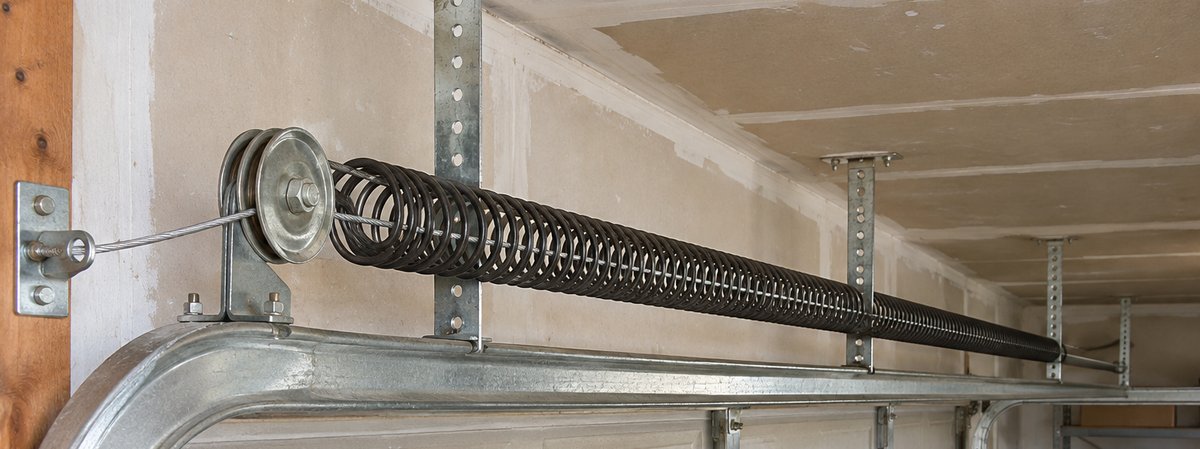
What the standards and the door makers say:
- DASMA's standard requires every counterbalance spring to be restrained, inside or outside the spring. For extension springs, the restraining device is tested by cycling it at 1.5 times the spring's rated cycles, then destroying the spring at full stretch, at its center and at each end loop. The device passes only if it keeps the spring, its end loops and the pulleys contained.
- Clopay's installation manual says extension spring doors "must never be operated without a properly installed spring containment cable."
- DASMA says that if you have extension springs and no safety cable, call your local dealer for a safety inspection.
How to check yours, from the floor: with the door closed, look along each spring for a straight steel cable through the middle of the coils, anchored at both ends. If there's no cable, it hangs slack outside the spring, or only one side has one, stop using the door until it's checked. Don't fit a cable yourself: with the door closed, the springs are at full tension.
If yours are missing, adding them is a small job for a technician when the door is open and the springs are relaxed, and we check for them on every extension spring door we service.
How long springs last: cycle ratings
Springs are rated in cycles. One cycle is the door opening once and closing once.
- 10,000 cycles is the baseline. The 2004 edition of DASMA's standard for sectional doors (ANSI/DASMA 102) set a design minimum of 10,000 cycles for the door system. Standard residential torsion and extension springs are rated around that figure.
- A residential door is defined by use: the same standard describes it as a door normally operated less than 1,500 cycles a year.
- High-cycle springs use more steel, so each cycle stresses the wire less and the rated life is longer. Ask about them if the garage is your main way in and out.
In years, it depends on your household. At four cycles a day, 10,000 cycles is just under seven years. At eight a day, it's about three and a half. Our guide to why a garage door feels heavy walks through the balance test that shows when springs are wearing out.
DASMA's data sheet on spring life lists what shortens it, for both types:
- Rust. It reduces the spring wire's strength and starts fatigue cracks. In Georgia's humid summers, keeping the door closed when you're not using it keeps the springs out of the damp; DASMA recommends that for doors in climates with heat, cold or frequent rain.
- The wrong spring for the door, or the wrong number of turns on a torsion spring.
- A door heavier than the springs were sized for, after paint, insulation or other added parts.
- No lubrication. DASMA says regular lubrication, as the door maker's instructions require, helps a spring reach its full life. Genie suggests lubricating torsion springs to reduce friction between the coils.
For cold-weather care, from springs to weather seals, see our winter garage door guide.
Torsion or extension: which is right for your door?
Neither is right for every garage. These are the things a technician weighs:
- Door size and weight. Clopay's FAQ says retail single-car doors (10 feet wide and under) generally come with extension springs, and two-car doors with EZ-SET torsion springs. Clopay adds that professional dealers choose the spring to suit the site.
- Headroom, the space between the top of the door opening and the ceiling. Clopay lists a minimum of 10 inches for extension springs and 12 inches for torsion springs, before adding room for an opener. Low-headroom track kits bring both down to about 4½ inches, with different hardware.
- How the door fails. A broken torsion spring stays on its shaft. A broken extension spring is held only by its safety cable.
- Balance. A torsion system lifts both sides of the door from one shaft. Extension springs lift each side separately, so the two springs and cables have to stay matched.
- What's already there. If your extension spring door is balanced, has safety cables and runs well, there's no safety reason to replace a working system. Replace the springs as a pair when they wear out.
Converting extension springs to torsion
If you have an older extension spring door, converting it to torsion springs is an option, and the natural time to ask is when the springs have broken anyway or the opener is being replaced. It is a real job, not a spring swap. Here's what's involved:
- Check the headroom. The torsion shaft needs more room above the door than extension springs (12 inches against 10 in Clopay's standard figures), plus space for the opener.
- Check the wall above the door. The torsion springs anchor to a wooden pad on the header. Clopay's installation manual calls for a pad of at least 2 x 6 by 12 inches, lag-screwed into wood of Grade 2 or better southern yellow pine. Older or patched framing has to be fixed first.
- Remove the extension system safely, with the door open and the springs relaxed: springs, pulleys, safety cables and lift cables.
- Weigh the door and size the springs. DASMA notes that a trained technician can weigh a door on a scale once its counterbalance is disabled. The new torsion springs must match that weight and the door's height.
- Install the torsion assembly: center bracket and anchor pad, shaft, end bearing plates, cable drums, new lift cables and the springs.
- Wind the springs to the specified number of turns, in the right direction, with solid steel winding bars.
- Balance the door so it stays put when let go halfway up, then reconnect the opener and set its force and travel.
Some doors aren't good candidates: very low ceilings, a header that can't take an anchor pad, or an old single-car door where a new door makes more sense. Our garage door buying guide covers that choice. Either way, you get a written price for each option before any work starts.
Signs of a broken or worn spring
| What you notice | What it usually means | Spring type |
|---|---|---|
| A loud bang from the garage | A spring has snapped | Either |
| A clear gap between two sections of coil on the torsion spring | A broken torsion spring | Torsion |
| A spring hanging from its safety cable, or lying on the floor | A broken extension spring | Extension |
| A spring that looks stretched out, with gaps between its coils when the door is open | A worn extension spring that has lost its pull | Extension |
| The door is suddenly very heavy or won't lift by hand | A broken spring, or both springs worn out | Either |
| The opener lifts the door a few inches, then stops or reverses | The opener is sensing a door that's too heavy | Either |
| The opener hums briefly and the door doesn't move | Chamberlain lists broken springs as a cause | Either |
| Slack lift cables, or a door hanging crooked | A broken spring on one side, or a cable off its drum or pulley | Either |
| The door drifts down from halfway in the balance test | Springs losing tension | Either |
Genie's maintenance guide gives the same list to look for: "stretched or gapped springs, wear, slipping, cracking, or fractures."
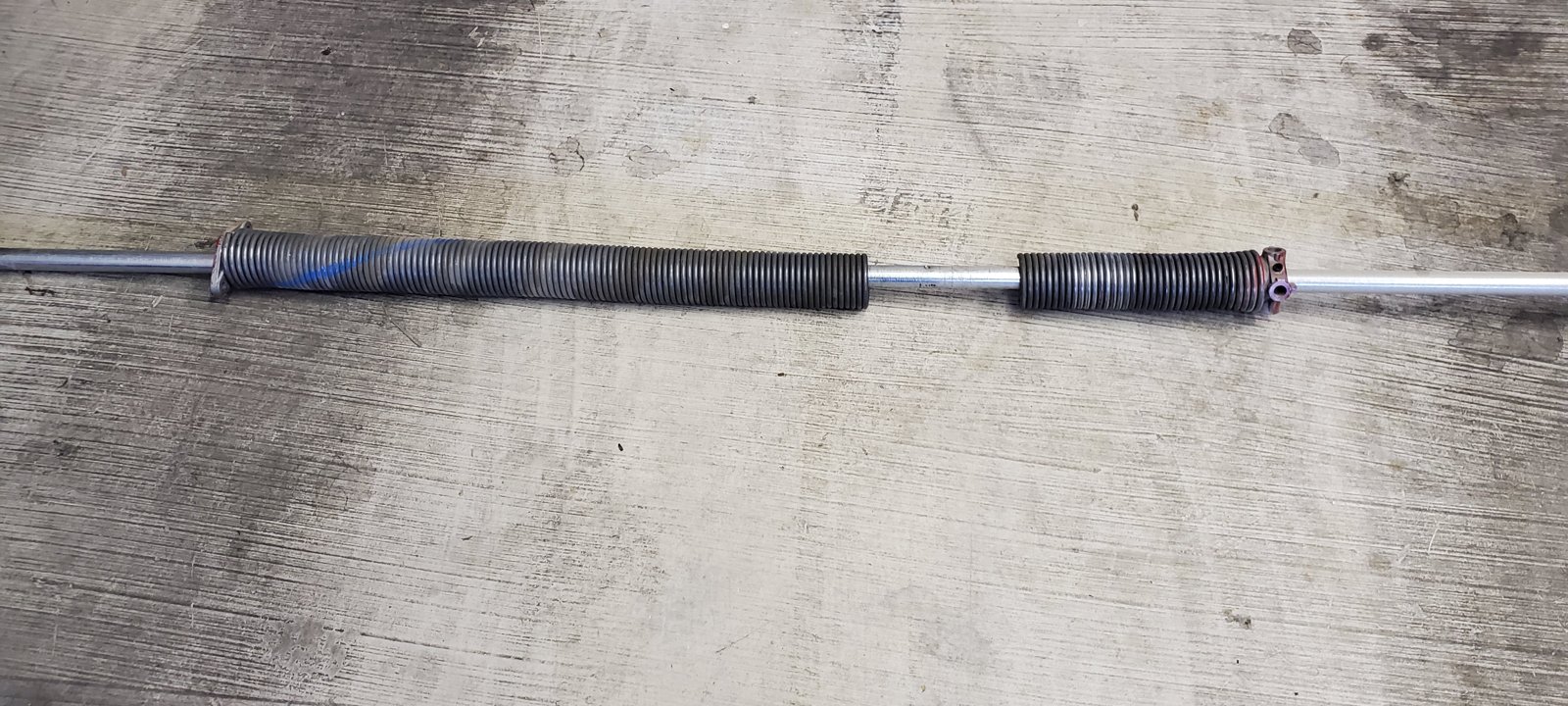
If you think a spring has broken:
- Don't use the opener. Lifting a door with a broken spring wears out its drive gear; see garage door opener making noise but not opening.
- Don't lift the door by hand, and keep people and pets out from under it.
- If the door is closed, leave it closed. If it's stuck open, don't pull the emergency release; with a broken spring the door can drop. Our guide to opening a garage door manually explains when that's safe and when it isn't.
- If a cable has come off, read what to do when your garage door cables are off track.
Why spring repair is a technician's job
Every source we checked says the same thing:
- Clopay: "Unwinding standard torsion springs requires specific tools and training." Its manual warns that removing a torsion spring assembly without training or tools can release the spring forces without control and cause serious or fatal injury, and it recommends a professional for spring replacement.
- Genie: never adjust torsion springs or any fasteners painted red.
- Chamberlain: for broken springs, "Contact a trained door technician."
- DASMA and the CPSC: spring systems, and doors that aren't balanced, are for trained professionals.
A torsion spring is wound a quarter turn at a time with steel bars against the full weight of the door; a slip sends the bar spinning. Extension springs are hooked and adjusted under tension. And the wrong spring, wind or number of turns leaves the door unbalanced, which wears out cables, drums and the opener.
DIY or technician: who does what
| Job | You | Technician |
|---|---|---|
| Look at the springs and identify which type you have (look, don't touch) | Yes | |
| Check that each extension spring has a safety cable through it | Yes | |
| Run the balance test, starting with the door closed | Yes | |
| Lubricate the springs as your door maker's manual says | Yes | |
| Keep the door closed when you're not using it | Yes | |
| Replace a broken or worn spring | Yes | |
| Adjust spring tension | Yes | |
| Add or replace extension spring safety cables | Yes | |
| Replace lift cables, drums or pulleys | Yes | |
| Touch bottom brackets or anything with red fasteners | Yes | |
| Convert extension springs to torsion | Yes |
What we do on a spring visit
- Inspect the whole counterbalance system: springs, cables, drums or pulleys, bottom brackets, safety cables, rollers and tracks.
- Identify the springs and size the new ones to your door's weight and height. On doors with two springs, we replace both, as DASMA and Clopay advise.
- Install and set the springs to the door maker's specification, and add safety cables to extension springs that don't have them.
- Balance the door, then test it by hand: let go halfway up, and it stays put.
- Check the opener: reconnect it, set its force and travel, and run the safety reverse test.
New springs from us come with our written warranty: 3 years on torsion springs and 5 years on extension springs (see the warranty). You get a written price before any work starts. Read more about our garage door spring repair and replacement, and keep them going longer with a yearly garage door tune-up and the checks in our maintenance checklist.
When to call us
Call if you heard a bang, see a gap in a spring, find an extension spring without a safety cable, or the door has become heavy, crooked or slow to lift. We've repaired and replaced torsion and extension springs across Metro Atlanta since 1999. We're rated 4.9 on Google with Over 4,000 Five-Star Reviews, and our office is open seven days a week, 7 AM to 8 PM.
Call (678) 271-8918 or book a visit online. If the door is stuck open and won't close, see emergency garage door repair.
Frequently asked questions
What is the difference between torsion and extension springs?
Torsion springs sit on a shaft above the door and twist, turning cable drums. Extension springs run above the tracks on each side and stretch, pulling cables over pulleys. Both hold the most tension with the door closed.
Are torsion springs better than extension springs?
Torsion springs are the usual choice for two-car doors: they lift both sides from one shaft, and a broken spring stays on the shaft. Extension springs work well on many single-car doors and need less headroom, as long as each has a safety cable. The right choice depends on the door's weight and your garage's headroom.
How do I know if I have torsion or extension springs?
Close the door and look up. Coiled springs on a bar above the door are torsion springs. Long springs along the ceiling tracks on both sides, each with a pulley at the front, are extension springs.
Do extension springs need safety cables?
Yes. DASMA says extension spring doors need a safety cable through each spring, fixed at both ends, so a broken spring stays contained. Clopay says extension spring doors must never be operated without one. If yours don't have them, call for an inspection and don't use the door until they're fitted.
Can you convert extension springs to torsion springs?
Yes, on most doors with enough headroom and a solid wall above the opening. It means removing the extension springs, pulleys and cables, then installing a torsion shaft, anchor pad, drums, new cables and springs sized to the door. We'll check your garage and give you a written price first.
How long do garage door springs last?
Standard springs are rated around 10,000 cycles (one opening and closing each). That's just under seven years at four cycles a day, about three and a half at eight. High-cycle springs last longer.
Can I replace garage door springs myself?
We don't recommend it. Clopay, Genie, Chamberlain and DASMA all say spring work belongs to a trained technician because of the stored tension. You can look at the springs, check for safety cables and run the balance test.