Repair the opener when one part has failed on a unit that still reverses safely and has parts available. Replace it when it has no photo eyes, fails the reverse test, was made before 1993, or needs several major parts at once. And before you decide anything, check that the door itself isn't the problem.
This guide gives you the test that rules out the door, the faults that are worth fixing, the signs an opener is done, and what a new one adds.
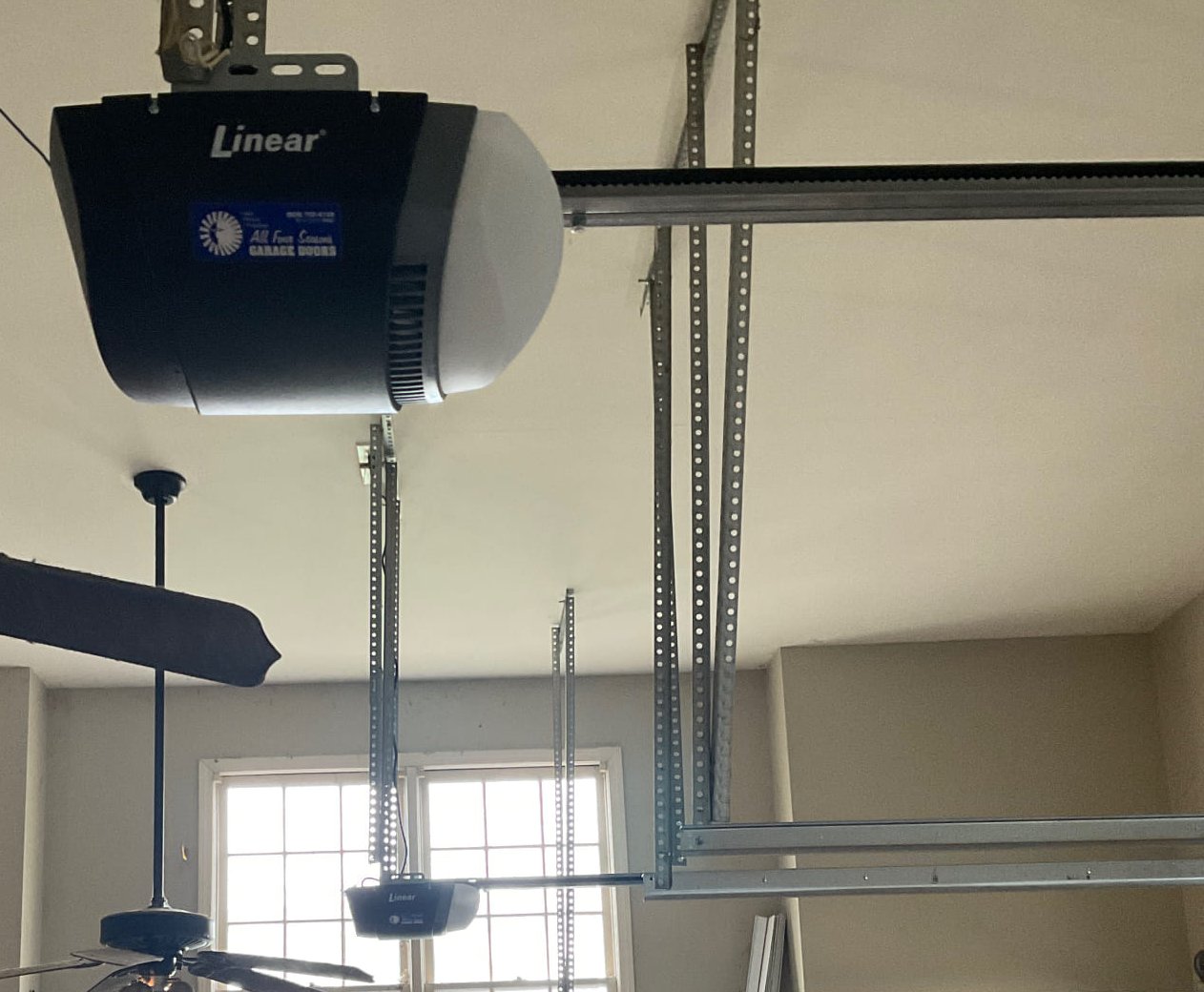
The short answer, by situation
| What's going on | Usually | Why |
|---|---|---|
| Motor runs, chain or belt doesn't move, opener otherwise sound | Repair | A stripped drive gear and sprocket are a parts kit |
| Remote or keypad stopped, wall button works | Repair | Usually a battery, programming or a new remote |
| Door reverses or won't close, sensor light off or blinking | Repair | Sensor alignment, wiring or a new pair of sensors |
| Door stops short or reverses for no reason | Repair (adjust) | Travel limits and force settings, or the RPM sensor |
| Opener dead, no response, lights flash a board fault | Repair or replace | A logic board is a part; on an older unit, weigh it against a new opener |
| Motor itself has failed | Usually replace | The motor is the opener; the rest of the unit is just as old |
| No photo eyes, or the door fails the reverse test after adjustment | Replace | The CPSC says to replace openers that don't reverse |
| Made before 1993 | Replace | Chamberlain no longer sells parts or supports them |
| Door feels heavy, drifts or slams when you lift it by hand | Fix the door first | A new opener on an unbalanced door wears out the same way |
The rest of this page explains each line.
Before you decide: rule out the door
The springs carry a garage door's weight, not the opener. The opener only guides a door that is already balanced. When a spring weakens or breaks, the opener feels the extra weight on every trip, and that's when gears strip, motors strain and doors reverse halfway down. Chamberlain, the maker of LiftMaster openers, lists an out-of-balance door as the first thing to check when an opener won't travel fully.
So test the door before you spend money on the opener:
- Close the door all the way. Never pull the release with the door open. If a spring is weak or broken, the door can drop.
- Pull the red emergency release cord to disconnect the door from the opener.
- Lift the door by hand to about halfway and let go. A balanced door lifts with little effort and stays put, or drifts slowly.
- If it feels heavy, drops, shoots up, or binds and sticks, stop. The door needs service. The U.S. Consumer Product Safety Commission (CPSC) says doors that aren't balanced, or that bind or stick, should be serviced by a professional.
- If the door moves freely, close it, reconnect the trolley (run the opener and let it latch, or follow your manual) and carry on below.
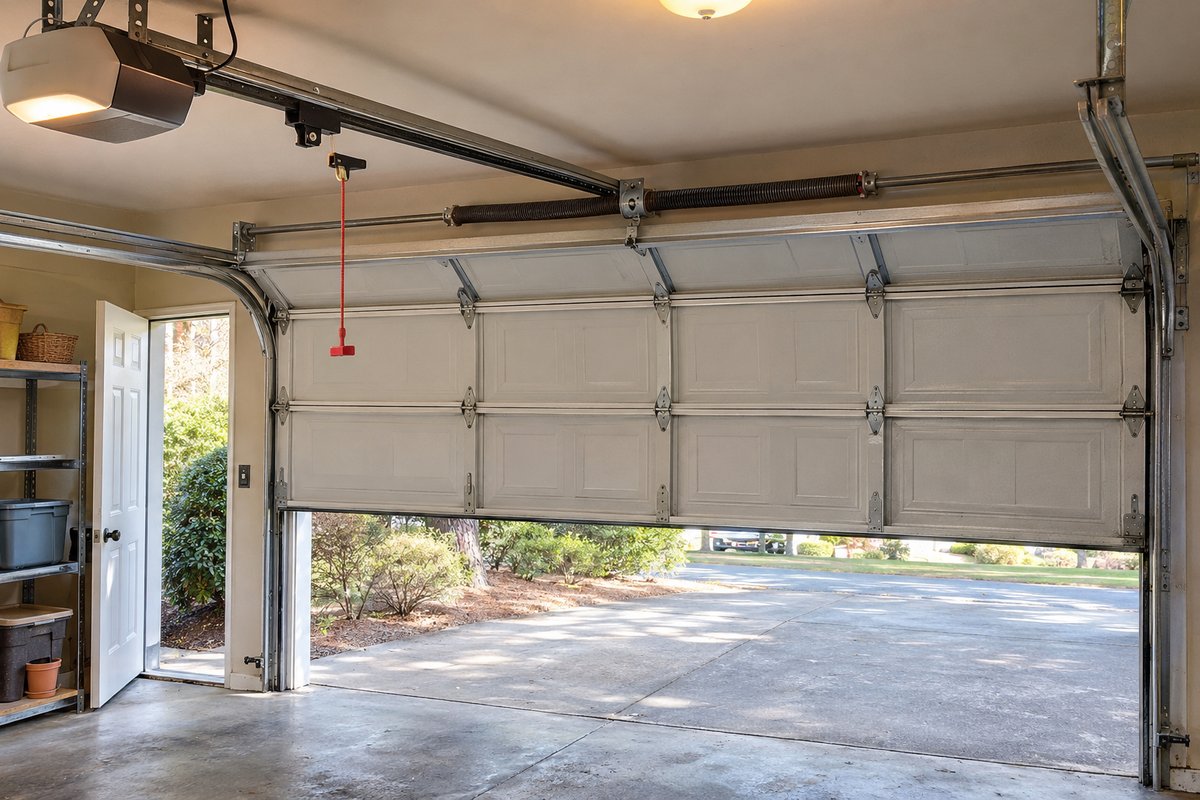
Don't try to tune around a heavy door with the opener's settings. Chamberlain's own programming guide is blunt about it: never use force adjustments to compensate for a binding or sticking door. Too much force also interferes with the safety reverse. The trade association for door makers, DASMA, adds that springs that don't match the door's weight shorten the life of the opener as well as the door.
That's why a new opener isn't the fix for a heavy door. It meets the same weight on its first day and starts wearing the same way. Our guide on why a garage door feels heavy walks through the causes, and garage door springs explains the repair. Spring work is for a technician, because of the stored tension.
Find your opener's age and model
Two facts settle most repair-or-replace calls: how old the opener is and whether parts are still made for it.
- The model number is on a label on the motor unit, usually on the side or back. It tells a technician which parts fit and which diagnostic chart applies.
- The Learn button color dates most LiftMaster, Chamberlain and Craftsman openers. Chamberlain gives these years for the button beside the antenna wire:
| Learn button | Years made |
|---|---|
| White | 2025 to present |
| Yellow | 2011 to 2022 |
| Purple | 2005 to 2014 |
| Red or orange | 1997 to 2005 |
| Green | 1994 to 1997 |
| No Learn button, a row of small switches (DIP switches) | Older fixed-code openers |
If you can't find either, a photo of the motor unit and its label is enough for us to tell you what you have. Our guide to programming a garage door remote shows where the Learn button sits on each brand.
Faults that are worth repairing
These are the common opener failures, and most are single parts. On an opener that reverses properly and still has parts available, repairing them is the sensible spend.
| Fault | What you notice | The repair |
|---|---|---|
| Stripped drive gear and sprocket | Motor runs, chain or belt doesn't move, white plastic dust under the opener | Gear and sprocket kit inside the motor unit |
| Logic board | Opener doesn't respond, behaves erratically, or flashes a board fault code | Replace the board, then reprogram travel and force |
| Safety sensors (photo eyes) | Door reverses or won't close; a sensor light is off or blinking | Clean, align, repair wiring or replace the pair |
| Remotes and keypads | Wall button works, remote or keypad doesn't | Battery, reprogramming or a new remote |
| Travel limits and force | Door stops short, doesn't close fully, or reverses for no reason | Reprogram per the manual, then test the reverse |
| RPM sensor | Door moves a few inches and stops or reverses | Clean or replace the sensor |
| Chain, belt or trolley | Chain slaps or has come off; trolley won't latch | Tension, reattach or replace the part |
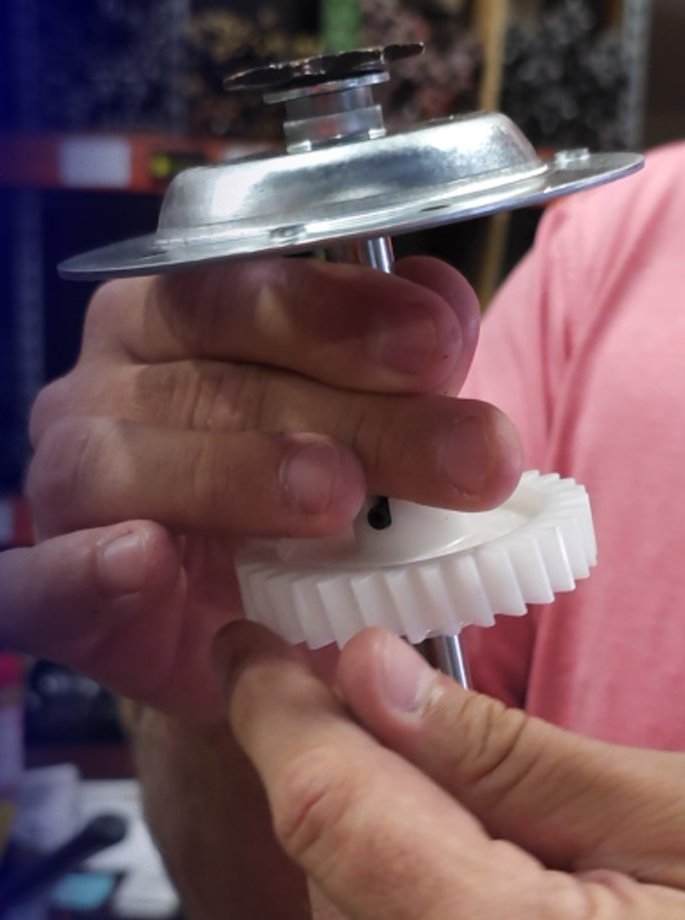
Drive gear and sprocket
On most chain and belt openers from LiftMaster, Chamberlain and Craftsman, the motor turns a white nylon gear. It is the part designed to wear, and when its teeth round off, the motor runs and nothing moves. The gear and sprocket come as a kit. It's a reasonable repair, but only after the door has passed the balance test above; a heavy door strips the new gear the same way. Our post on an opener making noise but not opening covers the signs and the two-minute test in detail.
Logic board
The logic board is the opener's control circuit: it reads the remotes, the sensors and the limits, and switches the motor. Chamberlain's troubleshooting guide treats the board as the last suspect, after the door, the settings and the RPM sensor. Boards are sold as replacement parts for supported models. After a board swap, the travel limits and force have to be programmed again and the reverse tested.
Safety sensors
The photo eyes are the two small sensors near the floor on each side of the door. A misaligned, dirty or unplugged sensor is the most common reason a door won't close, and it is usually a fix, not a replacement. Our garage door sensor problems guide walks through the lights, alignment and wiring. A sensor problem is not a reason to replace the opener.
Remotes and keypads
When the wall button works and a remote doesn't, the opener is fine. Start with the battery, then reprogram. If a remote is lost or broken, Chamberlain still lists current remotes for older Learn button colors, and universal remotes cover many other brands. See how to program a garage door opener remote.
Travel limits and force
The travel limits tell the opener where open and closed are. Force sets how hard it pushes before it decides something is in the way. When either is off, the door stops short, leaves a gap at the floor, or reverses for no reason. Newer openers set force automatically after you program the travel. Chamberlain warns that incorrect limits and excess force both interfere with the safety reverse, so after any adjustment, run the reverse test: the door must reverse when it touches a 2x4 laid flat on the floor.
RPM sensor, chain, belt and trolley
The RPM sensor counts motor turns so the opener knows where the door is; Chamberlain says it is rarely the cause, but a dirty or loose one stops the door a few inches into travel. A chain that has jumped the sprocket can often be reattached and tensioned, as our post on a chain that came off the opener explains. A trolley that won't latch has a worn catch, which is a part swap.
Signs it's time to replace the opener
It has no photo eyes, or it fails the reverse test
This is the one sign that settles the question on its own. The CPSC requires every opener made or imported for sale in the United States after January 1, 1991 to have a reversing system, and in 1993 it added a second, external protection: photo eyes, a door edge sensor or an equivalent device. The UL 325 safety standard requires at least two of these protections on residential openers.
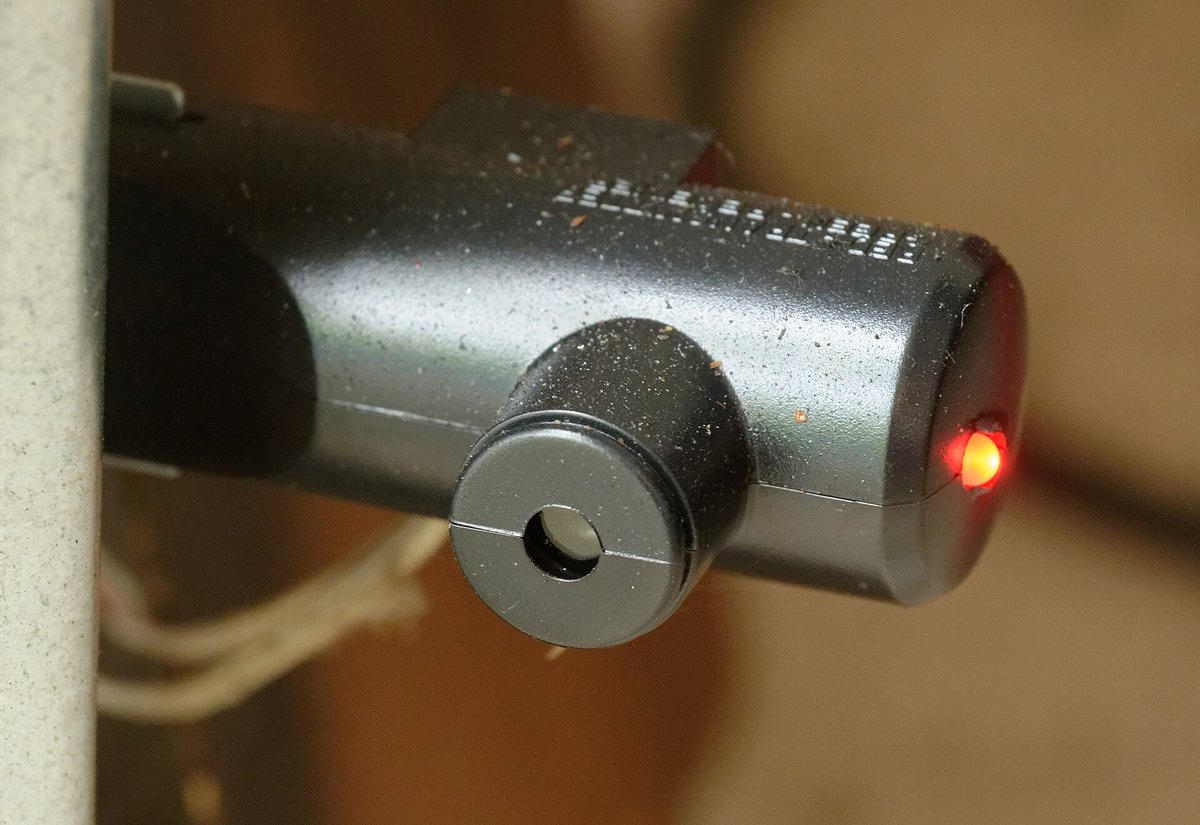
Photo: Jud McCranie, Wikimedia Commons, CC BY-SA 4.0.
If there are no sensors near the floor, the opener predates those rules. Genie notes that openers over 20 years old can lack safety photo eyes. The CPSC's advice to homeowners is direct: replace older openers with reversing openers that meet the federal standard.
Test yours every month, as the CPSC recommends. Lay a 2x4 flat on the floor in the door's path and close the door; it should reverse when it touches the board. Then pass something through the sensor beam while the door closes; it should reverse again. If it doesn't, stop using the opener until it has been adjusted per the manual, repaired or replaced. If adjustment doesn't make it reverse, replace it.
It was made before 1993
Chamberlain and LiftMaster recommend replacing openers made before 1993, including those with DIP switches. They stopped repair support for them in 2008, and say they no longer provide technical support or sell replacement parts for them. Most of these openers lack the external entrapment protection the 1993 rule added.
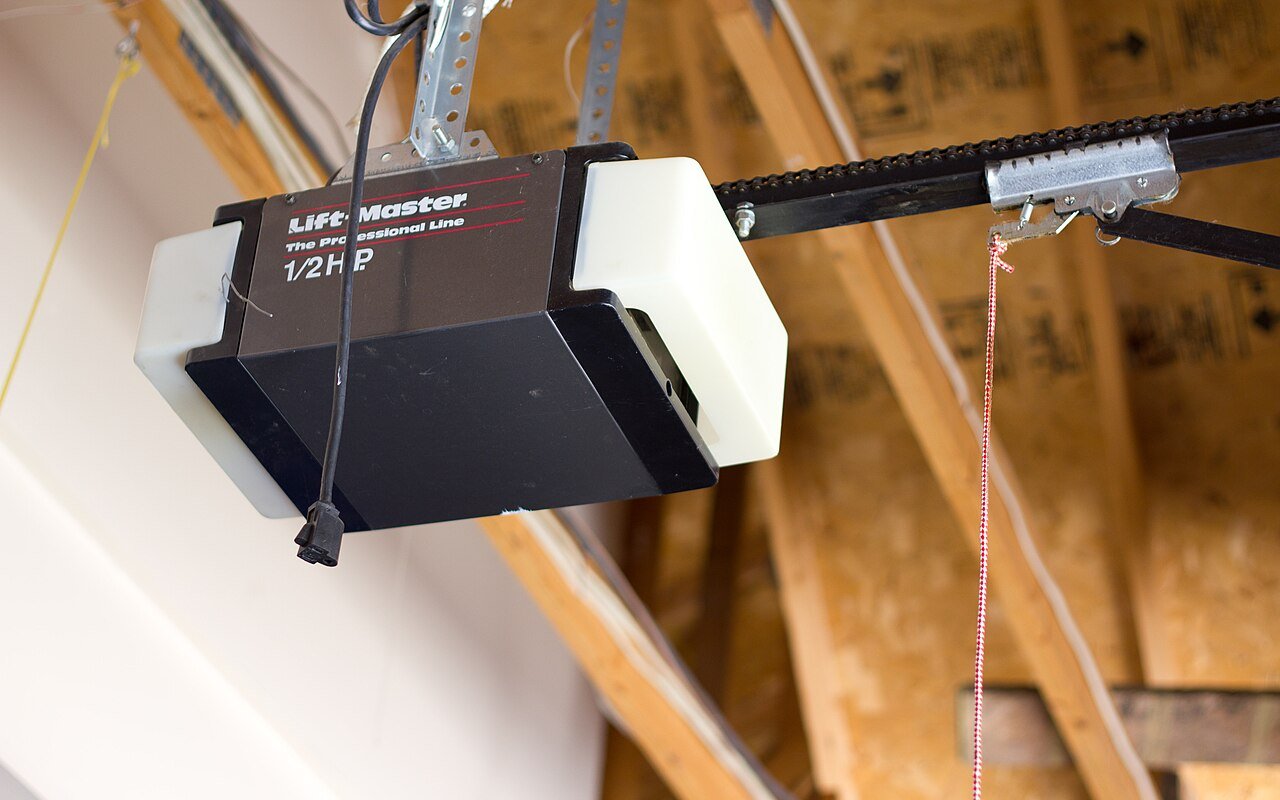
Photo: Dave Dugdale, CC BY-SA 2.0, via Wikimedia Commons.
Parts are no longer made
Even after 1993, a model reaches a point where the board, gear or sensors for it are no longer made. When the part you need is discontinued, a used or generic substitute is a gamble on an old unit. That's usually the point to replace. We'll tell you whether the part is available before you decide.
The motor itself has failed
A burned-out motor is different from a stripped gear. Motors are sold as parts for some models, but the motor is the heart of the opener. Replacing it on an older unit means paying for the most expensive part while keeping the same board, sensors, radio and rail. On an older opener, a new unit usually makes more sense. Before calling it a dead motor, though, rule out the cheaper suspects: a stripped gear, a locked door and a heavy door all make a motor hum without moving anything.
Several repairs at once, or the same repair again
One part on a sound opener is a repair. A gear plus a board plus sensors on the same unit is most of a new opener. And if the same gear strips again within a short time, the cause is usually the door, not the opener (see the balance test above).
It can't do what you need
Older fixed-code openers with DIP switches can't use rolling-code remotes, and Chamberlain's myQ Smart Garage Control, the add-on that gives an older opener app control, will not operate an opener with DIP switches. If you want app control, alerts or battery backup and your opener can't take them, that's a fair reason to replace a working unit.
What about age in years? No opener maker we checked publishes a single lifespan figure, and the same model lasts very different lengths of time in different garages. Door balance, how often the door runs and how well the opener was installed matter more than the calendar. Our garage door lifespan guide covers what the industry studies say and what shortens an opener's life.
What a new opener adds
If you're replacing, here is what a current opener gives you that an older one often doesn't. For the differences between chain, belt, screw and wall-mount drives, see our guide to the types of garage door openers; this list covers what changes when you upgrade.
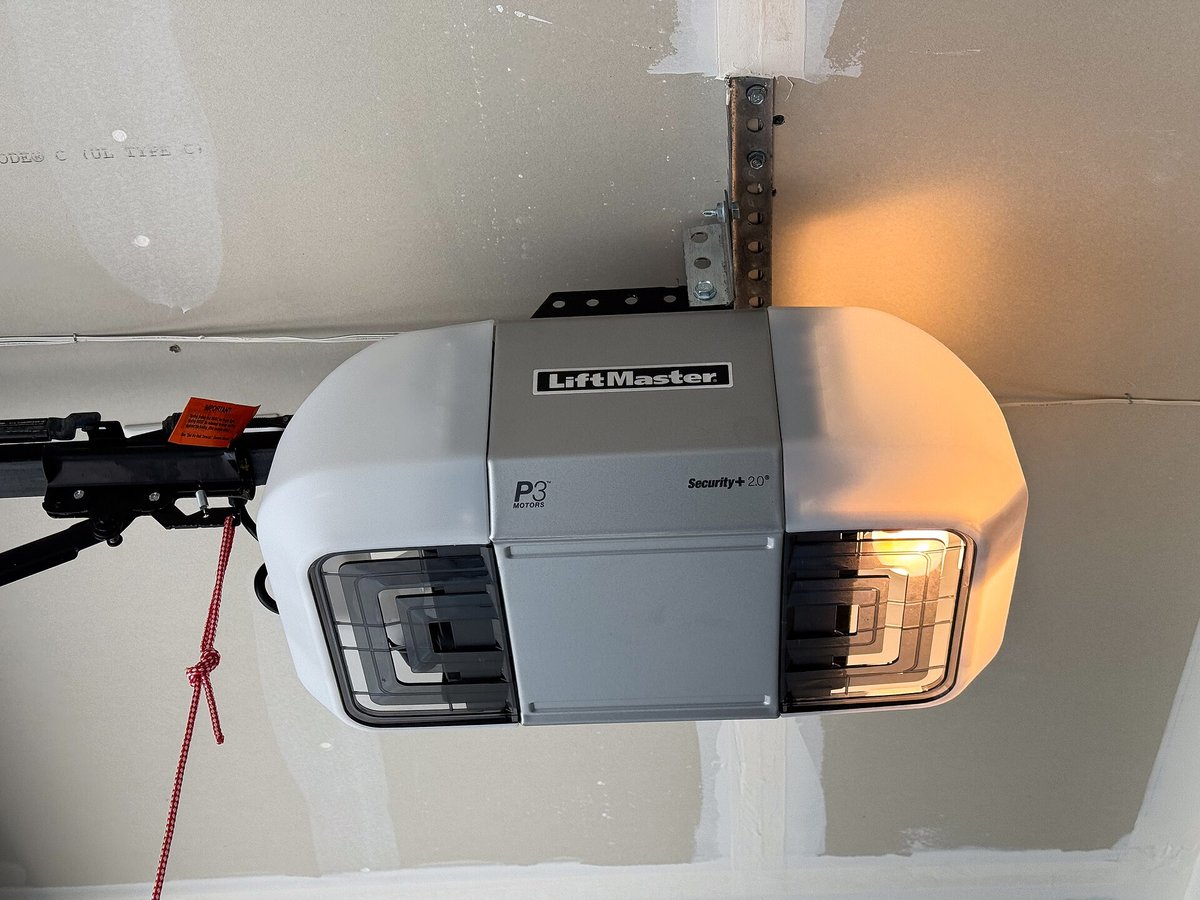
Photo: Tony Webster, Wikimedia Commons, CC BY 2.0.
- Photo eyes and automatic reverse that meet the federal rule. Every opener sold in the U.S. has them, so replacing a pre-1993 unit brings the door up to the standard.
- Rolling-code remotes. The code changes each time you press the button, unlike the fixed codes set by DIP switches. LiftMaster's current openers use its Security+ system.
- myQ app control. Newer LiftMaster openers have myQ built in. LiftMaster lists what it does: see whether the door is open or closed, open or close it from your phone, and get alerts when it opens, closes or is left open. Before a door closes from the app, the opener flashes and beeps for eight seconds so anyone in the garage can step clear.
- Battery backup. On DC-motor models, a backup battery runs the opener for a limited number of cycles in a power outage, so you can get the car out without lifting the door by hand. Chamberlain says the battery lasts about 1 to 2 years with normal use, so it's a part you replace.
- A quieter drive. Genie, which makes all three common drive types, calls belt drive openers the quietest, and says newer chain drives with DC motors are much quieter than older ones. A belt drive is the usual choice when a bedroom or living room sits over or beside the garage.
- A wall-mount option. A wall-mount (jackshaft) opener sits beside the door and turns the torsion bar, so there's no rail on the ceiling. Genie says it frees at least 48 inches of ceiling space, and that it is the most expensive type. It needs a torsion spring system, so not every door can take one.
One honest note on app control: you don't need a new opener for it. Chamberlain says the myQ Smart Garage Control works with most openers made after 1993 that have safety sensors and a Learn or Program button, on sectional doors. If your opener is sound and the app is the only thing you want, the add-on is the cheaper route.
We are an authorized LiftMaster dealer. LiftMaster openers are sold through dealers for professional installation, and we install and repair them across Metro Atlanta. See new garage door openers and installation for the models we fit.
Repair or replace: a six-question checklist
Answer these in order. The first "replace" answer settles it.
- Does the door pass the balance test? If not, fix the door first, then decide about the opener.
- Does the opener have photo eyes, and does it pass the reverse test? If not, and adjustment doesn't fix it: replace.
- Was it made before 1993, or does it have DIP switches? If so: replace.
- Is the failed part still made for this model? If not: replace.
- Is it one part, or several? One part on a sound opener: repair. The motor, or several major parts at once: usually replace.
- Does it do what you need? If you want features it can't take, and an add-on won't do: replace.
If you get to the end with "repair" on every line, repair it.
What you can check yourself, and what needs a technician
| You can do it | Leave it to a technician |
|---|---|
| The balance test (door closed first, release pulled, lift by hand) | Adjusting or replacing springs and cables |
| The monthly reverse test with a 2x4 and the photo-eye test | Replacing the drive gear, logic board or motor |
| Cleaning and aligning the photo eyes | Rewiring sensors run through walls or ceilings |
| Changing remote and keypad batteries, reprogramming remotes | Installing a new opener and setting it to the door |
| Reading the Learn button color and the model label | Any repair on a door that's heavy, crooked or off its track |
| Reprogramming travel limits, following the manual, then testing the reverse | Taking the cover off a motor unit with the power connected (never) |
Always unplug the opener before you touch the rail, chain, belt or anything inside the cover. The wall button and remotes can start it while your hands are on it. A yearly tune-up checks the balance, springs, cables, rollers and opener settings in one visit, and our garage door maintenance checklist has the monthly tests.
How we help you decide
When we look at an opener, we test the door first, then the opener, and tell you what failed and why. If both options make sense, you get both prices in writing before any work starts, and the choice is yours.
- Repairing an opener, especially a LiftMaster or Chamberlain: see LiftMaster garage door opener repair in Atlanta.
- Replacing it: see garage door openers and installation.
We have repaired and installed garage doors and openers across Metro Atlanta since 1999. We're rated 4.9 on Google with Over 4,000 Five-Star Reviews, and our office is open seven days a week, 7 AM to 8 PM.
Call (678) 271-8918 or book a visit online.
Frequently asked questions
Is it worth repairing an old garage door opener?
Yes, if it has photo eyes, passes the reverse test and the failed part is still made. A drive gear, sensor or board on a sound opener is a reasonable repair. If it was made before 1993, doesn't reverse, or needs the motor or several major parts, replacing it is usually the better spend.
How do I know if my garage door opener needs to be replaced?
Replace it if there are no photo eyes near the floor, if it fails the 2x4 reverse test after adjustment, if it was made before 1993 or has DIP switches, if parts for it are no longer made, or if the motor has failed on an older unit.
Can I replace just the garage door motor?
On some models the motor is sold as a part. On an older opener it rarely makes sense, because you pay for the most expensive part and keep the old board, sensors and rail. First make sure it really is the motor: a stripped gear, a locked door or a heavy door can all make a working motor hum without moving.
Will a new opener fix a garage door that feels heavy?
No. The springs carry the door's weight, not the opener. A new opener on a heavy door strains and wears the same way the old one did. Have the springs and balance fixed first; often the old opener works fine afterward.
Do I need a new opener to get myQ or phone control?
Not always. Chamberlain says its myQ Smart Garage Control works with most openers made after 1993 that have safety sensors, on sectional doors. It won't operate openers with DIP switches. Newer LiftMaster openers have myQ built in.
How long does a garage door opener last?
It depends far more on the door than on the brand. An opener lifting a well-balanced door lasts longer than one dragging a heavy door with weak springs. Openers made before 1993, or any opener that fails the monthly reverse test, should be replaced whatever their age.
Is it cheaper to repair or replace a garage door opener?
A single-part repair costs less than a new opener. The comparison changes when the opener needs several parts, the motor, or a part that's no longer made. We give you both prices in writing so you can compare.