How long do garage doors last? Lifespans for every part
Most garage doors last 15 to 30 years, depending on the material, according to the door maker Amarr. The moving parts wear out sooner: standard springs are rated for about 10,000 cycles, and openers usually last 10 to 15 years.
So "how long will my garage door last" is really two questions. The door itself, the panels you see from the street, is a long-term part of the house. The springs, opener, rollers, cables and seals that move it are wear parts, and most doors go through several sets of them. This guide gives the expected life of each one, what shortens it in a Georgia climate, and how to tell a part that needs replacing from a door that does.
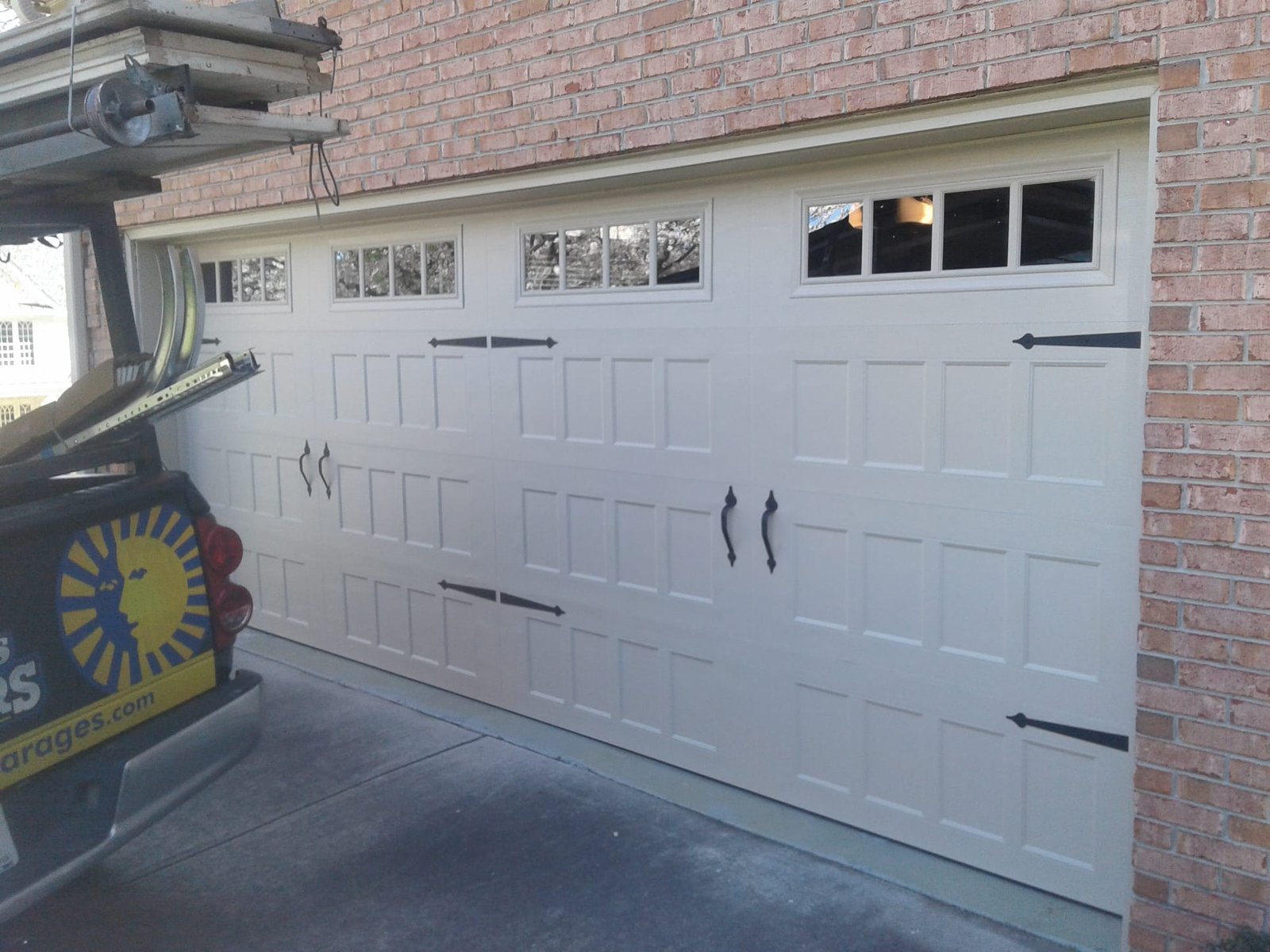
Garage door lifespan at a glance
Every figure here comes from a manufacturer, a trade association or a federal survey. Where nobody publishes a number, we say so.
| Part | Expected life | Measured in | Source |
|---|---|---|---|
| Steel door, single layer | About 15 to 20 years | Years | Amarr |
| Steel door, triple layer (insulated) | About 25 to 30 years | Years | Amarr |
| Aluminum door | Up to 30 years with proper care | Years | Amarr |
| Wood door | No published figure; depends on keeping the finish up | Years | Amarr, Clopay |
| Garage doors in general (2006 homeowner survey) | 10 to 15 years | Years | NAHB study, reported by DASMA |
| Torsion and extension springs, standard | About 10,000 cycles | Open-and-close cycles | Clopay, Garaga, Amarr |
| Garage door opener | 10 to 15 years | Years | NAHB study |
| Rollers | Every 5 to 7 years | Years | Genie |
| Lift cables | No published figure; replace when frayed | Condition | Clopay, Genie |
| Weatherstripping and bottom seal | Every 2 to 3 years, as a rule of thumb | Years | Clopay |
| Opener battery backup | About 1 to 2 years | Years | Chamberlain |
Two notes on the table. One cycle is the door opening once and closing once, so a spring's life in years depends on how often your household uses the door. And the NAHB figure for doors comes from a 2006 survey across all doors, while the manufacturer figures are for specific door types. For a well-kept triple-layer insulated steel door, Amarr's figure is 25 to 30 years.
How long the door itself lasts, by material
The panels, or sections, are the part of the door that lasts longest. What decides their life is the material, how much sun and rain the door faces, and how well the finish is kept up.
Steel doors
Steel is what most Metro Atlanta homes have. The door maker Amarr puts a single-layer steel door at around 15 to 20 years and a triple-layer steel door at as long as 25 to 30 years. A triple-layer door has steel on the outside, an insulated core and a steel or vinyl back, which makes it stiffer and harder to dent.
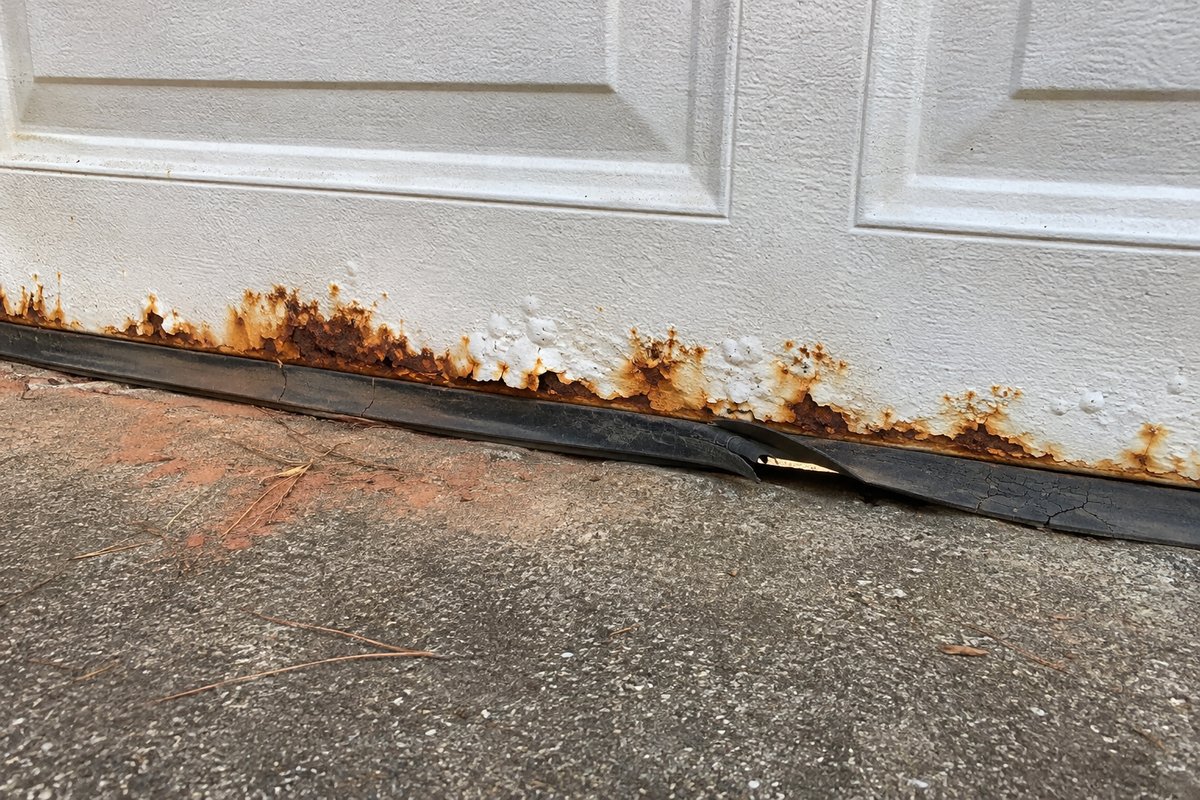
What ends a steel door's life is usually rust and denting. Rust starts where paint is chipped and at the bottom edge, where water sits against the bottom section. Clopay's maintenance guide asks you to check whether metal sections are rusted or heavily dented, and to have heavily dented doors inspected. Small dents in an uninsulated door can sometimes be pushed out from inside; a section with rust coming through is usually a replacement.
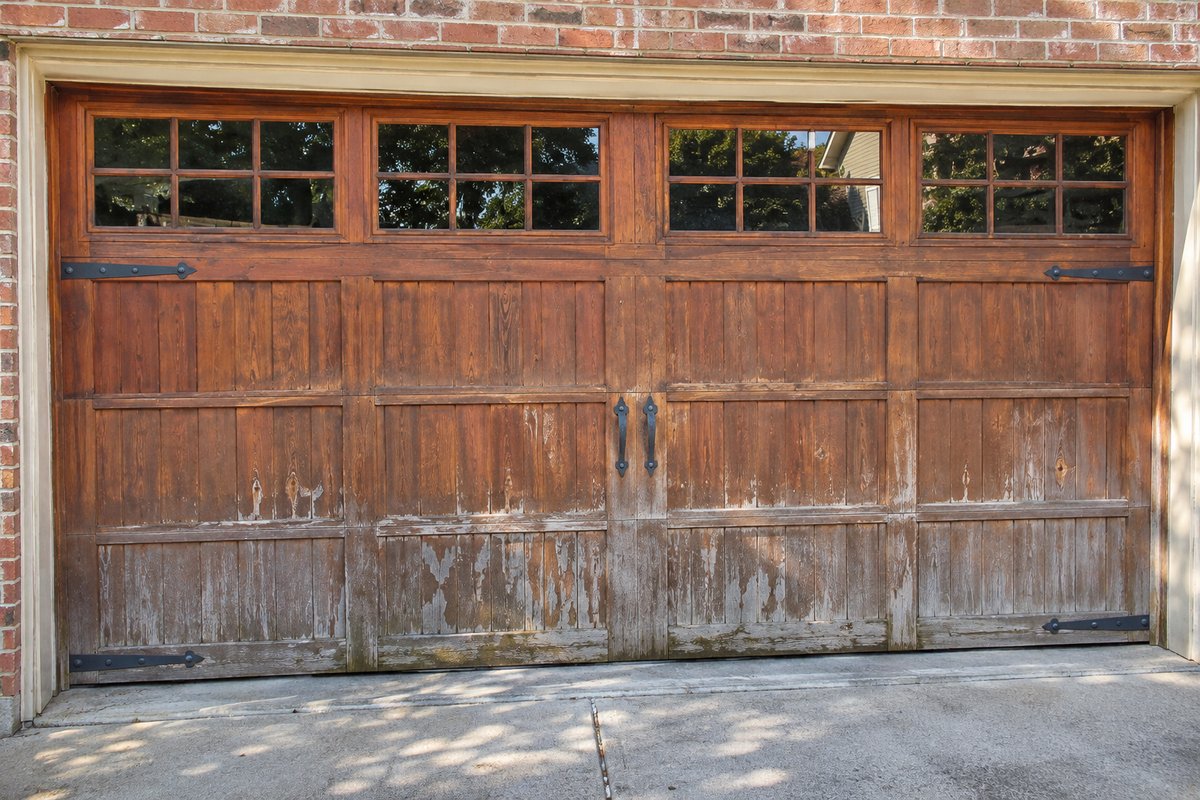
Wood doors
Amarr doesn't give a year figure for wood. It says to check wood doors regularly for rot and damage and to repaint them every few years. Clopay's wood door care manual is more specific: a wood door needs an annual inspection, and sun and moisture are the two main causes of a finish breaking down. Clopay asks owners to look every year for cracking or peeling paint and for cracks in the wood, and requires all six sides of each section to be finished, including the top and bottom edges.
In practice, a wood door lasts as long as its finish is kept up. Once water gets behind the finish and the bottom rail starts to rot, the section has to be rebuilt or replaced.
Aluminum doors
Amarr says aluminum doors resist corrosion naturally and are light, but dent more easily, and can last up to 30 years with proper care. They're less common on Georgia homes than steel, and mostly seen as full-view glass doors.
What about long door warranties?
Many steel doors come with long warranties on the sections. A warranty tells you what the maker will cover, not how long the springs, rollers and opener will last. Read the warranty for your door model, and keep the paperwork with the house records.
Garage door springs: lifespan by cycle rating
Springs are the part most likely to fail first, and the most dangerous to deal with. They carry the weight of the door. On most Metro Atlanta homes that's a torsion spring, the tightly wound spring on the bar above the door. Older and lighter doors often have extension springs, which stretch along the tracks on each side.
How long they last. Clopay says most garage door spring systems are designed to last 10,000 cycles. Garaga, a Canadian door maker, and Amarr give the same figure for standard residential springs. DASMA's standard for sectional doors (ANSI/DASMA 102) set 10,000 cycles as the design minimum for the door system, and describes a residential door as one normally operated fewer than 1,500 cycles a year.
What that means in years.
| Cycles a day | About how long a 10,000-cycle spring lasts |
|---|---|
| 2 (out in the morning, home at night) | About 13 to 14 years |
| 4 (a typical household) | Just under 7 years |
| 6 | About 4 and a half years |
| 8 (the garage is the main entry) | About 3 and a half years |
These are straight arithmetic from the 10,000-cycle rating. Clopay's own rule of thumb lines up with the middle row: if you've lived in the home 7 years or more, use the door daily, and still have the springs that came with the house, it's time to replace them.
Torsion vs extension. Garaga notes that extension springs usually wear out sooner, because they stretch and contract more with each use. Springs with higher cycle ratings are also made, and either kind has to be sized to the door's weight. Our post on torsion vs extension springs covers the differences.
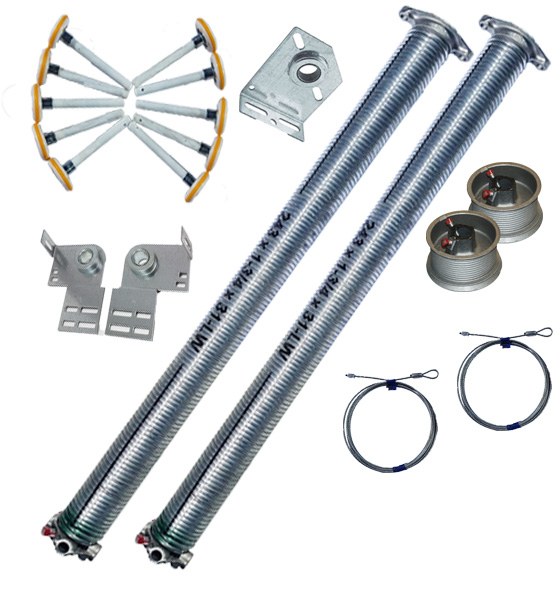
Photo: Blizzard6204, Wikimedia Commons, CC0.
Signs a spring is wearing out: the door feels heavy when you lift it by hand, it won't stay put halfway up, or you can see a gap in the coil. Our guide to why a garage door feels heavy walks through the balance test. A broken spring often goes with a loud bang.
Leave springs to a technician. Clopay recommends that only a trained garage door professional install standard torsion springs, because they are wound by hand and can cause serious injury if the tension lets go. We replace torsion and extension springs and back new springs with our written warranty: 3 years on torsion springs and 5 years on extension springs (see the warranty).
How long garage door openers last
The National Association of Home Builders' study of the life expectancy of home components puts a garage door opener at 10 to 15 years. How long yours lasts within that range depends mostly on the door it lifts. DASMA notes that springs that don't match the door's weight shorten the life of the opener as well as the door, so an opener lifting a well-balanced door lasts longer than one dragging a heavy one. When yours starts failing, here's how to decide whether to repair or replace a garage door opener.
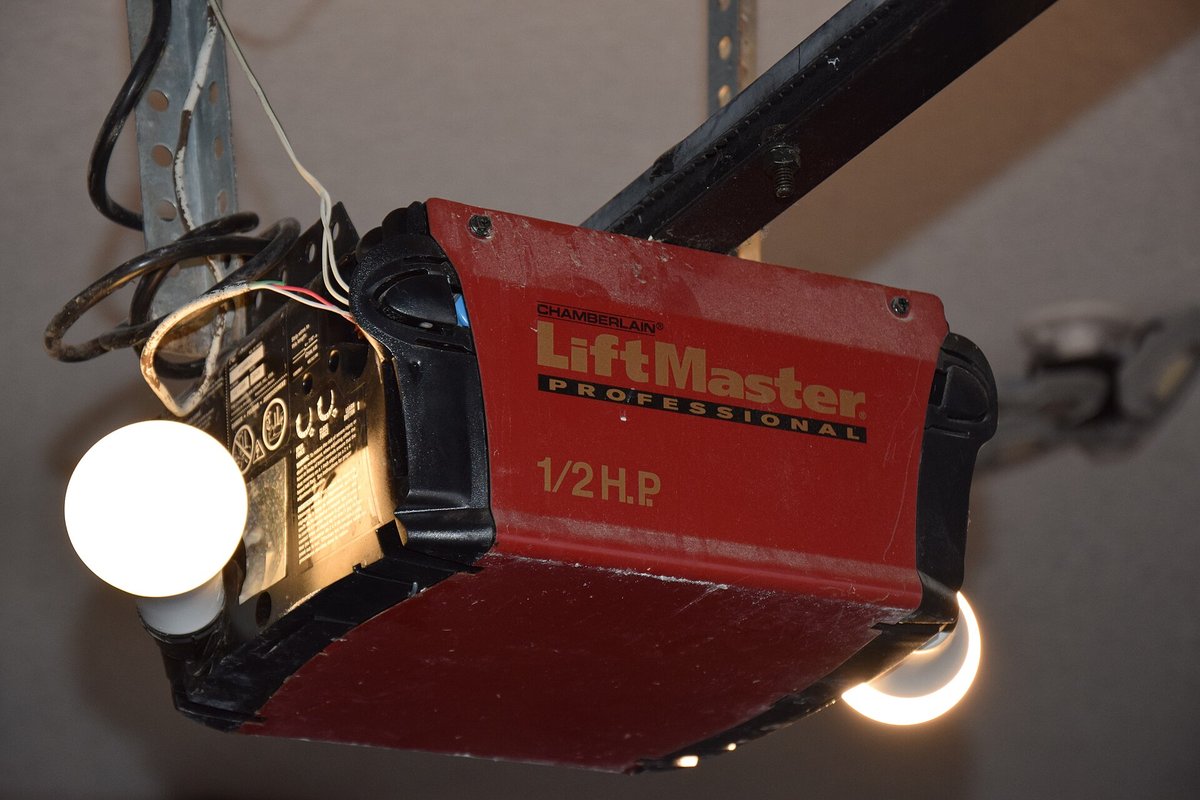
Photo: sheffieldb, Wikimedia Commons, CC BY 2.0.
Age matters for safety as well as wear:
- Openers made before 1993 were built before the federal safety rule for residential openers (16 CFR Part 1211) took effect, which requires automatic reversing protection. The U.S. Consumer Product Safety Commission recommends testing the reverse every month. An opener that doesn't reverse should be replaced, whatever its age.
- Genie notes that openers over 20 years old can lack safety photo eyes, the two sensors near the floor that stop and reverse the door when something crosses the beam.
- Battery backup units wear out sooner than the opener. Chamberlain says the battery lasts about 1 to 2 years with normal use.
Common signs an opener is near the end: the drive gear has stripped (the motor runs and the chain doesn't move), the logic board is failing, or it's an older model that can't be fitted with rolling-code remotes or phone control. Our guide to an opener making noise but not opening covers the repair-or-replace call in detail. We are an authorized LiftMaster dealer, and you can read about opener repair and new openers.
How long rollers, cables and seals last
Rollers
Genie says rollers wear out and can need replacing every 5 to 7 years. The rollers ride in the tracks on each side of the door, and every cycle turns them. Genie's signs of wear: broken rollers, bent shafts, worn-out bearings, chips, warping or cracks. Worn steel rollers look lopsided; nylon rollers tend to crack as they age. Clopay recommends nylon rollers for the smoothest, quietest operation.
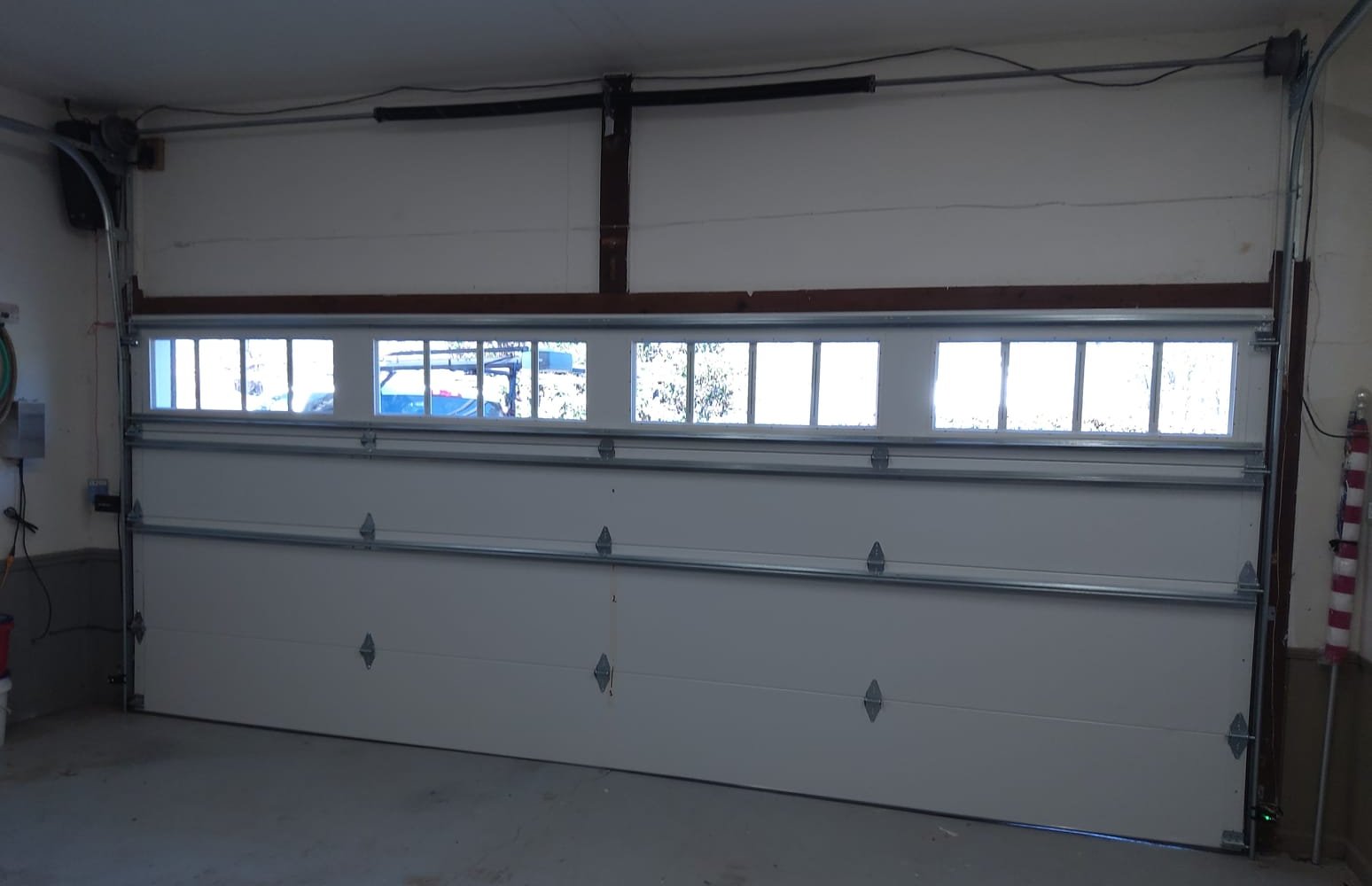
The bottom rollers sit in a bracket connected to the lift cables, under full spring tension, so roller replacement on the bottom section is a technician job. See roller replacement.
Lift cables
No manufacturer we found publishes a year figure for cables. They are replaced on condition. Clopay's maintenance checklist says frayed cables are in danger of breaking and could cause serious injury or property damage, and to have a professional replace them. Genie lists the signs: fraying, broken strands, wear, kinks or stretching. Look only at the cables near the bottom brackets, and don't touch them.
Weatherstripping and the bottom seal
Seals wear out fastest of anything on the door. Clopay's rule of thumb is that most seals need replacing every 2 to 3 years, depending on climate and use, and it suggests inspecting them every three months. Replace a seal when it's cracked, crushed, hardened or no longer springs back into shape.
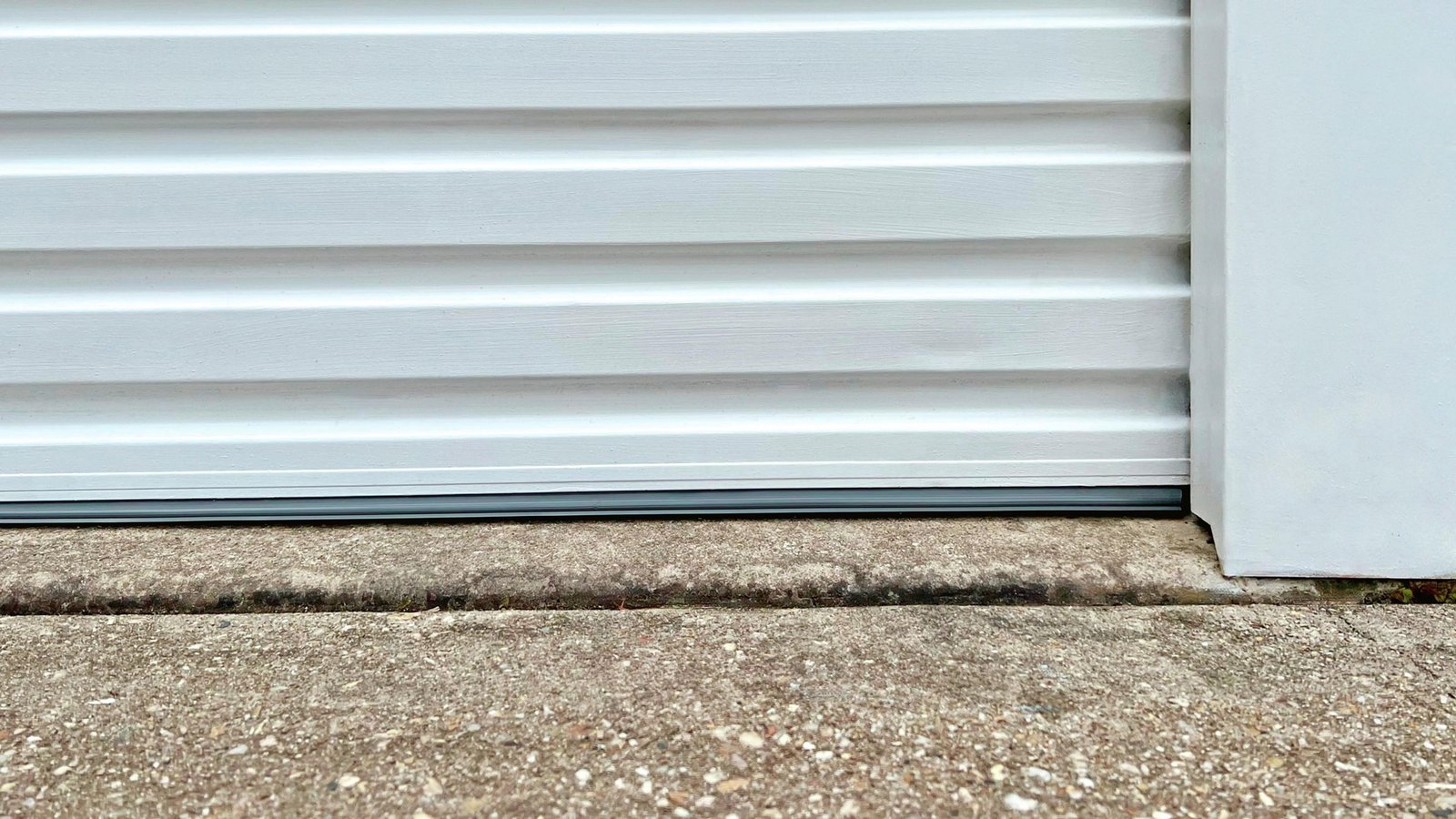
Material matters in a sunny climate. In Clopay's comparison, rubber bottom seals handle temperature changes well but can stiffen and crack over time, while vinyl resists moisture and UV and generally lasts longer than rubber in sunny conditions. Swapping a bottom seal is one of the jobs a handy homeowner can do; our weatherstrip how-to shows the steps, and we also replace weather seals.
What shortens a garage door's life in Georgia
Georgia doesn't have the salt air of the coast or the deep freezes of the North, but Metro Atlanta's heat, sun and rain do their own damage.
Heat and sun. NOAA's climate normals for Atlanta (1991–2020) show an average July high of 90°F and about 47 days a year at 90°F or hotter. A south- or west-facing door takes that sun all afternoon. Clopay names sun as one of the two main causes of finish breakdown on wood doors, and in its seal guide rubber stiffens and cracks over time.
Rain and humidity. Atlanta averages about 50 inches of rain a year, with about 76 days of a tenth of an inch or more (NOAA). Moisture is what rusts hardware. DASMA's technical data sheet on spring life says rust reduces the effective area of the spring wire, which reduces its strength, and that the corrosion pits rust leaves behind are where fatigue cracks start. For wood doors, Clopay names moisture as the other main cause of finish failure, and warns against refinishing in humid conditions or direct sun.
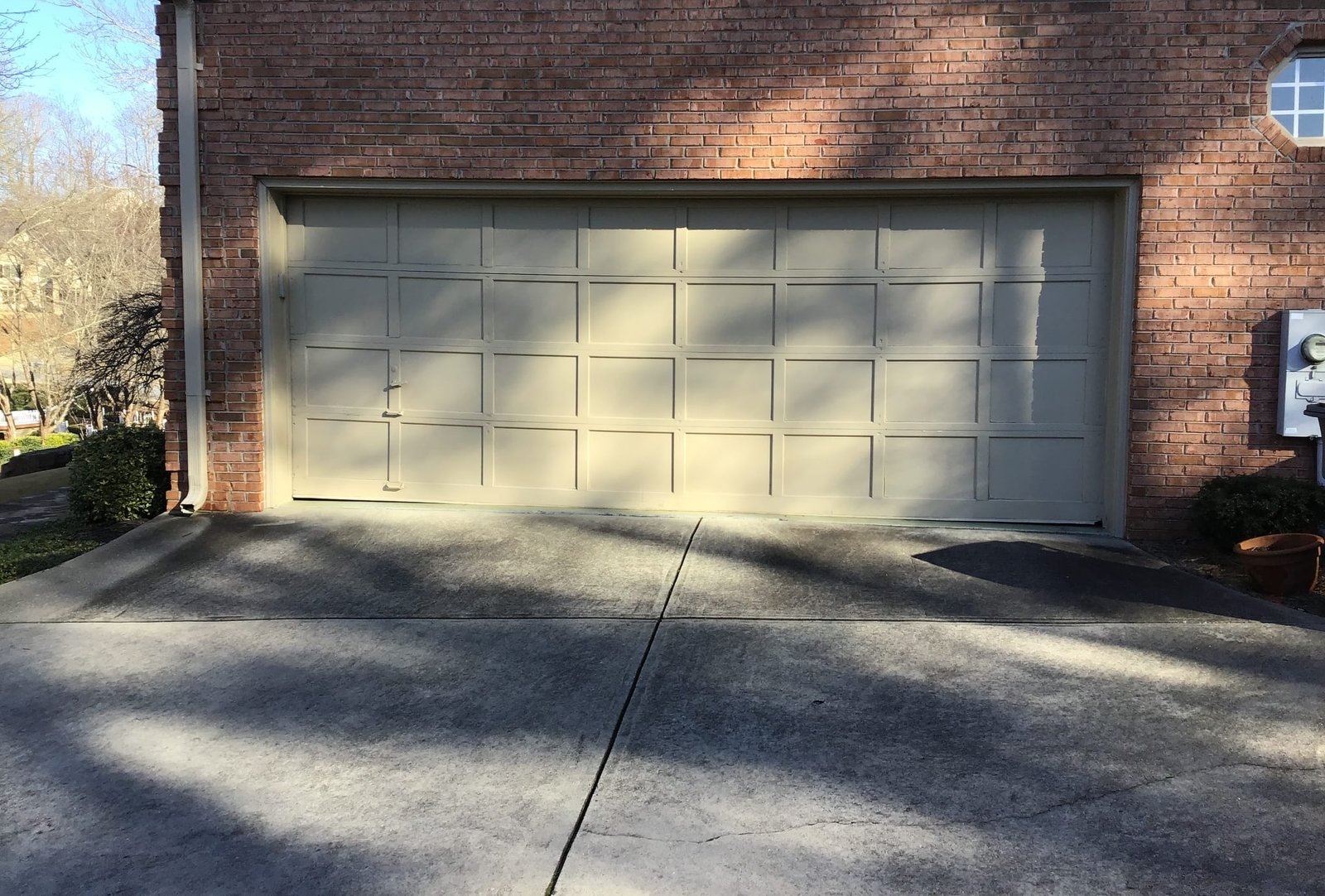
Leaving the door open. DASMA's same data sheet notes that doors left open for long periods on a regular basis expose the springs to more heat, moisture and air quality changes. In climates with extreme heat or frequent rain, it advises keeping the door closed where possible.
Repainting without thinking about weight. DASMA warns that paint and anything added to a door, such as decorative panels or storage hung from it, can push the door's weight past what the springs were sized for. That shortens spring and opener life. If you repaint a sun-faded door with several coats, have the balance checked afterward.
Skipping maintenance. DASMA says regular greasing or lubrication of the springs, as the door maker's instructions require, helps maximize spring cycle life. Clopay's wood door manual asks for lubrication of moving parts at least twice a year and a balance check at least twice a year.
Heavy use. Every cycle counts against the springs, rollers and opener. If the garage is the family's main entry and the door runs eight times a day, a standard 10,000-cycle spring lasts about three and a half years.
How to make a garage door last longer
Most of what extends a door's life is simple and cheap. Our garage door maintenance checklist has the full monthly-to-yearly list for Georgia homes. The short version:
- Test the balance twice a year. With the door closed, pull the opener's release cord, then lift the door halfway by hand. It should stay put. If it drifts down or shoots up, the springs need adjusting, which is a job for a technician.
- Test the auto-reverse every month, as the CPSC recommends. Lay a 2x4 flat under the door and close it; the door should reverse when it touches the wood.
- Lubricate the moving parts with a garage door lubricant as your door's manual says, and keep it off the tracks.
- Look at the seals every three months and replace them when they crack or flatten.
- Wash the door and touch up chips in the paint, especially along the bottom section where water sits.
- Keep the door closed when you don't need it open.
- Book a yearly professional check. A tune-up covers balance, springs, cables, rollers and opener settings in one visit.
DIY or call a technician?
| Safe for a homeowner | Leave to a technician |
|---|---|
| Monthly look-over and auto-reverse test | Spring adjustment or replacement |
| Balance test with the opener disconnected | Lift cables and drums |
| Lubricating hinges, rollers and bearings per the manual | Bottom brackets and bottom rollers (under spring tension) |
| Replacing a slide-in bottom seal | Bent or loose tracks |
| Cleaning photo-eye lenses, replacing remote batteries | Replacing a door section or the opener |
| Washing the door, touching up paint | Anything you're not sure about |
Repair or replace: signs your garage door has reached the end
Most garage door problems are part problems. A broken spring, a frayed cable, worn rollers or a dead opener are repairs, even on an older door. Replacing the whole door makes more sense when the door itself is failing.
| What you see | Usually a repair | Time to think about a new door |
|---|---|---|
| Door feels heavy, won't stay halfway up | Springs | – |
| Loud bang, gap in the spring | Springs | – |
| Door hangs crooked, loose cable | Cables and drums | – |
| Grinding, squeaking, rollers wobble | Rollers, lubrication | – |
| Opener runs, door doesn't move | Opener gear or trolley | Opener over 15 years old, or doesn't reverse |
| Light or water under the door | Bottom seal | – |
| One dented section | Section replacement, if the model is still made | Several damaged sections, or the model is discontinued |
| Rust coming through the paint | Small spots: clean and paint | Rust through the steel, especially along the bottom |
| Peeling finish on a wood door | Refinishing | Rot in the rails or panels |
| Door is uninsulated next to a living space | – | An insulated door keeps the garage and the room above it more comfortable |
| Repairs keep coming, part after part | Each repair on its own | When the repair list is longer than the door's remaining life |
A few other reasons people replace a door that still works: they're selling the house and the door is the worst-looking thing on the front of it, they want an insulated door because the garage is part of the living space, or the door is the original single-layer single-layer door and the home is now 20 years old.
Our Metro Atlanta garage door buying guide walks through materials, insulation, styles and what to ask for in a quote. When you're ready, see garage door installation, or if you'd rather fix what you have, garage door repair in Atlanta.
When to call us
Call us if a spring has broken, a cable is loose, the door hangs crooked or feels heavy, the opener won't reverse, or you want a straight answer on whether your door is worth repairing. We'll tell you which parts have life left in them and which don't, and give you both options in writing: the repair, and a new door if it makes sense.
We've repaired and installed garage doors across Metro Atlanta since 1999. We're rated 4.9 on Google with Over 4,000 Five-Star Reviews, and our office is open Monday to Sunday, 7 AM to 8 PM.
Call (678) 271-8918 or book a visit online. You'll get a written price before any work starts.
Frequently asked questions
How long do garage doors last?
Most garage doors last 15 to 30 years, depending on the material. Amarr puts single-layer steel doors at 15 to 20 years and triple-layer insulated steel doors at 25 to 30. The springs, opener, rollers and seals wear out sooner and are replaced along the way.
What is the average lifespan of a garage door spring?
Standard torsion and extension springs are rated for about 10,000 cycles, where one cycle is one opening and one closing. At four cycles a day, that's just under seven years. Extension springs usually wear out a little sooner than torsion springs.
How long does a garage door opener last?
The National Association of Home Builders puts garage door openers at 10 to 15 years. An opener lifting a well-balanced door lasts longer than one dragging a heavy door with weak springs. An opener built before the 1993 federal safety rule, or any opener that fails the monthly reverse test, should be replaced.
What type of garage door lasts the longest?
Among the figures manufacturers publish, triple-layer insulated steel (25 to 30 years, per Amarr) and aluminum (up to 30 years with proper care) are at the top. Wood lasts as long as its finish is kept up. In every material, maintenance and how often the door runs matter as much as what it's made of.
Is it worth repairing a 20-year-old garage door?
Often, yes. If the sections are solid, a 20-year-old door with a broken spring or worn rollers is a repair. Replacement makes more sense when the sections are rusted through, rotted or badly dented, the model is no longer made, or the repairs keep coming.
How often should garage door weatherstripping be replaced?
Clopay's rule of thumb is every 2 to 3 years, depending on climate and use. Check it every three months, and replace it when it's cracked, flattened, hard, or you can see daylight or water under the door.
Does Georgia's climate shorten a garage door's life?
Heat, sun and humidity do. Atlanta averages about 47 days a year at 90°F or hotter and about 50 inches of rain (NOAA). Sun breaks down wood finishes and rubber seals, and moisture rusts springs and hardware. Keeping the door closed, the paint touched up and the moving parts lubricated offsets most of it.