Choose a garage door company that shows proof of insurance, tells you who will do the work and gives you a written quote listing parts and labor. Call a technician for springs, cables, damaged tracks or opener wiring.
If the door is crooked, jammed or hanging out of its tracks, stop using it and keep people clear. If it’s stuck open and you can’t secure the garage, call for emergency garage door repair. With the door safely closed and out of use, you can take time to compare companies.
What to ask before you book
Start with a neighbor, friend or family member who has hired someone for similar work. Ask what actually needed fixing, whether the final bill matched the approved work and whom they called when they had a follow-up question. A good installation referral tells you something about the company. A referral for the same kind of repair tells you more about the visit you’re booking.
Call with the same description each time. “The door is closed and level, and the wall button works but the remote doesn’t” is more useful than “I need a new opener.” If the door is unsafe, describe where it stopped and what you saw before you stopped using it. Keep the diagnosis open so each company has the same starting point.
| Ask | What to look for |
|---|---|
| What business name will be on the quote and invoice? | A name and phone number you can match to the company you called and use after the visit. |
| Will you show me proof of insurance? | Current general liability and workers’ compensation documentation for the business doing the work, as applicable. |
| Who will be at my home? | Whether the technician is an employee or subcontractor, who supervises the work and who handles a return visit. |
| Have you worked on my door or opener model? | A clear answer about that equipment and what the technician needs to inspect before recommending a part. |
| What does the initial visit include? | Any charge for coming out or diagnosing the problem, whether it applies toward approved work and what you owe if you decline the repair. |
| What will I get in writing? | The diagnosis, scope, parts and labor, total, exclusions, and terms for parts and workmanship. |
Check Georgia licensing by the type of work
Georgia’s State Licensing Board for Residential and General Contractors puts garage doors in its Overhead Doors specialty. A contractor working within that specialty is exempt from the state residential or general contractor license for that scope. If the quote includes broader construction, tell the local building department exactly what is proposed and ask which license or permit applies.
Treat household electrical work as its own item. If the opener needs a new outlet or permanent power wiring, ask who will do that work. Ask for the electrical contractor’s license number and check the name, license type and status in the Georgia Secretary of State’s license search. For the company’s local business license, ask to see it and check with the city or county that issued it.
Ask who does the work and whose insurance covers it
Ask for a current certificate of insurance. Check the insured name and the policy dates. If a different company will supply the crew, ask which policy covers that crew’s work and whose name will be on the invoice. You can ask the insurance agent listed on the certificate to confirm coverage if the paperwork leaves questions.
Ask the person booking the visit who will diagnose the fault, who can approve changes to the quote, and who will answer if the door has the same problem again. If the work is subcontracted, get the name of the business coming to your home and the name of the business responsible for follow-up. Keep that information with the quote.
Read reviews for jobs like yours
Look at recent reviews across more than one place. Search the reviews for the work you expect to need, such as a cable repair, a bent track or an opener that won’t close. Details about the findings, approval and follow-up help you picture the visit. Read how the business responds to a complaint about its work, too.
For a door replacement, ask for photos of recent installations on homes like yours. Ask what the quote included around the opening, especially if yours has an unusual fit or damaged trim. For a repair, ask whether the company has worked on the same door or opener model and whether it can identify compatible parts. Those questions give you more to compare than a star rating by itself.
What a written garage door quote should spell out
Ask for the quote after the technician has looked at the door. A phone conversation can clarify the terms of the visit. The written quote is where you should see what the technician found, what they plan to do and what you’ll pay if you approve it. You should be able to read it later and tell what was repaired.
| Quote item | What you want in writing |
|---|---|
| Finding | The part or condition the technician found and how it relates to the symptom you called about. |
| Work | What will be repaired, what will be replaced and which parts will stay in service. |
| Parts | Each replacement part, its brand or maker and the model or part number where available. |
| Labor and total | Labor, any visit or diagnostic fee, applicable tax and any other charges included in the total. Ask about hauling away a replaced door or opener if it applies. |
| Checks after the repair | Which checks the technician will do, such as door balance and the opener’s safety reverse test. |
| Warranty and changes | Who covers parts and who covers labor, how to request service, and how you’ll approve any change in work or price. |
A useful spring quote describes the condition the technician found and tells you which spring or springs are included. An opener quote should say whether the opener itself is being replaced or whether the job is limited to a specific part, such as a safety sensor. If the quote calls for a new door, check what it says about the track, hardware, seal and any opener work. Ask which of those items are included.
Ask about the brand and fit of replacement parts
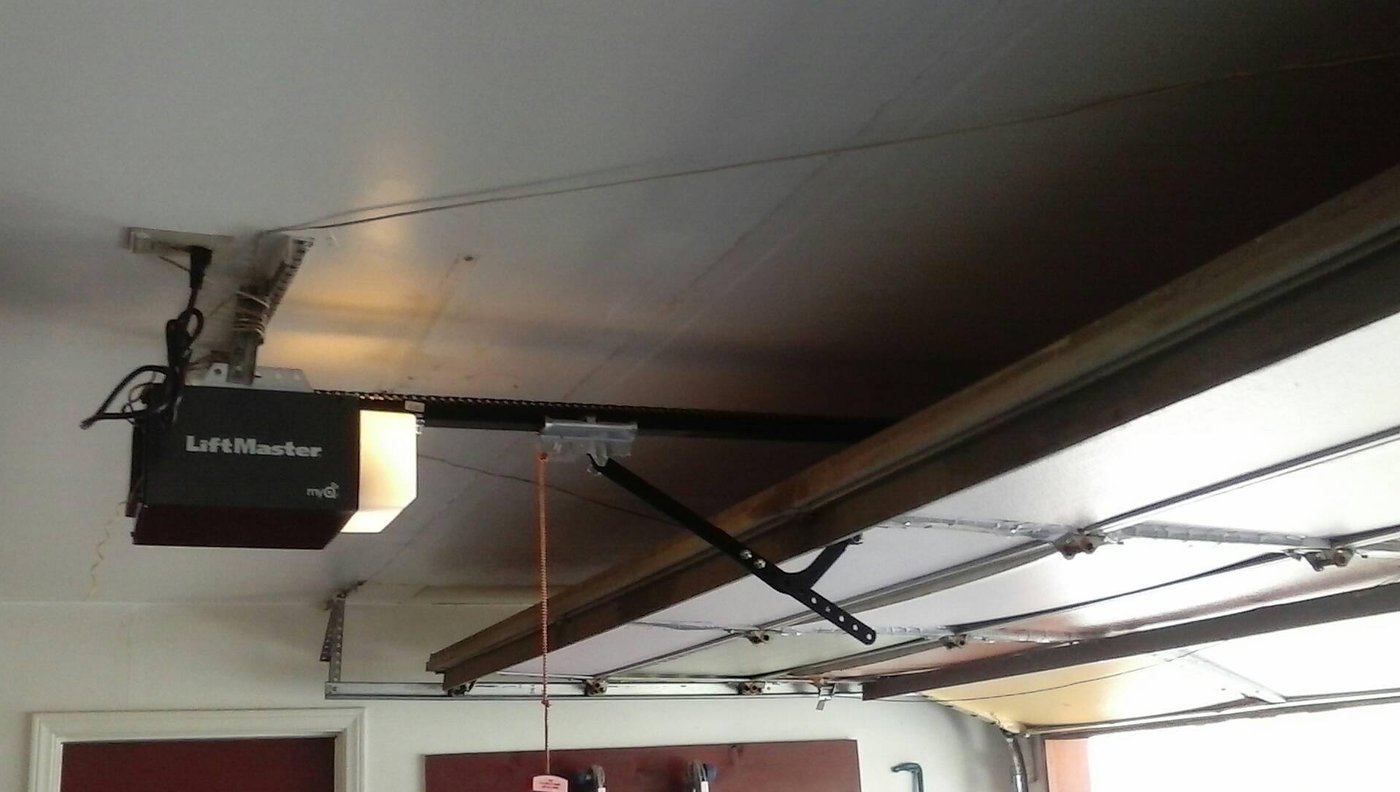
An opener’s brand is a useful starting point. The model tells the technician which parts to check. LiftMaster, for example, lists opener models compatible with its replacement safety sensor kits and directs buyers to the model’s manual or parts diagram. Genie publishes troubleshooting guidance for particular opener models. Ask the technician to record the opener model and identify the part they plan to fit.
Ask whether the quote uses a part from the original manufacturer or from another maker. For an alternative part, ask for the brand, what makes the part compatible and who handles a problem with it. For a spring or other assembly without a retail model number, ask for the part specification the technician used to match the door and have it written into the quote. An invoice that says only “hardware” gives you little to refer to if you need another visit.
Ask how the technician will check the repair
Ask which parts of the system they’ll check before handing the door back. A door and its opener work together. For spring or cable work, ask how they’ll check that the door is balanced. For an opener or sensor repair, ask for a demonstration of the safety reverse, which sends the closing door back up when its safety system detects an obstruction.
If the technician finds something else during the job, ask what it changes, whether the door can be used safely and how the total changes. Have them update the written scope before you approve more work. Keep the final invoice with the revised quote and any warranty paperwork so you know whom to call and which parts were installed.
How to keep the cost down without cutting corners
Compare the same work. Ask each company to quote the same problem and tell you what’s included. A quote for a sensor and a quote for a whole opener answer different questions. Ask what the technician ruled out before recommending replacement. If the door needs an opener, compare quotes for the same equipment and ask each company what’s included with it.
Separate what needs doing now from what can wait. Ask which work is needed to return the door to safe use and which items are optional. For example, if a door needs a spring repair and you also want a keypad, ask for separate lines so you can decide about the keypad later. If a recommended item is part of a safe repair, ask what it does and why it goes with the job.
Ask about repairing the failed part. If the rest of the door or opener is in sound condition and compatible parts are available, ask for a repair option. If the company recommends replacement, ask for the findings behind that recommendation and how each option addresses them. Our opener repair or replacement guide walks through that decision for the motor unit.
Compare replacement doors by what you actually use. Ask for a basic configuration that suits the opening, then price optional windows or decorative hardware separately. Keep the track designed for the new door in the scope. The Door and Access Systems Manufacturers Association (DASMA) explains that track fit depends on factors such as the door’s weight, section thickness and clearance. If the quote keeps old track with a new door, ask how the installer verified it’s designed for that door. See what’s involved in garage door installation.
Get another opinion when the door can sit safely. If the scope is larger than you expected, ask for the findings in writing and share the symptoms with another technician. Ask them to inspect the door and explain their own findings. Keep an unsafe door out of use while you decide. If it’s hanging open or the garage can’t be secured, arrange help to make it safe first.
What to do when the quotes disagree
Say you called because the door stopped moving and the quotes differ about the opener. One includes a spring repair. The other includes a spring and a new opener. Ask each technician what they checked on the door and what they found on the opener. Ask the company that included a new opener what would have to be true for the existing one to stay. If safe testing must wait until the spring is repaired, ask how the company will handle that decision and get approval for any additional work.
If the quotes describe the same job but cover different things afterward, ask each company to write down who handles a return visit and which work is covered. Compare the written scope, the checks included and the terms you’ll have if the same issue returns.
Red flags when comparing companies
Pause if nobody can tell you who will show up, if the quote leaves out the parts or if the company can’t explain why each item is needed. A technician can show you a finding from a safe spot or explain the check they made. You shouldn’t have to approve a vague list of repairs to find out what it means.
Ask for clarification when a new door is the only option on the quote. There are sound reasons to replace a door or opener, including incompatible parts or a safety feature that can’t be restored. The company should be able to explain how its recommendation follows from what it found. For deceptive sales tactics and what to do if you encounter one, see our guide to avoiding garage door repair scams.
Which jobs need a technician?
Use the door’s condition to decide how far to go. Look from the floor and stay clear of the opening. If the door hangs unevenly, looks damaged or binds, leave the controls alone and call. Tell the company what you saw without trying to make the door do it again.
| What you notice | What to do |
|---|---|
| A gap in the torsion spring, the coil on the shaft above the door, or an extension spring hanging loose beside the track | Stop using the door. Springs help lift the door and are under tension. Book garage door spring repair. |
| A loose, frayed or broken lift cable at the side of the door | Leave the cable, drum and bottom bracket alone. The spring system puts tension on those parts. Call for cable repair. |
| A bent track, a roller outside its track or a door hanging crooked | Keep clear and leave it in place. Track and roller work on a displaced door is for a technician. See what to do when a door comes off track. |
| An opener with damaged wires or a door that fails its safety reverse test | Stop using the opener and have a door technician check the opener and its controls. For a new or faulty household outlet or permanent power wiring, use an electrical contractor. |
| The wall control works normally and only a remote fails | On an otherwise sound door, check the battery and the wall control’s lock setting. Follow your model’s manual and see our remote programming guide. |
| A box blocks a safety sensor or the sensor lens is dusty | With the door closed and still, clear the obstruction or gently wipe the lens. If the fault continues, see the garage door sensor guide or call a technician. |
When the door is working normally, you can wash the face according to the door manual, inspect the weather seal and clear loose debris that’s within easy reach of the floor. On an undamaged door, you can clean or replace an accessible weather strip that doesn’t require loosening the bottom brackets or any lift hardware. Follow your manual for lubrication of routine points such as accessible hinges. Our garage door maintenance checklist covers those tasks.
If a check takes you to a spring, cable, mounting bracket or wiring, stop there. Call with the door’s position, what it did before you stopped using it and the opener brand and model if you already have them. A photo from a safe spot can show what you saw. If you can’t secure the garage or the door is unstable, say that at the start of the call.
Ask All Four Seasons for a written price
All Four Seasons is family-owned since 1999 and gives you a written price before work. We’re rated 4.9 on Google, with Over 4,000 Five-Star Reviews. For opener work, we’re an authorized LiftMaster dealer.
Call (678) 271-8918, see our Metro Atlanta garage door repair services or request a garage door estimate.
Frequently asked questions
Do garage door companies need a license in Georgia?
Georgia recognizes overhead-door work as a specialty, so work within that specialty is exempt from the state residential or general contractor license. If the job includes household electrical work or alterations to the structure, ask about that scope separately. For a new outlet or permanent power wiring, verify the electrical contractor’s license.
Can I get a firm quote over the phone?
Ask what the visit costs and what it includes. For a fault the technician hasn’t seen, ask for a written quote after inspection and before work. It should show the repair, parts, labor, total and what would require your approval to change.
Should I accept a quote that uses another brand of part?
Ask what brand and part the technician proposes, how it matches the door or opener model and who covers the part and labor if it fails. For an opener safety sensor, ask the technician to show how the part matches the model and demonstrate that the safety system works after installation.
When should I get another garage door quote?
Get another opinion when the quoted scope is unclear, the repair turns into a replacement without a clear explanation or you want to compare repair and replacement on equal terms. If the door is unsafe, leave it out of use. Arrange help first if it’s hanging open or you can’t secure the garage.
Can I keep my existing opener with a new door?
Ask the installer to check whether the opener is suitable for the new door and whether its safety features work. Have the written quote say whether the opener stays, which track and hardware are included and what the installer will test after the work.
What should I ask for when the job is finished?
Ask to see the relevant safety checks, then get the final invoice and any warranty information. Check that the invoice lists the work and parts you approved. Save the business name and contact details for whoever handles a return visit.