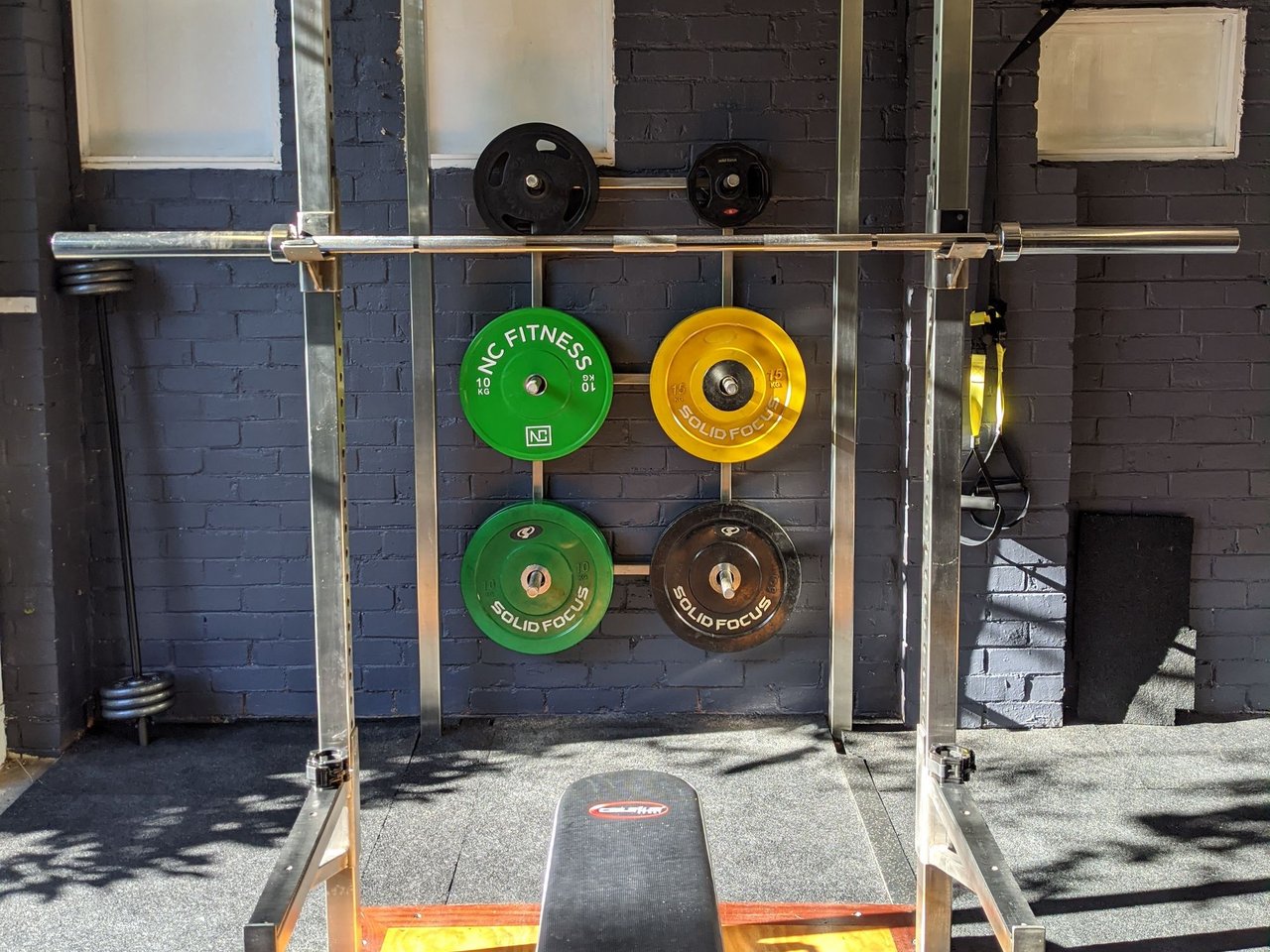
To turn your garage into a gym, map the garage door's travel and the space your equipment needs. Then fix drafts and moisture, plan ventilation to the outdoors, and decide whether your existing door needs insulation or replacement.
If you're setting up in January, try a few workouts at the hour you expect to train. A cold draft across your ankles with the door closed calls for a different fix than a damp floor after rain. In July, the same space needs a plan for heat and humidity. At Atlanta Hartsfield, the average daily low in January is 35.6°F and the average daily high in July is 90.1°F, according to NOAA's 1991–2020 climate normals. Use those as outdoor planning numbers and measure your own garage.
Measure for the workout and the open garage door
An empty bay looks bigger than it is. Measure it with the car parked if you're keeping a parking space. Open its doors and hatch while it's parked to see how much room you need to get in or unload groceries. Leave a path to the house door and to the controls for the garage door. If you have to move a bench every time someone comes home, give the bench a storage spot before you buy it.
- Watch a full door cycle from the side. With everyone clear of the opening, watch where the upper edge of the door passes through the curve of the tracks and where the sections rest overhead. With the door fully open and stopped, note the lowest obstruction over each workout zone. Include the door, track, opener rail and hanging lights.
- Tape out the equipment and the space to use it. Mark the footprint on the floor along with room to load plates, step off a machine and move a bench. Concept2's RowErg, for example, measures 8 by 2 feet assembled. The manufacturer recommends 9 by 4 feet with room to row. Use your equipment's instructions for its own clearance.
- Allow for the full reach of each exercise. Check where a barbell and plates would finish on an overhead press, where your head would go on a pull-up, and how high a jump rope swings. Use an empty hand or a tape measure with the door stopped. Include the thickness of any platform or mats in your measurements.
- Try the layout before mounting anything. Mark where a folding rack sits both open and stowed, and check where the bench and plates go when you park. Rogue's RML-3W, for example, folds against the wall and has manufacturer instructions for mounting. Have a contractor check the wall or slab if you're unsure what can carry the rack or its anchors.
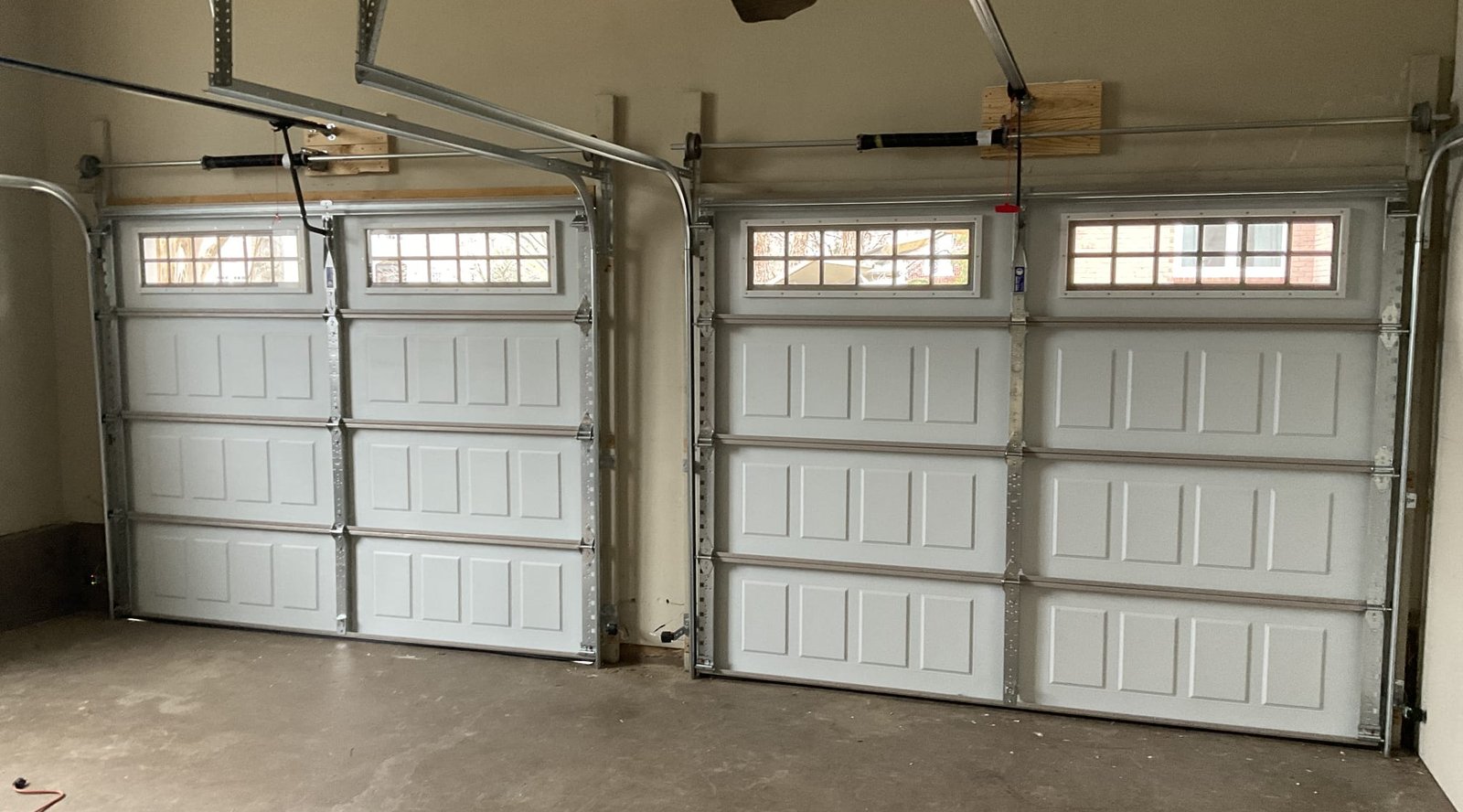
Plan for someone to operate the door while another person is in the garage. Keep the whole door path clear and set your workout zone away from the opening. Leave room by the lower tracks for the photo-eyes, the paired safety sensors that look across the opening. A plate rack, mat edge or folded machine in the beam can keep the door from closing. See our garage door sensor guide if the opener reverses after you move equipment in.
| How you use the garage | Where to start | What to check before buying |
|---|---|---|
| One bay still used for a car | Movable bench, dumbbells and a mat you can put away | Car doors and hatch open freely with everything stored |
| One workout bay in a two-car garage | Place the rack outside the door's overhead path and test the layout with the other bay occupied | Clear routes from both bays to the driveway and the house door |
| Dedicated lifting space | Mark the rack, upright plate storage and platform together | Room to load both ends of the bar and lift with the door fully open |
| Cardio corner | Check the manual for the machine's location, clearance and outlet requirements | Access to the controls and enough space to step off, with the machine in its working position |
Plan where the air comes from and where it goes
Keep the house door closed during workouts. In an attached garage, preserve the wall, ceiling and door that separate the garage from the house. The U.S. Department of Energy's Building America guide recommends a continuous air barrier at shared surfaces. A contractor can check gaps around pipes, wiring and floor framing, including joist spaces below a bedroom. Ask how the work will preserve the fire separation before opening a shared wall or ceiling.
Keep exhaust out of the gym. The CDC says never to run a vehicle in a garage attached to a home, even with the overhead door open. If someone needs to move a car in or out, pause your workout and move clear of the bay. Keep generators outdoors and use working carbon monoxide alarms in your home as the CDC recommends. If your garage has a fuel-burning water heater or furnace, tell the HVAC contractor before adding exhaust. Have them check how the appliance vents when the fan runs.
Use outdoors as the source of fresh air. When outdoor conditions suit a workout, open an exterior window or door. A portable fan aimed across your bench moves air around you. For regular workouts with the garage door shut, ask an HVAC contractor about a dedicated exhaust fan that vents directly outdoors and a way for outdoor air to replace what it removes. Have them consider where that air enters, where the exhaust goes and how the system runs while you train. EPA's Indoor AirPlus program uses outdoor exhaust as one option for attached garages. Equipment sizing depends on the garage and its use.
Plan heating and cooling separately. Keep the garage's air separate from the system that serves the house. Ask about a garage-only system if you need regular heating or cooling, and talk through ventilation in the same visit. If an installer proposes a ductless heat pump, ask what brings in fresh outdoor air and what handles humidity. Those are separate design questions. A dehumidifier can remove moisture from the air, and a fan can move that air around. Outdoor air still needs its own path in and out.
| What you notice | What to try or check first |
|---|---|
| Garage feels stuffy with the big door shut | Open a separate exterior window when conditions suit. For a closed-door routine, ask about outdoor exhaust and replacement air. |
| Droplets on the inside of the windows or door | Check indoor relative humidity and look for wet gear or other moisture sources. EPA recommends keeping indoor humidity below 60% where possible. |
| Puddle along the bottom edge after rain | Check where driveway runoff goes and look for daylight at the closed door's bottom seal. Let the floor dry before laying mats over that area. |
| A floor-level draft on cold mornings | Look at the bottom seal and the strips around the opening. Check whether the door sits evenly when closed. |
Air out damp mats and shoes after a workout. If moisture keeps coming back, look for the source before covering the slab. Water after rain, condensation during humid weather and moisture coming through concrete call for different checks. If the slab stays damp, ask a flooring or building professional to evaluate it first. For the workout surface, follow the mat maker's instructions and the equipment maker's requirements for a level, stable base.
Seal the opening, then decide what to insulate
Start with the door closed. Look for light at the floor and around the sides from inside the garage. Check for a torn bottom seal and for weatherstripping that no longer touches the door. If the floor slopes or dips, ask whether the gap comes from the slab, the seal, or the way the door closes before replacing anything. If the door looks crooked or binds during travel, stop using it and call a technician. Our garage door weather seal service covers the seals, and the weatherstripping guide shows how the different seals fit.
For an attached garage, deal with leaks at the house boundary separately from drafts at the big door. If you plan to heat or cool the gym regularly, ask a contractor to look at the garage's exterior walls and ceiling too. Insulation slows heat transfer through a surface. Air sealing limits air moving through gaps. A factory-insulated door addresses heat flow at the opening, and the rest of the garage still affects how the space feels at the rack.
Check the label on your existing door or find the order paperwork. From inside, bare stamped steel with exposed braces is common on single-layer doors. A vinyl-backed insulated section and an insulated section with a steel back can look similar from across the room, so use the model number to confirm the build. Never remove a hinge or section hardware to see what's inside.
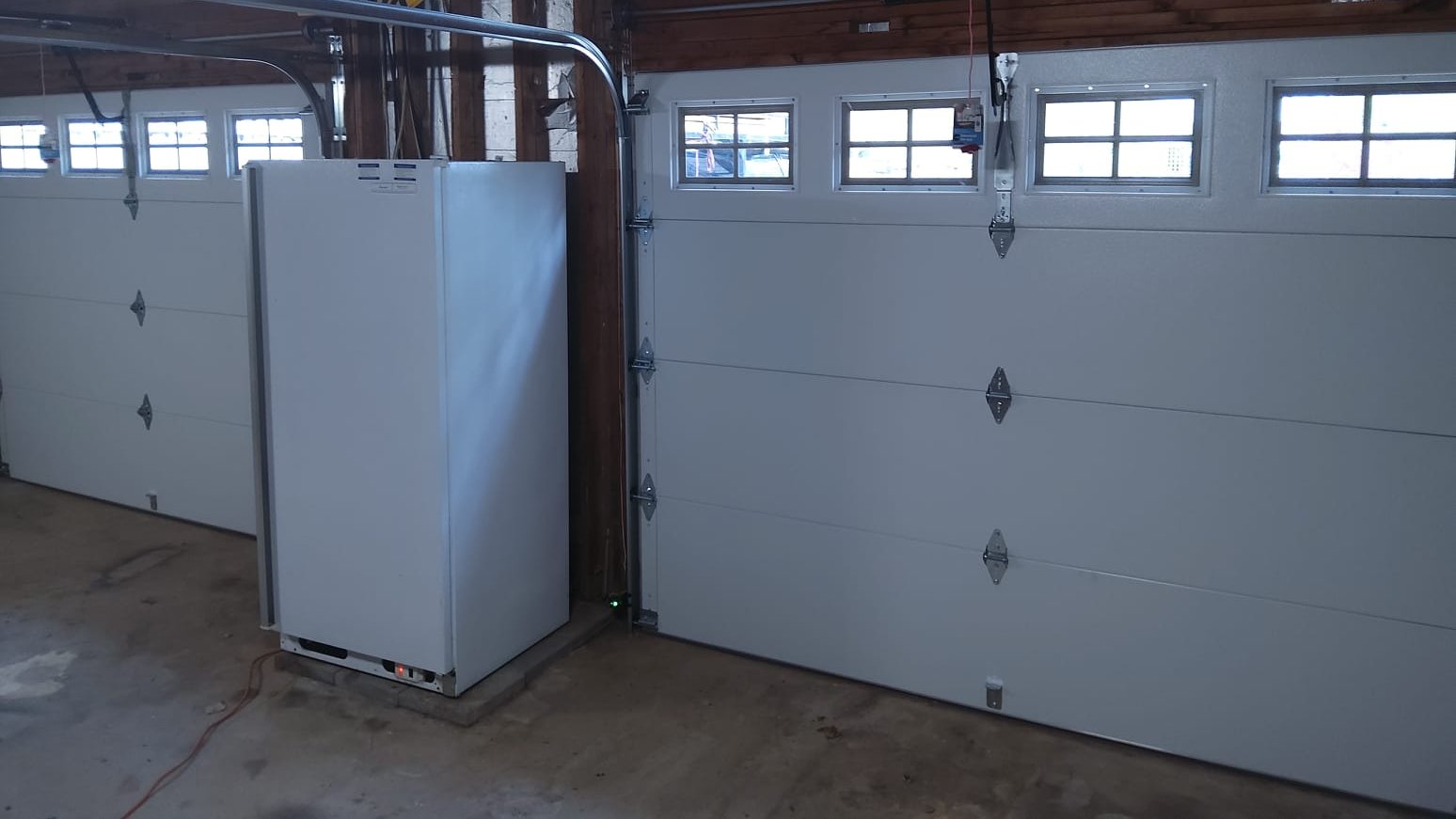
If you're considering a retrofit kit, check the door maker's instructions and ask a technician about weight and balance before buying. The springs carry the door's weight. Added material changes that load and can affect how the door and opener operate. Keep mats, mirrors, hooks and weight storage off the door itself. Our garage door insulation guide explains kit fit, insulation materials and factory builds in more detail.
Choose a door around the way you train
If the existing door operates well and the room feels comfortable after sealing and ventilation work, keep it. For a replacement on a gym you plan to use through summer and winter, ask to see a solid, insulated sectional steel door. Its horizontal sections move overhead on tracks, so check where the open door would sit before choosing the track setup. Compare that baseline with the same door fitted with upper windows if you want daylight.
| Choice | When it fits | What to ask the installer |
|---|---|---|
| Keep the current door and renew worn seals | The door works well and the main issue is a draft around the opening | Does the bottom seal match the retainer and meet the slab evenly? |
| Insulated steel with a vinyl back | You want factory insulation and the interior facing suits how you use the space | What is the exact model and its tested whole-door U-factor, if available? |
| Steel on both sides of an insulated core | You want a steel interior face and want to compare solid and glazed versions | What is the rating for the door with the glass and panel configuration I'm ordering? |
| A change to the opener or tracks | The rail or open door takes up space you need above the gym | Which part is in the way, and where would it sit with the proposed hardware? |
Read the two insulation numbers carefully. A garage door's advertised R-value describes the calculated heat resistance of one section. U-factor measures heat transfer through the whole tested door. Lower U-factor means less heat passes through the assembly under test. Ask for a comparable whole-door rating on each quote and a rating for the chosen glass, if available. Check the perimeter seals as a separate item. Amarr's Lincoln brochure, for example, lists U-factors of 0.32 for the vinyl-backed LI2000 and 0.23 for the steel-backed LI3000. Clopay offers factory-injected polyurethane in its Classic Steel line. Both examples give you specific constructions to ask about when comparing garage door types.
Check which part takes up the ceiling space. A compatible wall-mount opener such as the LiftMaster 98022 frees the space used by the center opener rail. The sectional door and its tracks still travel overhead. If the open sections are the obstruction, ask a technician to measure for a different track layout. Bring a photo of the rail, the sides of the opening and your planned rack location when you ask about garage door openers.
What you can do yourself and when to call a pro
| You can do this | Who to call for the rest |
|---|---|
| Tape out the layout, read equipment clearance requirements and move freestanding gear | A contractor for questionable rack anchors, slab condition or wall changes |
| Look for light around the closed door and note where it rubs, rattles or sits unevenly | A door technician for a door that binds, spring or cable work, track changes, added weight or a new door |
| Track temperature and humidity where you work out and note when the floor gets damp | An HVAC or building professional for outdoor exhaust, independent heating and cooling, or work on the garage-to-house separation |
| Keep the sensor path clear and follow the opener manual for safety checks | A door technician if the door fails its reversal test or has damaged hardware |
If you plan to remove the garage door, close in the opening or turn the space into a permanent conditioned room, check with your local building department before you start. Ask how the project affects permits, parking and the garage-to-house separation. Georgia lists its adopted residential code and amendments through the Department of Community Affairs. The local department can tell you what applies at your address.
Try the layout in January before committing to upgrades
Start with the gear you use now. Do one workout on a cold morning at your usual training time, then look at the same space after rain. Write down where you felt the draft, where gear got in the way and what stayed damp. If you share the bay, put everything away and park as you normally would. Make sure you can get the gear back out without unloading the garage each time.
Fix the things that interfere with every session first. Put the bench clear of the tracks, correct a worn seal or get recurring water at the floor checked before installing permanent flooring. Then decide whether the garage needs an outdoor exhaust fan, more insulation or a separate way to heat and cool it. Recheck airflow and humidity when warmer weather comes. Our winter garage door guide and door maintenance checklist cover the door checks to carry into the rest of the year.
If a door or track change is part of the plan, ask All Four Seasons about garage door installation in Metro Atlanta. We've been family-owned since 1999. Call (678) 271-8918 and tell us how you use the bay, what needs to fit overhead and whether you still park there.
Frequently asked questions
Can I use one garage bay as a gym and still park there?
Yes, if the equipment fits in use and has a spot to go when you park. Mark out the workout area and test it with the car parked, its doors and hatch open, and the overhead door stopped in its open position. Keep a walking route to the house and do any work that requires a running engine outdoors.
Do I need to replace my garage door to set up a home gym?
Start with the door you have if it works safely. Check the seals, note the space below the open door, and test the garage at your usual workout hour. An insulated replacement is worth comparing if the current door is due for replacement or heat transfer at the door is still a concern after you've dealt with drafts.
How do I ventilate a garage gym with the door closed?
Plan a path to the outdoors. Open an exterior window when conditions suit, or ask an HVAC contractor about an exhaust fan that vents outdoors with a way for outdoor air to enter. Keep the door to the house shut. In an attached garage, never run a vehicle inside, even with the overhead door open.
Can I use a space heater in a garage gym?
If the heater manual allows that setting, a portable electric heater is an option. The U.S. Consumer Product Safety Commission advises keeping it at least 3 feet from anything that can burn, plugging it straight into a wall outlet and turning it off before you leave. Keep it clear of mats and the car, and use it away from gasoline or other flammable liquids. Keep portable fuel-burning heaters out of your workout plan.
Will a wall-mount opener make room for a squat rack?
It can free space under the center opener rail on a compatible door. Check the rack and your overhead reach against the open door and tracks as well. Ask a garage door technician to measure those clearances before you order a rack or an opener.
What should I do if the garage floor is damp under the mats?
Lift the mats and let the surface dry. Check whether the moisture follows rain, appears during humid weather or comes back even in dry conditions. If it keeps returning, have the floor and drainage checked before installing another covering. Keep the mat edge away from the bottom seal and the photo-eyes.
Top photo: Chris Brown, Pexels, Pexels License. Cropped.