Most garage door noise comes from the door's own hardware, not the opener. Dry hinges and rollers squeak, worn rollers grind, loose hardware rattles, and one loud bang usually means a torsion spring has broken.
This guide from All Four Seasons matches each sound to its cause, gives a one-minute door-or-opener test, and splits the fixes into DIY jobs and technician jobs.
If the opener runs but the door doesn't move at all, that's a different problem with its own guide: garage door opener making noise but not opening.
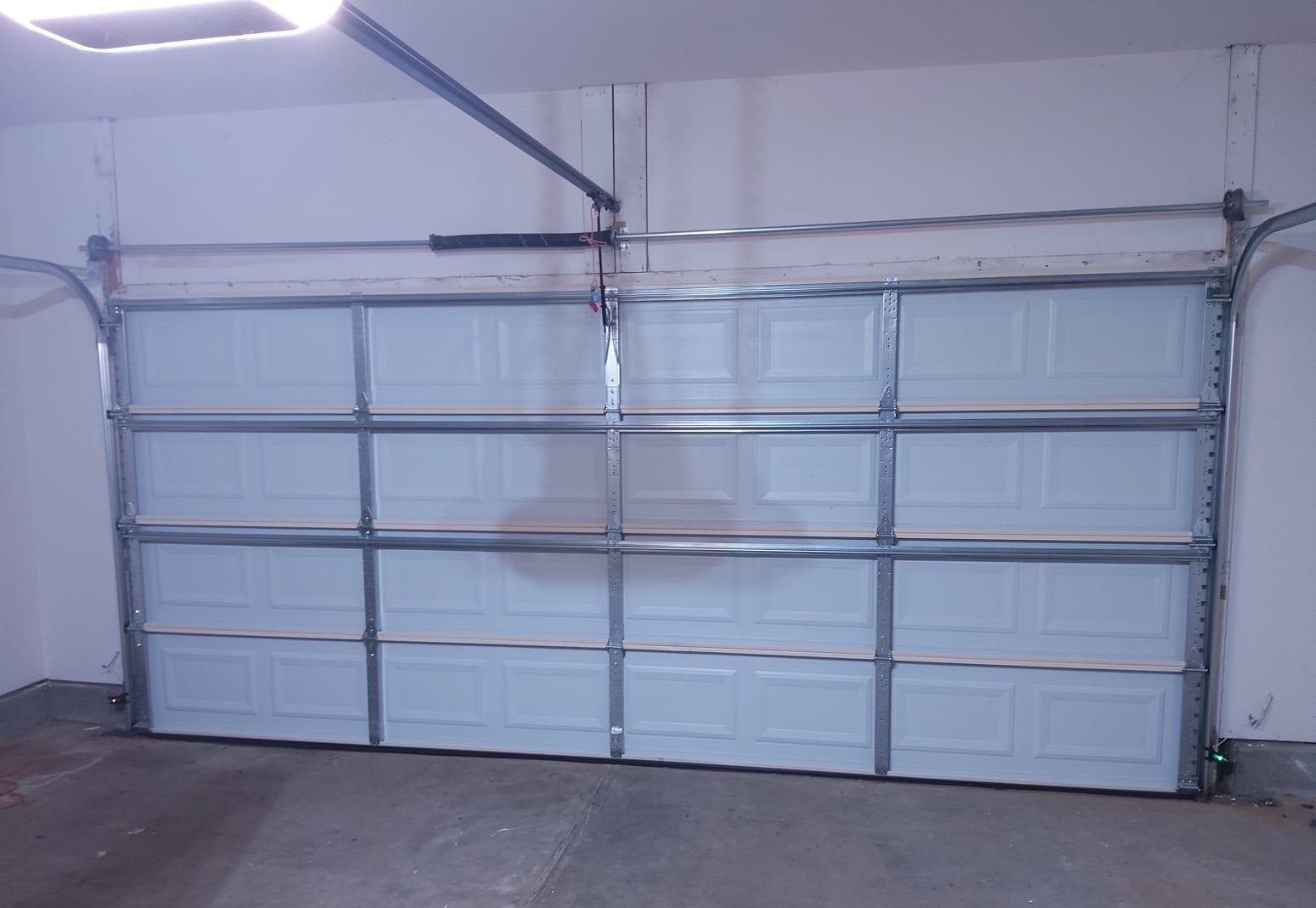
Stop first if you heard a bang
Some noises are a nuisance. A few are a warning. Three rules before you touch anything:
- A single loud bang, then a door that won't lift or hangs crooked, means stop. Clopay describes a breaking spring as a loud pop or bang that sounds like a gunshot. A crooked door after a bang usually means a lift cable has come off its drum. Don't run the opener, don't try to lift the door, and keep people and cars out from under it. Read what to do when your garage door cables are off track and call a technician.
- Leave the springs, cables and bottom brackets alone. DASMA, the door and opener manufacturers' association, says the bottom brackets are connected to the springs and are under extreme tension, and that cables should be replaced only by a trained technician. Look at them; don't loosen, adjust or pry at them.
- Unplug the opener before you work on the door. A remote in a car or a pocket can start it while your hand is in a hinge.
Match the sound to the cause
Stand inside the garage while someone runs the door up and down. Watch the part the sound seems to come from, and note whether it happens all the way or at one spot.
| What you hear | Where it usually comes from | Usual cause | Safe to fix yourself? |
|---|---|---|---|
| Squeak or squeal as the door moves | Hinges, steel rollers, torsion spring coils | Dry metal-on-metal parts | Yes: lubricate the right parts |
| Grinding or a gritty rumble | Rollers in the track | Worn roller bearings, a dirty track, or a bent track | Clean and lubricate; worn rollers and bent track are for a tech |
| Rattling or clanking | Hinges, track brackets, opener rail | Loose nuts and bolts shaken free by vibration | Yes, except the bottom brackets and spring hardware |
| Single loud bang or pop, door now heavy | The spring above the door | A broken torsion spring, sometimes a snapped cable | No. Stop using the door |
| Popping or creaking from above the door as it moves | Torsion spring coils | Dry spring coils rubbing | Light lubrication only; never adjust |
| Jerking, thumping or a door that slams down | Springs and balance | An out-of-balance door or a weak spring | Test the balance; adjusting is for a tech |
| Scraping along one side | Rollers and track | A roller out of the track or a bent track section | No. See garage door off track |
| Chain slapping or clattering overhead | Opener chain on its rail | A loose chain | Yes, with your opener's manual |
| Buzzing or droning through the ceiling | Opener and its mounting | Vibration carried into the framing | Usually: tension, then an isolator kit |
| Hum or grind from the opener, door doesn't move | Opener motor or gear | Disconnected trolley, stripped gear, broken spring | See opener making noise but not opening |
The one-minute test: is it the door or the opener?
Chamberlain, the maker of LiftMaster openers, gives this test in its noise troubleshooting guide. It splits every noise into two groups.
- Close the door all the way. Never pull the release with the door open. If a spring is broken, an open door can drop.
- Pull the red release cord to disconnect the door from the opener.
- Lift the door by hand and listen. It should move smoothly and stay put about halfway up. If it squeaks, grinds or rattles now, the noise is in the door. Chamberlain's first fix is to lubricate the hinges and rollers.
- If the door feels very heavy or drops when you let go, stop. That's a spring or balance problem, not a noise problem. Lower it gently and call a technician.
- Close the door and run the opener with the door still disconnected. If the opener is noisy on its own, check its drive: chain tension on a chain drive, belt tension on a belt drive, and lubrication on a screw drive.
- If the door and the opener are each quiet alone, Chamberlain points to the installation: the brackets and the angle of the rail. That's a job for whoever installed the opener.
Squeaking and squealing: dry hinges, rollers and springs
What you'll notice: a high squeak that repeats as each section of the door passes over the curve in the track, or a squeal from the spring above the door.
Why it happens: the hinges between the door sections pivot every time the door opens, the rollers turn on small bearings, and the torsion spring winds and unwinds. When the lubricant on those parts dries out or collects grit, metal rubs on metal. Clopay notes that friction builds up between the moving parts over time and makes the door noisier.
What to do: clean and lubricate the parts that move, and leave the rest dry.
- Hinges: a small amount on the hinge pins, then wipe off what squeezes out.
- Steel rollers: coat the bearings, the ring of small balls inside the wheel. Don't spray the track.
- Nylon rollers: don't lubricate the wheel. Clopay says nylon rollers don't take lubricant.
- Torsion spring: a light coat along the coils. DASMA says springs can squeak from normal use, and that a spray lubricant made for garage doors is the first thing to try. If the noise continues, call a technician. Don't touch anything that holds the spring.
Clopay recommends a silicone-based lubricant or white lithium grease, and says to avoid WD-40 and oil-based products because they attract dirt and dust. Your door's manual has the final say on the product. Our garage door maintenance checklist has the full table of what each manufacturer says to lubricate and what to leave dry.
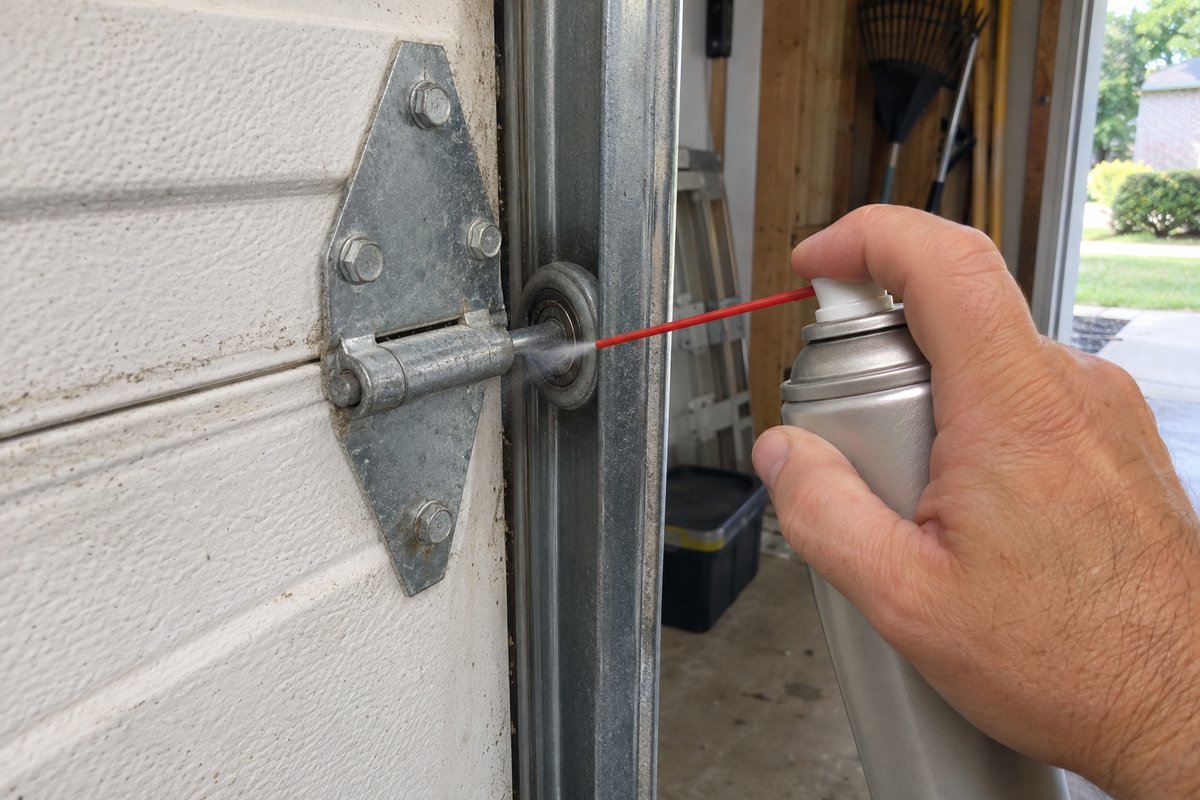
If it still squeaks: a hinge that is bent or cracked, or a roller that wobbles, won't be fixed by lubricant. Replace it (see below).
Grinding: worn rollers, a dirty track or a bent track
What you'll notice: a low grinding or gritty rumble as the door travels, sometimes worse at one point. Look for rollers that slide instead of turn, wheels with flat spots, or black dust along the track.
Why it happens: there are three common reasons.
- Worn rollers. Steel rollers with open bearings take in dirt and wear out; Genie notes that rollers commonly need replacing every 5 to 7 years. Clopay's checklist puts it simply: if the rollers don't move smoothly and quietly, they need lubrication or replacement.
- A dirty track. Grit and old grease in the track make the rollers drag. Clopay says to wipe the tracks clean and not to lubricate them, because grease in the track makes it harder for the rollers to move and makes the opener work harder.
- A bent track. A dent from a car bumper or a bin pinches the rollers as they pass. Clopay lists bent or twisted tracks as a repair for a professional, since track problems put extra stress on the opener.
What to do: with the opener unplugged and the door closed, clean the inside of the tracks with a brush and a damp cloth. Look along each track for dents and loose bolts. Then lubricate the roller bearings (steel rollers only) and run the door a few times.
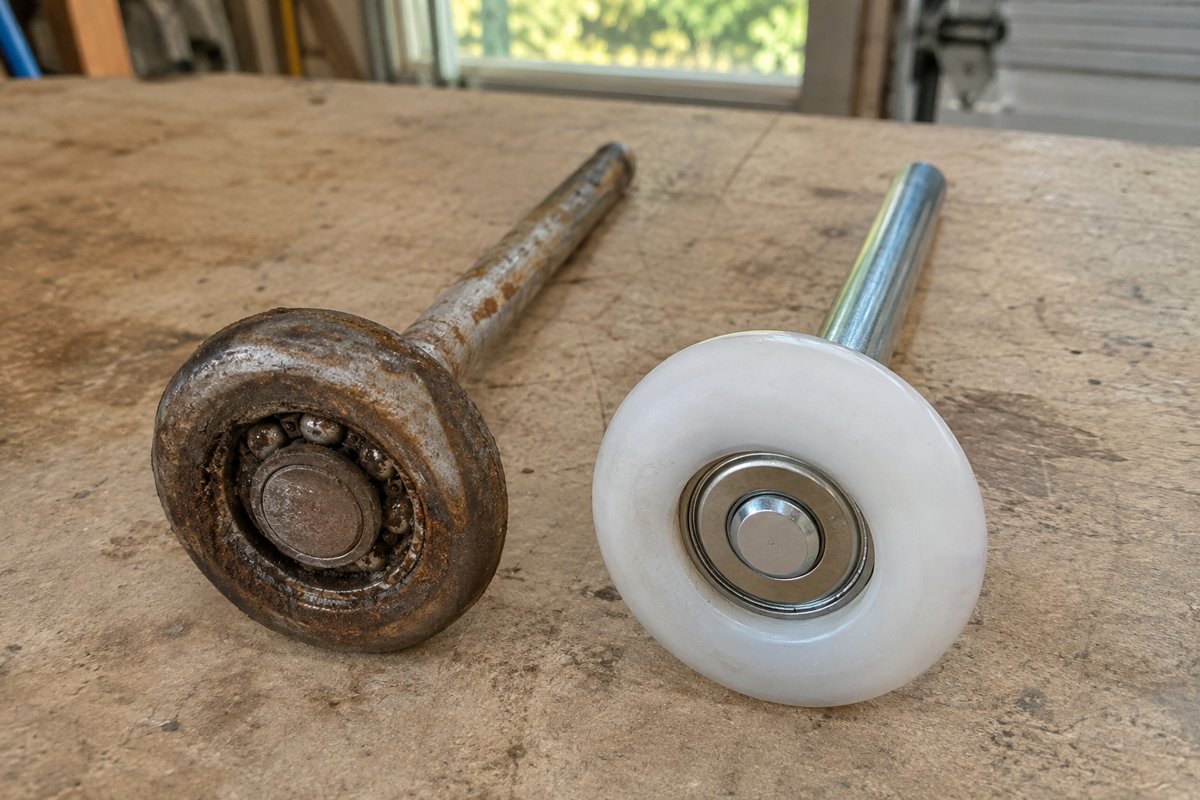
If the grinding is still there, the rollers are worn. Upper rollers come out one at a time with the hinge that holds them, and handy homeowners do swap them. The bottom rollers are different: they sit in the bottom brackets, which hold the lift cables under spring tension. Leave those to a technician. We replace worn and broken rollers, including the bottom ones, and a bent track section is a repair rather than a DIY job.
If the grinding comes from the opener and the door doesn't move, the drive gear inside the opener has likely stripped. That's covered in our opener noise guide.
Rattling and clanking: loose hardware
What you'll notice: a rattle or metallic clank as the door moves, often from the hinges, the track brackets on the wall or the opener rail. Some doors also rattle in their tracks on windy days.
Why it happens: the door shakes every time it runs. Clopay says that vibration loosens the hardware over time.
What to do: with the opener unplugged and the door closed, go round the door with a socket wrench or nut driver:
- Hinge bolts and screws on the inside face of each section.
- Track brackets that hold the vertical tracks to the wall, and the hangers that hold the horizontal tracks to the ceiling.
- The opener's mounting brackets and rail bolts. Chamberlain lists these in its noise checks.
Snug them, don't crank them. Clopay warns that overtightening strips the threads or damages the door parts. On a steel door, an overtightened screw can pull through the thin skin.
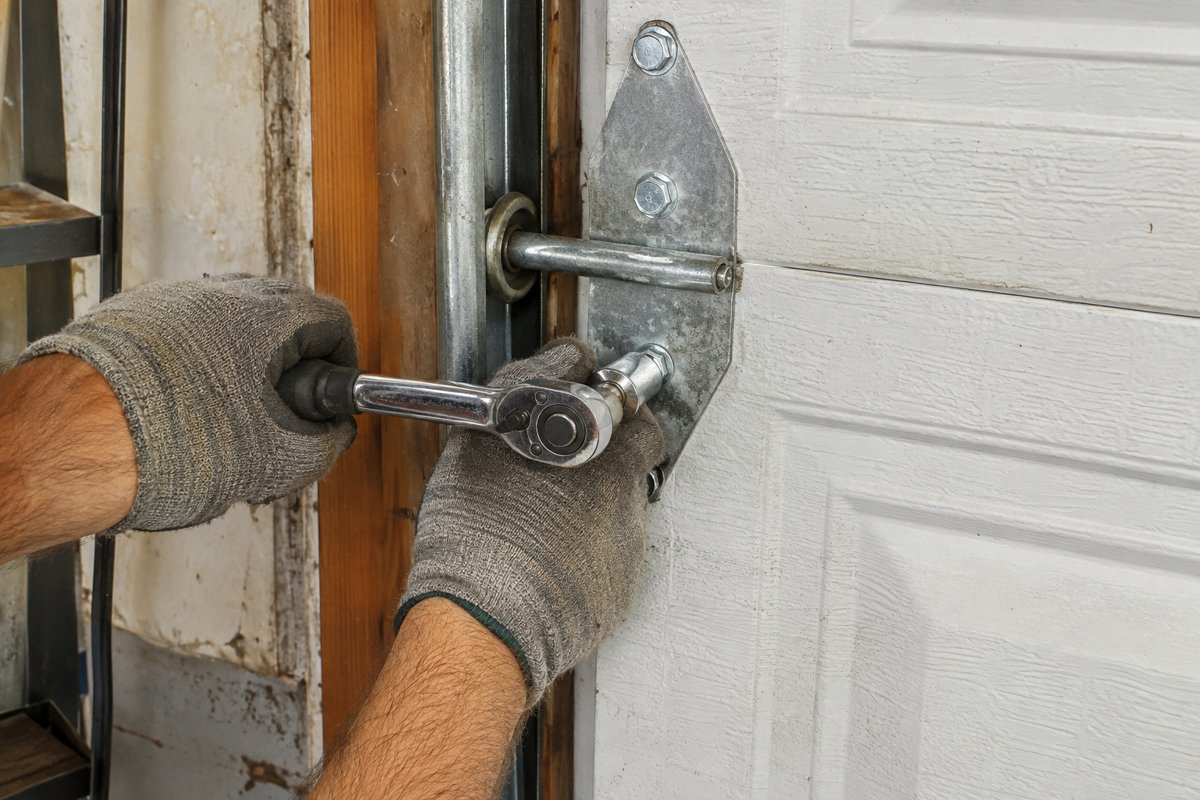
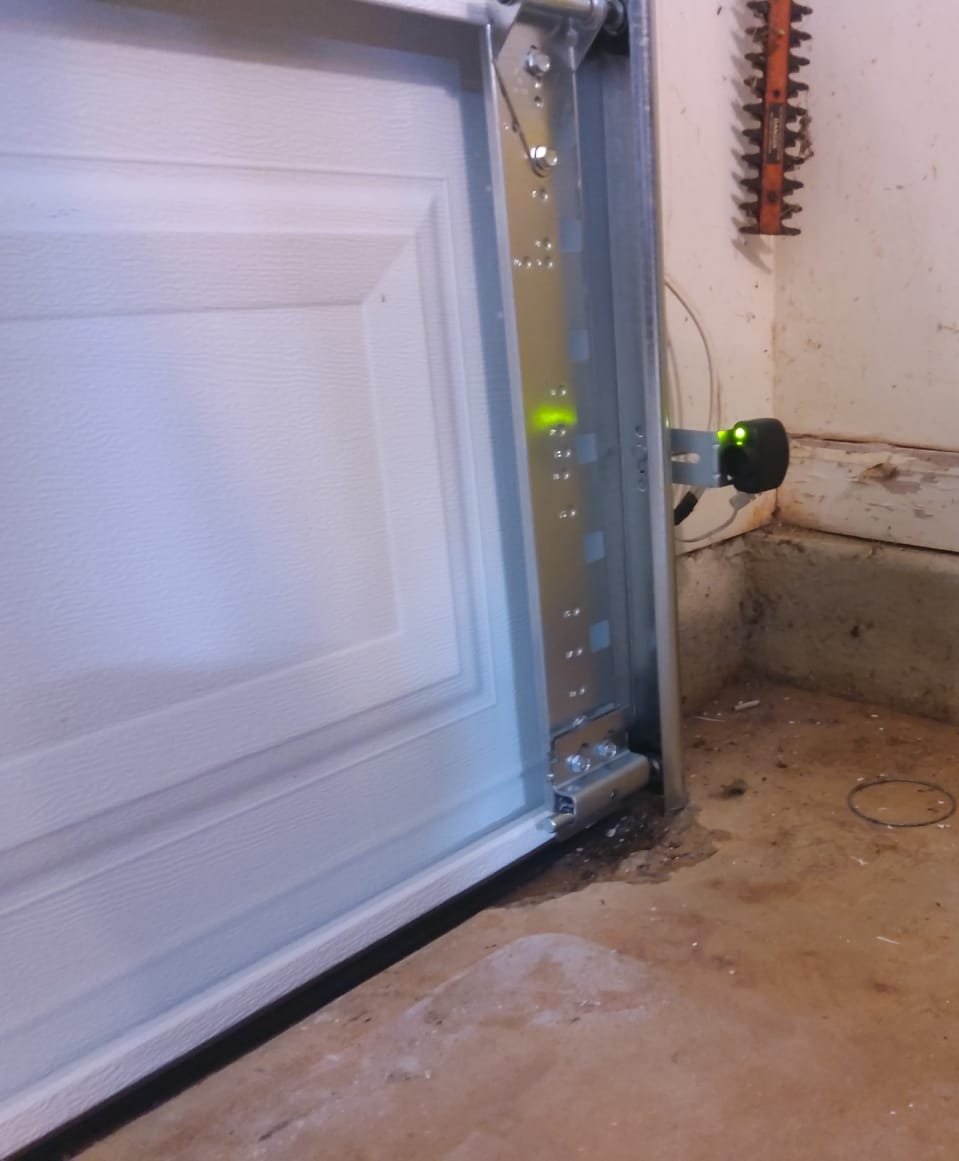
Don't tighten or loosen anything at the bottom corners of the door or on the spring assembly. DASMA's checklist for homeowners says to look for loose cables or loosening in the spring system, but not to touch or adjust the springs or anything they're fastened to. Many doors mark these fasteners in red. If one of them is loose, that's a call to a technician.
A loud bang or pop: a broken spring or cable
What you'll notice: one loud bang, often when nobody is using the door. Afterwards the door feels very heavy, lifts a few inches and stops, or won't open at all. With a torsion spring, you can usually see a gap of a few inches in the coil above the door.
Why it happens: the springs, not the opener, carry the door's weight, and they wear out with use. Clopay says a breaking spring makes a loud, unexpected bang and that you can confirm it by looking for a coil that has separated into two pieces. A lift cable that snaps or comes off its drum can also bang, and leaves the door hanging crooked.
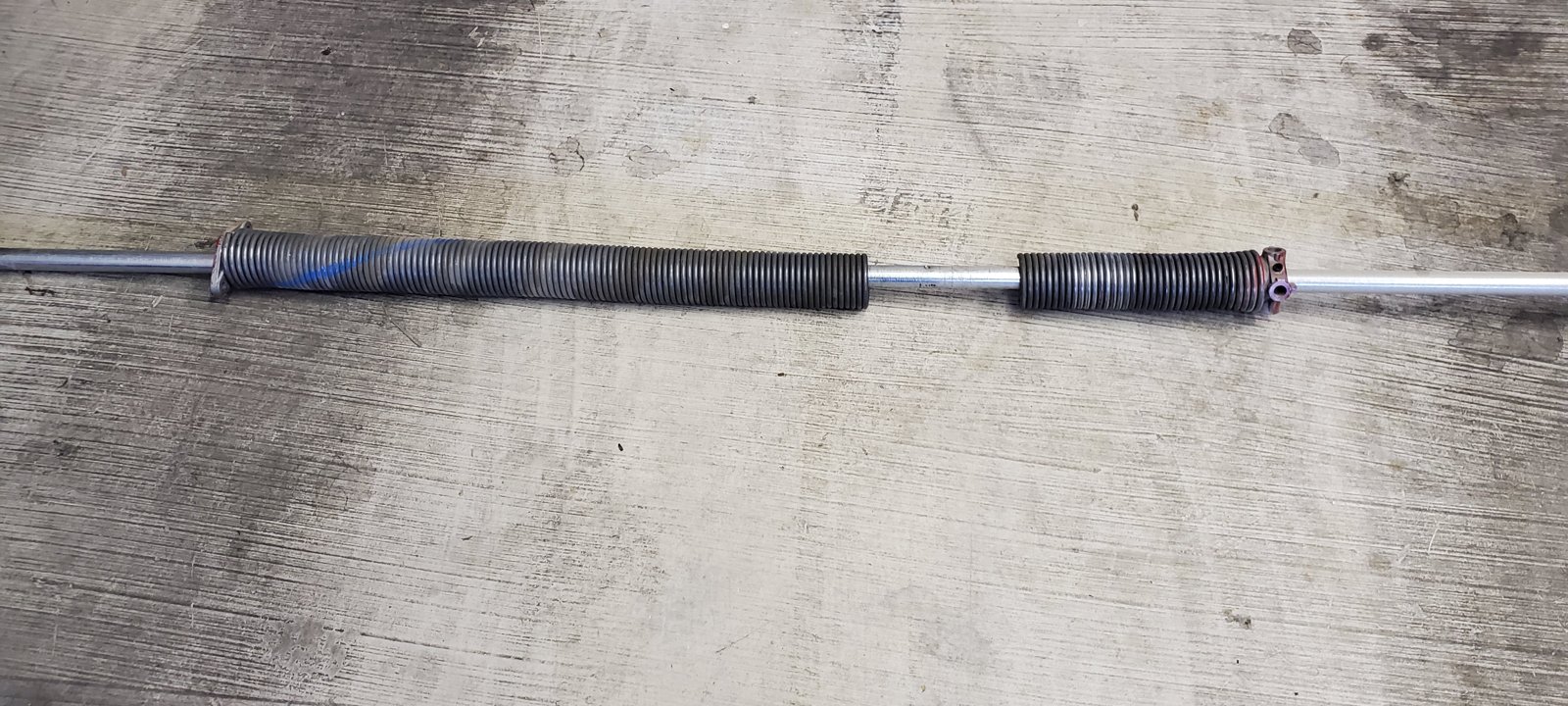
Photo: Garagedoorrepairlasvegas, CC BY-SA 4.0, via Wikimedia Commons.
What to do: stop using the door and the opener. An opener that keeps trying to lift a door with a broken spring strains the motor and strips its gear. Don't try to lift the door by hand. Spring replacement is a technician job: Clopay, DASMA and every door maker say the same, because of the tension the springs hold. If your door has two springs and one broke, DASMA recommends replacing both.
We replace torsion and extension springs, and new springs come with our written warranty: 3 years on torsion springs and 5 years on extension springs (see the warranty). If the door is stuck open, see emergency garage door repair.
Popping and creaking from the spring
What you'll notice: a creak, tick or soft pop from above the door as it opens or closes, with the door still working normally.
Why it happens: the coils of a torsion spring rub against each other as the spring winds and unwinds. When the coils are dry, that rubbing creaks. DASMA says springs can squeak and be noisy from normal use without that meaning a problem.
What to do: a light coat of garage door lubricant along the coils, wiped so it doesn't drip. If the noise continues, or the coil shows a gap or the door starts to feel heavy, have the spring looked at. Never touch the winding cones or set screws.
Jerking, thumping or a door that slams: balance
What you'll notice: the door moves in jerks, thumps on the way down, or drops the last foot. The opener sounds strained.
Why it happens: the springs balance the door so it weighs very little at any height. When a spring weakens, the opener and rollers take the extra load. DASMA says a door that doesn't move smoothly signals an unsafe condition and wears out other parts early.
What to do: run the balance test that Clopay and Chamberlain both give. Close the door, pull the release cord, lift the door about halfway by hand and let go. A balanced door stays put. If it drifts down or shoots up, the springs need adjusting, and that's a technician's job. Our guide to why a garage door feels heavy goes through the test in detail.
Opener noises: chain slap, belt whine, screw-drive grind and vibration
When the one-minute test shows the opener is noisy on its own, the drive type tells you where to look.
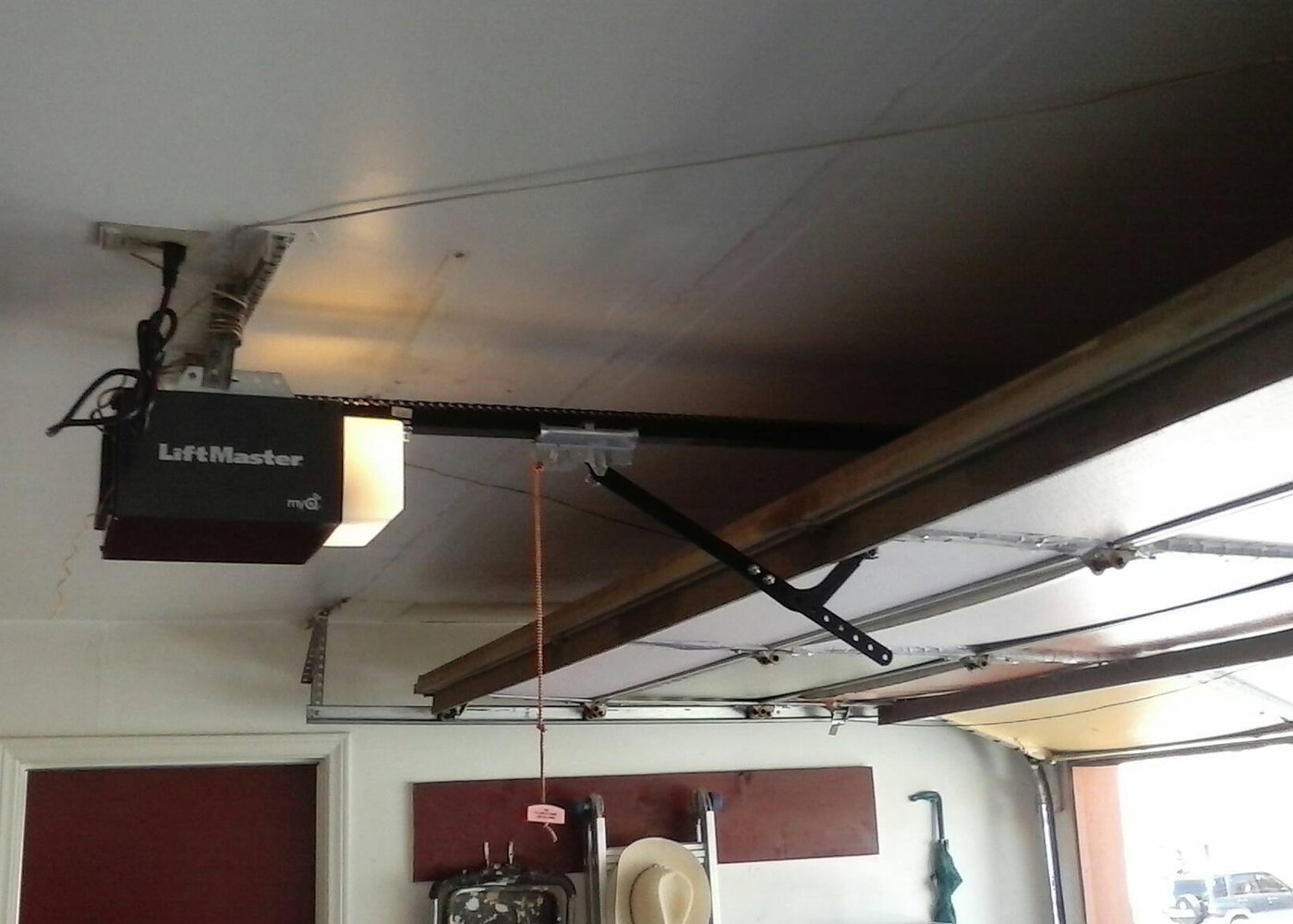
Chain drive: slapping or clattering
A loose chain slaps the rail. Chamberlain gives the setting: with the door disconnected, the chain should sit about 1/2 inch above the base of a T-rail, or 1/4 inch above a square rail, at the midpoint. It's adjusted with the nuts on the trolley, as your manual shows. Some droop with the door closed is normal; if the chain sits at the right height with the door open, leave it. Chamberlain warns that a chain set too loose or too tight makes sprocket noise.
Belt drive: whine or sprocket noise
Belt drives are quiet by design, so a new noise usually means tension. Chamberlain says a belt that's too loose or too tight causes sprocket noise, and the tension check is in your opener's manual. Don't grease the belt.
Screw drive: grinding or groaning
A screw drive needs grease on the threaded rod; Chamberlain's first check for a noisy screw drive is that the screw is lubricated. Genie, which makes many screw-drive openers, sells its own screw-drive lubricant and gives the steps: wipe the screw with a dry rag, run one thin bead of lubricant along its length, run the door up and down to spread it, and wipe off the excess.
Buzzing through the ceiling
An opener bolted to the ceiling framing carries vibration into the room above. Once the door is maintained and the drive tension is set, Chamberlain suggests a vibration reduction kit or vibration isolators for an opener that still vibrates.
And always, after any adjustment: test the safety reverse. Chamberlain says the door must reverse when it touches a 1½-inch object, such as a 2x4 laid flat on the floor. Don't use the opener until it passes.
How to quiet a noisy garage door: the Saturday routine
This is the order we'd follow at home, with a socket set, a stepladder, a brush, rags and a can of garage door lubricant.
- Unplug the opener and close the door.
- Look before you touch. Check the springs for a gap, the cables for frays, the tracks for dents and the hinges for cracks. If you see any of those, stop here and call.
- Clean the tracks with a brush and a damp cloth. No grease in the tracks.
- Tighten loose hardware on the hinges, track brackets and opener mounts. Snug, not cranked. Skip the bottom brackets and anything on the spring.
- Lubricate the hinge pins, steel roller bearings and the torsion spring coils with a garage door lubricant. Leave nylon rollers, the tracks and a belt dry. Wipe off the excess.
- Check the opener drive: chain or belt tension per your manual, or grease on a screw drive.
- Plug in, run the door a few times to work the lubricant in, and listen again.
- Test the safety reverse with a 2x4, and test the safety sensors by breaking the beam while the door closes. Both should send the door back up.
Clopay suggests lubricating every 3 to 6 months depending on use, and more often in dusty or humid climates like a Georgia summer. A yearly garage door tune-up covers the balance, springs, cables, rollers and opener settings in one visit.
Quieter for good: upgrades that make a difference
If the door is in good order and still louder than you'd like:
- Nylon rollers. Clopay recommends high-quality nylon rollers for the smoothest and quietest operation. Replacing steel rollers with nylon ones is a common tune-up upgrade (bottom rollers by a technician).
- A belt-drive opener. LiftMaster says its DC belt-drive openers, with a steel-reinforced rubber belt and a DC motor, avoid the vibration and noise of chain-drive and AC models, and calls them a good fit for homes with attached garages and bedrooms above or beside the garage. We're an authorized LiftMaster dealer.
- A wall-mount opener. LiftMaster's wall-mount openers sit on the wall next to the door instead of on the ceiling, so no sound or vibration travels through the ceiling into the room above.
- Vibration isolators for an existing ceiling-mounted opener, as above.
Our guide to the types of garage door openers compares chain, belt, screw and wall-mount drives side by side, including noise. When you're ready to look at a new opener, see our garage door openers page.
What you can fix yourself, and what needs a technician
| Job | DIY? | Why |
|---|---|---|
| Lubricate hinges, steel rollers, spring coils | Yes | Clopay, Chamberlain and DASMA all list it as owner maintenance |
| Clean the tracks | Yes | Unplug the opener first; no grease in the track |
| Tighten hinge, track-bracket and opener bolts | Yes | Snug, not overtightened |
| Adjust opener chain or belt tension | Yes, with the manual | Retest the safety reverse after any adjustment |
| Replace upper rollers or a cracked hinge | Handy homeowners | One at a time, door closed, opener unplugged |
| Replace bottom rollers or bottom brackets | No | The brackets hold the cables under spring tension |
| Repair or replace springs, cables or drums | No | DASMA: trained technician only |
| Straighten or replace a bent track | No | A pinched roller can jump the track |
| Rebalance the door | No | It means adjusting spring tension |
| Fix a door that's off track or hanging crooked | No | Stop using it and call |
When to call us
Call us if you heard a bang, if a cable looks frayed or slack, if the door jerks or feels heavy, if the grinding comes back after cleaning and lubrication, or if you'd rather have the whole door quieted in one visit. We have repaired garage doors and openers across Metro Atlanta since 1999, we're rated 4.9 on Google with Over 4,000 Five-Star Reviews, and our office is open seven days a week, 7 AM to 8 PM.
Call (678) 271-8918 or book a visit online. You'll get a written price before we start.
Frequently asked questions
Why is my garage door making so much noise?
Most often it's dry or worn hardware: hinges and steel rollers that need lubricating, rollers with worn bearings, or bolts shaken loose by vibration. Run the door with the opener disconnected. If it's still noisy, the sound is in the door; if not, it's in the opener's chain, belt or screw.
What can I spray on a noisy garage door?
Use a lubricant made for garage doors, a silicone-based spray or white lithium grease, as Clopay recommends. Put it on the hinge pins, steel roller bearings and torsion spring coils, and wipe off the excess. Don't spray the tracks or nylon rollers, and skip WD-40 and household oil.
Why does my garage door squeak when it opens?
A squeak that repeats as the door moves is almost always a dry hinge or roller bearing. A squeal from above the door is usually the torsion spring. Lubricate those parts. If a hinge is cracked or a roller wobbles, replace it; lubricant won't fix worn parts.
What does a loud bang from the garage mean?
Usually a broken torsion spring. Look for a gap in the coil above the door. If the door now feels heavy or hangs crooked, don't use it or the opener, and call a technician. Spring and cable repairs aren't DIY jobs because of the tension involved.
Why does my garage door rattle?
Loose hardware. The door's own vibration loosens hinge bolts, track brackets and opener mounts over time. With the opener unplugged, snug them with a socket wrench, without overtightening. Don't touch the bottom brackets or any fastener on the spring assembly.
Why does my garage door make a grinding noise?
Grinding from the door usually means worn roller bearings, a dirty track or a bent track. Clean the tracks and lubricate steel rollers; if the grinding stays, replace the rollers. Grinding from the opener with no door movement points to a stripped drive gear inside the opener.
How do I make my garage door opener quieter?
Check the drive first: chain or belt tension per your manual, or fresh grease on a screw drive. Tighten the rail and mounting bolts. If it still carries noise into the house, a vibration isolator kit helps. For a replacement, LiftMaster points to DC belt-drive and wall-mount openers as its quiet options.