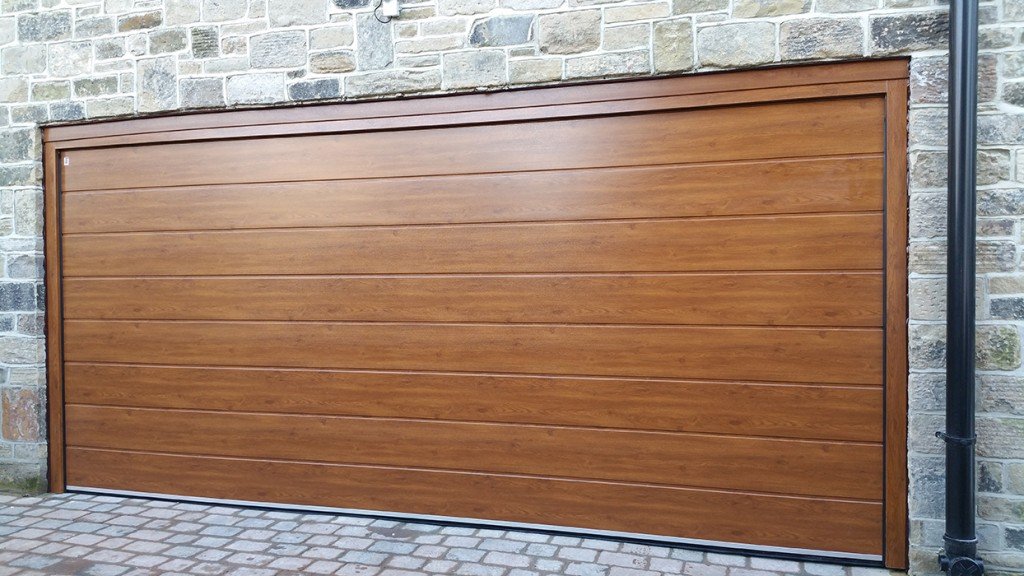
To protect a wood garage door in Georgia, inspect the finish and bottom edge, wash it gently, and renew the coating before bare wood is exposed. Follow your model’s instructions and leave spring balance to a technician.
Metro Atlanta’s humid summers bring two different problems to the same door. Rain can collect along the bottom section while direct sun wears the finish on the face. Start where your door gets the wettest or the most sun, even if the rest still looks freshly painted or stained.
Inspect the finish before you buy supplies
Start with the door fully closed. Walk across the driveway and look at the whole face first, then move in to check the lower corners, the horizontal ledges and the edges of the panels. A wide photo and a few close-ups give you something to compare the next time you look. Note whether the wear is spread across the face or concentrated in one place.
From inside, look at the wood around the hinges, the lower corners and the bracket where the opener arm meets the upper section. Stay on the floor and stick to what you can see. If a bracket looks loose or the wood is split where it holds a fastener, stop using the door and have a technician inspect it.
| What you see | Where to look | What to do next |
|---|---|---|
| Dirt or a dusty film, with the coating intact | Flat faces and recessed panels | Wash gently and inspect again once it dries. |
| Faded, dry-looking or thin stain | The most exposed face and lower rails | Check the stain maker’s renewal instructions while the wood is still sound. |
| Chipping, cracking or peeling paint | Panel corners, joints and the bottom edge | Find and correct any source of moisture. Prepare and prime exposed areas as the paint system directs. |
| Raised grain, persistent dark patches or a swollen lower rail | Just above the seal and at the ends of the bottom section | Check where water is coming from. Arrange an inspection if wood stays soft, swells or separates. |
| A split at a fastener, shifting hardware or a section that’s bowed enough to bind | Bottom corners, hinges and opener-arm bracket | Stop using the door and call a technician. |
Wood expands and contracts as its moisture content changes. Small surface checks, the fine cracks that follow the grain, can appear as wood weathers. Pay attention to where they are. A small check in the middle of a sound panel calls for finish maintenance. A split where a hinge or bracket attaches needs a door inspection.
How to clean a wood garage door
Read the care guide for your model and any instructions for its current coating. For a finished wood door, Clopay’s wash method uses lukewarm water, diluted mild soap and a soft cloth or sponge. Keep the door closed while you clean reachable surfaces.
- Wait until the door is shaded and cool. On an exposed garage, that can mean working earlier in the day or waiting until the sun moves off the door.
- Rinse away loose grit with warm water. Use gentle flow and avoid directing a stream at the section joints or under the bottom edge.
- Wash with a soft microfiber cloth or a nonabrasive sponge. Use a mild soap diluted as directed. Work across the face and wipe the ledges where dirt collects. Clean the windows separately according to the glazing instructions.
- Rinse with clean, lukewarm water. Give the surface time to dry. Look again at spots that appeared faded, dull or dark before cleaning and note which marks remain.
Skip the pressure washer. Clopay also advises against scouring pads, solvent cleaners and acidic cleaners such as vinegar. If dark spotting remains, ask the finish manufacturer which cleaner is compatible before trying to remove it. If you can already see bare or swollen wood, check the refinishing guidance before washing that area. Any bare wood must be dry before coating.
Keep water away from the bottom section
On a sectional door, the bottom section is the full-width piece that meets the floor. On a one-piece door, start with the lower edge. Check either after a hard rain. Water can wick up into wood at the lower edge, and water sitting on a horizontal ledge can seep into the section itself. The USDA Forest Products Laboratory’s guide to finishing wood explains why wood grain at exposed ends takes up water readily.
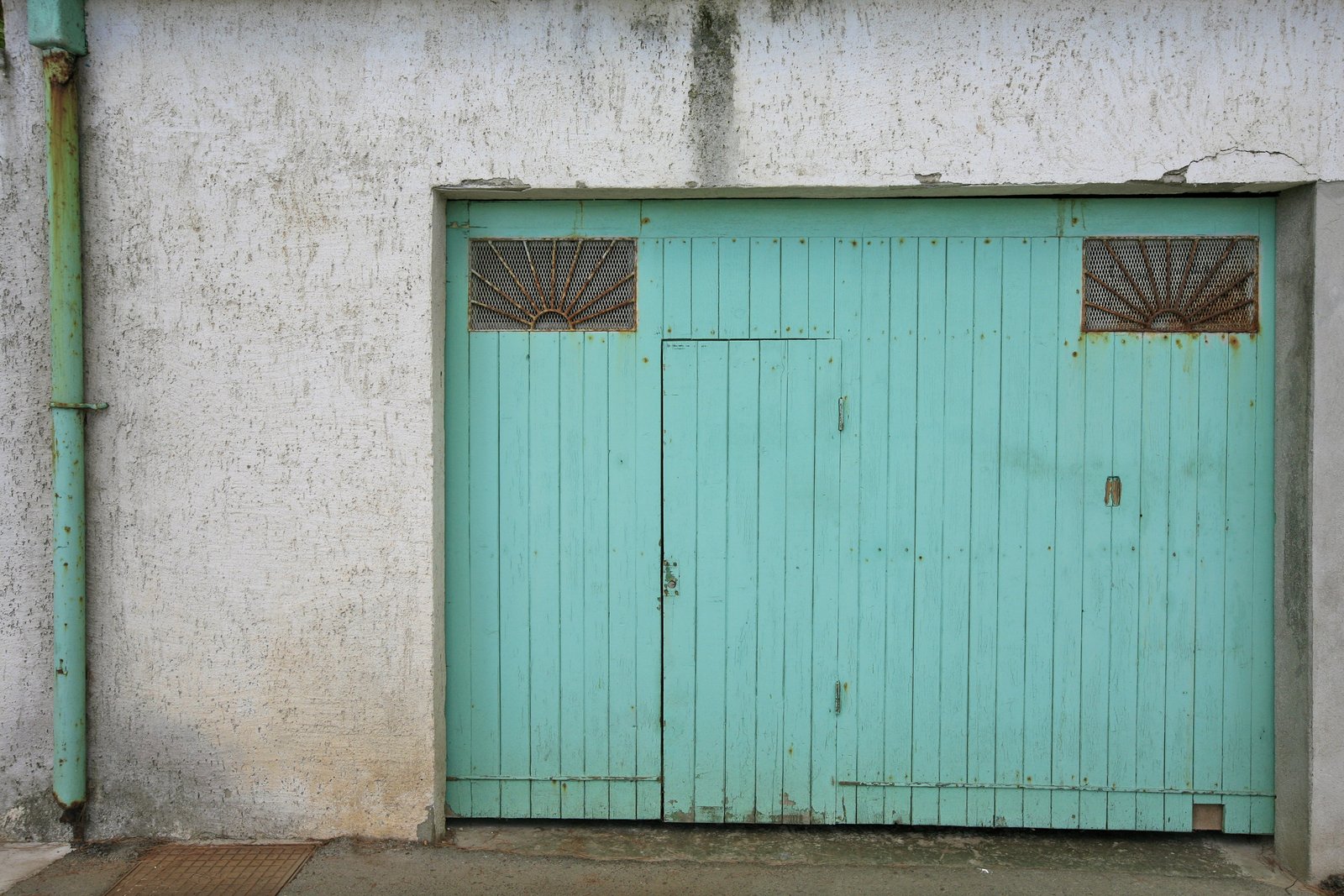
Photo by Alex Proimos, Wikimedia Commons, CC BY 2.0. Resized.

Follow the water before you recoat
- Look at the driveway and the floor just inside. After a storm, see whether a puddle sits against the door, water has crossed the threshold or a drip line follows the garage opening. Check whether a downspout discharges toward the door or a sprinkler regularly wets it. Redirect water you can control and get persistent pooling or drainage problems assessed.
- Look at the seal with the door closed. The flexible strip along the floor is the bottom seal. From inside, check for tears or daylight. If the edge sits unevenly, have the door and the floor contact checked before choosing a replacement seal. Our garage door weather seal service covers the seal itself. Keep your hands clear of the bottom corner brackets, where the lift cables attach.
- Check the wood directly above the seal. Look for flaking finish, an exposed edge, swelling or a panel pulling away from its frame. If the surface still looks dark or swollen once the driveway dries, get the section evaluated. Tell the technician whether water shows up inside as well.
If the wood is sound, restore the coating once the wetting problem is addressed and the wood is dry. Use the manufacturer’s directions on exposed edges and joints. If the underside or a concealed edge needs work, arrange access with a technician. Leave the sections assembled and keep your hands out of the joints.
Soft wood, separated joints or movement around a fastener needs a closer look before anyone starts sanding. Ask about garage door section replacement if the damage is confined to the bottom section. A technician can check the wood at the hardware and tell you whether a compatible section is available.
Give a sun-facing door a closer look
Watch where the afternoon sun lands on your garage. On a south-facing door with little overhang, check the exposed face for fading, dry patches and fine cracks. A west-facing door that gets direct afternoon sun deserves the same attention. Compare the exposed area with a strip under the header or with a neighboring door that sits farther back under an overhang. Uneven fading is a reason to inspect the sunny area between scheduled checks.
Dark coatings absorb more heat. For its wood doors, Clopay cautions that high surface temperatures from dark colors can contribute to shrinkage, bowing, cracking and early finish wear, especially on doors with direct southern exposure. If you want a darker color for a sunny garage, ask the door manufacturer which colors it permits on your model and what upkeep it calls for.
Plan cleaning and coating around the actual conditions at the door. Check the finish label for surface temperature, humidity, drying and recoat limits. A door can stay wet with morning dew after the driveway has dried, or get hot in direct sun while the air still feels mild. Choose a dry window long enough for the coating to set, with rain and evening dew in mind.
When to refinish a wood garage door
Use the manufacturer’s schedule and act sooner if you find thin finish, exposed wood or peeling. Clopay’s wood garage door care manual calls for an annual finish inspection. Its schedule distinguishes painted doors from stained ones.
| Door or finish | What the manufacturer recommends |
|---|---|
| Clopay painted wood | Repaint every 1 to 2 years. Inspect annually and address signs of coating failure when you find them. |
| Clopay stained wood | Inspect annually and reapply when the stain maker directs. Clearer stains generally need more frequent renewal. |
| Wayne Dalton 7100 with an applicable clear-coat system | The 7100 manual says that when the finish begins to fade, a field-applied clear coat can be needed after 1 to 3 years, depending on exposure and use. Check the model’s finishing insert for the specific coating. |
If your door has a custom shop finish, ask the installer or finish supplier for the product and color before you buy a new coating. Save the information with your door manual and warranty paperwork. It gives you a starting point for identifying the right cleaner, primer or renewal coat and for matching a small repair.
One worn spot on a door with an otherwise sound coating is a good place to check whether the finish maker permits a touch-up. If the coating is thin across several sections, or peeling in several places, plan for broader preparation and refinishing. Fix active leaks, repeated wetting or damaged wood before coating the door.
How to refinish with paint or stain
Start with the door you have
Find the model on the label or order paperwork and check the material and original finish. One manufacturer can sell both paint-grade and stain-grade panels in the same series. For example, Wayne Dalton lists paint-grade configurations for its 7101 through 7104 models and a raised hemlock panel on the 7105 that can take paint or stain. Check your own model and panel material before choosing a finish.
| If you want | Choose | Check first |
|---|---|---|
| A uniform, opaque color | An exterior paint system approved for the door | Match the primer, finish coat and existing surface. Clopay specifies a latex finish over its factory primer. |
| Visible grain | A compatible exterior stain approved for stain-grade wood | Check how the existing finish was applied and what prep is needed for the wood to accept the stain. |
| To switch from paint to a see-through stain | Have the door material and removal work assessed first | Penetrating stain needs access to the wood, and some paint-grade panels are unsuitable for stain even after stripping. |
Prepare the surface
- Wash, dry and reassess. Find out whether you are working with a sound finish that needs renewal or an area where paint has lifted or wood has been exposed. Confirm which preparation steps and products your coating maker specifies for each surface.
- Remove loose material as directed. A sound painted face can need light sanding for the next coat to grip. On peeling areas, remove loose paint and smooth the transition between firmly attached paint and exposed wood. Clear away sanding dust before coating. For an older painted door at a pre-1978 home, consult the EPA’s lead-safe renovation guidance before sanding or scraping.
- Check caulking instructions for your finish. Clopay specifies paintable exterior caulk at its wood panel joints for painting and gives different directions for staining. Follow the model guide for compatible sealant, joint location and when to apply it. Leave the moving gaps between door sections clear.
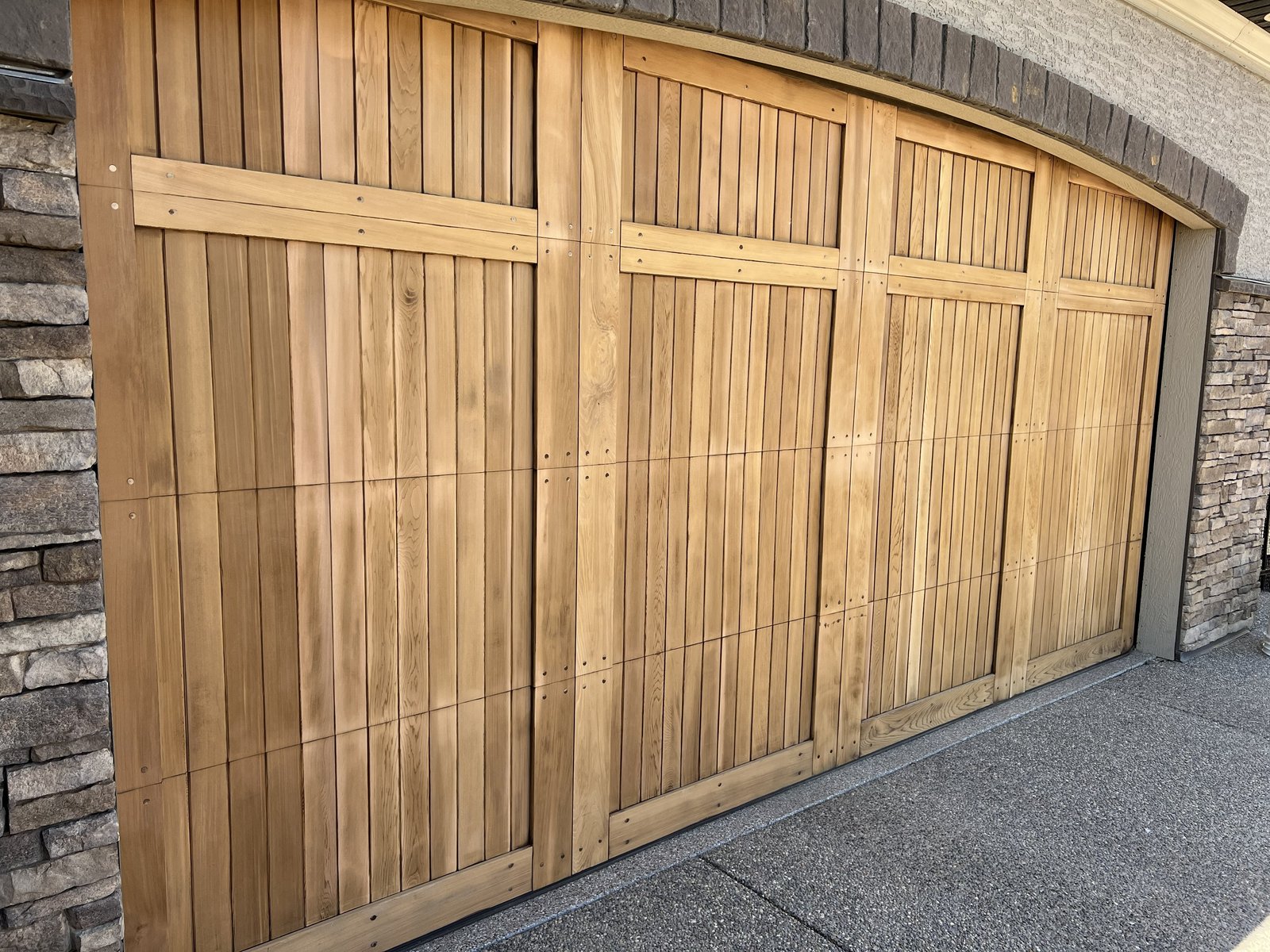
Photo by Dynamic Painting, Wikimedia Commons, CC BY 4.0. Resized.

Apply the finish and let it dry
If you’re painting, use the specified exterior primer where the instructions call for it, then apply a compatible finish paint. Clopay’s instructions for finishing bare wood specify at least 1 coat of primer and 2 coats of exterior finish paint. Its guide also requires a tannin-blocking primer on cedar and redwood. Tannins are natural compounds in the wood that can leave brown marks through paint. Follow the label for coverage and the time between coats.
If you’re staining, follow the door maker’s approved system and the stain label. For a Clopay door that accepts stain, its manual calls for an exterior penetrating oil-based stain that repels water and resists mildew and ultraviolet light. The same manual advises against adding a film-forming varnish or urethane. If your door came with a factory stain, check the care guide for the original system and its compatible renewal coat.
Finish new sections before installation. The Door and Access Systems Manufacturers Association (DASMA) calls for finish coverage on all 6 sides of each section, including the back, the upper and lower edges and both ends. For a door already installed, ask a technician about access wherever the model instructions require work behind the hardware or on hidden surfaces. Leave the door assembled for face maintenance, keep finish off moving hardware and let the coating dry as directed before resuming regular use.
If you’re shopping for a replacement, see our wood garage doors and ask which finishes are available for your door’s exposure. The model, the finish and the location of the opening will shape the care you’ll need to give it.
Hardware, door weight and when to call a technician
Wood garage doors are heavy. The springs counterbalance that weight so the door can move with little effort. A torsion spring is the coil on a shaft above the door. Extension springs run beside the overhead tracks on some doors. Both types store energy, and the lift cables and bottom brackets are part of the same system.
If the door starts binding, looks crooked or feels unusually heavy in normal use, stop using it. Leave it in place and have a technician check its balance and the condition of the wood around the hardware. A door that begins struggling after a finish job also needs attention. DASMA notes that coating an installed door adds weight and can change how it operates. Read why a garage door feels heavy for signs to report when you call.
| Homeowner care | Technician work |
|---|---|
| Look for finish wear, water near the floor and visible gaps in the seal. | Evaluate a bowed, swollen or damaged section and the wood around hardware fasteners. |
| Clean intact finishes and renew reachable surfaces when the manufacturer permits it. | Safely access concealed surfaces if refinishing requires removing sections or hardware. |
| Look from the floor for frayed cables, loose hardware or a roller out of its track. Keep clear and leave adjustments alone. | Check balance and service springs, lift cables and bottom brackets. |
| Check the manual for which accessible parts to lubricate and which lubricant to use. | Diagnose binding, a change in weight or travel, or loose hardware attached to wood. |
Use our garage door maintenance checklist for routine care beyond the finish. If the door is operating normally but due for a professional check, book a garage door tune-up. If it’s heavy, crooked or has loose hardware, tell us what changed when you call so we can arrange a garage door repair visit.
All Four Seasons has been family-owned since 1999. For a wood door inspection in Metro Atlanta, call (678) 271-8918 or request a service visit. You’ll get a written price before repair work starts.
Frequently asked questions
How often should I inspect my wood garage door finish?
Clopay calls for an annual finish inspection on its wood doors. Follow your own model’s schedule, and take another look if water repeatedly collects at the bottom or one section loses color faster in direct sun.
Can I pressure-wash a wood garage door?
Skip the pressure washer. Follow the model’s wash instructions. Clopay calls for warm water, diluted mild soap and a soft cloth or nonabrasive sponge, followed by a clean-water rinse.
Can I stain a painted wood garage door?
First confirm the door is stain-grade. A penetrating stain needs access to the wood, so the existing paint has to come off where you want that finish. Ask the manufacturer or a refinisher how the door was built and whether the conversion is suitable before stripping it.
What if only the bottom of my wood garage door is peeling?
Look for water pooling against the door, a gap in the seal or runoff hitting the face. Correct the moisture source and let the wood dry before recoating. If the lower edge is soft or a joint is separating, have the section inspected first.
Should I put a clear coat over my stained garage door?
Use the renewal coat specified for the existing finish and door model. Clopay advises against varnish or urethane that forms a film on its stained wood doors. Wayne Dalton’s 7100 manual directs owners to the model’s finishing insert for any clear-coat maintenance.
Why does my wood garage door feel heavier after refinishing?
A coating adds weight, and a change in how the door travels also warrants a check for binding or balance problems. Stop using the door and have a technician inspect it. Leave spring and opener adjustments to the technician.
Top photo: First Garage Doors, Wikimedia Commons, CC BY-SA 4.0. Re-encoded.
