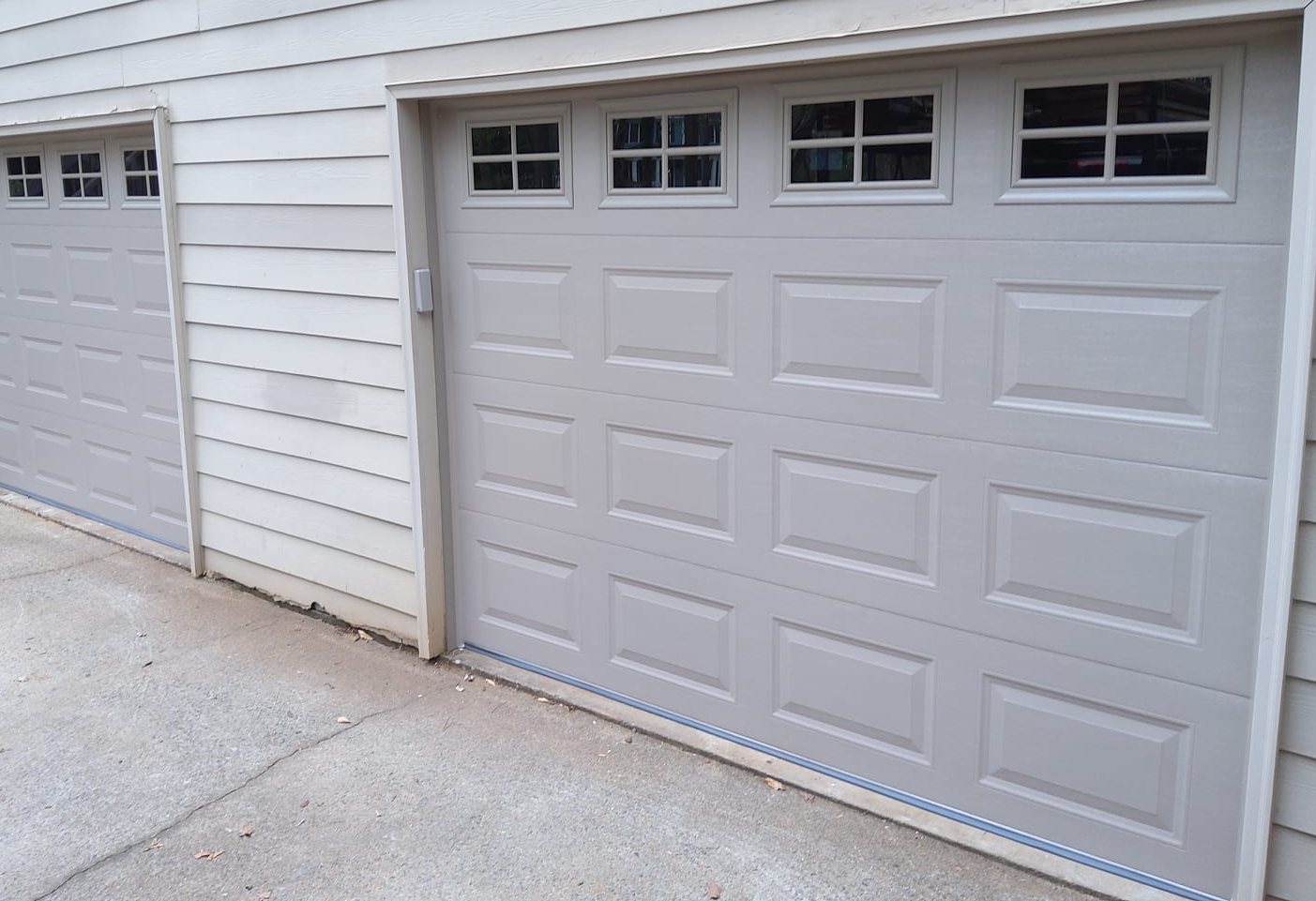
If rain slips under your garage door, check the bottom seal and the concrete it closes against. If water pools at the door, redirect the runoff first. In a mapped flood zone, ask your local floodplain office about flood vents.
If water is rising inside the garage, stay out. Follow local emergency instructions, and keep away from wet electrical equipment. Once the area is safe, the location of the first wet spot can help you decide whether to call a garage door technician, a drainage contractor or your floodplain office.
Find where the water gets in
Start with the door closed and the garage dry. A puddle in the middle of the garage tells you where water collected. Look for the wet trail it left behind to see where it entered.
| What you see | Where to look first | What to do next |
|---|---|---|
| A narrow wet line starts beneath the door, and the driveway drains away | The flexible bottom seal and the concrete directly beneath it | Check for a torn seal or a low spot where the seal loses contact |
| Water gathers against the outside face or flows down the driveway toward the opening | Driveway slope, roof runoff and any existing drain | Trace the water and correct the drainage before choosing a threshold |
| One corner gets wet, or the inside of a door section is streaked | The side weather seal and the joints between door sections | Inspect the side seal and note whether the leak happens only in wind-driven rain |
| A few drops fall just after the wet door opens | The outside of the door and the joints that flex as it goes overhead | Watch for the same pattern during another rain. Some dripping as a wet sectional door opens is normal |
| The wet trail starts at a wall, a floor joint or a drain | Water entering through the building or backing up through plumbing | Ask a drainage, foundation or plumbing professional to trace the source |
| Water rises around several sides of the garage or across the street | Floodwater moving through the area | Follow emergency guidance and have the flood risk assessed before making changes |
- Look for daylight with the door fully closed. From inside, look along the bottom edge and into both corners where it meets the vertical frames, called jambs. Mark gaps on the floor with painter's tape so you can find them after the door opens.
- Compare the gap with the seal and the slab. Look for splits, missing pieces or a flattened strip. Lay a straightedge across a dry area of concrete where the gap shows. A seal that looks sound but bridges a dip points to the slab as something to check. If the door itself sits crooked, leave it in place and arrange service.
- Trace the water after a safe, ordinary rain. Look for leaves or silt against the opening, a downspout emptying beside it, or a low spot where water stays after the rest of the drive drains. Photograph the first wet spot from a dry location. That photo is more useful than one of the whole floor after the water has spread.
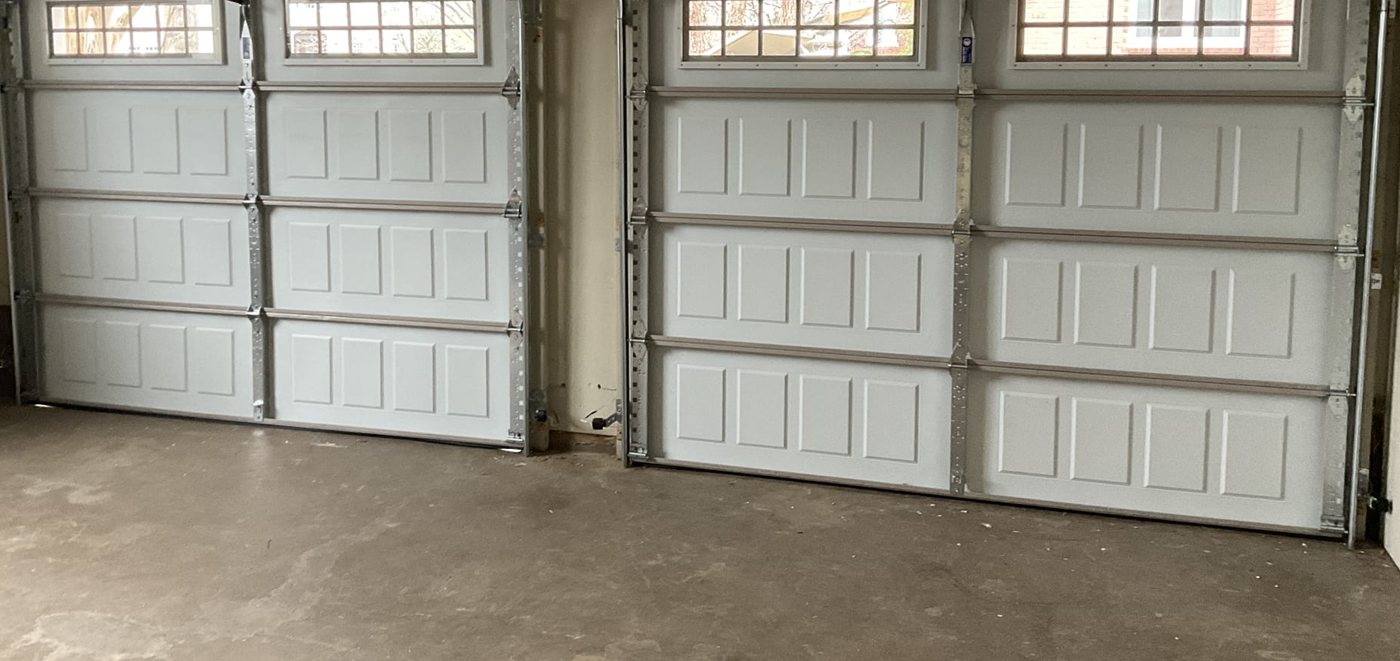
The Door & Access Systems Manufacturers Association (DASMA) describes several paths for rain through sectional garage doors. Wind can drive it through the bottom, sides and joints. Water can also collect between sections and travel to the ends, where it gets around the perimeter seal. A wet corner alone gives you a place to start looking.
Choose the right bottom seal or threshold
A bottom seal moves with the door. It's the flexible strip that sits against the slab when the door closes. Many doors hold it in a narrow channel along the bottom edge called a retainer. A threshold seal stays on the slab. Its low ridge gives the bottom seal a surface to close against and can limit shallow rainwater entry.
Replace the door's bottom seal if it has worn out
If the concrete is sound, the door closes evenly and the rubber is cracked or flattened, start with a replacement bottom seal. Check your door's model and the shape of the existing insert. Clopay's replacement instructions point out that retainer designs vary and recommend confirming the right part with the manufacturer. For example, Garaga lists U-shaped seals with PVC or aluminum retainers as well as a one-piece option. Bring the model number and a photo of the end profile when ordering a replacement.
On a door that closes evenly, a torn or shrunken strip can leave an opening at one corner even if the rest of the seal looks good. Look at the vertical weather seal there too. If the opening shows daylight above the floor, the side seal or the door's fit deserves a look. Our garage door weather stripping guide covers the different profiles and walks through routine replacement.
Add a floor-mounted threshold for a shallow gap
Consider a threshold if the door works normally, the bottom seal is intact and light runoff still reaches a small gap at the floor. For a slab that has settled, cracked or dropped at one corner, have the concrete checked first. The door needs an even contact line. DASMA's guidance on water entering beneath a sectional door illustrates how a sloped concrete lip or a recessed sill can help manage rain at that line.
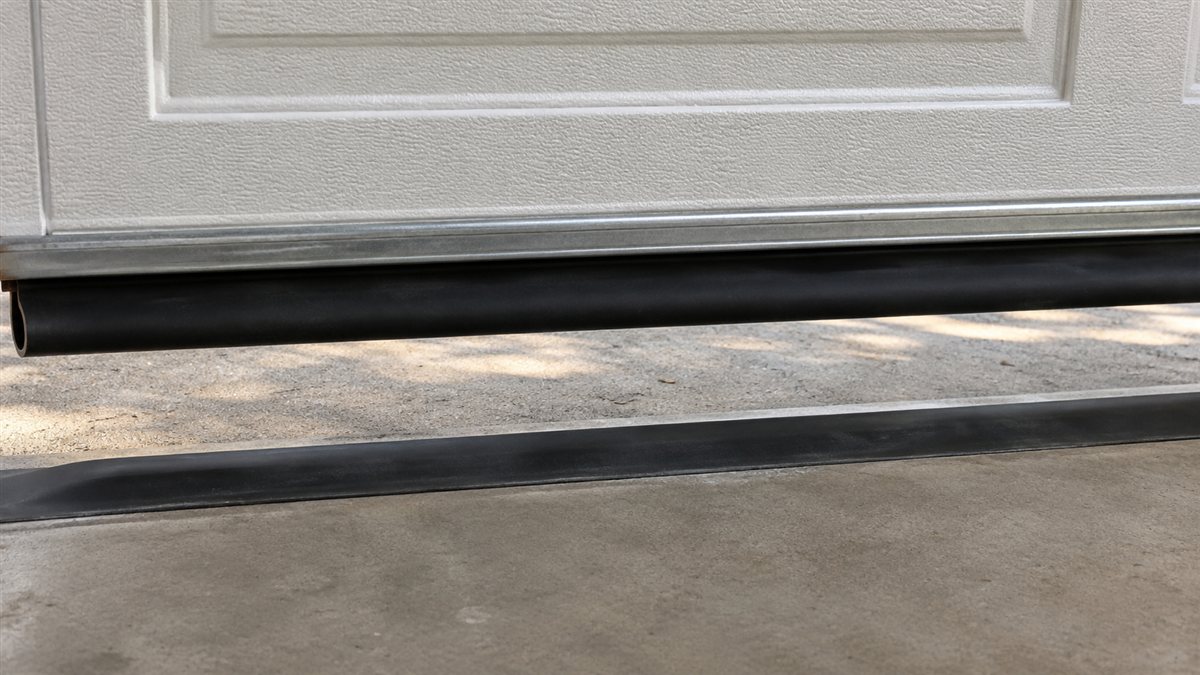
Pick a threshold low enough for the door to close as its manufacturer intended. Also check what happens to water that starts inside, such as drips from a wet car. If the garage floor drains toward the opening, adding a raised strip can leave you with standing water on the garage side. Check where the water will go before you bond the strip down.
Fit a threshold on a dry day
- Read the instructions for your door and the threshold kit. Check the compatible door types, the condition and finish of the concrete, the adhesive and the time before the strip can take vehicle traffic. If there's a required flood opening in or near the door, check with your floodplain official before altering the opening or obstructing the path to it.
- Clean and dry the contact area. Sweep away grit and remove oil or loose paint as the kit directs. If the concrete is crumbling along the door line, have it repaired before applying adhesive.
- Dry-fit and mark the position. Lay out the strip without adhesive. Use the product's placement instructions to see where the ridge meets the door when closed. Mark the footprint on the slab. Keep fingers and tools clear as the door moves.
- Bond it and let it cure. Use the specified adhesive and follow the kit's directions for the ends, the door position while it sets and when you can drive over it. Weather Defender, for example, calls for keeping vehicles off its original threshold for 24 hours. Follow the timing for your own kit.
- Check the door and then check for leaks. After the kit's required cure time, verify normal closing and follow your opener manual to test the safety reverse. If the door reverses at the strip, stops short or fails a safety test, stop using the opener and have the setup checked. Leave the safety settings and sensors alone. After the next ordinary rain, see whether the first wet spot has moved or disappeared.
Fix driveway drainage if water pools against the door
A downslope driveway can carry water to the full width of a garage door. Start by looking uphill. If one downspout spills into the driveway or a planting bed sends runoff across it, fixing that source can reduce the amount of water the opening sees. The U.S. Department of Energy's Building America Solution Center recommends sloping hard surfaces away from the house and using drains or shallow channels where space or terrain limits the slope.
- Check roof runoff. From the ground, look for water spilling over gutters or a downspout that empties beside the door. Clear debris where you can reach safely, and have a contractor route recurring roof runoff to a suitable discharge point away from the garage and foundation.
- Check an existing drain at both ends. With the area dry, clear leaves from the grate. Check the outlet if it's visible and safely accessible. If water still stands on the driveway or backs up through a clear grate, ask a contractor to check the pipe and outlet as well as the inlet.
- Intercept water crossing the pavement. A channel drain, also called a trench drain, is a long grated inlet across the water's path. On a driveway that slopes toward the garage, a contractor can assess whether a drain across the approach will catch water before it hits the door. Ask where the outlet will discharge, whether the grate is rated for your vehicles and how you'll clear it after a storm.
- Give yard runoff a route around the building. A swale is a broad, shallow channel that carries water away. If the lawn or bed sends water toward a side wall or down the drive, a drainage contractor can assess whether a swale or regrading will redirect it. Check local rules before changing the discharge or altering grade in a floodplain.
Ask the contractor to show you the path from where the water arrives to where it leaves. If there is a dip at the entrance itself, ask whether the concrete apron just outside the door needs reshaping. The area a few feet back from the door and the strip it closes on both matter. Take another photo during the next comparable rain to see how the water moves after the work.
When FEMA flood vents apply to a garage
Rain running down a driveway and floodwater rising around the whole building call for different fixes. During the September 2009 Metro Atlanta flood, the National Weather Service recorded Sweetwater Creek near Austell cresting about 20 feet above flood stage. For a house exposed to rising floodwater, start with the property's flood risk and the garage's elevation.
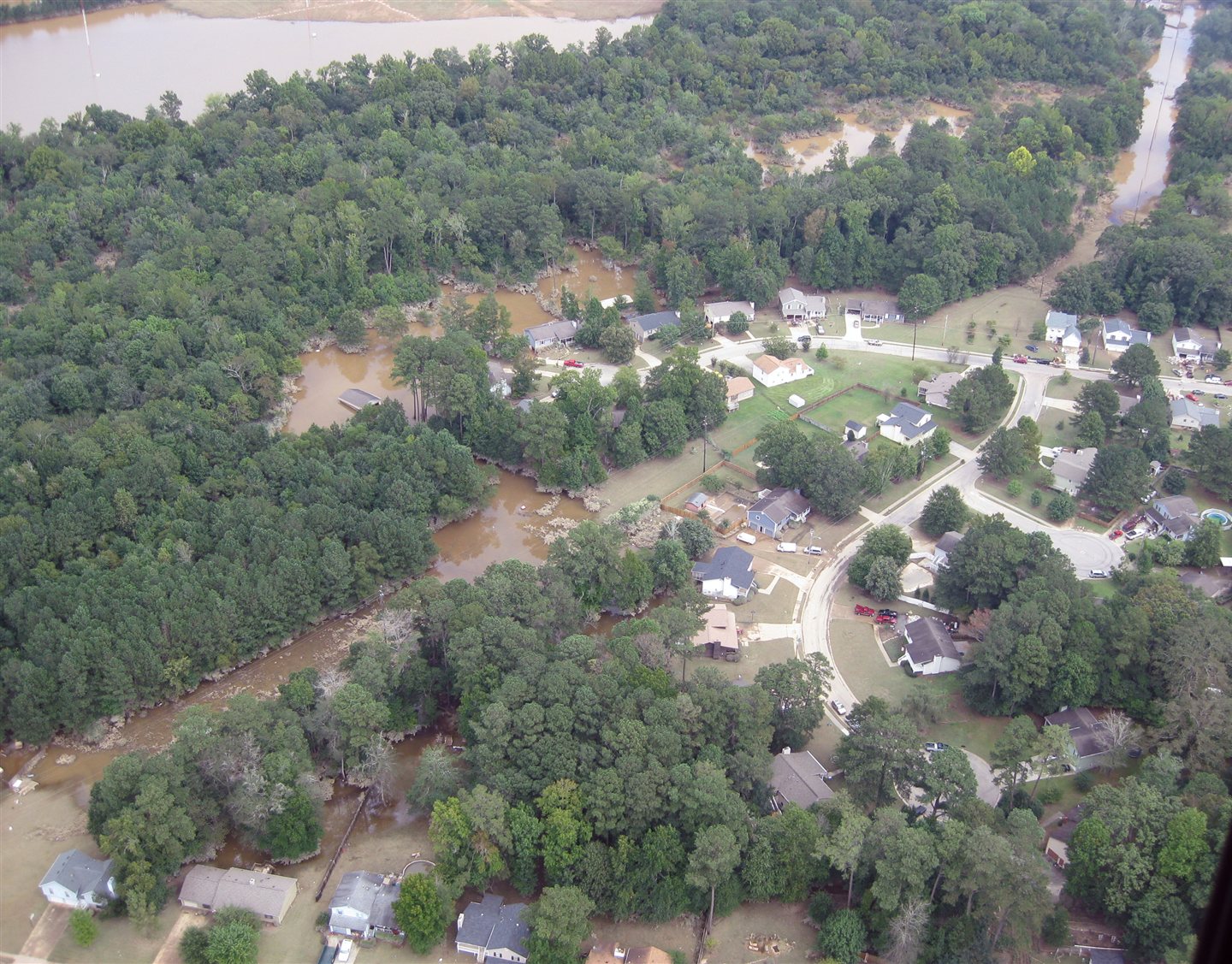
Central Georgia, September 2009. Photo by Bruce Kinney, FEMA, via Wikimedia Commons.
Look up your street address in FEMA's Flood Map Service Center. Then ask your city or county floodplain administrator how the map, your garage floor elevation and local rules apply to the building. The City of Atlanta's floodplain management office explains how to get a determination for property within city limits. If you have an Elevation Certificate or current plans, bring them when you ask about a replacement door or other work.
A flood vent, also called a flood opening, lets rising water enter a qualifying enclosure and flow back out on its own. The two-way flow reduces the difference in water pressure against the walls. FEMA's flood-opening guidance covers qualifying garage enclosures below the base flood elevation, the expected water level of a flood with a 1% chance of occurring in any year. An attached garage below that elevation in Zone A can qualify under the enclosure rules when used only for parking, building access or storage and when it meets the other requirements.
FEMA's Technical Bulletin 1 on flood openings describes what your local official or designer will check.
- Number and placement. A qualifying enclosure needs at least 2 flood openings to the exterior. The building-code provisions cited in the bulletin place openings on different sides of the enclosure. Each opening's bottom edge can sit at most 1 foot above the higher of the finished ground outside or the finished grade or floor inside, measured directly below that opening. Confirm the locally adopted requirements before any work.
- Opening size. For non-engineered openings, the federal minimum is 1 square inch of net open area for every square foot of enclosed area. For example, 400 square feet calls for at least 400 square inches of net open area. Use the clear area after applicable obstructions, such as fixed louvers, are accounted for. Engineered vents follow their documented coverage and installation conditions.
- Automatic operation. The overhead door itself, gaps around it and an opener triggered by water do not count. FEMA favors permanent wall openings and advises putting flood openings in the garage door only when there's insufficient wall area. If vents are already in your door, identify and document them before ordering a new one. Keep stored items, sealant and trim out of the vent path.
For utilities such as a furnace, water heater or electrical panel in an area that floods, Georgia's emergency management agency advises raising them. Ask the appropriate trade and your local official where the equipment can go. Keep important documents in a dry place and decide on an evacuation route before a storm.
What to do if the garage has flooded
- Wait until local officials say it's safe to return. Stay out of standing floodwater and never drive through a flooded road. Floodwater can carry sewage and hide hazards.
- Leave the opener and wet electrical equipment off. The CDC's guidance on reentering a flooded home says to shut off main power only if you can reach the switch from a dry location. If the route crosses standing water, stay out and call an electrician. Have an electrician check the electrical system before restoring power after flooding. Tell the garage door technician where the water reached, including any low-mounted sensors or wiring.
- Photograph the water line and damage when it's safe. Get wide views and close-ups of the door, walls, floor and equipment before cleanup. If you have flood insurance, contact the insurer and follow its instructions. FEMA's National Flood Insurance Program has a guide to documenting flood damage.
- Have a distorted or jammed door checked before operating it. Keep clear if a section is bent, the door hangs unevenly or a roller has left its track. Leave the emergency release alone. If the door is out of its tracks, see our off-track garage door repair page. If equipment got wet, arrange an inspection through our garage door opener service after electrical clearance. Our sensor troubleshooting guide is for equipment that's dry and safe to use.
What you can do yourself and when to call
| Job | Who to call or what to do |
|---|---|
| Trace an ordinary rain leak from a dry spot, clear a reachable grate or check for a worn seal | You can do these checks with the door closed and the area safe |
| Fit a compatible floor threshold on sound concrete | Follow the kit and opener instructions if the door already works properly |
| Deal with a bent retainer, uneven closing or a door that fails its safety test | Call a garage door technician. Leave springs, cables and the brackets at the bottom corners alone |
| Correct a sunken apron, runoff down the driveway or a drain that backs up | Call a concrete or drainage contractor. Bring photos of the water path |
| Change vents, a vented door or grading in a regulated floodplain | Start with the local floodplain office. Ask what documentation and approvals the work requires |
| Address floodwater that reached receptacles, wiring or door equipment | Call an electrician for the electrical system and arrange a door inspection once it's safe |
Check the bottom seal and the drainage path before spring storms, and add them to your garage door maintenance checklist. If the door closes unevenly or the seal has split, All Four Seasons can inspect the fit and explain the repair. See our garage door weather seal replacement service or request a garage door visit. Call (678) 271-8918. For a damaged or stuck door once the area is safe, we offer 24/7 emergency garage door repair.
Frequently asked questions
How do I stop rainwater from coming under my garage door?
Start where the water first crosses the opening. Replace a torn bottom seal if the door closes evenly. Consider a floor threshold for a small gap on sound concrete. If runoff collects outside the door, give it a route away from the opening first.
What is the difference between a bottom seal and a threshold seal?
A bottom seal attaches to the moving door. A threshold seal bonds to the floor. They can work together if the strip fits your opening and the door closes and reverses properly with it in place.
Can I floodproof a garage door with a rubber threshold?
A rubber threshold can reduce shallow rainwater entry at the floor. Standard sectional garage doors have limited resistance to water, especially under wind-driven rain. For rising floodwater, have your local floodplain office assess the opening and the building before you change either.
Will a trench drain help if my driveway slopes toward my garage?
It can catch surface water that runs down the pavement if the grate intercepts the flow and the pipe has an adequate outlet. Have the contractor check both ends of the system. Ask about drive-over loading and a way to clear leaves and sediment.
Does every garage in a flood zone need flood vents?
The flood zone, floor elevation, use of the space and locally adopted rules all matter. Start with the FEMA map and ask the local floodplain administrator about the specific enclosure. Preserve existing flood openings while you confirm what's required.
Can I open the garage door to let floodwater out?
Stay out while the water is rising or the garage is unsafe. For qualifying floodplain enclosures, flood openings are designed to let water out automatically as it recedes. If water reached the wiring or the door was pushed out of shape, get the electrical system and door checked before operating it.