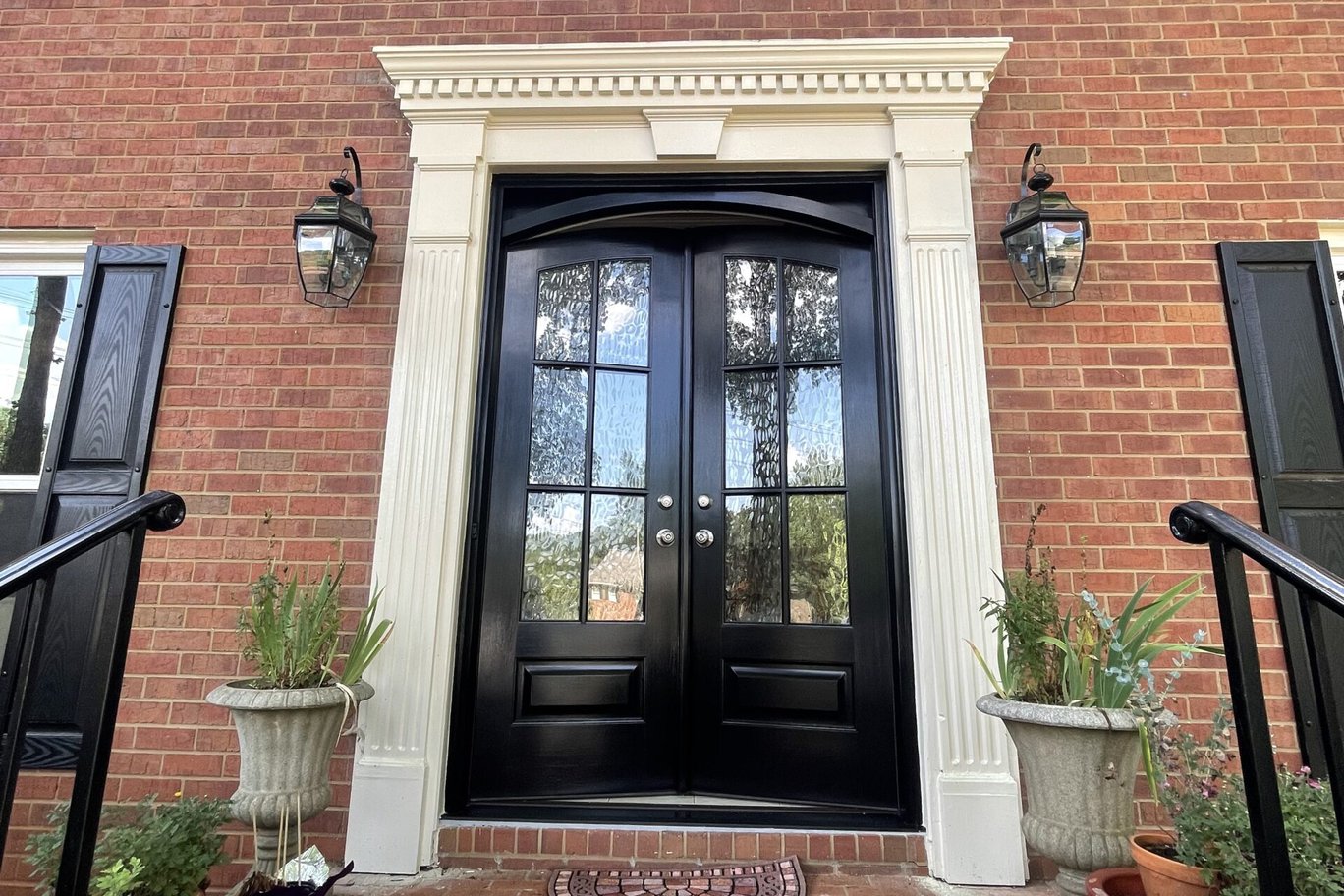
Start with the frame. Reinforce the deadbolt strike and anchor the hinges into sound framing with the specified fasteners. Then choose a graded deadbolt and check nearby glass and the garage-to-house door.
Walk through your front door, back door and garage-to-house door with the same checklist. Open and close each door, look at the frame and turn the deadbolt. Pay attention to any door you have to lift, push or pull to lock. That tells you where to start before you spend money on hardware.
Start with a check of the door and frame
The slab is the part that swings. The jamb is the frame the hinges and strike plates attach to. The deadbolt strike is the metal plate on the jamb that receives the bolt. If you see two plates, one usually receives the handle latch and the other receives the deadbolt. Check both.
| What you see or feel | Where to start |
|---|---|
| Deadbolt turns easily with the door open and rubs when it shuts | Check how the door hangs and where the bolt meets the strike. |
| The deadbolt turns only partway when the door is shut | Check bolt alignment and the depth of the pocket against your lock instructions. |
| The strike moves or the wood around it is split or soft | Have the jamb and the framing behind it checked before mounting new hardware. |
| The door drags and the gaps around it are uneven | Check the hinges and frame alignment before moving the strike. |
| A narrow glass panel sits next to the lock | Check the panel, its frame and the material behind the strike. |
| The door into the house from the garage looks like an interior bedroom door | Verify its construction or fire-rating label before changing hardware. |
Take a photo of the door edge, each hinge and the frame around the strike. If there's a label on the edge of the slab or frame, photograph that too. A photo of the whole opening shows how the parts fit together, particularly if there's glass on one or both sides. Those details help if you need to match hardware or ask an installer about a replacement.
Reinforce the frame and deadbolt strike
A deadbolt presses against the strike when the closed door is pushed. The strike's fasteners carry that load into the frame. On a conventional wood-framed opening, a reinforced strike with the specified long screws can anchor into solid framing behind the jamb. The trim around the door is decorative. Check where the screws actually land.
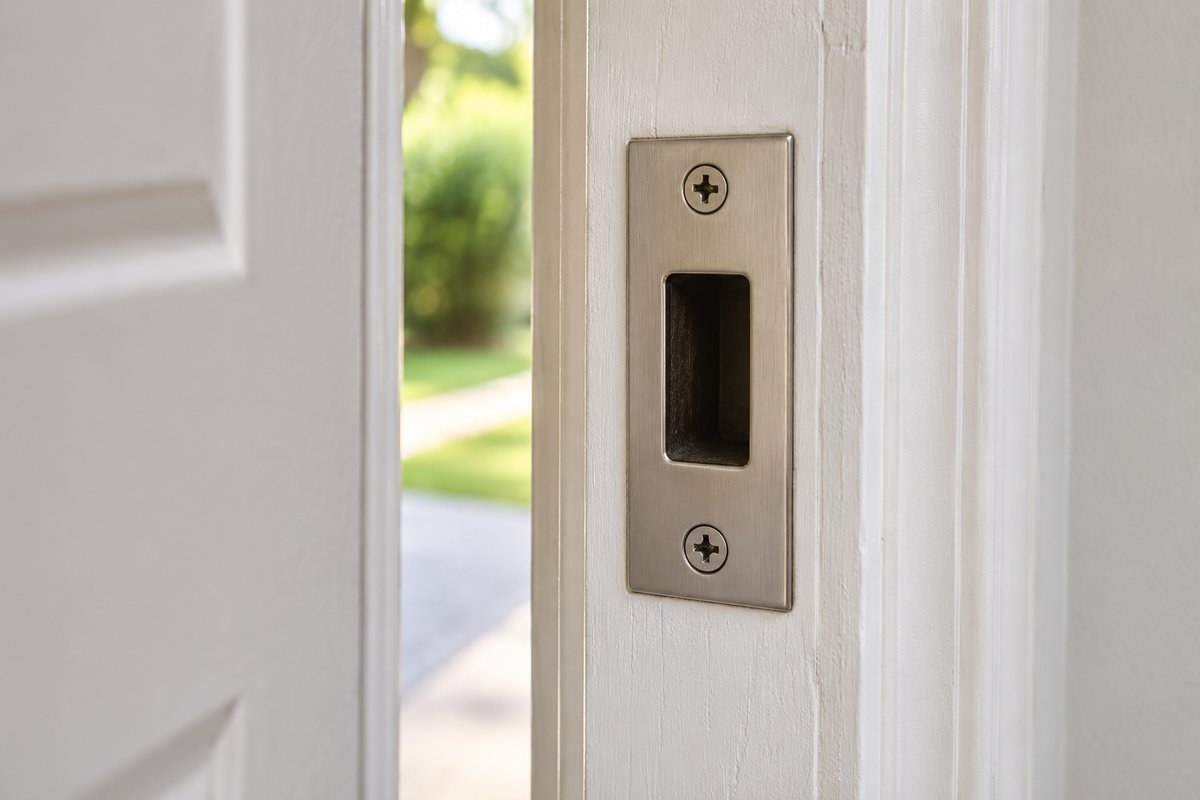
- Check the wood first. Open the door and look around the strike and lower ends of the jamb for splits, movement or soft wood. If the jamb moves or the fasteners won't hold, get the frame repaired before adding a reinforcement plate.
- Match the strike to the lock and frame. Use the deadbolt maker's strike and reinforcement hardware or a compatible kit designed for the opening. Some designs have a reinforcement plate behind the visible strike. Follow the parts diagram so the plates and fasteners are installed in the right order.
- Follow the fastener instructions. A 3-inch strike screw is a common example for a wood-framed opening where it can engage sound framing. The finished thickness of the jamb, space behind it and the material there all matter. Follow the supplied fastener and pilot-hole instructions. If there's a sidelite next to the jamb or you have a metal frame, check the door-system instructions before drilling.
- Retest the bolt. Check the thumbturn and key with the door open. Next, shut the door normally and try the thumbturn from inside. The bolt should extend and retract fully and smoothly without leaning on the door. If it works open and binds closed, check the alignment or depth of the strike pocket before replacing the lock.
Schlage's deadbolt installation instructions show the difference between the screws that attach the reinforcement plate and those that hold the visible strike. Check the instructions for your exact model before you buy parts. If an upgrade calls for cutting away wood or if you can't identify what sits behind the jamb, an installer can assess the opening first.
Use longer hinge screws where the door system calls for them
The hinges hold the slab in position so the latch and deadbolt line up with their strikes. If the top hinge is loose, deal with that before adjusting the strike to match a sagging door. Check the frame side of each hinge for movement, and look for screw heads that stick up and keep the hinge from closing flat.
Therma-Tru's installation instructions show one setup that uses supplied #10, 2½-inch screws in designated top-hinge holes to reach the stud. Follow your door's instructions on which fasteners and holes to use, how to drill the pilot holes and where the long screws should anchor.
Work on one approved screw location at a time and recheck the swing as you go. The screw head should sit flat in the hinge. If tightening changes the clearance or pulls the jamb out of line, have someone check the shims, the spacers that support the jamb against the framing. A heavy door that has dropped, a hinge pulling out of damaged wood or a frame shifting at several points is a job for an installer.
Door swing is a separate decision. If your door swings outward and the hinges are exposed, ask the door maker about security hinges, including hinges with non-removable pins. When replacing the unit, choose a swing that fits the landing and the home's exit path.
Read the ANSI/BHMA grade on the deadbolt
The Builders Hardware Manufacturers Association (BHMA) publishes ANSI-approved hardware standards. Read the standard number as well as the grade. Two deadbolts can have different kinds of markings, even side by side on the same shelf.
| Marking | What it tells you |
|---|---|
| ANSI/BHMA A156.40-2025 with letters | The residential deadbolt standard. BHMA's residential label gives separate A, B or C ratings for security, durability and finish. A is the highest in each category. AAA means A in all 3. |
| ANSI/BHMA A156.36-2020 with Grade 1, 2 or 3 | The auxiliary lock standard, which covers deadbolts among other products. Grade 1 is the most demanding tier, followed by Grade 2 and Grade 3. |
Start with the exact model number and the standard listed for it. If you want a stronger residential deadbolt, look for an A in the security category under ANSI/BHMA A156.40-2025. If you're comparing models under ANSI/BHMA A156.36-2020, compare the numbered grades within that standard. A Grade 1 label and an AAA label describe results under different sets of requirements. The BHMA product directory lets you look up a model and its listing.
Check that the lock fits the door thickness and the backset, the distance from the door edge to the center of the lock hole. Ask about the strike and the depth required for the bolt to travel all the way into the jamb. A tested lock still needs the specified hardware, a sound frame and room for the bolt to move. If you have to pull the door toward you to get the bolt all the way out, fix the fit before you judge the lock itself.
For an entry that serves as your required exit, keep the door easy to open from inside. The 2024 International Residential Code (IRC), Section R318.2, requires people to be able to open that door easily from inside without a key or special knowledge. An inside thumbturn lets someone release a typical single-cylinder deadbolt without finding a key. If glass sits close to the lock, address the glass and frame while preserving keyless exit.
Choose the slab, glass and frame together
For a replacement, ask for the door and frame specifications together. Check what is behind the lock, how the frame is anchored and how the glass is held in the opening. A knock on the slab can't tell you its construction or rating. Look for a label, the manufacturer's paperwork or the original order.
| Door option | What to check when comparing units |
|---|---|
| Exterior fiberglass doors | Look for a reinforced lock block, the solid section inside the slab that supports the hardware. Therma-Tru's Fiber-Classic line is one example of a fiberglass door with an insulated core and reinforced lock area. |
| Steel entry doors | Ask how the lock area is reinforced, what the core is made of and how the specified frame and strike are anchored. |
| Exterior wood doors | Verify exterior construction and check the condition of the wood at the lock and hinges. For an existing wood door, look for splits and moisture damage before reusing it. |
If you're comparing hardware for a new unit, a multi-point lock engages the frame in several places. Therma-Tru, for example, offers a system that engages it at 3 points. Ask the installer to show you how the hardware works with the door closed. If you already have a multi-point system, identify it before ordering a retrofit deadbolt. A lock designed for a standard round hole needs the right door preparation and room to work.
A door that includes glass gives you more to specify. Decide where you want daylight and how close the glass will sit to the inside lock. A solid panel avoids glass at the lock, and an upper glass panel or a transom, a window above the door, lets in daylight higher up. You can compare layouts in our entry door gallery.
Give sidelites their own check
A sidelite, also called a sidelight, is a fixed glass panel beside the door. Ask how the post between the door and glass is built and where the strike fasteners can safely anchor. A sidelite unit can need its own frame reinforcement. If you can't confirm what's behind the strike or hinge, have the door maker or installer locate that anchoring point.
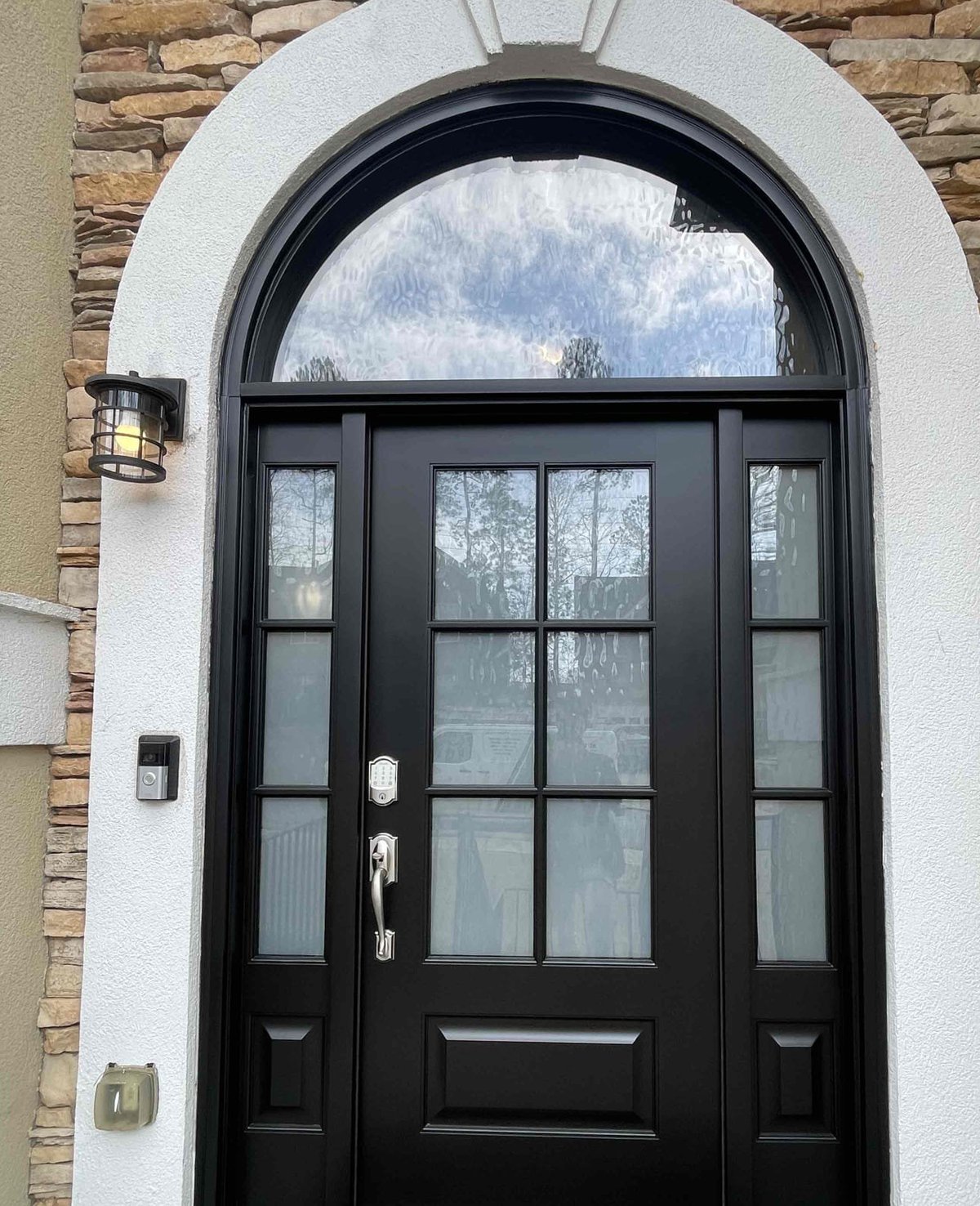
For glass close to the lock, ask a glazier or door installer which laminated or tested security glazing fits the unit. Laminated glass has an interlayer that helps retain broken glass. Tempered glass is made to break into small pieces. Clear, frosted and decorative describe how the glass looks. Ask separately what it's made of and what the complete assembly was tested to do.
If you're quoted impact-rated glass, ask for the product approval and the exact tested frame and glass combination. For example, Therma-Tru's impact-rated glass is designed for windborne debris applications. If you're considering security film on existing glass, ask how it will attach to the frame. 3M's Scotchshield S2400 film is designed to delay forced entry when used with its specified attachment sealant. Ask for that system's limits in writing.
If you plan to change the whole opening, our guide to converting a front door with sidelights to a double door explains what to measure before choosing a unit.
Choose a smart lock your door can use
A smart deadbolt adds ways to manage who gets in. Depending on the model, you can assign a code to a dog walker, delete it when the job ends or check lock activity through an app. Start with the same mechanical check you'd do for a keyed lock. If turning the existing thumbturn takes a shove against the slab, fix the fit before installing a motorized bolt.
- Compare the hardware rating and fit. Verify the exact model's BHMA listing where available. Check the door thickness, backset, strike and clearance for the inside housing.
- Know what works offline. Test the local keypad and learn how to get in with a dead battery. Some models come with a physical key. Find out which features need an internet connection.
- Set up access before relying on it. Give people individual codes if the lock supports them. Remove old codes and app access when someone leaves. Turn on low-battery alerts if your model offers them.
- Test from both sides. Start with the door open. Check the keypad, thumbturn and backup method. Then check the closed door and confirm the bolt runs smoothly.
The Schlage Encode Smart WiFi Deadbolt is one example with battery alerts, app-managed access codes and a physical backup key. Remote app control relies on the connection. Check the exact model if a keypad, backup key or remote feature is part of your decision. If you use auto-lock, try it while you're home and confirm the door was fully shut and the bolt engaged.
The keypad for a vehicle garage door serves a different opening. For that equipment, use our guide to setting or changing a garage door keypad code.
Check the door between the garage and the house
The hinged door from an attached garage into the living space is part of the separation between the garage and the house. Start by identifying the door construction and any rating before you reinforce the frame, change the lock or order a replacement.
Georgia's amendment to IRC Section R302.5.1 gives 3 options for that opening. Use solid wood at least 1⅜ inches thick, solid or honeycomb-core steel at least 1⅜ inches thick, or a door with a 20-minute fire rating. An opening directly from a private garage into a sleeping room is prohibited. Georgia's replacement text omits the model section's self-closing and self-latching language. Check with your local building department about your opening and any requirements that apply to its assembly.
Look along the edge of the door and the frame for labels. If you can't identify the construction or rating, ask the installer to verify it. For a rated assembly, have them confirm which locks, strikes, hinges and other changes the listing allows before drilling or enlarging holes. The U.S. Fire Administration's garage fire guidance recommends a 20-minute fire-rated door that closes and latches on its own.
Check that the latch holds when you shut the door normally, then test the deadbolt if one is fitted. If a closer is already installed, keep it working and check that it latches the door on its own. Secure the house door when you leave the overhead garage door open, and don't prop the house door open while you work in the garage.
What you can check yourself and when to call
| What you found | Who should handle it |
|---|---|
| Door closes freely and you can identify the hardware | You can test the bolt, note the model and check the instructions for a compatible lock or strike. |
| Sound wood frame, confirmed backing and a matching strike kit | If you're comfortable with the work, follow the supplied instructions and retest the door after each change. |
| Loose or damaged frame, sagging slab or repeated binding | Ask an installer to check the framing and fit before buying hardware. |
| Unclear backing next to a sidelite or a glass insert you want to upgrade | Have a door installer or glazier check the frame and specify the glazing or reinforcement. |
| Unknown garage separation door or changes to a rated assembly | Have an installer verify the assembly and confirm the applicable requirements with your building department. |
For an entry that needs a new frame or slab, bring your photos and tell us which doors you use every day. All Four Seasons has been family-owned since 1999. See our entry door services or front door options for Metro Atlanta homes. To discuss a replacement, call (678) 271-8918 or request an entry door design consultation.
Frequently asked questions
Where should I start to improve front door security?
Close the door and test the deadbolt. Check the jamb, strike and hinges for movement or damage. If the wood is sound and the bolt lines up, a compatible reinforced strike can be a practical first upgrade. Repair a loose or split jamb first.
Should I use 3-inch screws in every hinge and strike?
Use the door and lock makers' specified fasteners and hole locations. A long screw is useful when it reaches sound framing and sits flush in the hardware. A sidelite, rated assembly or metal jamb calls for instructions specific to that unit.
Is Grade 1 the same as AAA on a deadbolt?
They refer to different standards. Grade 1 is the highest numbered grade under ANSI/BHMA A156.36. AAA is an A in each of the 3 residential categories under ANSI/BHMA A156.40. Look up the exact model if the packaging leaves the standard unclear.
Is a door chain enough to secure a front door?
A door chain is a secondary latch. For securing the closed door, focus on a properly fitted deadbolt, a reinforced strike and sound framing. Keep any added latch easy for your household to release from inside.
Can I keep glass beside my front door?
Yes. Review the glazing, its frame and the anchoring behind the strike together. Ask about compatible laminated glazing or a tested security glazing assembly. Keep the required exit easy to open from the inside without a key.
Why does my smart deadbolt work when the door is open but bind when it closes?
Check where the bolt meets the strike and how far it can extend into the pocket. A door that sags or needs pressure to latch needs its fit checked first. For a door that closes freely, follow the lock maker's alignment checks.
Does every garage-to-house door in Georgia need a fire rating?
Georgia's R302.5.1 gives a 20-minute fire-rated door as one option and also allows qualifying solid wood or steel doors. Check which option your door meets before buying hardware. Ask your local building department about the requirements for your opening.