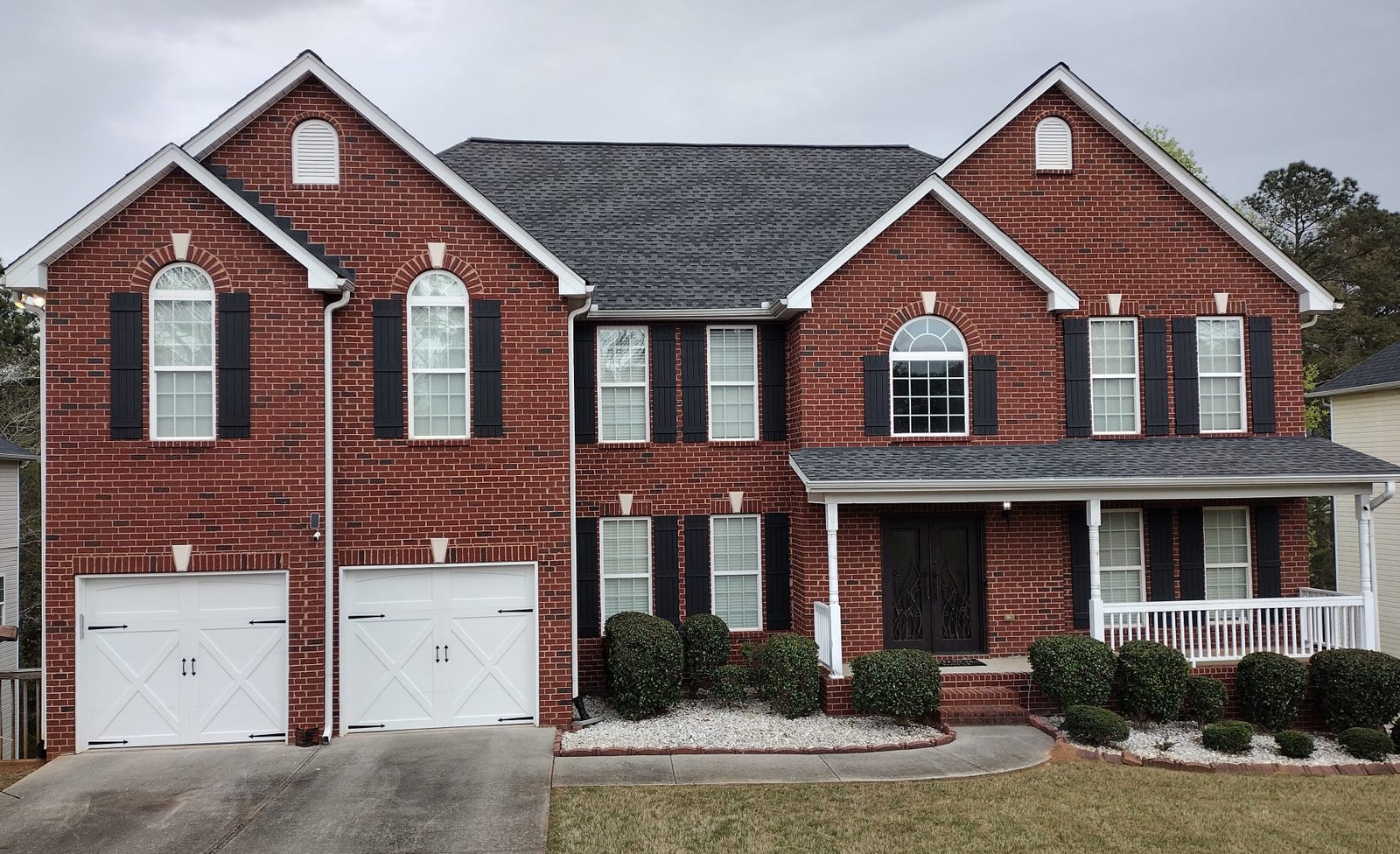
Choose a garage door style by the lines of your house and how much glass you want. Carriage house doors add detail, modern doors simplify the face, traditional panels repeat familiar shapes, and full-view glass puts daylight first.
Start at the end of your driveway. Look for a shape you see first, such as a porch arch, the long eave of a ranch or the repeated windows of a brick colonial. Pick one of those cues for the door to repeat. The cue gives you a way to compare doors on your house without guessing from a catalog photo.
If you're still deciding how the door should open or what it should be made of, start with our guide to garage door types and materials. Then use the photos and comparisons here to choose the face of the door.
Compare four garage door styles
| Style | What you'll see from the street | Try it when | Compare before you order |
|---|---|---|---|
| Carriage house | A paired-door pattern, often with vertical detail and decorative handles or strap hinges | A Craftsman porch, a farmhouse with X-shaped trim or an arched stone opening gives you a detail to repeat | Square or arched window shapes, stamped or applied trim, with or without hardware |
| Modern | A flat or lightly grooved face, with optional slim windows | Your exterior has long rooflines, simple trim or an off-center window arrangement | Solid face, a horizontal row of glass or a vertical stack of narrow windows |
| Traditional | Repeated rectangles, often with raised or recessed centers | A brick colonial, ranch or other facade already uses rectangular shapes | Short or long panels, window grids and alignment across adjacent doors |
| Full-view glass | A grid of wide glass panes framed in aluminum | You want light through much of the door and want the garage to read like another glazed part of the house | Clear, frosted and opaque samples in daylight and with the garage lights on |
Carriage house garage doors
Look for the center line and the upright boards or trim on either side. Those details give carriage house garage doors the appearance of two doors meeting in the middle. Look at the door face on its own first. If you like the proportions with the decorative hardware removed from the rendering, you have room to add as much or as little detail as you want.
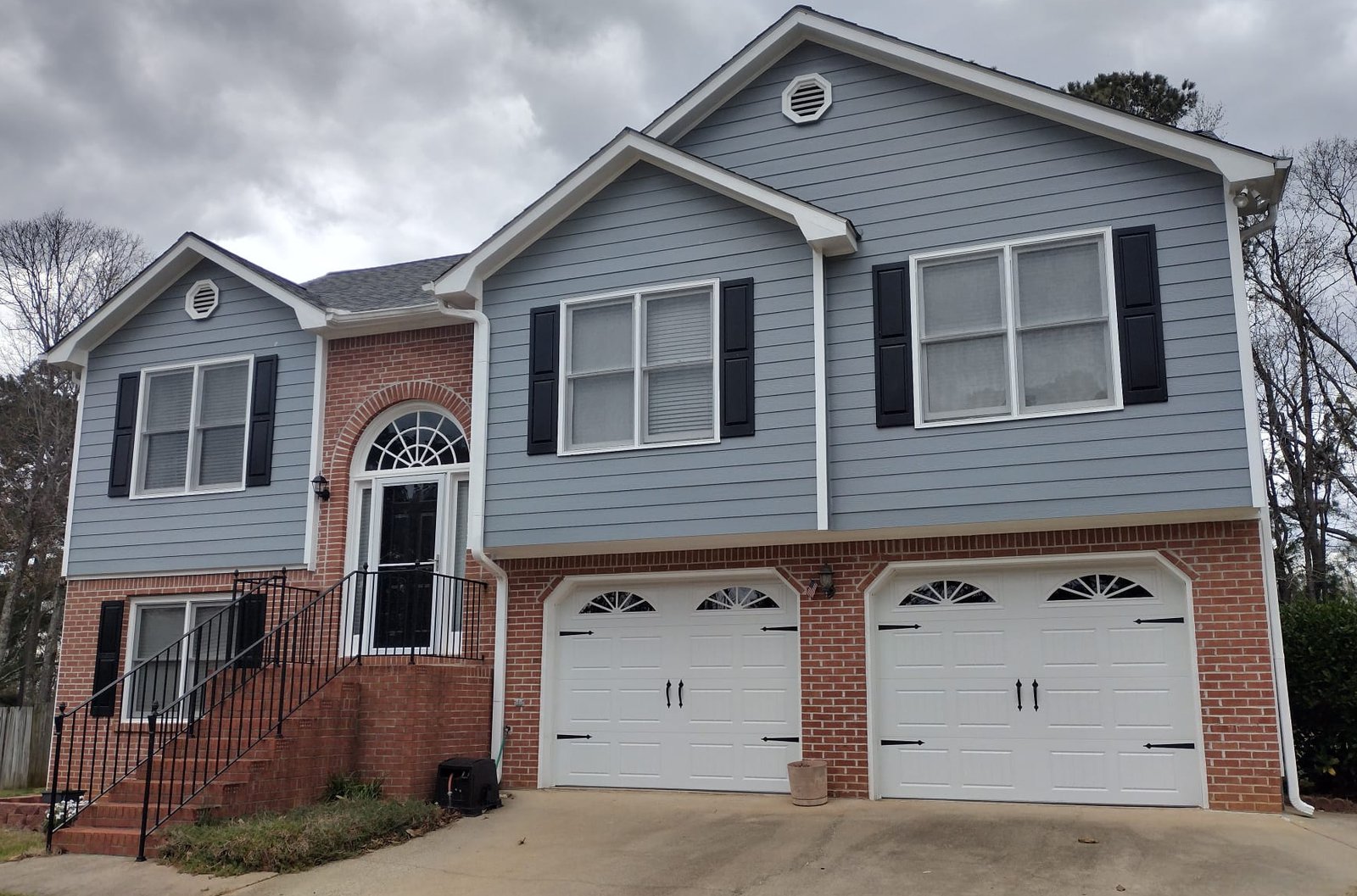
On a Craftsman facade, try square windows that echo the porch or entry door. If the masonry above the garage forms an arch, compare an arched window design and a square one on the same photo. Some designs trace an arch with an insert inside a rectangular window, so ask to see what the opening and the glass each look like on the order drawing.
Compare stamped details and overlay trim if two designs look alike on screen. With a stamped design, the pattern is formed into the door face. An overlay is a separate layer of trim on the face. An angled view makes the difference easier to see. On a wide door, check where the decorative center line and handles land. On paired openings, look at whether the same design gives you a pleasing repeat across both bays.
Amarr Classica has stamped carriage house patterns with square and arched designs and optional decorative hardware. Amarr Designer's Choice includes a Bead Board design if you want narrow vertical grooves. Clopay Gallery Steel gives you a grooved face with decorative windows and wood-look finish choices. Clopay Coachman shows the overlay approach, with composite trim that gives the face the look of framed boards. Use the catalog examples to decide which details you want to see in your own rendering.
The split-level house in the photo gives you an example from our project library. The fan shapes in the garage windows pick up the curved window above the front door. The black carriage hardware repeats the dark front door and railing at a smaller scale. If you want one detail to carry through your own facade, try the window shape first. Then compare the rendering with black hardware and with the hardware hidden.
Modern garage doors
A flush panel has a flat face without raised rectangles. A grooved modern door has shallow lines on the face. View both from across the driveway. A flush face can let the entry or porch keep the focus. Grooves can carry across the garage the same horizontal rhythm as siding or a low roofline.
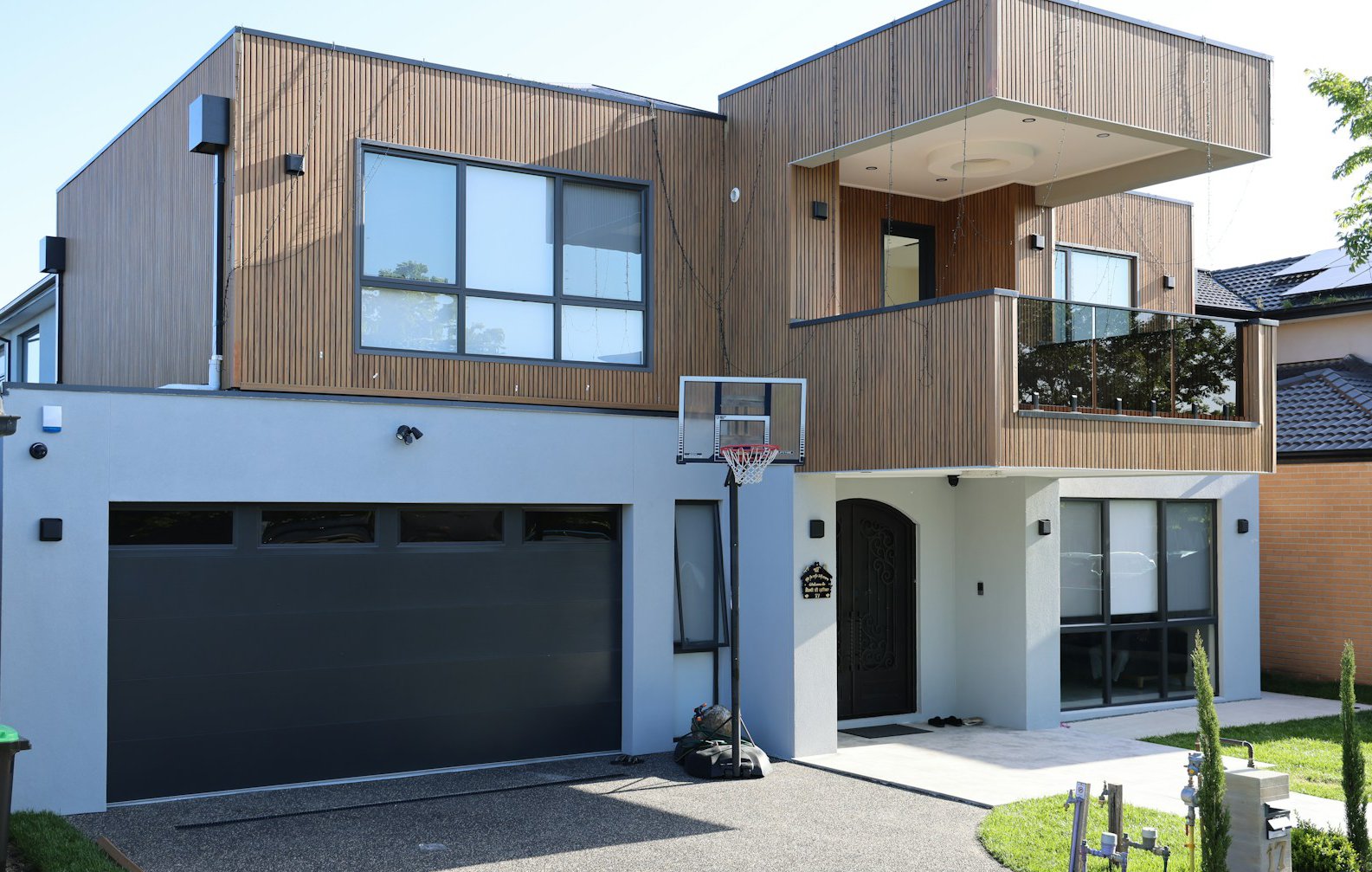
If you want windows, compare the same door in three layouts. A solid face keeps the large shape as simple as possible. A horizontal row can align with the windows beside it. A vertical stack of narrow windows moves the detail to one edge, where it can echo an off-center entry or sidelight, the narrow window beside a front door.
Mark the desired side of the windows on a photo taken from the driveway. Ask your installer to confirm how the order drawing shows the door. For two adjacent openings, try the stacks toward the shared pier, toward the outside edges and on the same side of each door. Small drawings can make those options look interchangeable. On a full photo, it is easier to see which layout works with the entry path and exterior lights.
Clopay Modern Steel offers flush and grooved panels, slim contemporary windows and woodgrain finishes. Its Ultra-Grain Plank design uses a printed horizontal plank pattern on a flush panel. If you like wood tones but want a flat face, compare that effect with the same door in a solid color. Look at a physical finish sample outdoors next to your siding and trim.
Traditional garage doors
Traditional garage doors are a natural place to start when your house already repeats rectangular shapes. A raised panel has a center that projects from the face. A recessed panel sets the center back within its border. Either can give a plain garage opening a pattern that picks up the windows or shutters without adding carriage handles or straps.
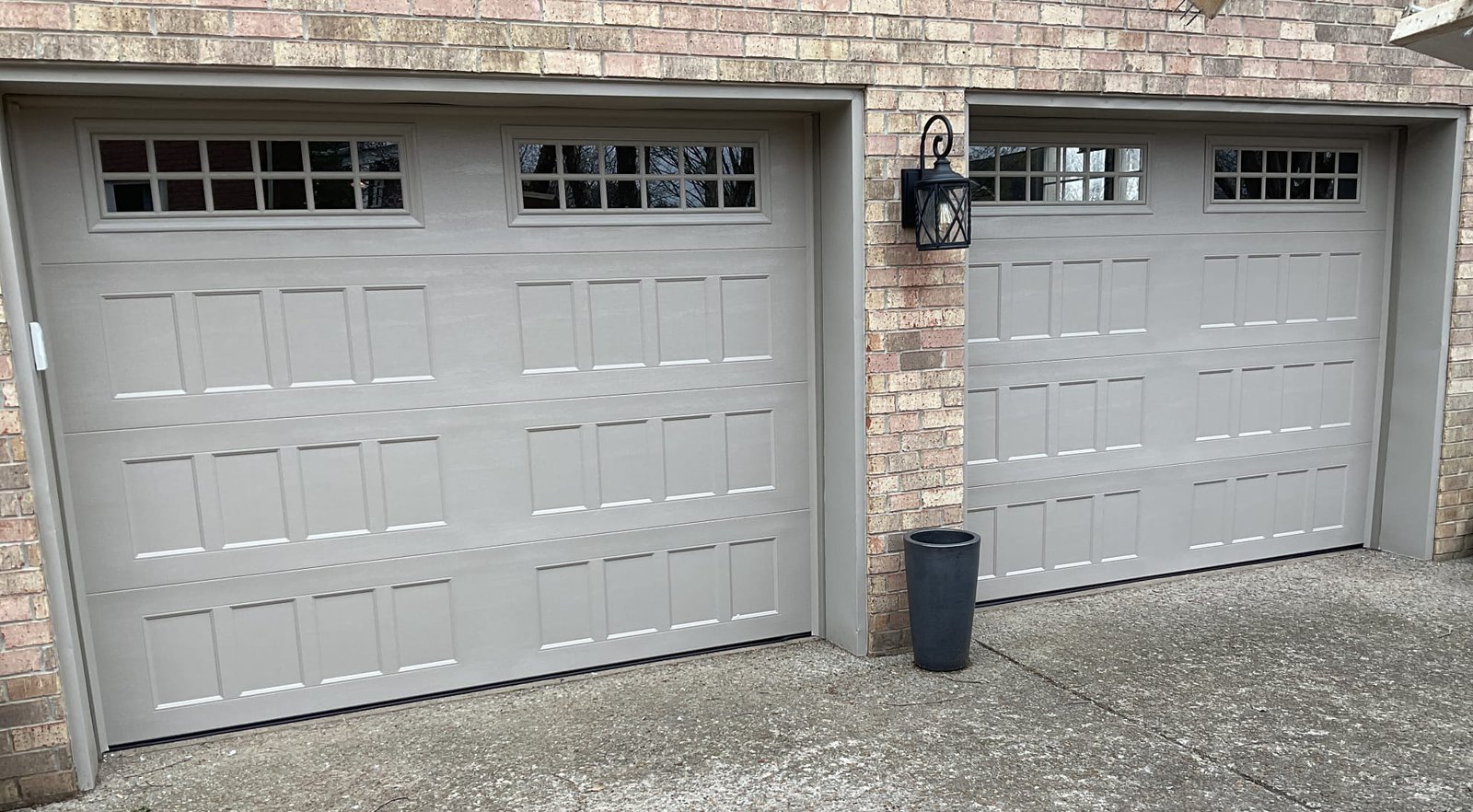
Short panels make a series of smaller rectangles. Long panels use fewer, wider rectangles in a row. If you have a brick colonial with tall, divided windows, compare a short-panel design with a window grid that echoes the house. On a ranch with a broad opening and a low roof, try long panels first. Give yourself the same finish and window treatment in both renderings to see which spacing you prefer.
On a garage with one narrow opening and one wide opening, ask for a drawing of both. Look at where the panel borders fall under the windows and whether the glass starts at the same height. Repeating the finish, window shape and general spacing can tie the openings together even when the number of rectangles changes.
Amarr Lincoln comes in short and long raised-panel designs, with optional window inserts. Clopay Bridgeport Steel uses recessed panels and offers a narrow or extended panel. Wayne Dalton lists short and long panels in its Classic Steel 9100 and 9605 line. Compare the drawings for your opening dimensions before using any example photo as the basis for an order.
Full-view glass garage doors
With full-view glass garage doors, panes occupy much of the face. The aluminum frame and its dividers give the door its pattern. If your home already has broad windows or patio doors, compare the widths and colors of those frames from the driveway. A full-view garage door can repeat those lines even when the proportions of the opening are different.
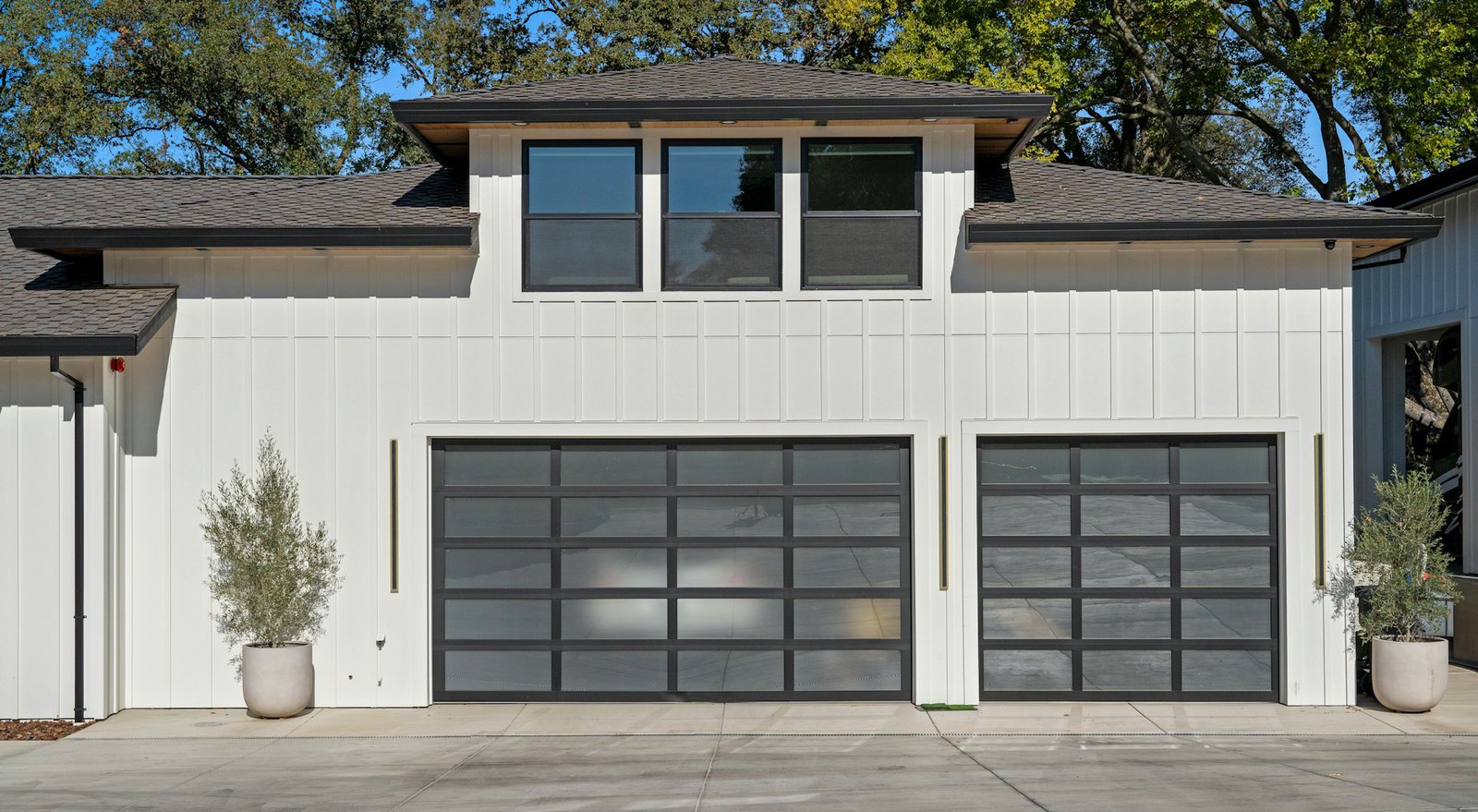
Clear glass gives you a view through the door. Frosted glass diffuses light and obscures detail, and opaque glazing is an option when you want to screen the view across the panes. Ask to see samples identified by their actual glass names. Hold the sample with light behind it and again with light on the viewing side. If a sample is translucent, check what you can see when you hold a hand close to it.
Think about what faces the door. A workshop with a bench along the back wall has a different view from a garage with storage shelves right beside the glass. During the day, glass can reflect the driveway and sky. With the garage lit at night, what you see from outside changes. Make the choice for both conditions if the door faces a sidewalk or a close neighbor.
Clopay Avante offers an aluminum frame with glass choices including clear and frosted glazing. Amarr Vista is another aluminum full-view collection with clear and frost glass options. Request the glass and frame samples together. The frame remains a visible part of the design across the whole door.
Choose windows, finish and hardware together
Change one detail at a time when you compare renderings. A door with a dark finish, new glass and added hardware can look entirely different from the starting design. If you see all three changes at once, it is hard to tell which one you want to keep.
| If you want | Try this in the preview | Check it on your house |
|---|---|---|
| Daylight with less of the garage in view | A higher row of windows or an obscure glass sample | Look from the sidewalk and the driveway, including from uphill if your yard slopes |
| A simpler garage front | The same panel design without window grids or decorative metal | See where your eye lands when you can view the door and entry together |
| Windows that look like part of the house | A window insert with a similar grid or arch to a nearby window | Compare the size and spacing of the panes, especially between doors of different widths |
| A wood-look face with a quieter pattern | A small range of grain and color samples beside the siding | Look from arm's length and from where cars enter the driveway |
| Carriage detail you can still see from the street | Handles alone, then handles with decorative straps | Check how the metal looks against the finish and around the exterior light fixtures |
Use our garage door design tool to try layouts and our garage door color guide for finish ideas. Look at physical samples next to the house too. On a red brick facade, for example, compare a white sample beside the existing white window trim. On a shaded Craftsman porch, compare your wood-look sample beside the nearby posts or front door. Walk back to the driveway after each change so you can see the whole facade.
For a door with windows, look at the glass, insert and frame as separate choices. The insert makes a pattern inside the opening. The frame sets the outline you see around it. If the front windows have fine grids, plain glass on the garage can still work when the outlines line up. Try a plain version and a divided version from where someone would see the house for the first time. If you can see a similar door in person, look at the pattern from both sides of the glass.
What to do yourself and what to ask the installer to confirm
- Take one straight-on photo and one from the street. Include the front door, roofline, nearby windows and all garage openings. If the garage sits below the street, take another photo from the angle people see as they approach.
- Pick a detail to carry over. Draw a line from a nearby window, porch beam or siding joint on your photo. Use it as a starting point for the window row, grooves or panel borders in the preview.
- Make two versions you would actually order. Put them side by side with the same photo and crop. Save the model, face design, finish, window layout, glass and hardware with each version. For an exterior subject to HOA review, ask what drawings or samples the association wants before you order.
- Ask the installer to confirm the drawing at the measured size. Have them mark the glass and decorative handles as viewed from the driveway. Confirm the window placement, panel count, hardware location and glass name for each opening, especially if there is more than one door.
You can handle the photos, previews and color samples yourself. Ask the installer about any change that adds weight to an existing door, including glass, applied trim or hardware. The Door and Access Systems Manufacturers Association says garage doors are engineered as complete assemblies and advises against attaching materials without explicit instructions from the original manufacturer. Bring a photo of the model label if you want to ask about changes to the door you have.
See recent garage door projects for examples of how doors look on a whole building. If you're comparing full replacements, our Metro Atlanta garage door buying guide covers the other decisions to make before you order.
See how your choices look on your home
Bring a driveway photo and your two choices to All Four Seasons. We've been family-owned since 1999. We can help you compare finishes and window layouts and confirm what works at your opening. See what's involved in garage door installation in Atlanta, request a design consultation or call (678) 271-8918.
Frequently asked questions
Which garage door style suits a brick home?
Look at the window shapes and masonry around the opening. Traditional short or long panels can repeat the rectangular forms of a brick colonial. If the garage has arched masonry or the entry has a strong carriage detail, mock up a carriage house door as a second option.
What makes a garage door look modern?
Start with a flat face or shallow horizontal grooves. A solid face puts the emphasis on the shape of the opening. For glass, try a row of plain narrow windows or a stack near one edge. Compare it with the rest of the facade in view.
How do I choose between short and long panels?
Short panels make a tighter repeat. Long panels give you fewer, wider shapes across the face. Try both on the same image with the same finish, and ask for drawings that show the number and position of panels in your actual door size.
Does a full-view glass door give you privacy at night?
Privacy depends on the glazing and the light on either side. Check clear, frosted and opaque samples with the garage lights on, viewing them from outside. If you need to screen the view across the door, ask to see the offered opaque options first.
Can I add windows or carriage house trim to the door I have?
Ask the door manufacturer or installer about approved options for your model. Glass and applied trim can add weight. Take photos of the door and its model label and let the installer verify which changes the original door system can support.
Should the garage door match the front door?
They can share a color, a window shape or a trim detail. Try repeating one feature first. If you want the entry to stand out, preview a garage door color that relates to the siding or trim and see where your eye goes from the street.