
Replace old windows when damaged frames, repeated leaks or sashes that won’t close make repair impractical. Worn weatherstripping or a fogged glass unit can often be repaired separately. New windows can improve comfort, reduce heat transfer and cut noise.
A foggy pane in the dining room, a draft by the sofa and a bedroom window that won’t lock call for different checks. Start with the opening that gives you the most trouble. Once you know which part is failing, you can choose between new glass, a parts repair and a whole new window.
Signs you need new windows
The sash is the part of the window that holds the glass and moves on a window that opens. The frame is the fixed part around it. Knowing where the problem starts is often enough to narrow down what to ask for.
| What you notice | What to check first | What to do next |
|---|---|---|
| Haze or droplets you can’t wipe away from either side | Check for moisture trapped between the panes of insulated glass | If the frame is sound, ask about a glass unit or sash before replacing the whole window |
| A breeze with the window shut and latched | Check the joint where the sash closes and the joint between the frame and trim | The frame is distorted, the sash can’t close evenly, or drafts persist after the leak is located and repaired |
| The window sticks, won’t stay open or won’t lock | Have the hardware, alignment and frame checked | The frame has shifted or warped, or compatible parts are unavailable and the window still can’t operate safely |
| Cracked glass, soft wood or recurring water stains | Keep clear of damaged glass and get the source of any water traced | The frame is rotted or the opening needs to be opened up for repair |
| The room heats up in afternoon sun or feels chilly beside the glass | Note the time of day and which direction the window faces. Check for moving air separately | The glazing is a poor match for the room and improvements such as shading or air sealing fall short |
| Street noise interrupts sleep or conversation | Close and latch the window and note what you still hear | Noise remains a priority after gaps are addressed and the proposed window has test data for outdoor sound |
Fog between the panes
If the glass is intact, wipe the inside with a soft cloth. Check the outside only if you can reach it safely from the ground. Moisture that wipes off the room side is surface condensation. It can show up after a shower or cooking when moist indoor air meets cool glass. Check whether the bath or kitchen fan vents outdoors and use it when you add moisture to the room. Outdoor moisture can also form on humid mornings and clear as conditions change.
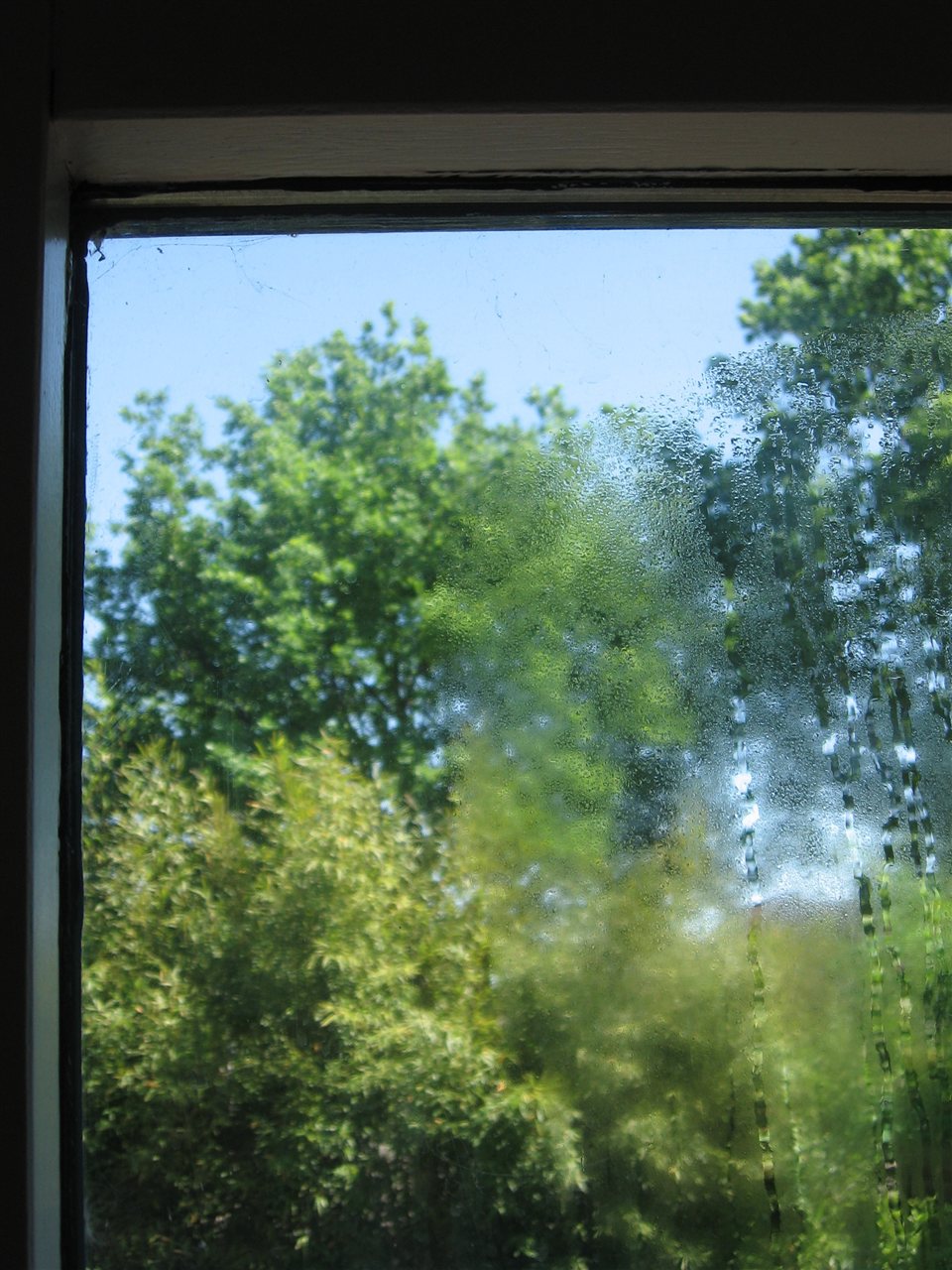
Photo by M.M. Minderhoud via Wikimedia Commons. Resized under CC BY-SA 2.5.

Haze or droplets trapped inside a double-pane unit point to a failed seal around the glass. Wiping the surfaces, running a fan or caulking the trim can’t reach that sealed space. Ask a window or glass professional if the sealed glass unit can be replaced, or if the manufacturer offers a replacement sash. If the frame is sound and the window operates and locks properly, ask for a written quote on that smaller repair.
Drafts, cold glass and afternoon heat
On a breezy day, close and latch the window. Check for moving air along the edges where the sash shuts, then around the inside trim. On a sound, operable window, close it on a strip of paper at the sash edge. If the strip slides out with little resistance, the U.S. Department of Energy (DOE) treats that as a clue that the window is leaking air at that spot. Try more than one edge and compare it with a window that feels comfortable.
The location changes the repair. Worn weatherstripping belongs at the moving joint. A dry, fixed gap at the inside trim is an air-sealing problem. If you feel cold near the middle of the glass but find no moving air around the edges, the glass itself can account for the chill. Likewise, a room that heats up as the sun comes through a west-facing window prompts a look at shading and solar heat gain. Record where and when you feel the difference before you shop. For more on seasonal checks, see how to winterize Atlanta windows.
An increase in your utility bill is a reason to look closer. Compare actual energy use across similar periods and bring the bills to a home energy assessment if several rooms are uncomfortable. The DOE’s home assessment guidance looks at the whole house, including leaks at attic hatches and other openings. That wider check is worth doing before you commit to replacing windows for energy savings alone.
Sticking, slipping or failed locks
Try opening and closing the window gently from inside if the glass is intact and the sash is stable. Note whether it rubs at one corner, drops when raised or closes fully but still won’t latch. A failed lock, crank or balance can be a parts repair on a sound window. The balance is the mechanism that helps support a sash as it moves up and down.
Stop testing a sash that drops or shifts out of place and have it assessed. If the window serves as an emergency exit and won’t open, make that repair or replacement a priority. Tell the installer it’s an escape opening before selecting a new style. Ask them to verify the usable opening for your home and show you how the window opens from inside.
Damaged frames, cracked glass or water after rain
Look at the sill and the lower corners from inside. Soft or crumbling wood, a frame visibly out of square and stains that return after rain warrant a closer look. Take pictures of the stain when it’s fresh and note which side of the house was getting rain. If you see peeling paint, check whether it came with water staining or soft wood. Paint alone gives you too little information to decide how much needs replacing.
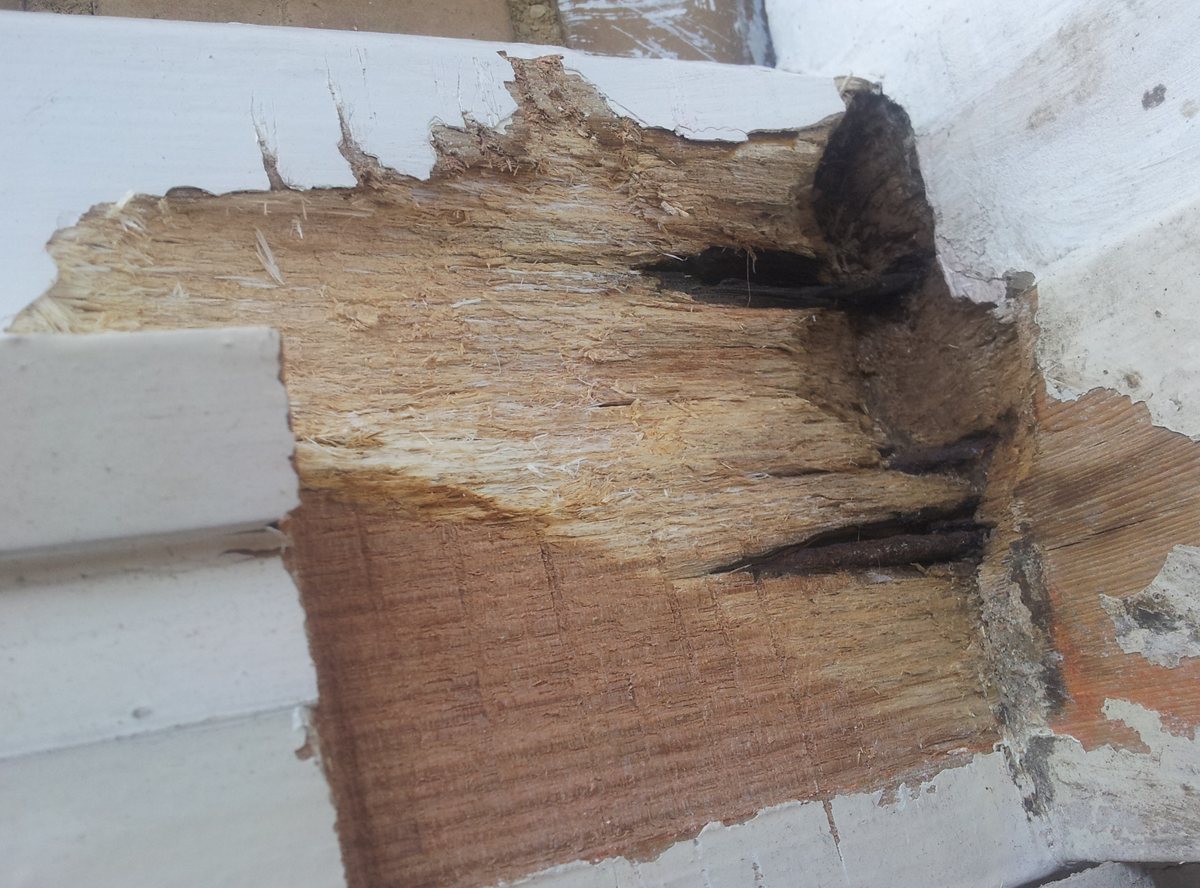
Photo by GMAX82 via Wikimedia Commons. Cropped and resized under CC0 1.0.

Water can reach the opening from above or around it, so ask the installer to trace the route before ordering a window. The check should cover the sill and the flashing, the material that directs water away from the opening, as well as the wall or trim around it. A single cracked pane in a sound frame calls for a glass assessment. For loose glass or a damaged sash, leave the window alone and keep people clear until it’s assessed.
Repair, replace the glass or replace the whole window?
Start with the smallest repair that addresses the cause and gets the window working safely. As you compare quotes, check that each one describes the same scope. “Window replacement” can mean a new unit fitted inside the existing frame or a new window and frame installed together.
| Scope | What it covers | When to ask about it |
|---|---|---|
| Maintenance or parts repair | Weatherstripping, fixed air gaps or compatible hardware | The glass and frame are sound and you can isolate the problem |
| Glass unit or sash replacement | A new sealed glass assembly or the sash holding it | Fog or cracked glass is confined to one unit and the existing frame is in good shape |
| Insert replacement | A new window fits inside the existing frame | The existing frame is sound and square, manages water properly, and you want to keep the trim where possible |
| Full-frame replacement | The old window and its frame come out so the opening can be inspected and prepared | There’s rot, distortion or a recurring leak that requires work around the opening |
An insert can preserve trim, but the new frame takes up some space inside the old one. Ask how much glass you’ll see and how much room you’ll have when the window is open. With full-frame work, ask who will repair any damaged wood uncovered during removal and how the new window will be sealed and flashed. That matters when part of the opening is behind brick, siding or tile that you want to preserve.
What you can check yourself
From indoors or ground level, record where the draft, fog or stain is and when it appears. If the unit is sound and accessible, start with routine window maintenance and use the manufacturer’s instructions to identify the right weatherstripping. Small, dry gaps at fixed indoor joints can be candidates for caulk. Keep the sash free to open and leave drainage openings clear. A picture of the whole opening plus a close-up gives an installer a useful start.
Call a professional for cracked or loose glass, a sash that won’t stay up, damp or soft framing, or work that requires a ladder or removing trim. Our guide covers when to hire a pro for window replacement. If your house was built before 1978, ask about lead-safe work before anyone scrapes, sands or removes painted window parts. The EPA specifically covers window replacement in its lead renovation guidance. For the installation scope, see professional window installation.
What are the benefits of replacing old windows?
More comfortable rooms and lower heating and cooling use
An efficient window can reduce heat transfer through the opening. Good installation can also cut air leakage around it. In practice, that can mean a warmer spot to sit near the glass in winter or less afternoon heat in a room that gets direct sun. ENERGY STAR’s savings estimates model whole-home replacements and use different starting points for clear single-pane and double-pane windows. The difference in your home depends on what you’re replacing, your climate, the new window’s ratings and the installation.
Use your Georgia ZIP code to check your ENERGY STAR climate zone and ask for the ratings for the window you’re actually ordering. The ENERGY STAR window buying guide explains how to compare them.
| Rating or feature | What to look for |
|---|---|
| U-factor | A lower number means less heat passes through the whole window. Compare it when a room feels cold near the glass. |
| Solar heat gain coefficient (SHGC) | A lower number means less of the sun’s heat makes it indoors. Pay attention to it for sunny west-facing rooms. |
| Visible transmittance (VT) | A higher number means more visible light comes through. Compare it alongside SHGC if you like the daylight but want less heat. |
| Air leakage | A lower rating means less air passes through the tested unit. Ask how the installer will also seal the gap around the frame. |
Low-emissivity, or low-e, coatings change how heat passes through the glass. The DOE notes that some coatings reduce solar heat gain while letting in visible light. ENERGY STAR also notes that some window coatings reduce ultraviolet exposure that contributes to fading. If you’re protecting a rug or wood floors in direct sun, ask about the glass option and review a sample in daylight.
Less outdoor noise where it matters
If traffic is what wakes you up, ask for an Outdoor-Indoor Transmission Class (OITC) rating for the unit and glass package in the quote. It measures how well a product blocks sounds such as traffic and construction. Sound Transmission Class (STC) is another rating, weighted more toward sounds like voices. For either rating, a higher number reflects better performance under that test.
Ask to compare laminated glass, which has an interlayer between sheets of glass, or packages that use different glass thicknesses. A third pane alone doesn’t tell you how well the window will block traffic. Describe the noise and where you hear it so the installer can consider the opening and nearby paths, such as a door on the same wall.
Windows you can use and a look that fits the house
Replacing a window with a distorted frame or broken sash can give you an opening you can use and latch again. Ask to try the proposed handle and lock before you order. If you’re choosing an operable window over a kitchen sink, check that you can reach the handle. If it opens outward, check what’s outside it, including railings, shrubs and walkways.
For the exterior, step back across the yard and look at the frame color, window proportions and grid pattern together. Matching the visible details can help a replacement fit an older Atlanta house. For a fresh look, compare how a different grid or frame color works across the whole front of the house. Our window builder lets you preview that choice before you settle on a style.
If your home still has its original wood windows, ask a contractor who works on older houses to assess them before you order replacements. The National Park Service’s guidance starts with the condition of the individual window. A localized repair can preserve the sash profiles and pane pattern that give the house its character. If a historic window is beyond repair, take close-up photos of those details to help you compare replacements.
What to ask for when you compare replacement windows
- Write down the problem for each opening. Note fog, noise or a failed lock by room. Start with unsafe windows or active leaks, then the rooms you use most. If you’re planning the work in stages, write down the style, finish and grid you want to match later.
- Choose how each window should open. Double-hung windows have two sashes that slide vertically. Sliding windows move sideways. Casement windows hinge at the side, and awning windows hinge at the top. A fixed picture window can suit a view where you don’t need the opening for ventilation or escape. Compare the available configurations in our standard window styles.
- Compare exact options. ProVia’s Endure line uses vinyl, and its Aeris line combines an interior wood finish with a vinyl exterior. Use those differences to compare appearance and care instructions. Then ask for the climate-zone label and whole-window ratings for the exact size, style and glass you’re considering. For a room-by-room walkthrough of styles, frames and glass, see how to choose replacement windows.
- Get the scope in writing. Confirm which frame stays, what happens if hidden damage is found, and who will handle flashing, air sealing and trim. Review how to prepare your home for installation before the visit.
- Test each finished window. Before signing off, open, close and lock every operable unit. Check the glass and trim, and ask where to find the model information and care instructions.
If you’re deciding which openings to tackle first, see our window replacement service in Metro Atlanta. All Four Seasons has been family-owned since 1999. Call (678) 271-8918 or request a window assessment.
Frequently asked questions
How do I know when to replace old windows?
Consider replacement when the frame is rotted or distorted, water keeps coming in around the opening, or the sash won’t work safely and a parts repair isn’t practical. Isolated problems such as a worn seal or broken lock often have a smaller fix. Have someone identify the cause of recurring water before settling on an installation method.
Can I fix a foggy double-pane window without replacing the frame?
Often, yes. If the permanent haze is between the panes and the frame is sound, ask whether the sealed glass unit or sash is available separately. If you can wipe off the moisture inside the room, start by checking humidity and ventilation.
Do new windows lower energy bills?
They can, especially when you replace single-pane windows with efficient models that match your climate and are installed correctly. Compare U-factor and SHGC and ask how the perimeter will be sealed. If a higher bill is the main concern, check the whole home for other sources of energy loss before making the decision.
Is it worth replacing windows for traffic noise?
It can be when the window is a major path for the noise. Check for gaps, then ask for the OITC rating of the specific window and glass you’re considering. Laminated glass or panes of different thicknesses are worth comparing when the goal is a quieter bedroom.
Do I need to replace every window at once?
You can start with the openings that leak, won’t operate safely or cause the most discomfort. Ask how later phases will match the first set, especially the frame color and grid pattern on windows visible together from the street.
Should I replace a window just because it is old?
Check how it works and what shape it’s in. If it opens and locks, the frame is sound and the issue is a small draft, start with maintenance or air sealing. For sound single-pane windows, ask whether a low-e storm window is a practical option if you want to keep the original unit.
Should I replace windows before selling my home?
Start with problems you can point to, such as an active leak, cracked glass or a window that won’t lock. Ask for repair and replacement options for those openings. A repair that gets a sound window working again gives you another way to prepare the house for sale.
Top photo by Atlien1996 via Wikimedia Commons. Resized under CC BY-SA 4.0.
