
To fix drafty windows in winter, close and latch each window, then check for moving air along the sash and trim. Use weatherstripping where the window moves and caulk at fixed gaps. Get damaged or poorly operating windows assessed.
A cold seat by the living room window can have several causes. Outside air can slip through a worn seal or come in from behind the trim. Room air can also cool as it moves down a cold pane. Finding the source first saves you from buying a fix for the wrong part.
Find where the draft starts
The sash is the part that holds the glass and moves on a window that opens. The frame is the fixed part around it, and the trim covers the joint between the window and the wall. Check those edges separately. In an Atlanta home with a chilly bay window or one uncomfortable bedroom, start with the opening you notice most.
- Close and latch the window normally. Lift the shade or pull back the curtains. On a breezy day, feel along the interior edges where the sash meets the frame. On double-hung windows, check the meeting rail, where the upper and lower sashes overlap, as well as the sill. On casement windows, check the edge opposite the hinges and then work around the rest of the sash.
- Make a second pass around the trim. Follow the joint from the side of the frame to the sill and then up the other side. Check where the trim meets the wall. Write down the exact spot where you feel air. “Left corner of the sill” gives you a place to retest after sealing.
- Try the paper test at a moving edge. Close an intact, easy-to-operate window on a strip of ordinary paper, clear of the lock. Pull gently. If the paper slides out easily, the U.S. Department of Energy’s home energy assessment guide treats that as a clue to air leakage. Compare a few spots along the same sash. A loose spot beside a snug one gives you a better starting point than a single check.
- Look at the window in daylight and after rain. Cracked sealant and visible gaps give you places to check for air. Water marks, soft wood or damp trim after rain call for a closer look at where the water enters. Take a photo before the area dries.
If the edges feel still but the middle of the window feels cold, start with a covering. Room air cools against cold glass and can drift down toward the sill. Someone sitting nearby can feel chilled by the cold surface as well. A shade addresses heat loss through the window area. Caulk and weatherstripping address gaps that let air pass through.
| What you find | First step |
|---|---|
| Air at the joint where the sash closes and the window latches normally | Check for worn or missing weatherstripping. Match the strip to the window. |
| Air at a narrow, dry gap in fixed interior trim | Seal the joint with a compatible caulk. |
| Air still comes from behind the trim after the visible joint is sealed | Ask about air sealing between the window frame and the wall framing. |
| Cold near the glass with little air movement at the edges | Try a close-fitting cellular shade or, on a suitable opening, an indoor shrink-film kit. |
| Moisture between panes, soft wood or a sash that sticks or drops | Identify the failed part before covering or sealing the window. |
Four ways to winterize a sound window
Replace weatherstripping where the sash closes
Replace a strip that has pulled loose, hardened or flattened if the sash still closes squarely. For a window with a strip that fits in a groove, take a photo of the cross-section and look up the manufacturer’s replacement part. If the window takes an adhesive strip, check that the material works at that joint. A flexible V-strip is one option for some sliding joints. Compressible foam works at compatible surfaces that press together when the window closes. The DOE Energy Saver air-sealing guide shows where to use weatherstripping and where to use caulk.
Remove the worn material and clean and dry the contact surface as the product directs. Measure each edge and fit the strip so it meets at the corners. Close and latch the window before doing the rest of the room. If the strip bunches up or the lock is harder to turn, check how the strip fits.
Repeat the paper test where you found the leak. If the paper still slides out easily, check the strip’s profile and whether the sash closes evenly. Reopen the window and confirm that the new strip stays seated. For the rest of your seasonal check, see our window maintenance guide.
Caulk narrow gaps around fixed trim
Use caulk on a dry, stationary seam, such as a crack where interior trim meets the wall. Pick a product compatible with both surfaces and the size of the joint. If you plan to paint the trim, check that the sealant is paintable. For an accessible exterior seam, use a product labeled for outdoor use and follow the window maker’s sealing details.
Clear loose old sealant from the seam if you can do so without disturbing suspect paint. Clean and dry the surfaces, then use the product’s temperature and curing directions. Apply a continuous bead that contacts both sides of the joint and smooth it as directed. In a home built before 1978, check the EPA’s guidance on lead-safe renovation before working on painted trim.
Keep the sash edges, tracks and drainage slots clear. The little openings near the exterior sill are often weep holes, which let water drain. Look up the window’s instructions if you’re unsure which slots are for drainage.
If air still comes from behind the trim, the leak can be in the gap between the window frame and the studs. The ENERGY STAR guide to sealing behind window trim explains when the job calls for opening up the trim and sealing the gap with a suitable material. If the trim is damp, the gap is large or you’d have to disturb old paint, get the opening assessed first.
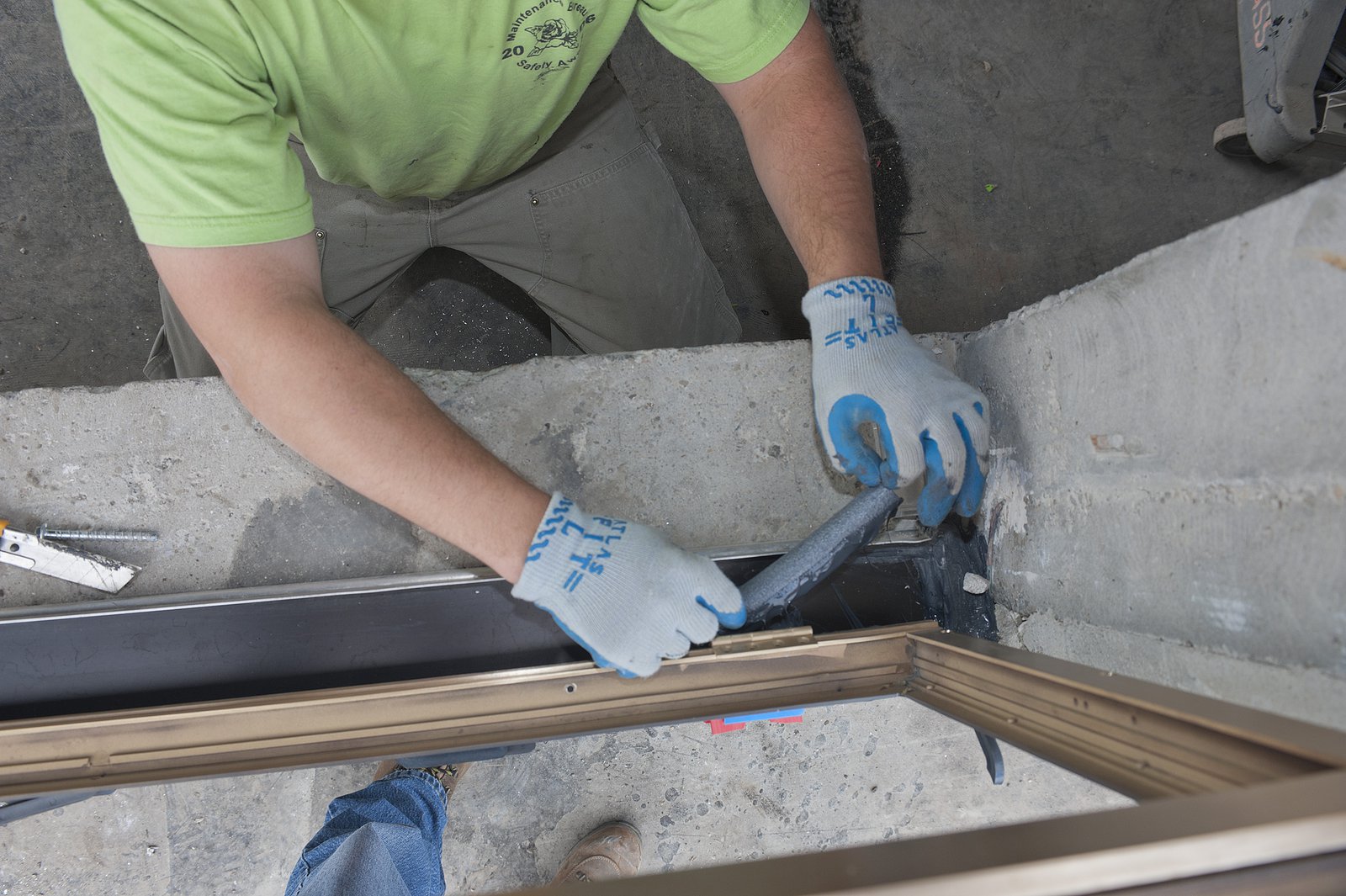
Photo by the Oregon Department of Transportation via Wikimedia Commons. Resized under CC BY 2.0.

Use indoor shrink film on windows you can leave covered
An indoor shrink-film kit uses clear plastic and double-sided tape to enclose a layer of air between the film and window. The DOE’s winter weatherization tips include clear plastic film as a way to reduce airflow. Choose a dry window you can leave closed for the season and check that the tape is approved for your trim finish. Keep windows in your fire escape plan clear and easy to open.
Measure the opening and follow the kit directions for trimming the film. Clean and dry the mounting surface. Run the tape around the perimeter, press the film onto it and use a hair dryer as directed by the kit to remove wrinkles. Check the corners for lifted tape. Duck Brand’s standard kit instructions show this type of installation. An indoor shrink kit spans the opening, so plan to take it down before you need to open the window.
If you rent, ask before sticking tape to the trim or changing the seals. Check the product’s removal instructions before applying it. If you see water collecting behind the film, uncover the window and check where the moisture is coming from. Film is a seasonal comfort measure. A leak that wets the sill needs its own diagnosis.
Fit cellular shades where the glass feels cold
Cellular shades have rows of honeycomb-shaped pockets that trap air. The closer the shade fits to the window opening, the less room there is for air to circulate around its edges. Check the shade maker’s measuring guide and allow room for locks, handles and cranks. If you compare options, ask for the Attachments Energy Rating Council rating for the shade you’re considering.
Lower the shades after sunset. Open them when direct winter sun can warm the room, and raise them as needed for light or to use the window. If you notice droplets on the room side of the glass, raise the shade to check the sill and let it dry. Pay attention to whether it happens after cooking or showers.
For a room you use all day, test the shade while you’re sitting where you usually feel cold. If the seat feels better but a breeze is still coming from the edge of the sash, go back to that joint. See the DOE fact sheet on cellular shades for more on how fit and daily use affect performance.
How to winterize bay or specialty windows
On bay and bow windows, test each section separately. The center glass is often fixed, with side windows that open. Latch those side windows and check their moving edges first. Then follow the fixed joints between units, where the assembly meets the wall and where the seat meets the lower trim. Note whether you feel air at a seam or cold across the whole seat.

Photo by Ger Barbiers, Rijksdienst voor het Cultureel Erfgoed, via Wikimedia Commons. Resized under CC BY-SA 4.0.

If the seat stays cold after you’ve sealed obvious air leaks, ask a window professional to check the insulation below the projecting section. Some bay designs offer an insulated lower section. If you see dampness beneath the seat, staining above the window or a joint that repeatedly opens, ask for a water and support check before re-caulking.
For a stationary arch or other custom-shaped window, trace the perimeter where the frame and trim meet. Use the same fixed-joint check you would on a rectangular window. If you’re sizing a shade or a temporary film kit, look for a fit that follows the opening and keeps any adjoining operable sash accessible. Measure each bay section on its own if you’re fitting individual shades.
When the window needs more than a winter fix
Fog trapped between panes. Wipe the room-side glass with a cloth. If the glass is safely accessible from the ground, check the outdoor surface too. Fog you can’t wipe from either side points to a failed seal in the insulated glass unit. A window or glass professional can check whether the sealed glass or the sash is replaceable on your model.
Soft wood or recurring water stains. Note whether stains follow rain and where they start. Soft wood at the sill or trim calls for an assessment of the frame and surrounding opening. Water can enter above or beside the window, so have its path traced before deciding what needs replacing.
A window that sticks, drops or won’t latch. If the sash is stable, note where it rubs or stops during normal use. A crank, lock or balance can be replaceable on some models. The balance is the part that supports a sash as it slides up and down. Stop testing a sash that drops or shifts out of place, and get an escape window that won’t open assessed promptly.
Our guide to signs you need new windows goes deeper into glass and hardware repairs, damaged frames and what a replacement can improve.
| Handle it yourself | Ask a professional to check |
|---|---|
| Clean a sound track, replace a matching seal or caulk a small fixed interior gap. | Trace a persistent leak behind trim or a water stain that returns after rain. |
| Fit a shade or removable film where the window stays safe to use as intended. | Inspect fog inside a sealed glass unit, a sash that drops or a frame that feels soft. |
| Close, latch and repeat your draft check in similar weather. | Check the fit, frame and surrounding opening when one corner still will not close evenly. |
When replacement makes sense
Start with the smallest repair that solves the problem. If a window closes evenly and the frame is dry and sound, replacing worn seals or available hardware can restore normal use. If fog is the only issue, ask about replacing the sealed glass unit or sash. If the frame is deteriorated or distorted, repairs keep failing, or the window cannot be made to close and lock with available parts, ask for a replacement assessment.
Ask what the proposed work includes around the opening. An insert fits into a sound existing frame. Full-frame replacement removes the old frame and exposes the opening so the installer can inspect it and address air sealing and flashing, the system that directs water away. If you have a leak around the opening, ask who will trace it and handle any needed repairs before the new window goes in. Our window installation guide for homeowners explains what happens once you’ve chosen a scope.
When you compare replacement units, ask for ratings on the actual configuration in the quote. A lower U-factor means less heat passes through the window. The solar heat gain coefficient, or SHGC, describes how much of the sun’s heat passes through it. The air leakage rating, when shown, describes airflow through the tested window under set conditions. The DOE Energy Saver guide explains the labels. Ask separately how the installer will seal the frame to the house.
If several rooms feel cold and your main concern is energy use, a home energy assessment can check the rest of the house too. Bring notes on which windows feel drafty, when it happens and which fixes you’ve tried. If only one or two windows are causing trouble, a room-by-room list lets you start there.
All Four Seasons is family-owned and operated since 1999. For window replacement in Metro Atlanta, call (678) 271-8918 or tell us which windows are giving you trouble. Let us know if the issue is a breeze at the trim, a window that won’t latch or moisture that keeps coming back.
Frequently asked questions
How can I tell if my window is drafty or just cold?
Close and latch it, then check for a breeze all the way around the sash and trim. Try the paper test at several sash edges. If the chill is mainly near the center of the glass and you find little movement at the edges, try a fitted shade.
Should I use caulk or weatherstripping on a drafty window?
Use weatherstripping where a moving sash closes against the frame. Use caulk on a narrow, dry joint between fixed surfaces, such as the interior trim and the wall. Leave tracks, drainage openings and the path of the sash clear.
Can I use a plastic film kit on a bedroom window?
Use it only on a window you can leave covered and closed. Keep every window in your fire escape plan clear and operable. If you use the window often or need it for escape, try a shade that lifts out of the way and preserves access to the latch.
Why does my bay window still feel cold after I seal it?
Check the side sashes, the joints between sections and the seam under the seat. If you feel cold across the seat and find little airflow at those edges, ask about the insulation below the bay. If you feel cold near the glass, try close-fitting shades for each section.
Does fog between panes mean I need a new window?
Fog trapped between panes points to a failed seal in the glass unit. If the frame is sound and the window opens, closes and locks normally, ask whether a replacement glass unit or sash is available before replacing the whole window.
What if the draft comes back after I seal the trim?
Check the sash again and write down where air moves under similar weather conditions. If it keeps coming from behind the trim, ask about the seal between the frame and the wall. If the same spot gets damp after rain, get the water source checked before applying another bead of caulk.
Do I need to replace every window in the house?
Start with the openings that have damage, repeated leaks or trouble closing. Keep a list of which windows work and which need attention. You can use it to discuss individual repairs or phase replacements by room.
Top photo: Beath–Dickey House in Atlanta, photographed by Atlien1996 via Wikimedia Commons. Resized under CC BY-SA 4.0.
