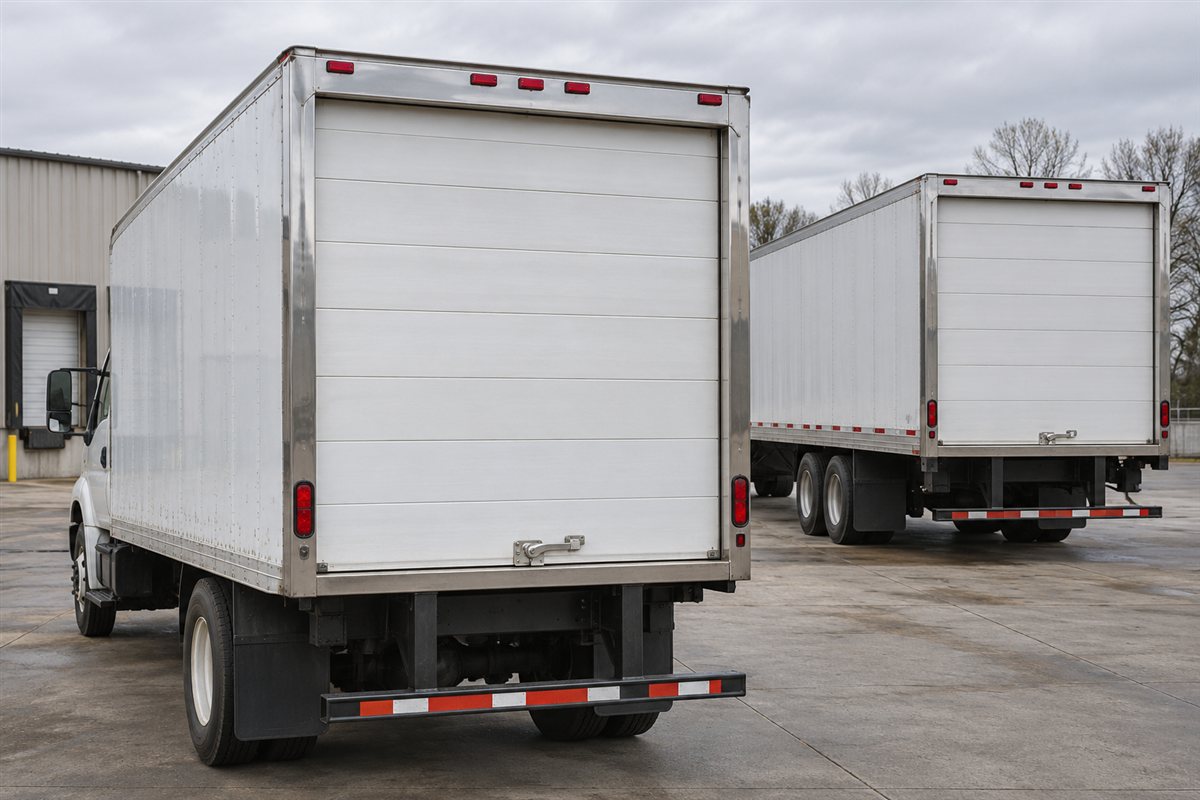
If your box truck or trailer roll-up door hangs crooked, drops or won't latch, stop using it and keep the vehicle parked. Check what you can see from outside and let a truck-door technician handle the repair.
A door that binds halfway up gives you a different clue from a door that closes evenly but won't lock. The difference matters when you're calling from a delivery stop or deciding which trailer can go back into service. For help in Middle Tennessee, request commercial service from our Nashville team and tell us you're calling about a vehicle cargo door.
Start with the door where it stopped
If the door is up or partway open, keep clear of the opening and keep others back. Don't walk underneath to retrieve cargo, reach behind the door to find a jam, or try to pull it straight with the strap. A roll-up door is heavy. A broken spring leaves it without the assist that normally carries part of that weight.
If the door is closed, leave it there when you see a slack or frayed cable, a roller out of its track, a bowed panel or a bottom edge that sits at an angle. If the door won't close and latch securely, leave the unit parked and tell dispatch. TODCO tells drivers to close and lock the door before moving the vehicle. Tennessee's commercial driver manual also includes door condition and secure latching in its inspection guidance.
If you suspect a load has shifted against the door, keep the latch engaged and let dispatch arrange safe access. The Tennessee CDL manual calls for cargo to be secured with blocking, bracing or tiedowns as appropriate. The latch holds the door shut. Check the cargo restraints during loading so the freight stays in place.
Match the symptom to the part a technician will check
Safe observations are the ones you can make with the door still and from outside its path. The table gives a technician a place to start. One symptom can have more than one cause.
| What you see or feel | What to report from a safe position | What the technician will check |
|---|---|---|
| The latch moves but won't catch | Note whether the bottom edge reaches the sill evenly. Look for loose debris in the accessible catch area. | Worn latch or keeper, damage at the sill, latch and keeper alignment |
| The door stops at the same height | Report where it last stopped. Look for a dent or an obstruction visible from outside. | A tight spot in the track, damaged roller, panel or hinge |
| One corner hangs lower | Leave the door where it is. Note which side is low and whether a cable is visibly loose. | Both lift cables, cable drums, rollers and track alignment |
| The door suddenly feels heavy or starts to drop | Stop using it and report how the change started. Keep clear if the door is raised. | Spring, counterbalance assembly and cables |
| The door suddenly pulls upward on its own | Report the unexpected motion from the last use. Leave further testing to the technician. | Counterbalance setting and free movement through the tracks |
| The door closes but daylight shows at one edge | Note which edge and look for a torn or folded seal from outside. | Seal condition, panel fit, door centering and the rear opening |
| You heard a new scrape after an impact | Photograph any visible damage from outside. Leave the door where it is. | Door panels, tracks, their mounts and the frame that supports them |
Describe what happened on the last normal use. “The left corner stopped at the curve” gives the technician more to work with than “it sounds like a spring.” If the fault appeared right after loading or backing into a dock, include that detail. Leave the door still while you make the call.
What the parts do on a truck or trailer
On a typical sectional cargo door, the panels rise in tracks on either side of the opening. The tracks turn inward above the cargo space so the panels travel overhead. A roll-up door needs room inside the body for that travel. At a tight dock it saves the space that swing doors need behind the vehicle. If you're comparing it with a door on the warehouse itself, see our guide to commercial garage doors and our overview of building roll-up doors.
Spring, cables and drums. The counterbalance is the spring assembly that offsets the door's weight. Lift cables run from the door to drums, the grooved wheels that wind and unwind the cables. If a cable is damaged or comes out of position, the technician checks the other side and the parts the cable passes as well. A door that suddenly feels heavy needs an inspection before anyone tries to work it again.
Panels, hinges and rollers. Hinges let sections bend around the track curve. Rollers guide the sections along the track. Some panel designs have built-in joints, so the hardware and service points differ by model. One roller, a damaged hinge or a bent section can bind at one point in the door's travel. If there was an impact, the technician also checks the area of track and frame next to the damaged section.
Latch, keeper and seals. On a common setup, the latch at the bottom of the door engages a plate at the sill. The sill is the metal threshold at the rear floor. A keeper holds the latch handle in its closed position. The top, side and bottom seals close gaps around the door. A latch problem can show up even when the door travels freely, and a seal problem can show up even when the latch works.
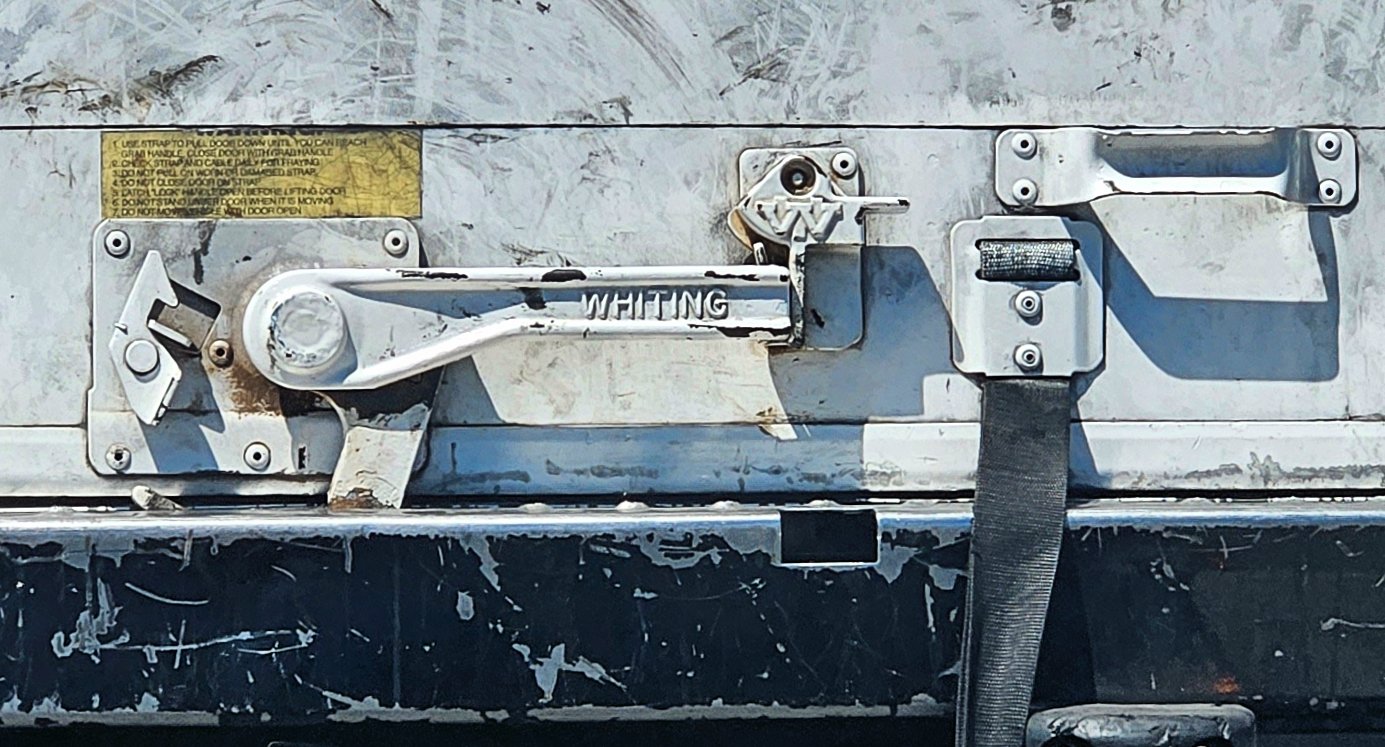
Photo by Eric Polk, “Whiting latch.jpg,” via Wikimedia Commons, CC BY-SA 4.0.
Pull strap. The strap lets you reach the door to bring it down during normal use. TODCO says to replace a worn or frayed strap and keep it clear of added ropes or attachments. Use the vehicle's designated steps and handholds to climb in and out. Put in a service request if the strap is too short for the way your crew loads the truck. TODCO offers different strap lengths and mount options for different loading setups.
What drivers can check and what a technician handles
| You can check from outside the opening | Call a trained truck-door technician for |
|---|---|
| Door position, visible panel damage and obvious gaps around the seal | A jammed, unstable or off-track door |
| Loose debris at an exposed sill, with the door fully closed and stable | A bent track, broken roller, damaged hinge or distorted panel |
| Whether the keeper visibly holds the latch handle on doors equipped with one | A latch that needs adjustment or won't secure the door |
| Visible strap wear, cable fraying or missing warning decals | Worn lift cables, a slipped drum or any counterbalance work |
| Vehicle unit number and door ID from records or an accessible label | Matching parts, checking balance and testing full travel after repairs |
Give the door a visual check before the route. Look at the panels, the area around the latch and any parts you can see without opening a suspect door. Report a bent edge, a change in how the latch sits, or a strap with torn stitching. When the door is in normal working condition, check for smooth movement during regular use and stay clear of the doorway while the door moves.
If a door is suddenly heavy, shifted or partly off track, skip any balance test. A technician can check the balance after supporting the door and inspecting the hardware. Both Whiting and TODCO direct spring or counterbalance work to trained people. Keep your hands off the cables, drums and spring fasteners.
On a freezing Middle Tennessee morning, look for visible ice around the sill or latch while the door is closed. The National Weather Service in Nashville documented freezing rain across parts of Middle Tennessee during the February 2021 winter storm. If the door resists, stop pulling and let the ice thaw before reassessing it. If the latch still binds or the door sits unevenly after the ice clears, report that as a repair issue. If you also manage the building where the fleet parks, see how to prepare a garage door for a Middle Tennessee winter.
Identify the door before ordering parts
A box truck's chassis badge tells you the truck make. Start with the cargo door maker and its serial number for the repair. Whiting places the serial tag on the inside of its door. TODCO uses the door serial number to look up the original opening dimensions. Check your fleet or body records first when the door is stuck. If the label is inside an unsafe unit, let the technician find it after securing the door.
Share the photo of the tag, the unit number and the manufacturer name with the person matching parts. On a trailer, give the trailer number even if you also have the tractor number. If the fleet has several similar units, put the unit number on the same report as the photos. That gives the shop a record tied to the door it will work on.
On a Whiting door, replacement track is ordered against the door's serial number. Panel joints also come in different shapes. On a TODCO door, the maker can use the size and number of sections, known as the panel stack, when a serial number is unavailable. Leave measuring to the technician if it involves opening the door or climbing into the body. Good photos of the existing unit and the damaged area are enough to start that conversation.
If you run a refrigerated trailer, mention it at the start. TODCO makes insulated doors in more than one thickness and with different track choices. Have the technician match the door construction and its seals to the body. Include any water at the threshold or gaps around the door when you report the symptom. Where the gap appears helps the technician decide which seal or alignment to check.
When to repair a part or replace the door
A serviceable door can sometimes take a matching latch, strap, seal, roller or section. Ask the technician to show you what failed and whether the part fits the existing door. A new latch alone won't align a bottom section that's bent. If there was a dock strike and the opening is out of shape, ask whether the body needs repair before the door work can proceed.
When you compare replacement options, ask which hardware stays. TODCO calls panels and their hardware a drop-in door. Its complete door includes the track and counterbalance as well. The terms matter when the door has several damaged panels, or when an impact damaged both the door and the tracks. Ask which parts of the existing assembly have been checked and which parts the estimate covers.
Before you put the unit back on a route, ask the technician to confirm the door moves freely, sits centered, closes fully and latches as designed. Whiting's final checks also include whether the cables run free and the side, upper and lower seals fit. If a problem returns in the same spot after repair, report it with the work order and where in the travel it happens. That is more useful than trying a new adjustment yourself.
A door check for a driver or fleet manager
Whiting's installation guide calls for a daily look at the cables and pull strap and a monthly look at panels and hardware. Follow the manual for the unit you run. TODCO also flags worn or missing warning labels and warns that pressure washing or harsh cleaners can damage the finish. Build these checks into the inspection you already do for the truck or trailer.
- At the start of the route, look at the closed door. Report a loose latch, an uneven bottom edge or damage from the previous shift. Verify the door is closed and locked before departure.
- After a stop, note any change in travel. If it starts scraping or takes more force than usual, record where you noticed it and flag it for service. Park the unit if it can't close or lock securely.
- Follow the maker's cleaning and lubrication schedule. Whiting specifies its Easy Up lubricant for designated points. TODCO lists a light oil for a stiff lock and its own lubricant for other service points. Use your fleet's approved procedure for accessible points on a sound door. Leave the spring and anything that requires reaching over the opening to the shop.
- Record the fix on the right unit. Keep the door make, serial number, work completed and date with the truck or trailer's service records. If another driver reports the same symptom, you can tell the technician what was already repaired.
What to tell us when you call in Middle Tennessee
Call All Four Seasons at (678) 271-8918 or send the Nashville commercial team a service request. Have the unit's location ready, even if your office is somewhere else. Tell us whether it's a box truck or trailer, whether the door is open, closed or sitting crooked, and whether it will latch. Share the door maker, serial number and photos if you can get them safely. If you're reporting multiple units, list each one with its own symptom.
Tell us if cargo is still on board and whether the truck is at a dock, a yard or a delivery stop. We can confirm whether we handle your door setup and what service options are available for your location. You get a written price before work starts.
All Four Seasons has been family-owned since 1999. Meet our Nashville team or see our Nashville-area service information.
If your issue is with equipment on the building at your dock or warehouse, see Nashville commercial garage door repair. Our Nashville garage door services page covers other doors and openers on the property.
Frequently asked questions
Can I drive a truck if the roll-up door won't latch?
Keep it parked. TODCO advises closing and locking the door before driving, and Tennessee's CDL inspection guidance includes checking that doors latch properly. Tell dispatch or your fleet manager whether the door also sits crooked or has visible damage.
Why is my truck's roll-up door suddenly hard to lift?
A damaged spring or cable can affect the lift assist. A damaged roller or hinge can also make the door hard to move. If the change is sudden, leave the door where it stopped and have a technician check it. If you saw the door drag at a particular spot, pass that along.
Can you replace one damaged panel on a trailer roll-up door?
Ask a technician to match the section's profile and construction and check the adjoining panels, rollers and tracks. Whiting documents more than one panel joint design. If the adjoining parts or the door opening are damaged, the repair needs to address those as well.
Where do I find the serial number on a cargo door?
Look in the fleet or body records first if the door has jammed. Whiting puts its tag on the inside of the door, and TODCO uses the serial number to identify original specifications. Leave the search to the technician if the tag isn't safely accessible.
Can I use a ratchet strap to hold the cargo door shut?
Keep the unit parked if its latch won't engage. A ratchet strap is for securing cargo in an appropriate setup. Have the door's own latch and keeper repaired and checked before dispatch. TODCO's owner manual also directs owners to leave its door hardware free of added attachments.
Is the trailer door the same as the one on my box truck?
Part fit depends on the cargo body and door model. Even doors from the same maker can have different tracks, panel joints, counterbalances or seals. Use each door's serial number and confirm the part against the maker's records.
What if the door won't stay open while I'm unloading?
Stop unloading and keep people out of the opening. A door that moves on its own needs a technician to check balance and hardware. Leave props, strap ties and other improvised supports out of the doorway.