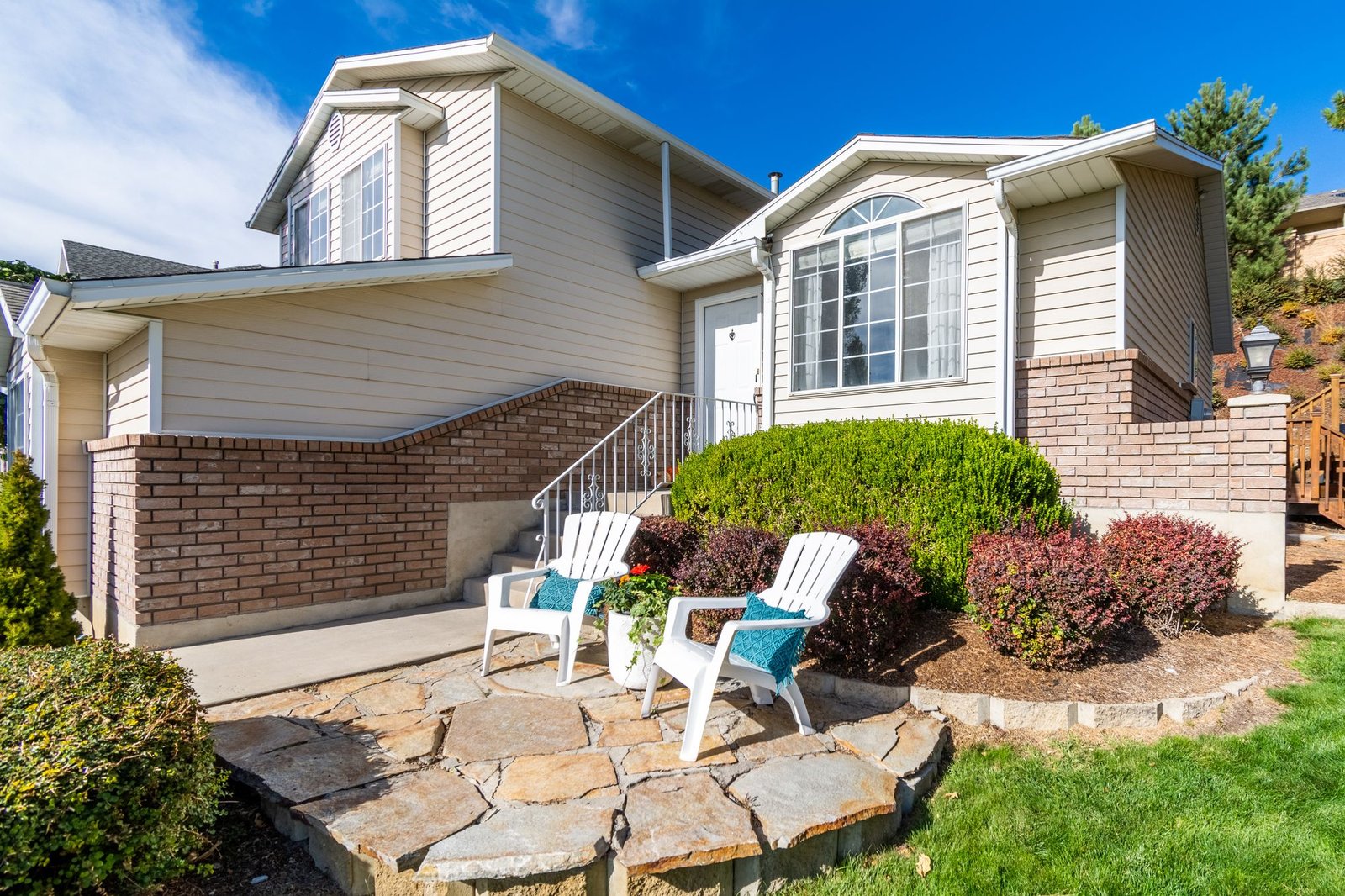
Choose replacement windows room by room. Match the opening style to how you use the space, compare frame materials and whole-window energy ratings, then ask for a written quote that spells out the glass and installation work.
In a Metro Atlanta home, the window over the kitchen sink has a different job from the one that takes direct sun all afternoon. Keep a list of what bothers you at each opening. It'll give you a way to compare options when the samples and quotes arrive.
Choose a window style for each room
Start with what the window needs to do. Do you open it every morning, want a clear view from the sofa, or need to keep the walkway outside free? The sash is the framed part that holds the glass. On an opening window, how the sash moves determines what kind of clearance you need.
| Room or opening | Style to consider | What to check |
|---|---|---|
| Bedroom | Double-hung windows have an upper and a lower sash that move vertically. A casement is another option | If the window serves as an emergency escape and rescue opening, have the installer verify the actual clear opening and applicable requirements before you order |
| Kitchen over a sink | A crank on a casement window is easier to reach across a counter. A projecting garden window gives herbs a shelf | Try the handle from where you stand at the sink. Check the space outside for a sash or window that projects |
| Bathroom or laundry room | An awning window hinges at the upper edge and swings out from the bottom. Placing it higher on the wall can give you light and ventilation with privacy | Test whether you can reach the operator and confirm where safety glazing is required |
| Living or dining room | A fixed picture window keeps the view open. Bay and bow windows project beyond the wall. A bay has angled sections, while a bow forms a gentler curve | Decide where you want fresh air. Pair a fixed window with a window that opens, or ask which panels in a bay or bow operate |
| Along a deck, porch or path | Sliding windows open side to side within the frame, leaving the space outside clear | Check which panel moves, where you can reach the lock and how you'll clean the exterior glass |
| Basement utility room | Basement hopper windows hinge at the bottom and tilt inward from the upper edge | Keep the interior swing clear of shelves and pipes. If you plan to use the room for sleeping, confirm escape-opening requirements separately |
| Arch or angled opening | Custom-shaped windows can follow an existing arch or angle. A fixed shape over an opening window can serve the same design goal | Have the opening measured and the trim plan drawn before ordering |
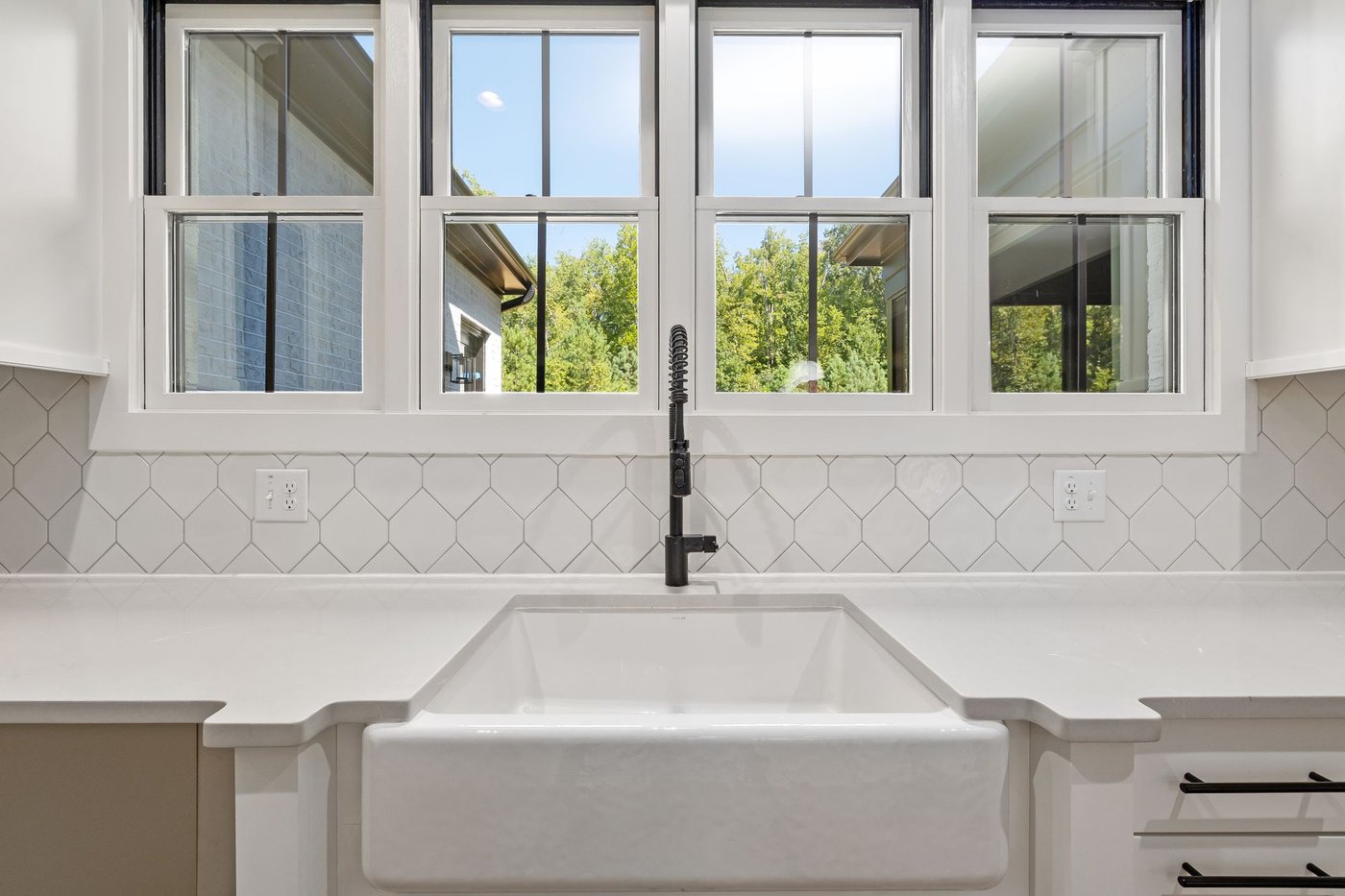
Walk around the outside of the house before picking a style. A side-hinged casement that works well over a sink needs an unobstructed swing. If that window faces a busy deck, a slider keeps the sash within the frame. On the front of the house, compare the height of the horizontal bars and the grille pattern from one room to the next so the windows read as a group from the street.
For a bedroom escape window, ask for the net clear opening, the unobstructed space available with the window open. Two windows with the same outside frame size can leave different usable openings. Changing the style or fitting an insert inside the existing frame makes this a measurement to verify before ordering.
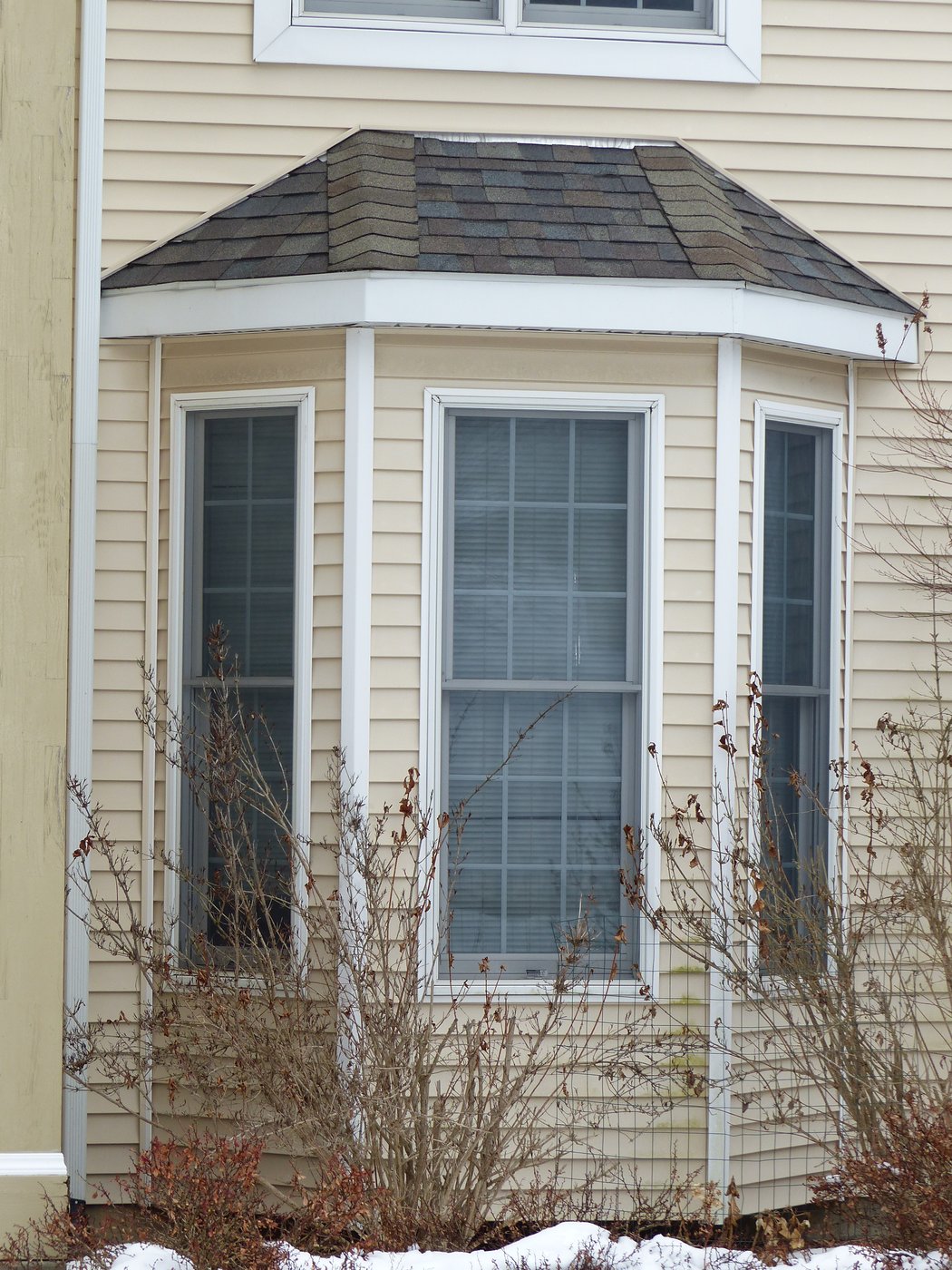
Photo by Stilfehler via Wikimedia Commons, resized, under CC BY-SA 4.0. Original photo.

Compare frame materials and upkeep
Bring home a frame sample and look at it next to the existing casing, the trim around the window. A finish can look different beside painted trim than it does in the showroom. Ask what the inside and outside surfaces are made of, especially when a wood frame has an exterior covering.
| Frame material | What it offers | What to compare |
|---|---|---|
| Vinyl | It resists moisture and generally needs little upkeep | The finish options, frame profile and whole-window U-factor |
| Wood | You can paint or stain the exposed wood, which makes it easier to match existing woodwork | How exposed surfaces need to be maintained and how the exterior finish protects against moisture |
| Clad wood | You get a wood interior with an outer layer, often aluminum or vinyl, that reduces exterior maintenance | Which faces are clad and how the interior wood is finished |
| Fiberglass | It is strong and changes little in size as the temperature changes | The frame depth, available profiles and the rating for the glass package you want |
| Aluminum | Its strength can suit a slim frame profile | Ask about a thermal break, an insulating section that interrupts heat flow through the metal. Check the whole-window U-factor |
The frame, sash and glass all affect the window's energy rating. If you're deciding between two frame materials, ask for the ratings with comparable glass and the same operating style. Then compare the interior frame width and the amount of glass you'll see. That's particularly useful for a narrow bathroom opening or a pair of windows you want to match.
Pick glass for the room and its exposure
Double-pane glass has two sheets of glass separated by a sealed space. Triple-pane has three sheets and two spaces. The assembly is called an insulating glass unit. Some units use argon in the spaces to slow heat transfer. A spacer keeps the panes apart and is part of the system that seals the edges.
Low-E stands for low emissivity. It's a thin coating that reduces heat transfer across the glass. Different low-E coatings allow different amounts of solar heat through. Ask for the solar heat gain and daylight ratings for the exact package offered. Two windows described as double-pane low-E can have different ratings.
When to compare double-pane and triple-pane
Start with a double-pane, low-E option that meets your local ENERGY STAR criteria. Price a triple-pane version alongside it if you want more insulation, such as for a seating area that feels cold next to the glass in winter. The added pane can lower the U-factor and add to the cost. Compare the full ratings before choosing where the upgrade makes sense.
If your west-facing den gets hot in the afternoon, look at solar heat gain coefficient first. An extra pane and a lower U-factor tell you about insulation. The solar heat rating tells you how much heat from sunlight the window lets in. Record both numbers on the same line of your quote so you can see which one changes with the upgrade.
If street noise is the concern, ask for a sound rating for the proposed unit. Pane count alone gives you little to go on. Glass thickness, pane spacing, laminated glass and how well the assembly is sealed all matter. Ask for a sound-control option in the affected room so you can compare its cost separately.
Read the NFRC label and check your ENERGY STAR zone
The National Fenestration Rating Council, or NFRC, rates the whole window. Its label gives you numbers to compare. ENERGY STAR uses independently rated performance to identify windows that meet the program's requirements for a climate zone. Ask for both labels or the matching product documentation for the window, style and glass in your quote.
| On the NFRC label | What it tells you | How to use it |
|---|---|---|
| U-factor | How readily heat flows through the whole window | Lower means the unit insulates better |
| Solar heat gain coefficient (SHGC) | How much of the sun's energy makes it through as heat | Lower means less solar heat enters. Check it for rooms that overheat when the sun hits the glass |
| Visible transmittance (VT) | How much visible light comes through | Higher means more daylight passes through. Compare it alongside SHGC if you want to keep a room bright |
| Air leakage (AL) | How much air passes through the window assembly under test conditions | Lower means less air moves through the unit. Ask how the gap around the installed window will be sealed, too |
| Condensation resistance, when shown | How well the window resists surface condensation under test conditions | Higher means more resistance. Indoor humidity and outdoor conditions still affect what you see on the glass |
Which ENERGY STAR limits apply in Georgia?
EPA calls the Metro Atlanta zone South-Central. Fulton, Cobb and Gwinnett counties are in that zone. The Southeast spans more than one ENERGY STAR zone. Chatham County, for example, is Southern. Check the address by county with the ENERGY STAR climate zone finder.
| ENERGY STAR Version 7.0 zone | Window U-factor | Window SHGC |
|---|---|---|
| South-Central, including Metro Atlanta | 0.28 or lower | 0.23 or lower |
| Southern, including parts of Georgia nearer the coast | 0.32 or lower | 0.23 or lower |
These are the program's U-factor and SHGC limits for residential windows. A window rated 0.26 for U-factor and 0.25 for SHGC would pass the South-Central U-factor limit and miss the SHGC limit. Look for your zone highlighted on the ENERGY STAR label to confirm the product qualifies. An escape opening or a window near a tub has separate requirements. Ask the installer to check what applies to each opening.
Compare daylight and heat gain together. In a shaded kitchen where you want more daylight, look for a higher VT among options that meet your zone's criteria. On a west-facing wall without shade, give more weight to a lower SHGC. When two packages look similar on paper, put the samples side by side in daylight.
Decide between an insert and a full-frame replacement
An insert, also called a pocket replacement, fits a new window inside the existing frame. It can preserve much of the surrounding trim when the old frame and sill are sound. The extra frame takes up some of the opening. Ask how much visible glass and usable opening you'll have afterward, especially in a small room or a bedroom.
In a full-frame replacement, the installer takes out the old frame to reach the rough opening, the opening in the wall framing. That gives the installer access to inspect the area, repair damaged material and install flashing and air sealing around the new unit. Flashing directs water back out of the wall assembly. Full-frame work can involve more trim or siding work, depending on the opening and exterior finish.
If there are water stains below the sill or soft wood near a corner, ask the installer to trace where the water is coming from before choosing a method. The source can be above or beside the window. Have the quote explain what will be inspected and how repairs found after removal would be handled.
What drives window replacement cost?
Ask for a written quote that labels each opening by room. A wide living-room window and a narrow bath window can take very different work even if both are listed as replacements. The scope should be clear enough for you to see what changes when you switch the style, glass or installation method.
| Cost driver | What changes the work or the product |
|---|---|
| Size and quantity | Larger windows use more material. Custom dimensions, arched openings and groups of windows joined together add fabrication or fitting work. The number of openings sets the scale of the job |
| Style | A fixed unit has no operating hardware. Opening sashes add hardware. A projecting bay or bow adds an assembly whose support and exterior finish need to be accounted for |
| Frame material and finish | Vinyl, fiberglass, aluminum and wood differ in how they're made and finished. Cladding, a custom color or a particular interior finish can change the quote within the same material |
| Glass package | Low-E coatings, additional panes, specialty sound-control glass and safety glazing affect the window specification and cost. Ask which choices are included and which are optional |
| Installation type and access | An insert reuses the existing frame. Full-frame work reaches the wall opening and can add flashing, insulation, siding or trim work. Difficult access and damaged sills can add labor |
When you compare bids, line up the openings, product ratings and work side by side. Look for removal and disposal, sealing and flashing where applicable, any permit responsibilities, and who handles casing, paint and repairs. If one quote covers a sound-frame insert and another covers full-frame work with new trim, ask each installer to explain the reason for that scope. Our guide to comparing replacement window quotes goes deeper on what to check before you sign.
What you can check and what the installer should verify
- List the openings you want to address. Note where you feel a draft, see fog between panes or struggle to open the sash. Photograph the inside and outside from a safe spot. For each room, write down the main job of the window, such as daylight, ventilation or keeping afternoon sun off a desk. Check the signs you need new windows if you're still deciding which openings need work.
- Mark what you want to keep. Make a note of existing trim, grille patterns, shades and any furniture or fixtures that affect reach. If you're doing the project in phases, ask for the scope of each phase in writing and record the finish details you want to match later.
- Have the installer measure and inspect. Ask them to verify frame and sill condition, exact order dimensions, clear openings where required, and any safety glazing. Confirm what material will be removed and how the assembly will be flashed and sealed.
- Review the quote opening by opening. Check style, operating direction, frame finish, glass package, ratings and installation type against your list. Keep the product documentation and the written scope together so you can check the delivery and keep a record of what was installed.
All Four Seasons has been family-owned since 1999. When you're ready to compare options for your home, read about window replacement in Metro Atlanta, ask for a window estimate or call (678) 271-8918.
Frequently asked questions
Do all the replacement windows in my house need to match?
You can coordinate the exterior finish and grille pattern while choosing different opening styles inside. A double-hung bedroom window and a crank-operated kitchen window can each suit the room. Check side-by-side samples if matching the exterior frame color and profile matters to you.
Is triple-pane glass worth considering in Metro Atlanta?
Compare it with double-pane low-E for a room where you want more insulation. Ask for the U-factor, SHGC and visible transmittance for each option. If direct afternoon sun is the problem, use the SHGC to compare how each package controls it.
Can a double-pane window meet ENERGY STAR requirements in Georgia?
Yes. Qualification depends on the performance of the whole window and the climate zone. Ask for the ENERGY STAR label for your county and the NFRC ratings for the exact style and glass package you're quoted.
Is a picture window a good choice for a bedroom?
It can serve as a daylight or view window where you've already confirmed how the room meets applicable emergency escape requirements. A fixed picture window stays closed. If you're replacing an opening used for escape, have the installer confirm the requirements and clear opening of the proposed unit first.
Will an insert replacement leave less glass showing?
It can. An insert sits inside the old frame, so another layer of frame takes up some of the opening. Ask for the visible glass dimensions and, where escape matters, the clear dimensions with the sash open.
Why do two window quotes for the same rooms differ?
They can include different glass, sizes, finishes, access work and installation methods. Compare the work listed for each opening, including trim, disposal and any repairs to the existing opening. Ask how the installer will document and price unexpected work before it goes ahead.