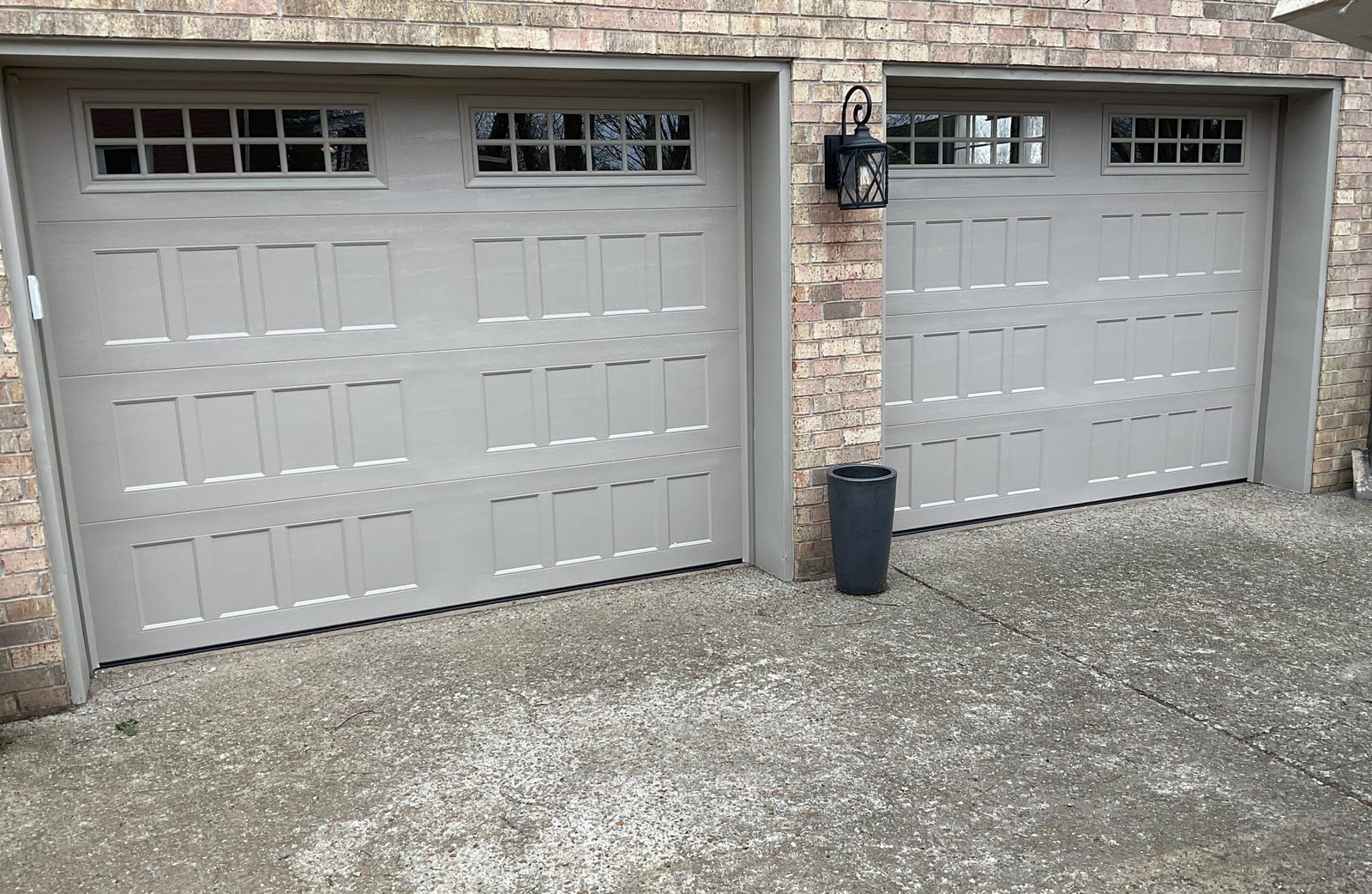
Upgrade the part that causes the problem. A sound garage door can often stay when you want better seals, less noise or phone control. Consider replacement when several sections are damaged or the changes you want require a different door.
Think about the last time the door bothered you. Was it the draft at your workbench, the rattle under a bedroom, or the drive back home to check whether you'd closed it? Those three problems call for three different upgrades.
Signs it's time to upgrade a garage door
Start with the door itself. Its horizontal sections, tracks and springs work together. One worn part is a reason to inspect the assembly. Damage spread across several sections or a door that needs an unavailable replacement section gives you a reason to compare a complete replacement.
Stop using the door if it hangs crooked, a roller is out of its track, or a lift cable is frayed or loose. Keep people clear of the opening and stay away from the springs, cables and bottom brackets. Those brackets connect the lift cables to the door and are under tension. If the door is stuck open or unsafe to operate, call for emergency garage door repair.
| What you notice | Where to start | When a larger upgrade makes sense |
|---|---|---|
| Faded paint or a shallow dent on a door that runs smoothly | Check the finish instructions or have the dent assessed | Deep creases, heavy rust or impact damage across several sections warrant a replacement comparison |
| A draft or a strip of daylight at the floor | Check the bottom seal, the flexible strip under the door, and the fit against the slab | If the opening seals well but you need more comfort inside the garage, consider an insulated door |
| Squeaks or rattles as sections move around the track curve | Have the rollers, hinges and tracks checked | Consider quieter hardware if it fits the door and the parts are due for replacement |
| A steady drive noise overhead on a door that travels smoothly | Have the opener and its rail checked | A belt-drive opener is an option if the drive is the source of the noise |
| A dark garage or a worn look from the driveway | Check whether the manufacturer offers a compatible window section or an approved finish update | Compare a new door if you want a different panel pattern or a window layout your model can't take |
| An opener that works from the wall but has a dead remote | Check remote compatibility, the battery and programming | Upgrade the controls for a specific feature, such as door-status alerts or shared access |
A shallow dent, fading or a small paint chip can be a finish problem. Follow the door maker's touch-up instructions and have a deep crease or an impact near a hinge assessed before you use the door again. The garage door dent repair guide covers cosmetic damage in detail.
If one section is damaged and the others are sound, ask whether the manufacturer still supplies a compatible replacement. Get the model from the door label if it is safely visible. Clopay, for example, offers replacement sections for models it still makes and notes that old and new finishes can look different. A match needs to fit the door's construction and hardware as well as its appearance. If the door binds, strains or has a history of repeated trouble, start with a garage door repair inspection.
Insulation and weather seals for a garage you use
Nashville's normal January low is below freezing and its normal July high is around 91°F, according to the National Weather Service. If you work at a bench by the door or walk through an attached garage to get into the house, check where you feel the temperature difference.
- Air comes in at the floor or sides. With the door closed, look for torn seals and uneven contact. A worn bottom seal can let in air, water or debris. If one corner still has a gap, have the door fit and the floor checked before buying a thicker seal. Our Middle Tennessee winter garage door guide covers cold-weather checks.
- The area near the closed door gets hot or cold. Insulation slows heat transfer through the sections. In a garage you use for projects, look at how the door is built and how well it seals. If you mostly park in a detached garage and the door fits well, put working hardware and a sound seal first.
- The room over an attached garage feels drafty. Ask about air sealing and insulation where the garage meets the house, including the floor above the garage. The U.S. Department of Energy's Building America guidance treats that boundary as part of the house's enclosure.
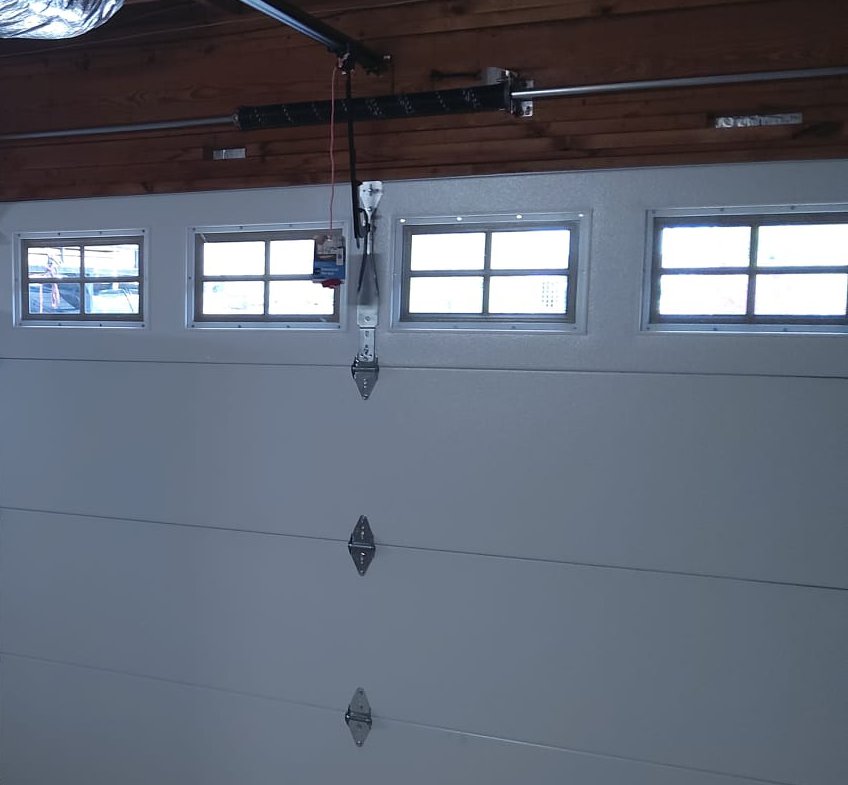
Retrofit kits exist for some non-insulated doors. Before buying one, ask the door manufacturer what it allows for your model and have a technician check what the proposed insulation adds to the door's weight. The springs are sized for the door they counterbalance. Added weight can put the door out of balance and make the opener work harder. This also applies if you want to add windows or decorative trim during the same project.
If you're choosing between a retrofit and a factory-insulated replacement, ask what the rating describes. R-value describes resistance to heat flow, and garage door ratings commonly refer to the center of a section. U-factor describes how readily heat passes through the tested door assembly, including section joints and the perimeter design. Lower U-factor means less heat transfer. Ask for the rating of the configuration you're considering, especially if it includes windows.
Windows for daylight, with a check for fit and privacy
A row of windows high on the door gives you daylight over a workbench or a view out, depending on the height and glass. Stand where you'd use the light and look at the door from the driveway after dark with the lights on inside. Clear glass gives a direct view. Frosted or obscure glass softens the view, though you can still judge how much detail comes through by looking at a sample with light behind it.
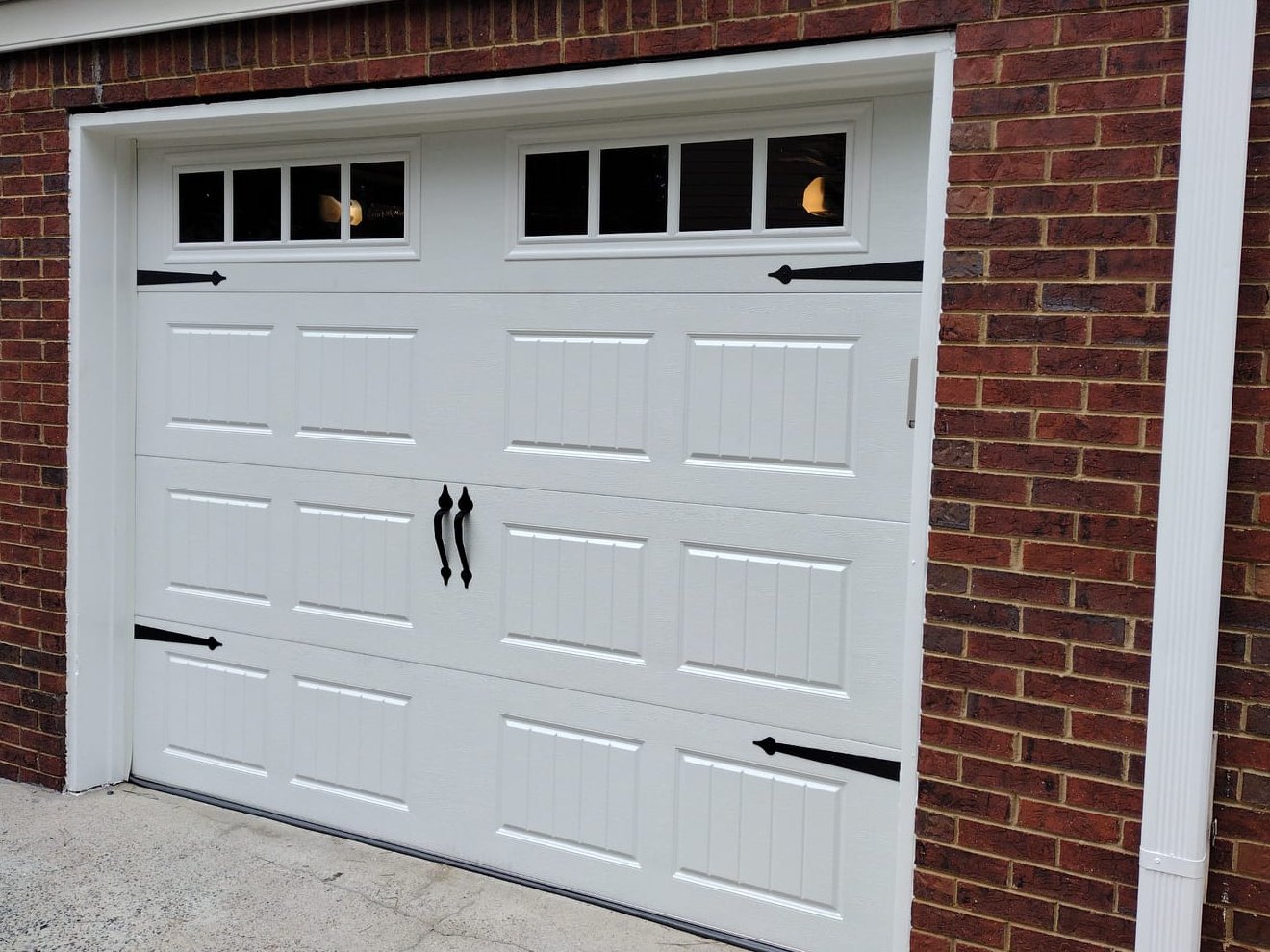
There are three different jobs people mean when they ask about adding or changing windows:
- Replace broken glass in a door that already has windows. Identify the door model and have the exact glazing checked. A matching replacement can preserve the section and the existing pattern where the manufacturer supports it. Some collections, such as Clopay Avante, call for professional glass replacement.
- Replace a solid section with one made for windows. Ask whether the manufacturer supplies a window section for that specific door. Check the finish match and have the installer verify weight, spring balance and opener compatibility. If the door is wind-rated, have the installer confirm that the proposed section and glazing are part of the approved configuration.
- Choose a new door with windows built in. This makes sense if a matching section is unavailable or if you want to change the whole appearance or insulation of the door. If insulation is one of your reasons, ask about insulated glazing and compare ratings for the actual window layout.
Have a technician use the door maker's approved method for any section changes. If you want daylight with more privacy, choose the height and glass before choosing the grille pattern. For more on glazing and what you can see from the street, see our garage door glass guide.
Quieter hardware starts with finding the sound
If the door still moves smoothly and has no visible damage, listen from a spot clear of the opening. Notice whether the sound follows the door up the sides or comes from the motor and rail overhead. Tell the technician where you hear it and whether it happens near the start, the curve in the track or the floor.
- Sound at the sides as the door moves. Rollers are the wheels at each end of the sections. Clopay recommends quality nylon rollers for quiet operation. Ask whether nylon is compatible with your door and have worn hinges or damaged tracks checked at the same time. Stop operation if a roller leaves the track or the door binds.
- Sound around the place where sections bend into the overhead track. Have the rollers and the hinges that join the sections checked for wear and damage. Follow the manufacturer's lubrication directions for your particular hardware. Some nylon rollers don't call for the same lubrication as steel rollers.
- Sound at the motor, rail or ceiling. Have the opener drive and supports inspected. If the door is balanced and the opener still accounts for the noise, compare a belt-drive model with a DC motor. Ask the installer to listen as the door moves and check whether the mounting is contributing to the vibration you hear indoors.
If you can hear the door in an upstairs bedroom, mention that during the inspection. A quieter motor can address drive noise. Wear in the rollers and a binding door need their own repair. An inspection gives you a way to decide where to spend your effort first.
When to upgrade the opener and keep the door
Keep a sound door if the opener is the only part you need to change. If the door jerks or the opener strains, have the door's balance and travel checked first. The springs counterbalance the door, and the opener moves it through its travel. A stronger motor won't restore balance to a door with a spring problem.
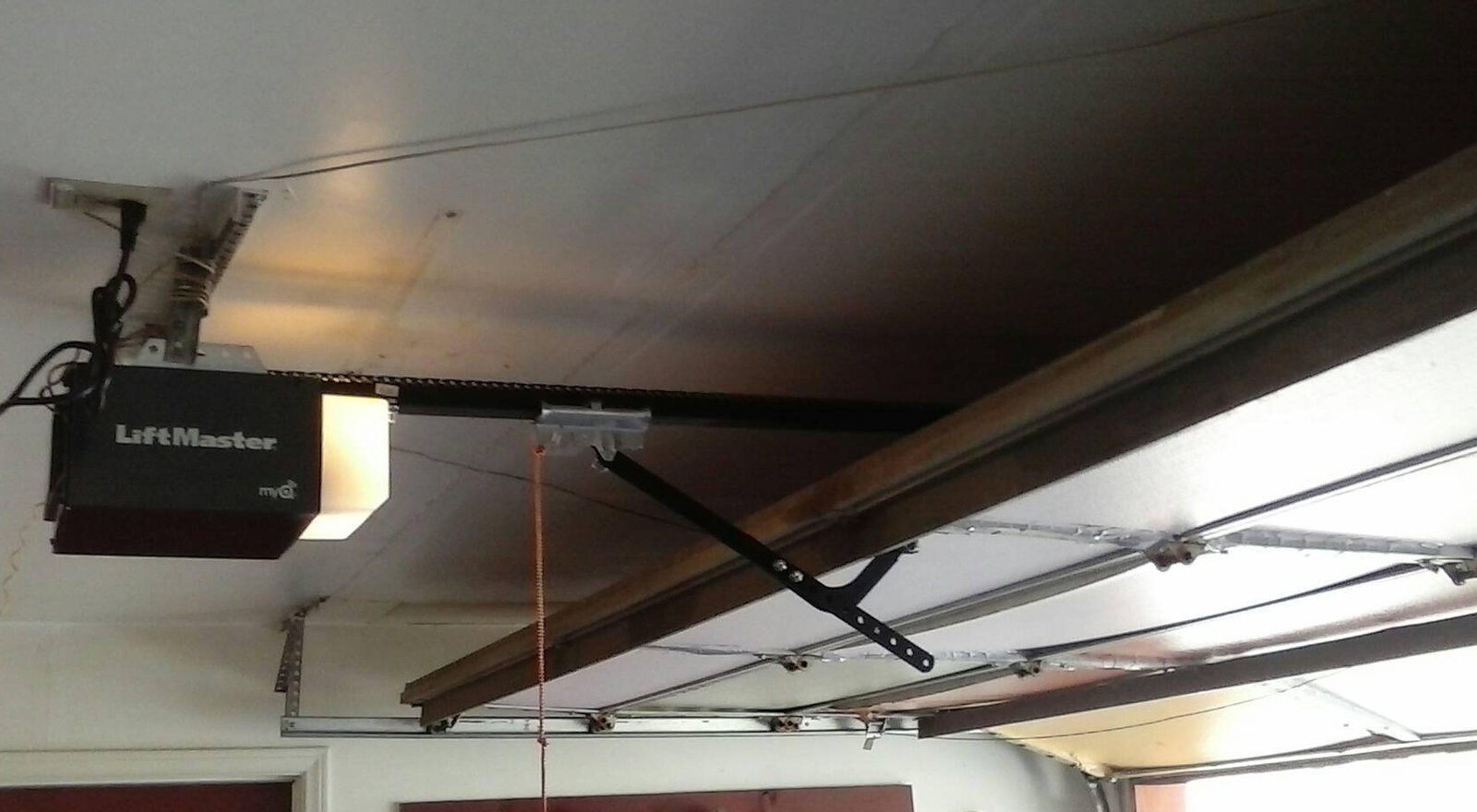
If the opener fails the safety reverse test, stop using it until the issue has been corrected. The U.S. Consumer Product Safety Commission recommends checking the door and opener every 30 days. Use your model's instructions for the contact-reversal and safety-sensor tests. The safety sensors are the two photo-eyes near the floor that detect an obstruction across the opening.
For a replacement, decide what you want it to do. A belt drive is worth comparing if the drive is the noise source. Battery backup is useful if you rely on powered access during an outage. LiftMaster's 6690L is one example with a belt drive, a DC motor, battery backup and myQ phone control. All Four Seasons is an authorized LiftMaster dealer. Start with the garage door opener guide if you want to compare drives, or use our opener inspection and replacement services to check which units fit your door.
If you're replacing the door and keeping the opener, have the installer confirm compatibility with the new door, including the rail, the way the arm attaches and any reinforcement the door manufacturer calls for. Ask for the reversal tests to be demonstrated with the door and opener working together.
Smart controls you can add without replacing the door
Pick the shortest route to the feature you use. If you want a way in from the driveway without carrying a remote, check for a compatible keypad. If your remote is the only thing that stopped working, start with the battery and the remote programming guide. A compatible opener accessory can leave the rest of the system in place.
| What you want | Feature to check | What to verify first |
|---|---|---|
| To see whether you left the door open | App status and open/close alerts | Wi-Fi at the opener and a working door-position sensor or supported built-in reporting |
| To let someone in without handing over a remote | Shared app access or a keypad that supports temporary codes | The permissions or time limits available on the actual model |
| To get in during an outage | An opener with battery backup | Which local controls work on backup power and how to check the battery |
| To see who's using the entrance | A camera or video keypad | Where the camera points and whether saved recordings require a subscription |
For example, Chamberlain's Smart Garage Control adds myQ to many compatible openers with photoelectric safety sensors. Check the brand and model against Chamberlain's compatibility list before ordering. Follow your opener's instructions for remote closing. Give other myQ users their own access through the app and remove permissions when they no longer need them.
The app depends on a connection. Keep a working remote or use the wall control if myQ goes offline while the opener has power. If you buy battery backup, have the installer show you which controls still work when the opener runs on battery. A router that loses power takes the internet connection with it.
What to check yourself and what to leave to a technician
- Name the problem you want to fix. Write down where the draft comes from, when the door makes noise or which kind of access you need. Pick the change you would notice most on a normal day.
- Look from the floor with the door closed. Photograph the exterior, the seals and any safely readable labels. Check for cosmetic wear. Follow the manual for jobs such as washing, touching up the finish or changing a remote battery.
- Have the working parts checked. Leave springs, cables, bottom brackets, rollers, tracks, sections and the opener rail to a technician. Ask what caused the problem, what can stay and what needs replacement. If your choices add weight, ask how the installer will check balance after the work.
- Get the scope in writing. A repair quote should name the parts to be replaced and the checks included. If you want a new door, compare the whole installation. Our guide to buying a new garage door covers measurements, materials, wind ratings and what to ask for in a written quote.
If you've decided to replace the door, see garage door installation in Middle Tennessee. Call All Four Seasons at (678) 271-8918 or request a garage door consultation. We're family-owned and operated since 1999, and we give you a written price before work starts.
Frequently asked questions
How do I know it's time to replace my garage door?
Get a replacement quote when several sections are damaged, compatible sections are unavailable, or the existing model can't support the window layout or insulation you want. If the rest of the door is sound, a worn seal, one matching section or an opener can often be replaced on its own.
Can I add insulation to the garage door I already have?
Some doors can take a retrofit insulation kit. Ask your door maker about the specific model and have a technician check the added weight and spring balance. If you feel air coming around the edges, inspect the seals first.
Can I add windows to a solid garage door?
Ask whether the manufacturer supplies a compatible window section. Then check the finish match, balance and opener fit. For a wind-rated door, confirm the approved glazing and section combination. If a compatible section is unavailable, compare a new door built with windows.
Will nylon rollers make my garage door quieter?
Compatible nylon rollers can reduce rolling noise. They address noise where the door moves through its tracks. If you hear the noise at the motor or the rail, ask for an opener inspection before choosing rollers.
Can I upgrade to a smart opener without replacing the door?
Yes, if the door is sound and the new opener fits. If your current opener works safely and supports a compatible hub, you can add phone control while keeping both the opener and the door.
Do I need a new garage door if the opener fails?
Often you can keep the door. Have it checked for smooth travel and proper balance, then have the opener diagnosed. If the opener fails a safety reverse test, stop using it until the issue is corrected.