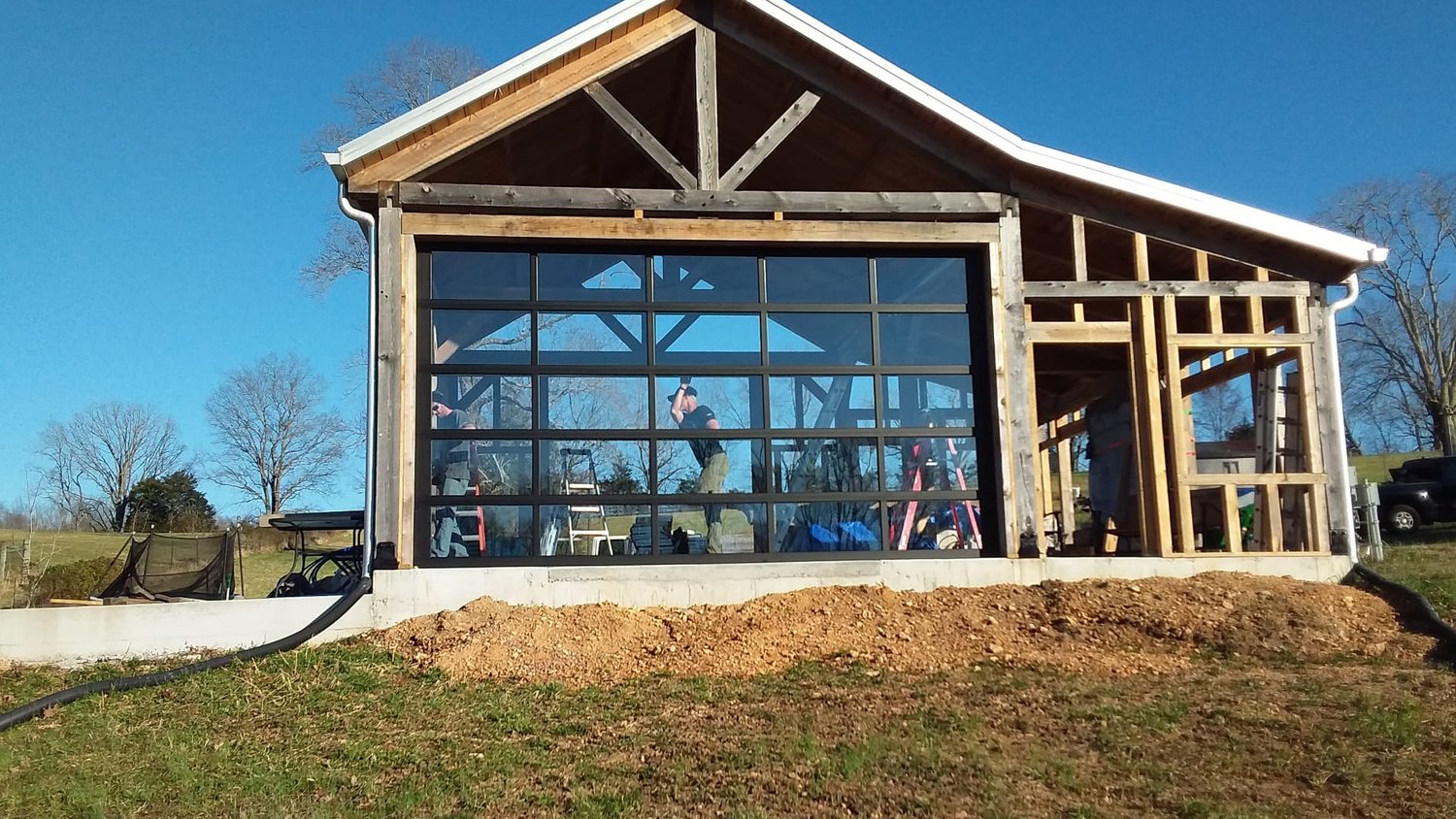
Choose a glass garage door by deciding how much daylight and privacy you want with the door closed. Then compare aluminum and steel frames, ask which panes come insulated, and check how the complete door seals against Tennessee weather.
A full-view door uses large panes across several sections of the door. You can also get daylight from a steel door with fewer windows. Start with what you do in the garage and what you want people to see from outside. Those two answers will narrow the options before you start choosing finishes.
Aluminum or steel for a glass garage door?
Ask for an elevation drawing, a straight-on view of the door made to your opening size. Manufacturers use the term full-view for doors with different amounts and arrangements of glass. The drawing shows you where the solid sections, horizontal rails and vertical dividers will land.
| Construction | What you'll see | What to ask about |
|---|---|---|
| Aluminum full-view | A metal grid around large panes. Some models let you specify solid infill, the panel that goes in place of a pane. | The grid for your door width, finish options, and which parts of the frame have insulation or a thermal break. |
| Steel full-view or large-window steel | Glass set into steel sections, with the amount and placement of glass varying by model. | Which sections are solid and insulated, which glass options fit, and which thermal rating applies to that layout. |
| Steel with a high window row | A solid face across most of the opening and daylight near the ceiling. | The height of the row from the driveway and whether the window style comes with your chosen steel door. |
Aluminum is the construction used on the Clopay Avante, Amarr Vista and Wayne Dalton Model 8800. The rails and dividers are part of the look. Amarr offers anodized and powder-coated finishes on the Vista. Wayne Dalton lists satin-etched and several tinted options on the 8800, along with solid infill and insulated glazing in selected configurations. Ask for the frame sample and glass sample together. Look at them beside your siding or trim in daylight.
Steel is an option when you want a larger solid area around the glass. Amarr's Classica Full View, for example, uses steel sections with a polyurethane insulation core. It comes with large windows and offers clear, frosted and dark-tinted insulated glass choices. The brochure's section R-value describes a solid section. Ask what performance data Amarr provides for the glazed door you're considering. Our guide to steel garage doors covers steel construction in more detail.
If your decision is still between a glass door and other designs, see our Nashville guide to modern garage door styles and cost factors.
What clear, frosted, tinted, tempered and insulated mean
On a quote, glazing means the material that fills a window opening. An order can specify a finish such as frosted, a safety treatment such as tempering, and an insulated unit for the same opening. Check the model's option sheet to see which combinations are available.
| Option | What it changes | What to verify |
|---|---|---|
| Clear | Gives a direct view through the glass and brings in daylight. | Which parts of the garage are visible from the street and driveway. |
| Frosted or obscure | Frosted glass scatters light and softens outlines. Patterned obscure glass distorts the view, with the effect varying by pattern. | Whether movement or shapes are visible when the garage is lit. |
| Tinted | Gray, bronze and other tints alter the color and amount of visible light coming through. A view through the glass is still possible. | How dark the interior feels by day and what you can see from outside after dark. |
| Tempered | Heat treatment changes how the glass breaks. Fully tempered glass breaks into small pieces if it fails. | Whether the pane is specified as safety glazing and which panes in an insulated unit are tempered. |
| Insulated | Two or more panes separated by a sealed space reduce heat flow through the glazing. | Available finishes, pane construction and the tested U-factor for the door assembly. |
| Opaque or solid infill | An opaque option blocks a view through that opening. A solid metal panel also cuts out the daylight from that opening. | Which rows can mix infill and glass and what the finished layout looks like from outside. |
When safety glazing is required, have the installer verify the right specification for your opening. The Door and Access Systems Manufacturers Association (DASMA) lists factors such as individual pane size, pane height and proximity to a walking surface. Ask the installer to also check the pane specification against the door's wind-load documents if the opening calls for a wind-rated system.
Check the view after dark
Think about the garage at the hour you actually use it. A pane that looks dark from the driveway in the afternoon can reveal more once the work lights are on. Frosted glass diffuses the view, but you can still see some shadows, especially close to the glass. For a bay that holds tools or bikes, decide whether you want to blur shapes or block views at their height.
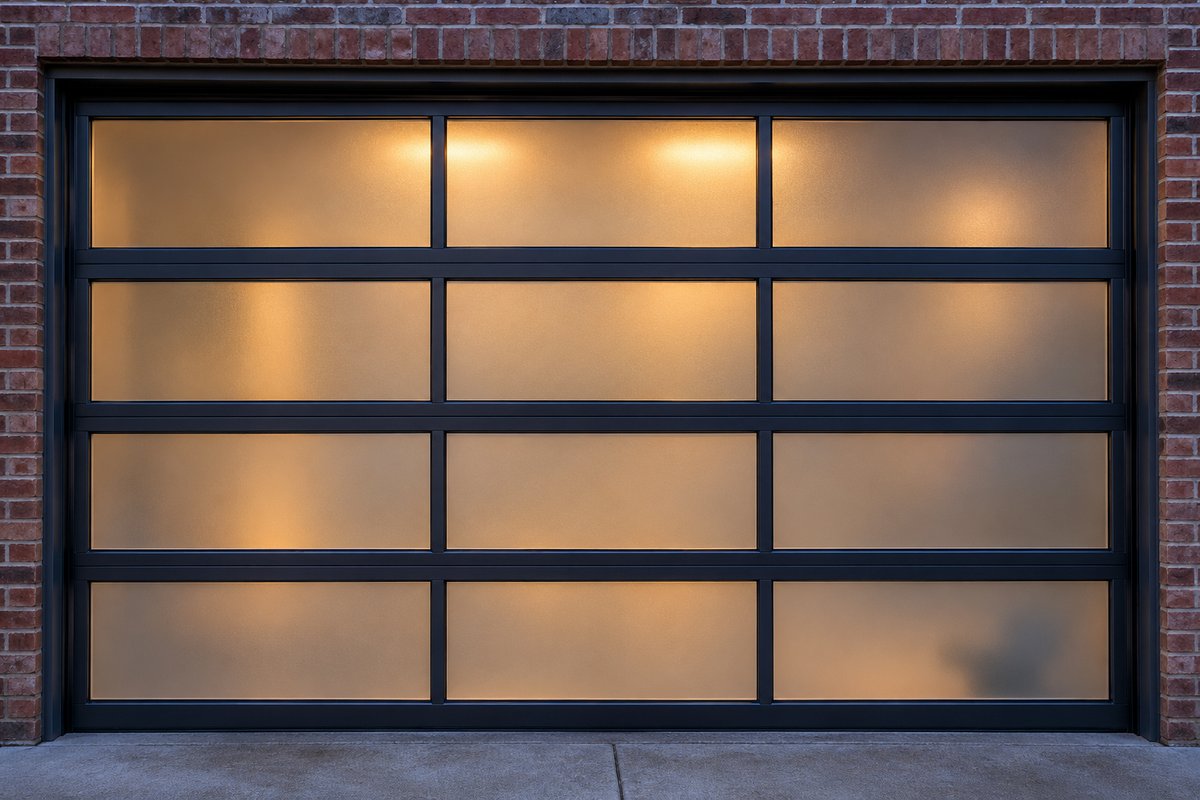
Try this with samples from the door you're considering:
- Look at them in daylight. Hold each sample where the door will be. Notice the color of the light on the inside as well as the color of the glass from the driveway.
- Light the room behind the sample. Check what you can see with a light on the garage side and the outside darker. Have someone hold an object near the glass, then move it back to where you would actually store it.
- Walk the usual approach. Look from the sidewalk, the foot of the driveway and any walkway past the opening. A high window row changes the view differently when someone approaches from higher ground.
- Order the layout by row. If your model allows it, consider solid or opaque lower panels and frosted upper panes. Ask for the final drawing with every row identified, especially when you are ordering two doors to match.
Use visible light transmittance, if the manufacturer lists it, to compare how much light passes through different panes. Higher means more visible light gets through. Look through each sample as well. A light-transmission percentage measures the light getting through, while the sample shows you how clearly you can make out the shapes behind it.
Compare insulation across the whole door
Nashville's climate records show regular freezing nights and many days at 90°F or above. If you spend time working in the garage or heat and cool it, compare glass, framing and seals together. Start by asking where heat can move through the closed door.
| Part of the opening | What to look for |
|---|---|
| Glass | Compare single-pane and insulated glazing. If direct sun is a concern, ask about low-emissivity glass, called low-E, and how the available coating deals with solar heat. |
| Frame | Ask where the frame has insulation. A thermal break is a barrier separating inner and outer metal surfaces to slow heat transfer through the frame. |
| Section joints and edges | Ask how the moving sections seal to each other and how the side and header seals meet the door when it closes. |
| Floor | Have the installer check how the bottom seal meets the slab across the full width, including any low spots. |
Ask for a tested whole-door U-factor. It tells you how readily heat passes through the complete assembly. A lower U-factor means less heat flows through under the test conditions. DASMA's test method accounts for the effects of the glass, frame, joints and seals together. Ask which door size and glazing were tested, and how closely they match your quote.
Read a section R-value as a section rating. A higher R-value means more resistance to heat flow for the section described. That number is calculated for a section, so taking its reciprocal won't give you the tested U-factor for the assembled door. If one quote gives a whole-door U-factor and the other gives the R-value of an insulated solid section, ask for the same measure on both quotes.
Treat sun and drafts as separate questions. If the door gets direct afternoon sun, ask about the solar heat gain coefficient for the glazing, if it's available. A lower value means less solar heat gets through. For drafts at the edge of the opening, ask the installer to check the seals and fit. Our Middle Tennessee winter garage door guide covers what to look for at the floor and around the opening.
Match the glazing to how you use the space
- Detached parking garage. If the main goal is daylight and you rarely heat or cool the space, compare clear and frosted samples before you pay for upgrades. Decide what you want in view when the car is out and the door is closed.
- Attached workshop or garage with a room above. Compare insulated glass, a frame that slows heat transfer and a fit that limits drafts. If the room above is uncomfortable, the insulation and air sealing between the garage and the house deserve their own check.
- Backyard or patio opening. Choose what you want to see through the closed door. If you want a view out, check from where you'll sit or work. If you're planning a restaurant or public-facing space, use our Nashville commercial garage door services page to discuss an assembly for that opening.
What to put on the quote
Bring a photo of the opening, the labels from any glass samples you like and your preferred mix of glass and solid panels. Our Nashville garage door installation team can check the fit and give you a written price before work starts. Ask for the following details so you can compare the same configuration across quotes.
- Model and panel layout. Get the exact series and a drawing for your opening, with the glass finish, pane construction and every solid panel shown.
- Thermal details. Ask for glazing and frame insulation separately, the tested whole-door U-factor if available, and the locations of the weather seals.
- Glazing and wind requirements. Ask who will verify what applies at your address. If the system needs a wind rating, make sure the ordered glass, door size, reinforcement and track match the manufacturer's wind-load drawing.
- Door hardware and opener fit. The technician should check the clearance above and behind the opening, match the springs to the finished door and confirm the opener and mounting details. See our guide to choosing a garage door opener if you are also weighing an opener replacement.
- Replacement parts. Ask how to identify the door and glazing later and whether your model supports replacing a pane or requires a larger assembly. Keep the quote and the matching care instructions together.
When the door is installed, ask to see it close against the floor and watch it travel a full cycle. Have the installer show you the opener's safety reverse test and where to find the model label. Keep a photo of that label for service calls.
Clean the glass and watch for wear
Check your door manual before choosing a cleaner. Clear glass, decorative glazing and plastic infill can have different care instructions. Clopay's Avante manual calls for a soft cloth with mild dish detergent on most of its glass windows. It specifies a soft cloth or sponge, mild dish soap and lukewarm water for acrylic or polycarbonate. For those plastic panels, rinse and dry with a soft cloth, and leave scrapers and brushes aside.
Work with the undamaged door closed and stopped. Wipe the frame and glass gently and use the rinse and drying method in the manual. Avoid abrasive and solvent-based cleaners on Clopay glazing. On painted steel sections, check the finish instructions before cleaning or touching up a chip.
| What you notice | What to do |
|---|---|
| Dirt on the glass or frame | Follow the cleaning instructions for that exact pane and finish. If you aren't sure what's installed, check the order or ask the installer. |
| A gap at the slab or a torn weather seal | Photograph where it appears with the door shut and ask for a seal and fit check. |
| Dew or fog | Check whether it wipes off an accessible face. Persistent haze between panes of a sealed unit can point to a failed glass seal. Ask a technician to inspect it. |
| A cracked pane, loose glass or a door that binds | Keep people clear, stop using the door and arrange service. Leave the glass, its retainers and the moving hardware in place for the technician. |
From the floor, you can look for gaps, damaged glass and visible wear. Leave glass replacement, springs, cables and the brackets at the lower corners to a trained door technician. Those brackets connect to the lift cables and are under tension. A replacement pane also needs to match the manufacturer's specifications, especially on a wind-rated door. Our Nashville garage door maintenance guide explains the visual checks. If you see damage or the door binds, use our Nashville garage door repair service.
Talk through your glass options
Bring your panel layout and tell us what matters most with the door closed. We can help you work through glazing choices and check the opening. Call All Four Seasons at (678) 271-8918, look through our Nashville garage door options or request a garage door estimate.
Frequently asked questions
Are frosted glass garage doors private at night?
Frosted panes diffuse the view. A brightly lit garage can still show shadows or movement, especially near the glass. Compare actual samples with a light behind them. If you want to block the view of the lower bay, ask which solid or opaque panels fit your door.
Can the same garage door glass be tempered, frosted and insulated?
Yes, on models that offer the combination. Tempering describes how the glass is treated, frosting describes how it looks and an insulated unit has multiple panes with a sealed space between them. Ask which finishes are available in insulated safety glazing for your exact model.
Does dark tint keep the garage cooler?
Some tints reduce the solar heat that passes through glass. Ask for the solar heat gain coefficient when it is available, then compare the visible light transmittance to see how much daylight each option passes. For heat flow through the closed door assembly, compare tested U-factors.
Can I get glass and still have an insulated steel door?
Yes. For example, Amarr offers insulated steel sections and several insulated glass choices in the Classica Full View line. Ask for performance data for the glazed configuration. A section rating for the solid steel portion tells you about that section.
Can a technician replace just one broken pane?
It depends on the model and whether the damaged pane is part of a sealed unit. Clopay's Avante manual directs glass replacement to a professional. Share the model and a photo taken from a safe distance so the technician can identify the part and match the finish and glass specification.
Can I reglaze my existing door with heavier insulated glass?
Ask the door manufacturer or a technician whether the change is supported. The door's balance and hardware depend on the finished weight, and a wind-rated door has specified glazing. Have a technician verify the approved parts and whether the springs, tracks or opener setup need to change.
What if I want daylight but little glass?
Compare a steel door with a high window row to a full-view door with solid lower panels. Look at the window height from the driveway before ordering. The high row can admit light without giving the same direct view into the bay as a door glazed at eye level.