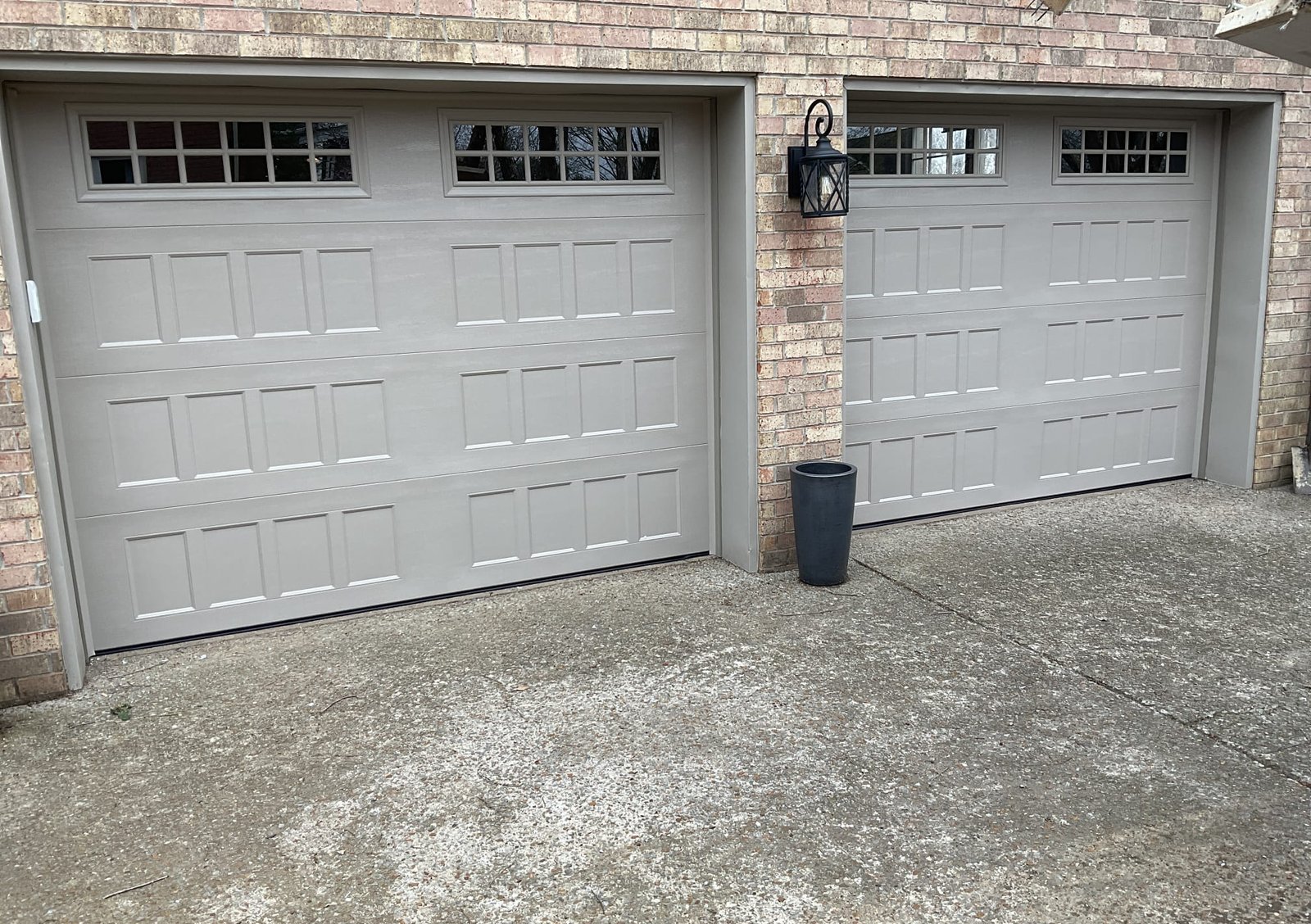
No garage door brand is better across the board: each maker sells doors from basic to high end, so the model matters more than the logo. Compare construction, insulation, steel thickness and the written warranty for the exact model you're quoted.
This guide sets seven residential makers side by side: Clopay, Amarr, Wayne Dalton, C.H.I. Overhead Doors, Raynor, Haas and Windsor. For each one you'll see who owns it, where it says its doors are built, its main lines, how it rates insulation and what its published warranty covers. Every figure comes from the maker's own brochure, warranty, website or its parent company's filings, and the sources are listed at the end.
The seven makers at a glance
| Maker | Owned by | Where it says the doors are built | Residential lines (examples) | Highest insulation figure it publishes |
|---|---|---|---|---|
| Clopay | Griffon Corporation (NYSE: GFF) | Plants in Troy and Russia, Ohio; Mountain Top, Pennsylvania; Goodyear, Arizona. Brochures carry a "Made in USA" mark | Classic Steel Premium, Coachman | R 18.4 (2" Intellicore polyurethane) |
| Amarr | ASSA ABLOY (since 2013) | Lawrence, Kansas and Mocksville, North Carolina; all steel and aluminum doors made in the USA | Classica, Hillcrest, Heritage, Lincoln, Olympus, Designer's Choice, Carriage Court, Amarr by Design, Vista | R 19.40 (2" polyurethane, certain panels) |
| Wayne Dalton | Overhead Door Corporation, owned by Sanwa Holdings of Japan | "Multiple manufacturing facilities across the United States" (no plant named) | Classic Steel (9100, 9605, 8300, 8500), Carriage House (8600, 9405), aluminum and glass (8800, 8850), wood | R 16.22 (Model 8500) |
| C.H.I. Overhead Doors | Nucor Corporation (since 2022) | Arthur, Illinois and Terre Haute, Indiana; "all our doors from scratch in the US" | Raised Panel, Planks, Overlay Carriage House, Stamped Carriage House, Skyline Flush, Shoreline, Sterling, Full-View Aluminum | R 17.19 (2" polyurethane) |
| Raynor | Raynor Worldwide, with roots in Dixon, Illinois | Not confirmed from Raynor's own pages for this guide | ShowCase, Aspen, TradeMark, Country Manor, EnergyCore | R 24.54 (TradeMark TM300, catalog listing) |
| Haas Door | Family-owned (its own badge) | Wauseon, Ohio | 600, 700 and 2000 insulated steel, American Tradition 9000, aluminum | Publishes tested U-factors, not R-values: U 0.081 (9200) |
| Windsor Door | Windsor America, "a 3rd generation family owned company" | Little Rock, Arkansas; "100% American made" sectional residential doors | 730, 750, 790, 1030, 1035, LP Custom Series | R 9.0 (Model 790) |
Two things jump out of this table. First, most of these brands belong to large groups: a lock company, a steel company, a Japanese door group and a U.S. building-products holding company. Second, the insulation column isn't a fair race, because the makers don't all measure the same thing. Both points are explained below.
Who owns which garage door brand
Ownership tells you who stands behind the warranty and how long a model line is likely to be supported. Here's what each maker or its parent says.
- Clopay is part of Griffon Corporation. Griffon's 2025 annual report says Clopay was founded in 1964 and sells under the Clopay, Ideal and Holmes names. Griffon's 2022 report names Clopay as the exclusive supplier of residential garage doors to Home Depot and Menards in North America.
- Amarr was founded in Winston-Salem, North Carolina in 1951 by the Brenner brothers. ASSA ABLOY, the Swedish lock and door group, announced it was buying Amarr in November 2013. For a while the group ran it under the Entrematic name. Our Amarr garage doors guide has the full history.
- Wayne Dalton was founded in 1954 by Emmanuel Mullet in Holmes County, Ohio. Its brochures and warranties now read "Wayne Dalton, a Division of Overhead Door Corporation." Sanwa Holdings bought Overhead Door Corporation in 1996, and in 2009 Overhead Door bought the door businesses of Wayne Dalton Corporation.
- Overhead Door is itself a brand of doors, made by the same Overhead Door Corporation of Lewisville, Texas, which Sanwa lists as a 100% owned subsidiary. So Wayne Dalton and Overhead Door are sister brands.
- C.H.I. Overhead Doors has made doors since 1981; the name stands for Coach House, Inc. Nucor, the steel maker, completed its purchase of C.H.I. from KKR in June 2022.
- Raynor is based in Dixon, Illinois. A Raynor marketing director, interviewed in the door industry's trade magazine in 2021, called the business the "Raynor Worldwide family." We couldn't open Raynor's own website to confirm more for this guide.
- Haas Door is in Wauseon, Ohio, and its website carries a "Family Owned" badge.
- Windsor Door traces back to a Little Rock company that took the Windsor name in 1961. Its own timeline shows a string of owners, then a family-owned Houston door company buying the assets in 2011 and rebranding as Windsor America in 2023, with a minority investment from Flack Global Metals.
Brand by brand
Clopay
Clopay's 2026 Classic Steel Premium brochure offers two insulation types in two thicknesses. Intellicore is Clopay's name for polyurethane foam injected between the steel skins, where it expands to fill the section. The alternative is a polystyrene board bonded inside.
| Classic Steel Premium construction | Calculated R-value |
|---|---|
| 2" Intellicore polyurethane | 18.4 |
| 1-3/8" polyurethane | 12.9 |
| 2" polystyrene | 9.0 |
| 1-3/8" polystyrene | 6.5 |
The Coachman collection, Clopay's carriage house line in steel, adds a composite overlay on the outside, which Clopay calls 4-layer construction, with the same 18.4, 9.0 and 6.5 R-values. Clopay states its R-values are calculated for the door section in line with DASMA TDS-163, the door industry's method.
Published warranty: Classic Steel Premium lists a limited lifetime paint system, 10 years on windows and 3 years on hardware. Coachman lists a limited lifetime paint system, 10 years on windows and overlay discoloration, and 5 years on hardware and overlay delamination.
Amarr
Amarr's "Openings" brochure lists Classica, Carriage Court and Designer's Choice for carriage house looks, Hillcrest for a carriage house look with standard hardware, Heritage, Lincoln and Olympus for traditional panels, Amarr by Design in cedar, mahogany or red grandis, and Vista and Horizon in aluminum and glass. The last digits of the model number give the construction: a 1000 is single-layer steel, a 2000 has a vinyl back, and a 3000 is steel on both sides with insulation between.
Amarr publishes calculated R-values from 6.48 for 1-3/8" polystyrene up to 19.40 for its 2" polyurethane Designer's Choice and Olympus doors in certain panels and colors. Its warranty runs by model: from 1 year on sections and hardware for entry-level Hillcrest and Lincoln doors up to Amarr's lifetime term on the top insulated models. It covers the original purchaser only.
For the collection-by-collection table, R-values and the full warranty grid, read our Amarr garage doors guide.
Wayne Dalton
Wayne Dalton's current model list runs from the 8000 and 8200 non-insulated and polystyrene doors up to foamed-in-place polyurethane models such as the 8300 and 8500, plus the 9100 and 9605, the 8600 and 9405 carriage house doors, the 8310 designer steel door, aluminum and glass doors (8800, 8850 and the Luminous 8450), a fiberglass 8680, a vinyl 8700 and several wood lines.
| Wayne Dalton model | Insulation | Published R-value |
|---|---|---|
| 8500 | Polyurethane, steel/insulation/steel | 16.22 (U-factor 0.18) |
| 8300, 8350, 8600, 8310 | Polyurethane | 12.12 (U-factor 0.21) |
| 9605 | Polyurethane | 10 on an 8' tall door |
| 9100 | Polyurethane | 9 on a 7' tall door |
| 8200, 8224 | Polystyrene | 7.4 |
Wayne Dalton says it uses a calculated door section R-value and that its U-factors are verified to ANSI/DASMA 105, the whole-door test.
Published warranty (Models 8300 and 8500, rev. 11.2024): sections against rust-through and foam separation, and hardware and tracks except springs, for as long as the original purchaser owns the home. Standard paint carries 10 years and special finishes such as Black and Walnut 5 years. Other parts carry 1 year. It isn't transferable.
C.H.I. Overhead Doors
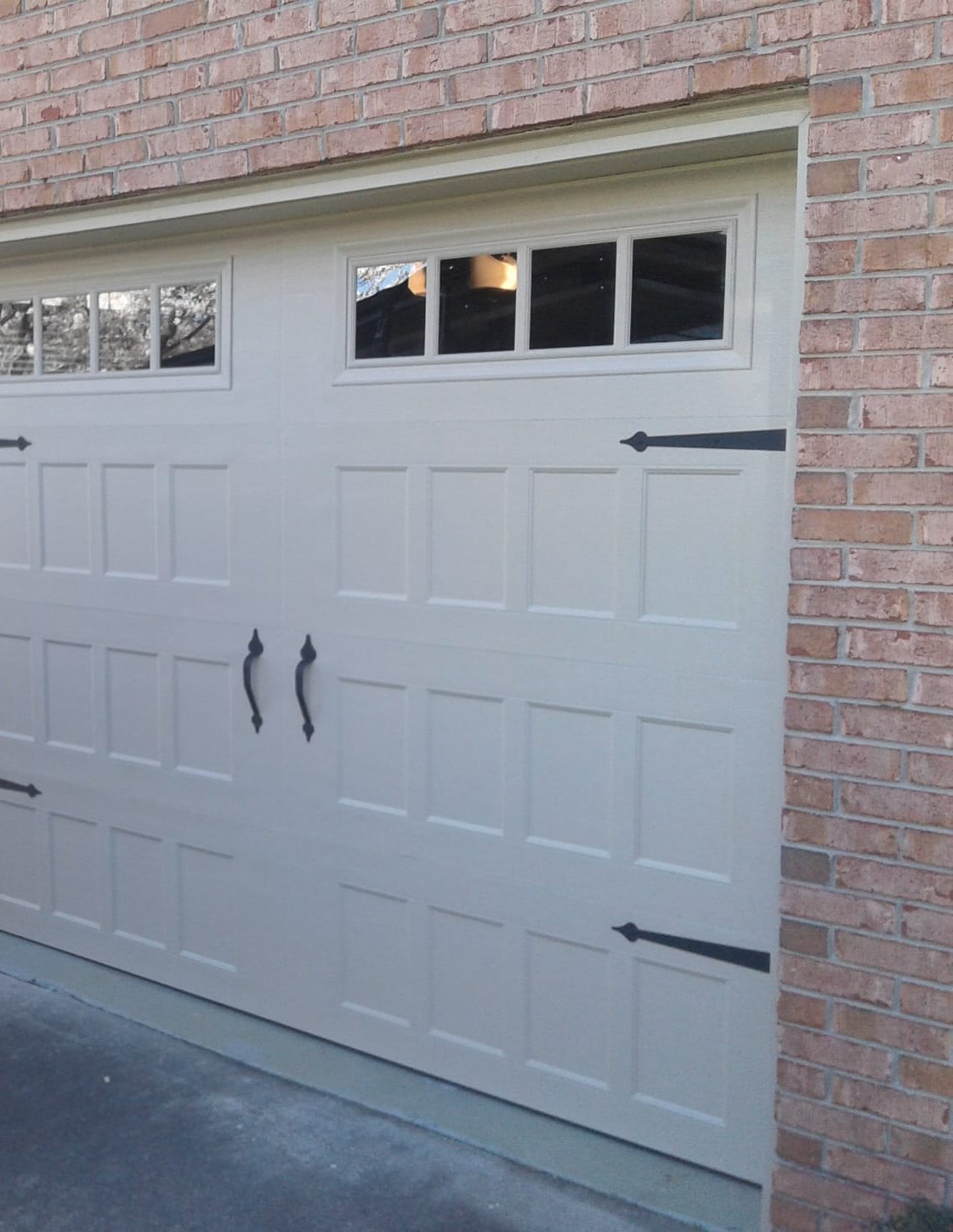
C.H.I. lists Planks, Sterling, Skyline Flush, Shoreline, Overlay Carriage House, Raised Panel, Stamped Carriage House, Stamped Shaker, Recessed Panel and Full-View Aluminum. Accents Woodtones is a wood-look finish offered across several of them.
The Raised Panel line shows how the construction steps up. The basic model is single-sided steel with no insulation. Next come polystyrene doors with a vinyl back or with steel on both sides, then polyurethane doors with steel on both sides in 1-3/8" and 2" thicknesses. C.H.I. publishes R-values of 7.94, 9.65, 13.4 and 17.19 for those insulated versions, with 17.19 for the 2" polyurethane door. It doesn't state the calculation method.
Published warranty (two-sided insulated steel doors): sections against splitting, cracking and rust-through for as long as the original purchaser owns the building; 6 years on hardware; 3 years on springs; 3 years against fading on Accents Woodtones. Labor isn't covered, coastal salt-air locations are excluded, the warranty isn't transferable and it runs from the date of manufacture. C.H.I. also sells a "Lifetime Package" that extends the long cover to springs and hardware.
Raynor
Raynor's residential lines include ShowCase, Aspen, TradeMark, Country Manor and EnergyCore. Its Aspen AP138 is 1-3/8" thick with Neufoam polyurethane blown between the steel skins and an R-value of 13.0, per Raynor's dealer product page. A construction catalog listing of Raynor's TradeMark doors gives R 16.4 for the TM175, 18.3 for the TM200 and 24.54 for the TM300, the highest figure we found from any of these makers. The listing doesn't say how it was calculated.
Raynor's website blocked our attempts to read its current residential warranty, so we haven't listed its terms. If you're quoted a Raynor door, ask for the warranty sheet for that model and read it alongside the others.
Haas Door
Haas takes a different approach to insulation. Instead of R-values, it publishes U-factors (heat loss through the whole door, where lower is better) tested under DASMA's Thermal Performance Verification Program. Haas notes that R-values are calculated by each maker and not independently validated.
| Haas series | Construction | Tested U-factor |
|---|---|---|
| 600 | 1-3/8" polyurethane | 0.106 |
| 700 | 1-3/4" polyurethane, 26-gauge skins | 0.093 |
| 2000 | 2" polyurethane | 0.094 |
| 9200 (American Tradition) | Insulated | 0.081 |
| 2400 with polystyrene insert | Polystyrene | 0.215 |
Published warranty (600 and 700 series pages): limited lifetime, with lifetime rust-through and delamination cover, 10 years on the finish (12 for plank options), 6 years on hardware and 3 years on springs.
Windsor Door
Windsor builds its sectional residential doors at its plant in Little Rock, Arkansas, and has distribution centers that include Atlanta. Its homeowner models are the 730, 750, 790, 1030, 1035, the LP Custom Series and the 1800R. The 750 takes an optional laid-in polystyrene insert rated R 6.0. The 790 has a 2" polystyrene core between 25-gauge steel skins, rated R 9.0. Windsor's product sheets describe the warranty only as a limited lifetime warranty; we couldn't find a term-by-term breakdown, so ask for it with any quote.
Comparing insulation: why the numbers don't line up
R-value measures how well a material resists heat flow: higher is better. U-factor measures how much heat passes through: lower is better. The trouble with comparing brands is that the published numbers aren't all measuring the same thing.
- Calculated section R-value. Clopay, Amarr and Wayne Dalton say their R-values are calculated for the middle of the insulated section, following DASMA TDS-163. Clopay's own technical sheet points out this figure doesn't account for section joints, thermal breaks or end stiles.
- Tested whole-door U-factor. DASMA 105 tests the complete door. Haas publishes only this number; Wayne Dalton publishes both.
- R-value with no method stated. C.H.I., Windsor and the Raynor catalog listing give R-values without saying how they were worked out.
So a 2" polyurethane door rated R 18.4 by one maker and R 17.19 by another isn't a meaningful difference. What does matter:
- Polyurethane versus polystyrene. Polyurethane is foamed in and bonds to both skins; polystyrene is a board laid or bonded in. Clopay, Amarr and C.H.I. all rate their polyurethane doors higher than their polystyrene doors of the same thickness.
- Thickness. A 2" door holds more insulation than a 1-3/8" door of the same type.
- Steel on both sides. A door with a steel back is stiffer and better protected than one with a vinyl back or no back at all.
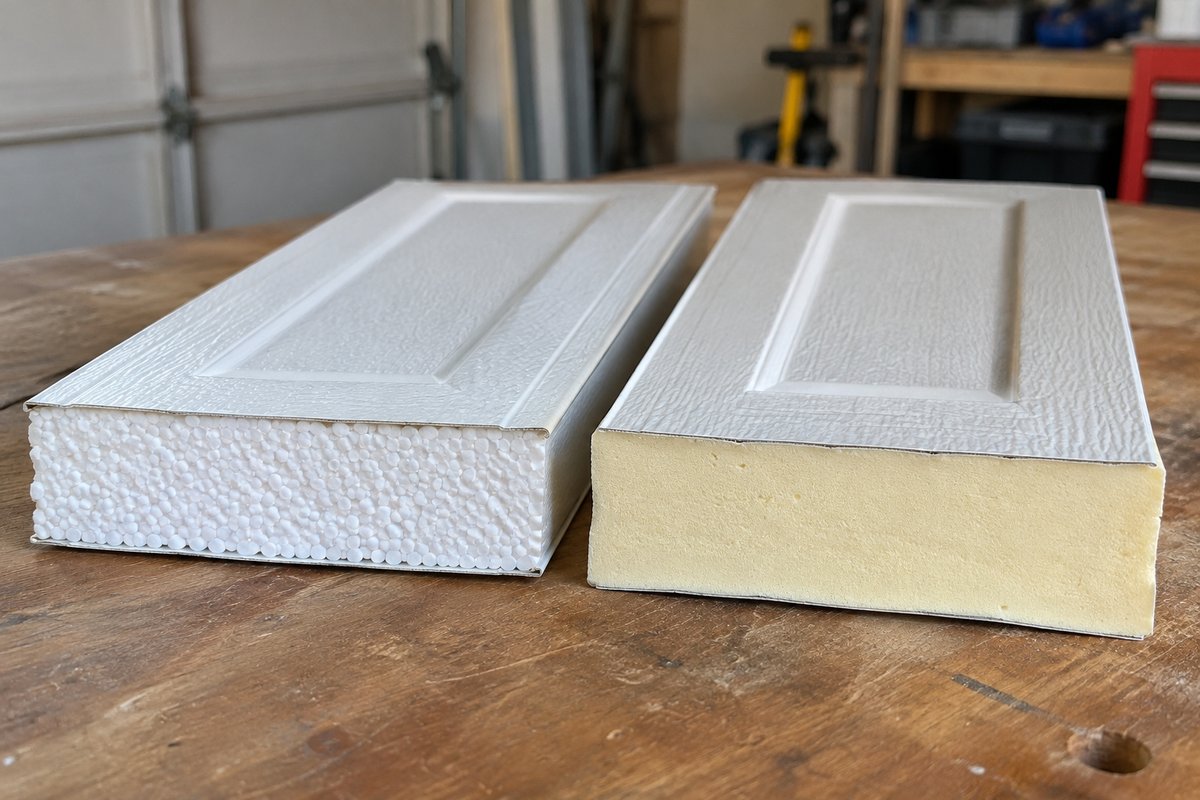
In a Georgia summer, an attached garage under a bedroom or beside the kitchen is where insulation earns its keep. For a detached garage used only for parking, a polystyrene door is often all you need. Our guide to insulated garage doors goes into the choice in more detail.
Comparing published warranties
These are the makers' warranties, not ours, and each one runs by model. Read the warranty for the exact door on your quote. "Limited lifetime" is the makers' term; Wayne Dalton and C.H.I. define it as for as long as the original purchaser owns the home or building.
| Maker (document) | Sections | Hardware | Springs | Finish | Transfers to the next owner? |
|---|---|---|---|---|---|
| Clopay Classic Steel Premium (brochure, 2026) | Not listed in the brochure | 3 years | Not listed | Paint system: limited lifetime | Not stated in the brochure |
| Amarr top insulated models (form 842, 11.13.24) | Amarr's lifetime term | Lifetime term | Lifetime term | Lifetime term (single-family home) | No |
| Wayne Dalton 8300 and 8500 (rev. 11.2024) | Limited lifetime | Limited lifetime, tracks included | Not in the lifetime cover | 10 years standard paint; 5 years special finishes | No |
| C.H.I. two-sided insulated steel | For as long as the original purchaser owns the building | 6 years | 3 years | 3 years against fade on Accents Woodtones | No |
| Haas 600 and 700 (series pages) | Limited lifetime, rust-through and delamination | 6 years | 3 years | 10 years (12 for planks) | Not stated |
| Windsor (product sheets) | Limited lifetime | Not published | Not published | Not published | Not stated |
| Raynor | Not confirmed for this guide |
Patterns worth knowing:
- Springs are usually covered for less time than the door. C.H.I. and Haas give 3 years; Wayne Dalton leaves springs out of its long cover. Springs wear by cycles, not by years. If you want longer cover, ask what spring is being fitted. Our garage door springs page explains the difference, and we back our own spring work for 3 years on torsion springs and 5 years on extension springs (see our warranty).
- Labor is usually on you. C.H.I. and Amarr state it plainly: the maker supplies the part, and removal and installation aren't included.
- Most don't transfer. If you're buying a house with a fairly new door, the maker's warranty probably ended when the seller moved out.
- Repainting the door can void the paint cover. Amarr says so in writing; check the others before you paint. Here's what each door maker says about painting.
How to choose a garage door brand: a 6-step checklist
- Decide what the door has to do. Parking only, a workshop, or a garage under living space? That sets how much insulation you need.
- Compare the same construction. Line up a 2" polyurethane door against another 2" polyurethane door, not against a single-layer door from another brand. Ask for the model number on every quote.
- Compare insulation the same way. Use calculated R-values only against other calculated R-values, or ask each maker for the tested U-factor.
- Check the steel. The lower the gauge number, the thicker the steel. Ask for both skins, since some doors have a thinner back.
- Read the warranty for that model. Sections, hardware, springs, finish, windows, and whether it transfers.
- Weigh the installer as heavily as the brand. Springs sized to the door's weight, level tracks, tight hardware and a correctly set opener decide how the door runs for years. A good door installed badly is still a bad door.
For sizes, styles and opener choices, our garage door buying guide for Atlanta homes covers the rest of the decision. To look at materials, see steel garage doors, wood garage doors and carriage house garage doors.
How to find out who made the door you already have
Knowing the maker matters most when something breaks, because a damaged section has to be replaced with one from the same maker and the same model.
- Look for a label on the inside of the door. Makers usually put a sticker on an end stile (the vertical edge of a section) or on the top or bottom section. It often carries the model and a date or serial code.
- Check your paperwork. The original invoice, the warranty registration or the owner's manual from the builder or the last owner.
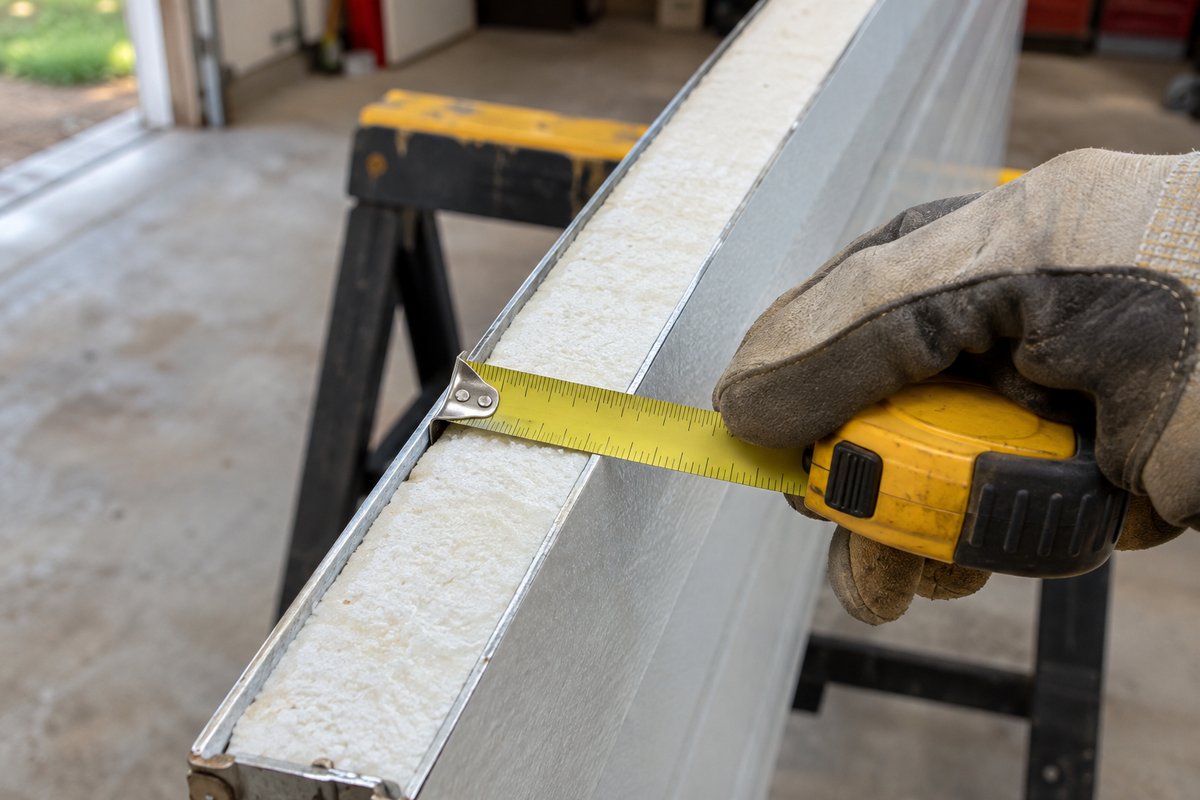
- Measure the thickness. Open the door partway and measure the edge of a section. 1-3/8" and 2" are the common insulated thicknesses.
- Look at the back. Bare steel ribs, a vinyl or paper back, or a smooth steel back tell you whether it's single-layer, double-layer or steel on both sides.
- Photograph the panel design and windows. Send the photos to us and we'll help match them.
What you can do yourself, and what's for a technician
| Job | DIY or technician | Why |
|---|---|---|
| Find the label, measure the door, photograph it | You | Safe and the fastest way to get a matched quote |
| Wash the door with mild soap and a soft brush | You | Amarr's warranty excludes damage from pressure washers |
| Lubricate rollers, hinges and springs | You | See our garage door maintenance checklist |
| Monthly reverse test on the opener | You | A 2x4 under the door; the door should reverse on contact |
| Balance check | You can check; a tech adjusts | If the door feels heavy, read why your garage door feels heavy |
| Replace a dented section | Technician | Needs a matching section and the door under control |
| Springs and cables | Technician | They hold the full weight of the door under tension |
| Install a new door | Technician | Springs must be matched to the door's weight |
Where All Four Seasons fits
We don't sell you on a logo. We install, repair and service garage doors across Metro Atlanta, and when you're choosing a new door we'll go through models side by side with you and put the price in writing before any work starts.
For openers, All Four Seasons is an authorized LiftMaster dealer. If you're replacing the opener at the same time, our garage door openers page and our guide to the main types of garage door openers cover the choice.
When to call us
Call us if you're comparing quotes for a new door, if you need a damaged section matched to the door you have, or if a spring or cable has gone. We've installed and repaired garage doors across Metro Atlanta since 1999, we're rated 4.9 on Google with Over 4,000 Five-Star Reviews, and our office is open seven days a week, 7 AM to 8 PM.
Call (678) 271-8918 or book a free estimate online. You'll get a written price before we start. To browse styles first, see our garage doors.
Frequently asked questions
Which garage door brand is best?
None is better across the board. Clopay, Amarr, Wayne Dalton, C.H.I., Raynor, Haas and Windsor each sell entry-level and high-end doors. Compare the same construction, insulation thickness, steel gauge and model warranty, and weigh the installer as heavily as the brand.
Who owns Clopay garage doors?
Clopay is part of Griffon Corporation, a U.S. company listed on the New York Stock Exchange. Griffon says Clopay was founded in 1964 and has plants in Troy and Russia, Ohio, Mountain Top, Pennsylvania and Goodyear, Arizona.
Who makes Wayne Dalton garage doors?
Wayne Dalton is a division of Overhead Door Corporation, which has been owned by Japan's Sanwa Holdings since 1996. Overhead Door bought Wayne Dalton's door businesses in 2009. Wayne Dalton was founded in 1954 in Holmes County, Ohio. Our Wayne Dalton garage doors guide covers its models, warranty and springs.
Who owns Amarr garage doors?
ASSA ABLOY, the Swedish lock and door group, which announced the purchase in November 2013. Amarr builds its steel and aluminum doors in Lawrence, Kansas and Mocksville, North Carolina. Our Amarr guide has the details.
Which garage door has the highest R-value?
Among the makers here, the highest published figures are Raynor's TradeMark TM300 at R 24.54 (catalog listing), Amarr's 2" polyurethane doors at R 19.40 and Clopay's 2" Intellicore at R 18.4. Makers calculate R-values differently, so small gaps don't mean much.
Are garage door warranties transferable?
Usually not. Amarr, Wayne Dalton and C.H.I. limit their warranties to the original purchaser. If you bought a house with a fairly new door, ask the seller for the invoice anyway: it tells you the maker and model.
Can I replace one section with a different brand?
No. Sections from different makers differ in height, profile, hinge positions and finish, so a replacement has to come from the same maker and model. Find the label on the inside of the door or send us photos and we'll match it.