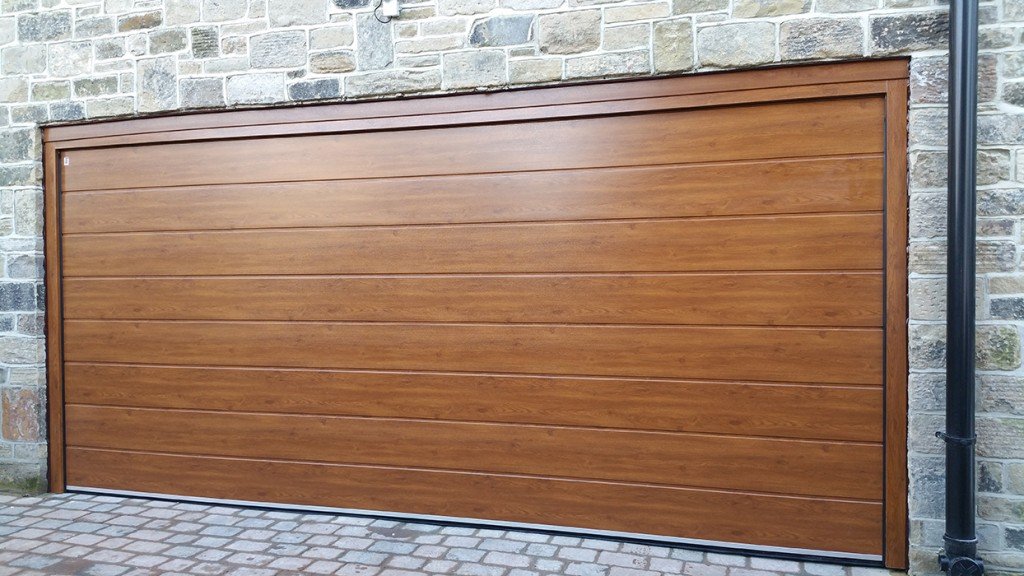
A residential garage door can last 15 to 30 years, depending on its construction and upkeep. Many springs are rated for 10,000 open-and-close cycles, and opener manufacturer Genie gives 10 to 15 years as a typical opener lifespan.
If your garage door feels heavy or drags as it closes, start by finding out which part is wearing out. A sound door can stay in service after a spring replacement. A motor that struggles on a door that’s out of balance needs the door checked first. And after a night of freezing rain, the first place to look is the strip where the door meets the driveway.
What usually needs replacing first?
Think of the door as three parts with different jobs. The sections are the panels that close the opening. The springs counterbalance their weight as the rollers guide the sections along the tracks. The opener is the motorized unit that moves a properly balanced door.
| What you’re checking | Planning estimate | What to look at first |
|---|---|---|
| Door sections | 15 to 30 years is Amarr’s broad range across materials and construction | Inspect the bottom edge, the finish and the areas around hinges for rust, rot or damage. |
| Springs | Clopay gives about 10,000 cycles as a common rating | Count a week of use. Ask for the actual rating when you have the springs replaced. |
| Opener | Genie gives 10 to 15 years as a typical estimate | Check the door’s condition, safety reversal and parts availability before deciding on replacement. |
| Rollers, lift cables and seals | Inspect for wear and damage | Watch for rough rollers, frayed cables or gaps around a cracked seal. |
If the door and opener were installed together, their installation year is a starting point for both. A receipt for a later spring or opener replacement gives you a separate date for that part. On a home you’ve just bought, keep a photo of the door label and the opener model number with whatever service records you have. Those details also help a technician check whether a damaged section or an opener part is still available.
How long the door sections last
Steel doors
Amarr estimates 15 to 20 years for single-layer steel and 25 to 30 years for triple-layer steel. If you’re replacing a door, ask the installer to show you the construction on the model sheet. On a triple-layer steel door, the insulated core sits between the steel faces. The number of visible panel rows tells you how the door is laid out, while the model sheet tells you what each section is made of.
For an existing steel door, look first at the finish along the lowest section. Dirt and deicer residue are worth washing off according to the door maker’s instructions. If you spot a dent, look at the surrounding metal and watch for changes at the seam between sections. A shallow mark on a door that still travels smoothly is a different repair decision from a crease, a bent section or a hinge pulling away. Our guide to steel and aluminum garage door dents shows what to look for.
Wood and aluminum doors
On a wood door, the finish is the first thing to check. Sun and moisture wear it down, and Amarr recommends looking for rot and damage. Check the exposed face and the lower edge for splitting, peeling finish or deterioration. Follow the model’s refinishing instructions while the wood is still sound. If a lower rail or a section around a hinge is deteriorating, have a technician assess the section before you spend time refinishing the door.
Amarr puts aluminum at up to 30 years with proper care. It resists corrosion, and dents more easily than steel. A ding in a panel and a bent frame call for different decisions. If the door binds or a section sits unevenly, leave the door still until it’s checked.
If you’re comparing materials, see our guide to garage door types. Start with the upkeep you’re willing to do and the exposure at your opening. A garage sheltered by an overhang and a door that catches rain at the end of a driveway give you different surfaces to watch.
Garage door springs wear by the cycle
A torsion spring is a coil mounted on a shaft above the door. Extension springs stretch along the tracks near the ceiling. Both counterbalance the door. On a torsion system, the shaft turns drums that reel in the lift cables as the door rises. Those cables connect to the brackets at the bottom corners, where there is stored spring tension.
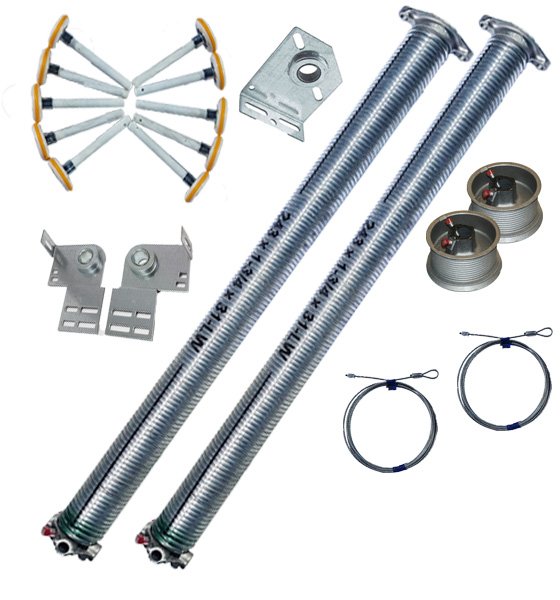
Photo by Blizzard6204, Wikimedia Commons, CC0.
Clopay counts an opening and a closing as one cycle. Backing out in the morning and closing the door is one. Coming home and closing it again is another. Add the school run, dog walk or trip to the trash bins if you open and close the garage for each. If you have two doors, count each door separately.
| Completed cycles in a week | Estimated annual cycles | Time to reach 10,000 cycles |
|---|---|---|
| 14 | 728 | About 13.7 years |
| 21 | 1,092 | About 9.2 years |
| 35 | 1,820 | About 5.5 years |
| 49 | 2,548 | About 3.9 years |
The math uses 52 weeks a year. If your most-used door runs 35 times a week and your second door runs 14 times, the same spring rating gives very different planning estimates. Count during a regular week, then use the spring’s rated cycles divided by your estimated annual cycles. The result is a way to plan. DASMA identifies rust, spring handling, installation and door use as factors that affect actual spring life.
If a spring needs replacing, ask which cycle rating fits your door’s weight and use. Mention any changes to the door, such as a retrofitted insulation kit or added trim. DASMA notes that adding weight to a door can affect how the spring system works and how long the opener and door last. A professional can check the door and size the springs to the current setup.
Stop operating the door if a spring has a visible break, a cable is slack or the door sits crooked. Avoid pulling the release on an open door with a suspected spring problem. If a spring loses its ability to counterbalance the door, the door can drop when disconnected. See garage door spring repair in Middle Tennessee for help with either spring type.
How long a garage door opener lasts
Genie’s 10-to-15-year estimate is useful when planning for a replacement. For a unit you use every day, put its safety and the condition of the door ahead of the date on the label. A track that binds or a door that pulls hard against the opener puts extra strain on the system. Replacing the motor while the door still binds leaves that problem in place.
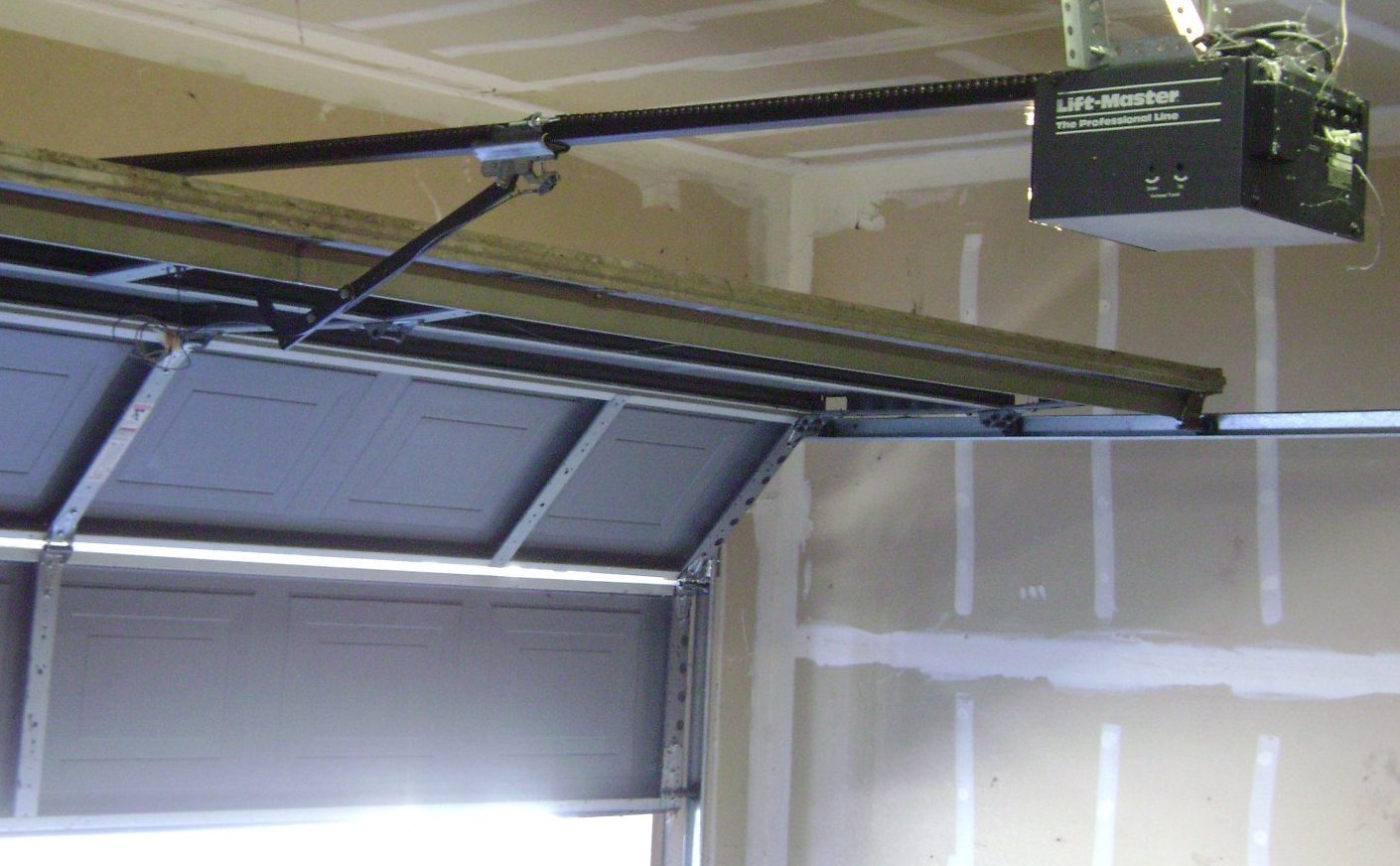
Photo by Oleg Alexandrov, Wikimedia Commons, public domain.
Start with these checks when the door is straight, moves normally and shows no visible damage:
- Work out which control fails. If the wall button works and one handheld remote doesn’t, check the remote battery and model compatibility. See how to program a garage door remote or keypad if you need to pair a replacement.
- Look at the safety sensors. These are the two photo-eyes near the floor. Clear objects out of the opening and check the indicator lights against your manual. If the door keeps reversing or the lights show a fault you can’t clear, arrange service.
- Check the model and available parts. LiftMaster, for example, still lists parts for the discontinued 85503-267, including a battery and a logic board. A model being out of production is a reason to check the parts list before deciding.
- Use the safety tests in the manual. The U.S. Consumer Product Safety Commission recommends testing reversal monthly. If the door fails the contact-reversal test, stop using the opener until a professional has checked it. LiftMaster recommends replacing its pre-1993 openers because most units from that era lack the external entrapment protection newer models have.
If the garage is your main way into the house, consider battery backup when you compare replacements. The LiftMaster 6690L is one belt-drive example that includes a battery. On an opener you already own, check the manual’s battery status indicator and test procedure. An alert for a replaceable backup battery calls for a different check from a motor fault.
All Four Seasons is an authorized LiftMaster dealer. Our garage door opener services cover diagnosis and replacement. If you’re weighing a new unit, see the guide to choosing a garage door opener.
How Middle Tennessee weather wears on a garage door
Freeze and thaw at the threshold
At Nashville International Airport, NOAA’s 1991–2020 normals put the average January low at 30.1°F and the average high at 49.1°F. At a garage opening, the concern is water reaching the bottom seal and freezing there. The National Weather Service documented ice accumulations of at least half an inch in the Nashville metro during the January 2026 winter storm.
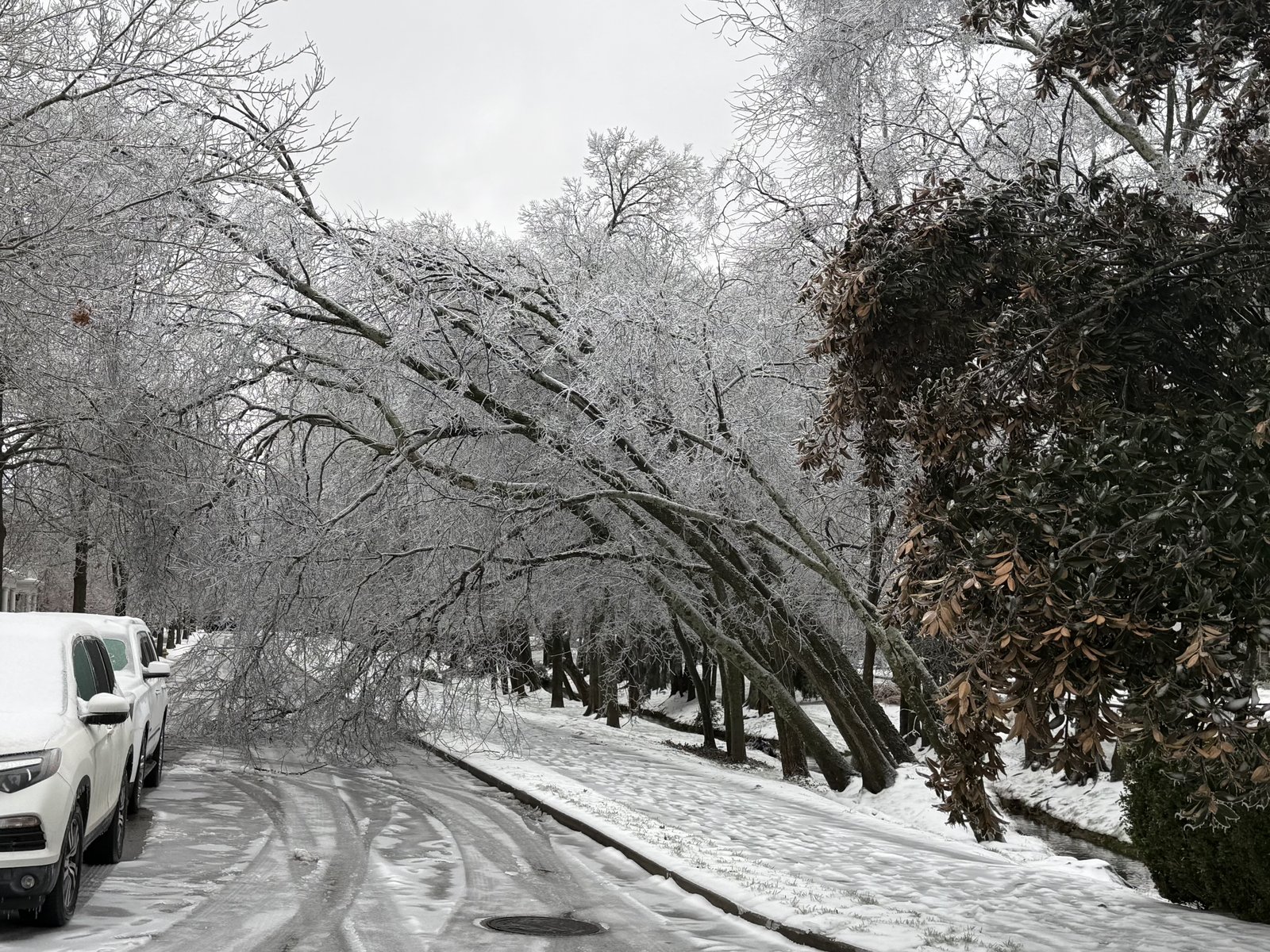
Photo by Antheasadira, “Ice storm westhaven.jpg,” Wikimedia Commons, CC BY-SA 4.0. Resized.
If the door doesn’t start moving after an icy night, stop pressing the opener button. Look at the joint between the flexible bottom seal and the concrete. Wait for the ice to release before operating the door. After it thaws, check the seal for tears and watch for an even fit across the opening when the door closes. If the door still binds or hangs unevenly, call for an inspection. Our Middle Tennessee winter garage door guide covers frozen seals and power outages in more detail.
Rain, lingering moisture and deicer
The same NOAA station averages 50.51 inches of precipitation a year. At your house, look at where the water actually goes. After a hard rain, check whether water sits against the seal or enters at one corner. If the driveway slopes toward the garage, note the spot where runoff collects. That gives you something to show a technician when you’re trying to determine whether the leak is at a worn seal or follows the grade of the concrete.
DASMA explains that corrosion pits can shorten spring life by allowing fatigue cracks to grow. Clopay also warns that salt or residue on steel can contribute to rust. If deicer has splashed onto the door, clean it once conditions allow, following the maker’s directions. On models that allow it, a soft sponge, mild detergent and a clean-water rinse are enough for regular washing. Keep an eye on the bottom edge and areas where the coating has chipped.
Spring storms and sudden damage
The National Weather Service documented severe thunderstorms and flooding in Middle Tennessee on March 14–15, 2025. After high wind or flooding, check the door from a safe spot for sections that have shifted, rollers out of their tracks, loose cables and damage around the opening. DASMA advises leaving structural and hardware repairs to a trained technician. If you see damage, keep the door still. Tell the technician what you saw and whether water reached the system or the door moved during the storm.
What you can check and when to call a technician
Start with the door closed and the opening clear. If the door is stuck partly open, crooked, off track or visibly damaged, skip the operating and balance checks.
| You can do these checks | Leave these to a technician |
|---|---|
| Look along the bottom seal, section seams and exterior finish from the floor. | Evaluate bent sections, loose brackets, damaged tracks and off-track rollers. |
| Look for cable fraying, a break in a spring or rollers sitting unevenly. Keep your hands clear. | Replace or adjust springs, lift cables, drums, bottom brackets and rollers near tensioned hardware. |
| Clean the door face and remove loose debris from accessible tracks with the door still. Use the care instructions for your model. | Diagnose binding or a door that rises or falls during a balance check. |
| Check the remote battery and clear the area around the photo-eyes. Follow the manual for monthly safety tests on a sound door. | Correct a failed safety test, recurring opener fault or problem with the door’s travel. |
With a sound door, use the opener manual’s balance test. Start with the door fully closed, disconnect the opener as directed and lift using the door handle. If the door moves easily, check whether it holds near halfway. If it feels heavy, sticks or moves on its own, end the test and call for service. Keep everyone clear of the opening. Follow the manual to lower the door and reconnect the opener if it is safe to do so.
For the contact-reversal test, Chamberlain specifies a 2×4 laid flat on the floor for many models. Follow your manual for positioning and testing, keeping people and pets out of the opening. The door should reverse when it hits the board. Use the manual’s separate test for the photo-eyes. If either test fails, have the system checked before using the opener again.
When to replace a part or the whole door
Ask which part failed and whether the rest of the system still runs safely. After a breakdown, that tells you more than the installation year alone.
| What the inspection finds | What to consider |
|---|---|
| One worn spring and sound sections, tracks and opener | Replace the spring system as needed, then check balance and safety reversal. |
| A cracked seal and a straight bottom section | Match the replacement seal to the existing retainer, the channel that holds it. If the gap follows an uneven slab, have the fit checked. |
| One damaged section, with the rest of the door sound | Ask if a matching section is available for the make and model. |
| Extensive rust, rot or damage across multiple sections | Compare a complete replacement with the scope of repair. Ask which door hardware the new model requires. |
| A functioning door with an opener that fails its safety tests or has unavailable parts | Have the opener diagnosed. Replace it if it can’t be repaired and returned to safe operation. |
For a door that still has years in its sections, ask what the proposed repair includes and how the door will be tested afterward. For a door with widespread damage, see what goes into garage door installation. If you’re in Brentwood and need someone to assess the opening, see our Brentwood garage door service.
For help deciding what to keep, schedule garage door repair in Middle Tennessee. Call (678) 271-8918 or use our Nashville contact page. All Four Seasons gives you a written price before work starts. We provide 24/7 emergency service if the door is stuck open or hanging crooked.
Frequently asked questions
Can a 20-year-old garage door still be worth repairing?
Yes, if the sections and tracks are sound and the work will restore safe operation. A failed spring or torn seal can be a part replacement. A bent opening, rot near hardware or rust through several sections calls for a closer inspection and a replacement comparison.
How long do garage door springs last if you use the door every day?
For a spring rated at 10,000 cycles, 3 complete open-and-close cycles a day work out to roughly 9 years. At 5 cycles a day, it’s about 5½ years. Check your actual use and spring rating.
Does a broken spring mean the opener needs replacing?
A broken spring calls for a spring repair and a check of door balance. The opener can stay in service if it operates the repaired door correctly and passes its safety tests. Stop using it while the spring is broken.
Can I replace the opener and keep the existing door?
Yes, if the existing door is sound, balanced and compatible with the replacement opener. Ask the installer to confirm the fit and check both safety systems after installation.
Can freezing weather shorten garage door life?
Repeated exposure to moisture can contribute to corrosion. The immediate risk in a freeze is a bottom seal stuck to the concrete. Wait for it to release and check for damage before running the door.
How do I tell if the bottom seal or the door is the problem?
A torn seal on an otherwise straight section points to seal wear. If the section is bent or the door sits higher on one side, have the door checked before ordering a seal. After rain, look for areas where water pools against the opening.
Top photo by modern garage doors (First Garage Doors), “Oak sectional garage door with wireless remote control opening.jpg,” Wikimedia Commons, CC BY-SA 4.0. Re-encoded.
The two CC BY-SA 4.0 photos are available under https://creativecommons.org/licenses/by-sa/4.0/. The original files are at https://commons.wikimedia.org/wiki/File:Oak_sectional_garage_door_with_wireless_remote_control_opening.jpg and https://commons.wikimedia.org/wiki/File:Ice_storm_westhaven.jpg.