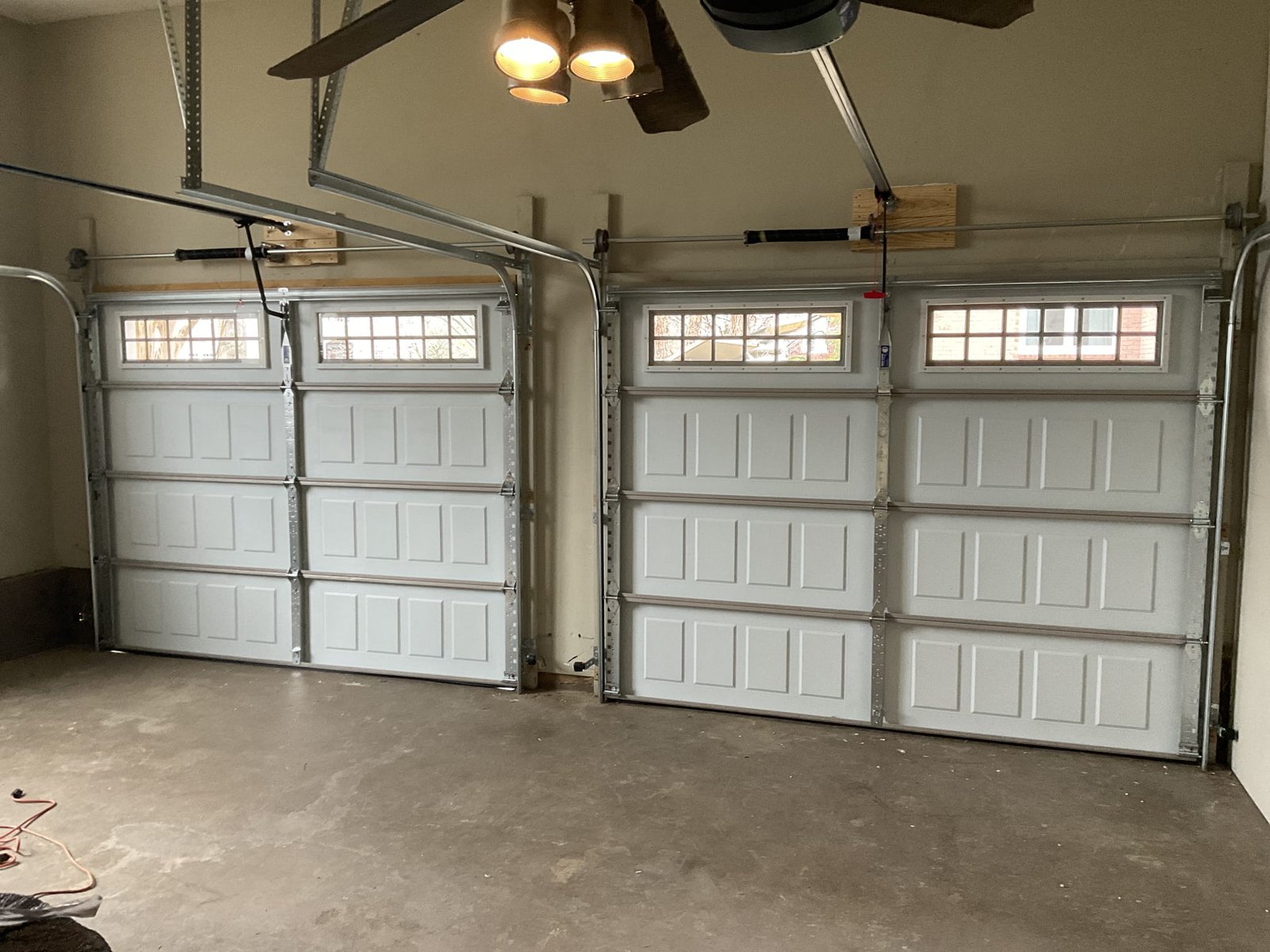
You can clear and clean the safety sensors, replace a remote battery, and lubricate the points listed in your door manual. Leave springs, lift cables and drums to a technician. Stop using the door if it hangs crooked or binds.
Start with what the door was doing before it stopped. A remote that quits while the wall button still works calls for a different check than a door that rose a few inches after a bang. If you've already seen a sign of damage, leave the door where it is and skip the button tests.
Match the symptom to your next step
Look from the floor and stay clear of the opening. Use what you already saw or heard on the last cycle. If anything in the table calls for service, keep remotes out of use and let everyone in the house know to leave the door alone.
| What you notice | What you can safely do | When to stop |
|---|---|---|
| One remote stopped working, but the door recently ran normally from the wall control | Check the remote battery and your model's wall-control lock setting | Get the opener checked if the controls still fail after the manual's basic checks |
| Door starts down and reverses, and a safety sensor light is off or flickering | Look for something blocking the beam and clean the sensor lenses | Stop if an indicator stays off or flashes after the manual's checks, you see damaged wiring, or the door fails a safety test |
| Light squeak, with straight, smooth travel | Look for damage and lubricate the points listed in your door manual | Stop for a bang, grinding, binding or uneven movement |
| Torn rubber along the bottom, with the door sitting squarely | Identify the seal and check how it attaches | Stop if the gap is uneven, the section is bent or the seal job involves the bottom corner brackets |
| Loud bang, visible gap in a spring or door suddenly very heavy | Leave the door in place and keep clear | Call for spring and balance inspection |
| Loose or frayed cable, crooked door or roller outside a track | Keep people out of the opening | Call for mechanical repair before moving the door |
| Bent panel or movement where the opener arm meets the door | Describe what you saw on the last cycle | Leave the door stopped until the panel and attachment are inspected |
If the door is stuck open and you can't secure the opening, or it hangs partway up, call (678) 271-8918 for 24/7 emergency garage door repair. You can lock the house entry door if you can reach it without passing under or beside the garage door.
Checks you can do yourself
The steps below are for residential sectional doors, the kind with hinged panels that travel up tracks. Use the manuals for your door and opener. If either manual calls for a technician, or your door shows a warning sign in the table, stop there.
Check the remote and wall control
If one remote stopped working, think back to the last time the wall button or a second remote worked. As long as there are no signs of mechanical trouble, compare the controls with the door in full view and the opening clear. If a second remote runs the door normally, start with the one that failed. If the door jerks or stops short during a check, stop using it.
- Check the lock setting against the opener manual. On compatible LiftMaster and Chamberlain controls, Lock mode can block handheld remotes while the wall button still works. Genie's Sure-Lock can also disable the wall console on some models when the door is fully closed. Check the model before drawing a conclusion from the wall button alone.
- Replace the battery with the type marked in the remote or its manual. Match the polarity shown in the compartment. Try the remote again from a spot where you can see the entire door, and watch the door until it stops.
- Follow your model's pairing steps if the remote still needs to be programmed. Use the garage door remote programming guide to find the right procedure. If neither the wall control nor a known working remote operates the door, move on to the manufacturer's opener checks or book garage door opener service.
Write down which controls worked. “The wall button opens and closes it, and the second remote works” tells a technician more than “the garage door stopped working.” It also gives you a baseline if the problem comes back after a battery change.
Clear and clean the safety sensors
The safety sensors, also called photo eyes, face each other near the floor. One sends a beam across the opening. When something interrupts that beam, a working sensor system prevents the door from closing or reverses it during closing. On Genie openers, look for the name Safe-T-Beam in the manual. LiftMaster and Chamberlain manuals use the name Protector System on compatible models.
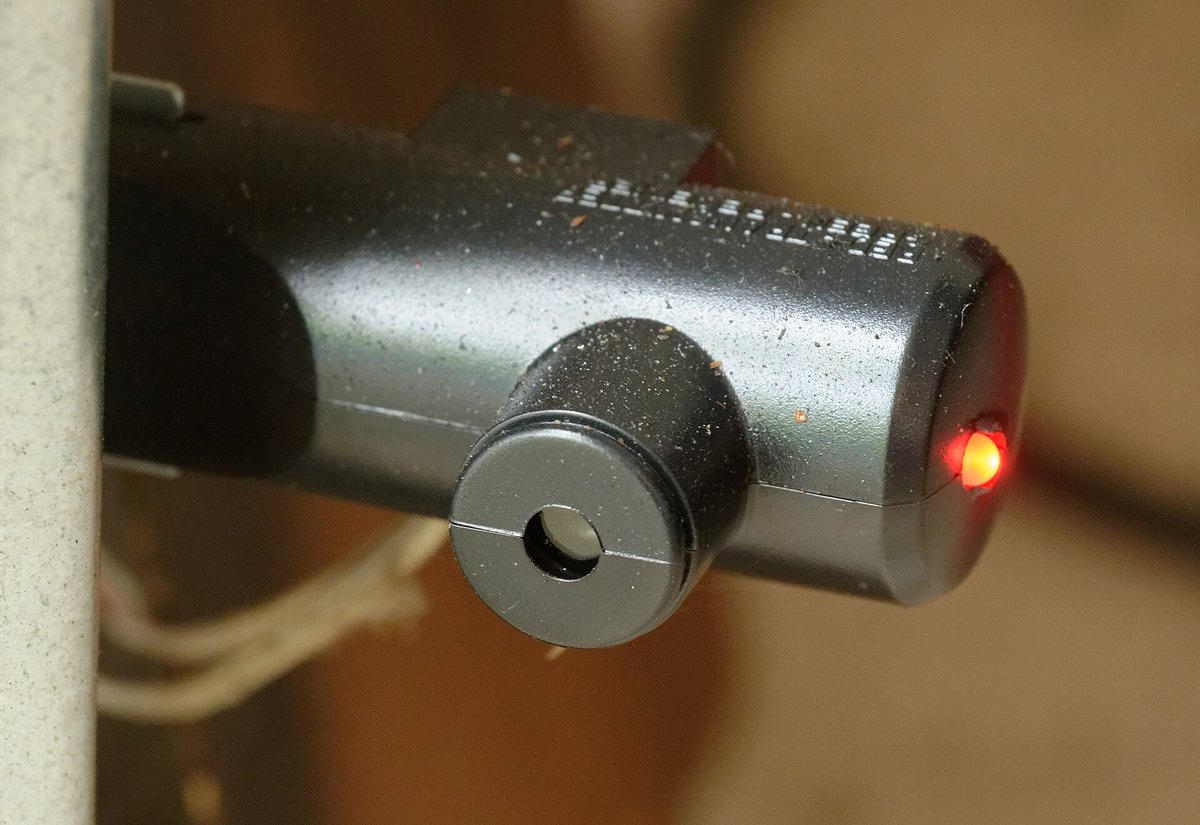
Photo by Jud McCranie, resized. Wikimedia Commons source · CC BY-SA 4.0.

- Clear the line between the sensors if you can reach the object safely from the side. Look for a bin, broom or cobweb close to one lens. Even a clear-looking doorway can have something in the beam near the side of the opening.
- Wipe both lenses gently with a clean, soft cloth. Check the indicator lights against your opener manual. The meaning of a color or flash pattern depends on the model.
- If a sensor was bumped, follow the manual's aiming instructions if the sensor and its mount are intact and safely reachable. Limit the adjustment to the sensor itself. Leave the track, its brackets and the wiring alone.
If the lights still indicate a fault, or the door closes while the beam is blocked during the manual's test, stop using the opener and have it checked. Keep the sensors connected. The garage door sensor guide covers model-specific lights and alignment in more detail.
Clean the track and lubricate only the listed points
For a light squeak on a door that still travels smoothly, start with a visual check. With the door fully closed and the opener disabled as the manual directs, wipe reachable dirt out of the track with a soft brush or damp cloth. Stay clear of the lift cables, bottom brackets and any space where a finger can get caught. Leave the running surface of the track dry.
A hinge joins two door panels. A roller is the small wheel that guides a panel along the track. Clopay recommends applying a small amount of garage door lubricant to the hinge pins it identifies and leaving the track dry. Use only the product and lubrication points your own manual lists. Roller instructions depend on the design, so check the manual before spraying any roller. If a point is near a spring, cable, drum or bottom bracket, leave it for a garage door tune-up.
Look for a cracked hinge, tilted roller or bent track before reaching for lubricant. If you see any of those, or the door has started scraping the same spot each time, stop using the door. If it moves smoothly and the light squeak goes away after maintenance, add the task to your garage door maintenance checklist at the interval your door manual specifies.
Work out whether the weather seal is the problem
The weather seal is the flexible strip that meets the floor or the frame when the door closes. If the door sits level and the rubber is visibly cracked or torn, check the door manual for the replacement profile and how it attaches. A seal that slides into an intact channel can be a DIY job if the manual's procedure keeps you clear of the lift hardware and requires no work under an unsupported door. Leave the bottom corner brackets and their fasteners alone.
Look at the gap from the driveway with the door closed. A torn strip on a door that sits squarely points toward the seal. If the door itself sits higher on one side, hangs up on the way down, or shows daylight alongside a bent panel, leave it in place for inspection. Replacing the rubber would leave the underlying problem in place.
Read the garage door weather stripping guide to identify your seal style. If the channel is damaged, the hardware is unfamiliar or the procedure would put you under the door, see our garage door weather seal service.
Repairs to leave to a technician
The spring system offsets the weight of the door. On a typical torsion setup, the spring turns a shaft above the door, drums at the ends guide the lift cables, and the cables attach at the door's bottom corners. These parts work together. Closing the door leaves stored energy in the spring system, and a cable hanging loose on one side doesn't tell you what load is still on the other.
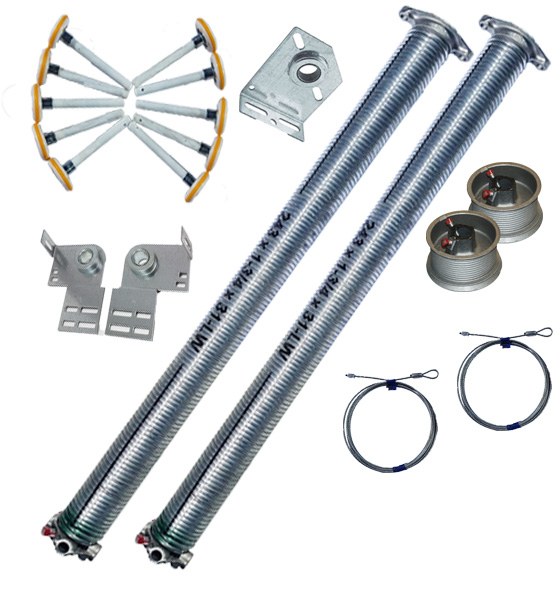
Photo by Blizzard6204. Wikimedia Commons source and CC0 dedication.

Springs and door balance
A torsion spring is the coil on the shaft above the opening. An extension spring stretches along a track near the ceiling on doors that use that system. A broken torsion spring can show a gap between sections of coil. On an extension setup, a separate containment cable runs through the spring to help contain it if it breaks. If you can see an extension spring has no containment cable, arrange a safety inspection.
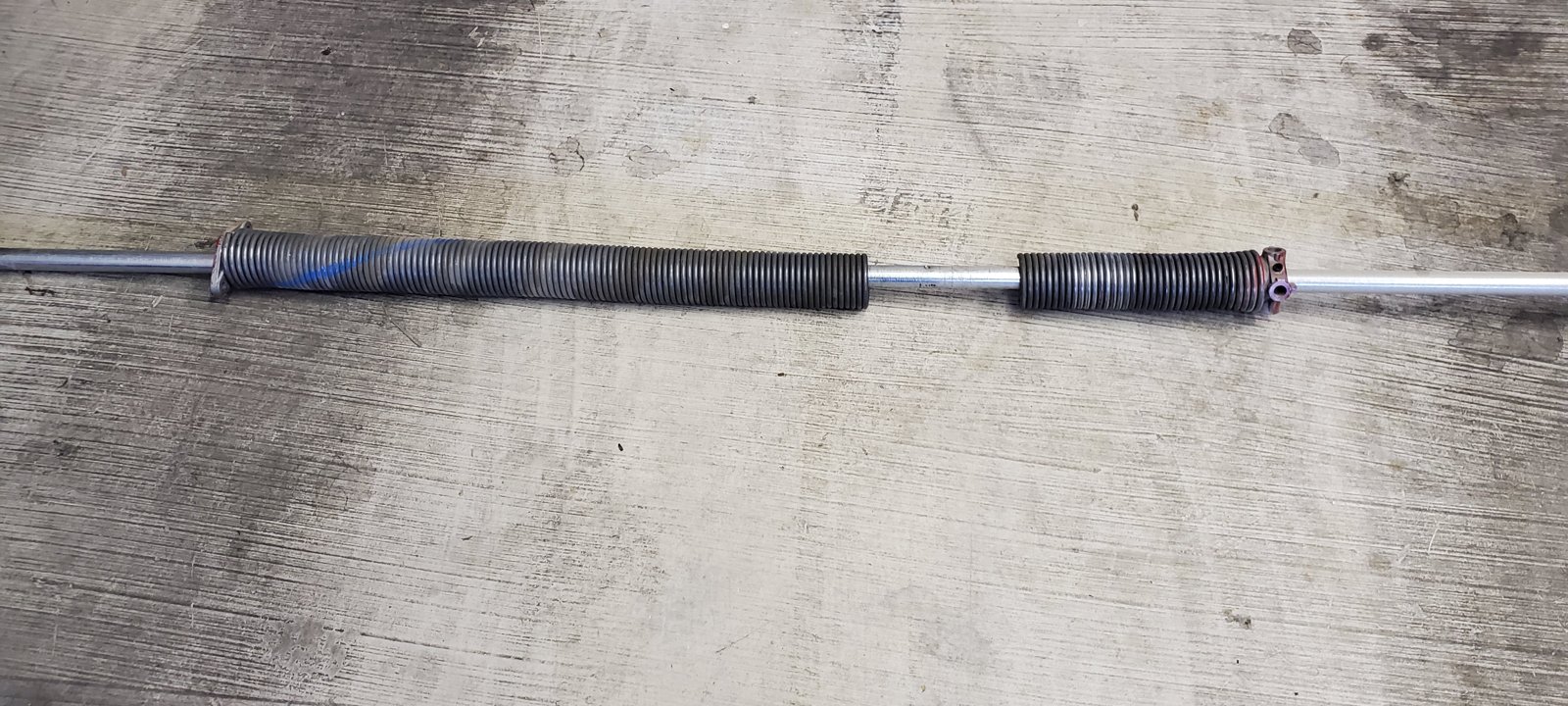
Photo by Garagedoorrepairlasvegas, cropped and resized. Wikimedia Commons source · CC BY-SA 4.0.

A door that suddenly feels heavy or won't stay where it used to during manual operation needs a balance inspection. If you heard a bang, saw a break or already know the door feels heavy, skip the balance test and leave the door in place. Keep your hands off the spring, shaft and fittings. Our garage door spring repair service covers torsion and extension systems.
Lift cables, drums and bottom brackets
A lift cable is the steel wire rope that connects the spring system to the door. The drum is the grooved wheel that takes up the cable on a torsion system. A frayed cable, loose loop or visible cable outside the drum grooves is reason to stop. A door that sits higher on one side needs inspection even if you can't see which part failed.
The Door & Access Systems Manufacturers Association (DASMA) assigns cable replacement and bottom bracket adjustments to trained technicians because of the spring tension. Keep clear of both bottom corners, even if the door looks level. Leave the cable where it is, and leave the drum and shaft hardware in place. The technician checks how the parts are working together before deciding between garage door cable repair and drum replacement.
Tracks, rollers, panels and opener mounts
The tracks guide the rollers as the door moves. A roller outside the track, a bent rail or a track pulling away from its support puts the door's movement in question. Keep clear of the opening and leave the door in place for off-track garage door repair. A track that needs straightening or a roller that has come out needs a physical inspection before the door runs again.
A panel, also called a section, is one of the slabs that make up the door. If the upper panel flexes around the opener arm, or you spot cracking or deformation there, stop using the opener. Clopay specifies reinforcement for its doors where an automatic opener attaches, with the design depending on door model and size. Ask the technician to inspect the reinforcement and the opener attachment and assess the need for garage door panel replacement. Leave opener rail, drive and mounting repairs to the technician too.
When to test the door after a simple fix
Test only if the door has no visible damage, sits level and was moving smoothly before the issue. After a remote battery change, sensor cleaning or routine lubrication, put tools away and clear the opening. If you disconnected power, restore it as the manual directs. Stay to the side with the door in full view and run a cycle with the ordinary control. Stop if the door binds, moves unevenly or fails to complete the cycle normally. After sensor work, run the manual's sensor test before you return the door to normal use.
For monthly safety checks on a door that works normally, use the opener manual's sensor and contact-reversal tests. They check two different things. The sensor test checks whether the opener detects a blocked beam. The contact test checks whether the door reverses when it reaches an object. The U.S. Consumer Product Safety Commission (CPSC) uses a 2×4 laid flat in the door's path for the contact test. Keep people and pets clear and never use any part of your body as a test object. If either test fails, stop using the opener and arrange service.
If the power goes out and you need to move a sound door by hand, start with it fully closed and follow the manual for the release. A door with a suspected spring, cable or track problem needs a technician before anyone uses the release. In particular, pulling it when a damaged door is open can let the door fall. See how to open a garage door manually for the checks to make before using it and the instructions for reconnecting your opener.
When to call All Four Seasons
Tell us where the door stopped, whether it's level and what happened on its last normal cycle. If you heard a bang, saw a cable hanging, or noticed a panel flex at the opener arm, tell us that too. Share the door or opener model if you already have it, and take a photo only from a clear spot away from the opening. Leave the door in place for the technician. If you are still deciding who to call, see how to choose a garage door repair company.
All Four Seasons has been family-owned and operated since 1999. For garage door repair in Metro Atlanta, call (678) 271-8918. We give you a written price before work starts.
Frequently asked questions
Can I repair my garage door myself?
You can replace a remote battery, clear the sensor beam, clean the sensor lenses and lubricate the points your manual lists. A simple seal change is also within reach on some doors. Leave loaded hardware, damaged tracks and structural work to a technician.
Can I replace a garage door spring or cable myself?
Leave springs and cables to a trained garage door technician. They work together under tension. A closed door or a cable that looks loose is a poor way to judge which parts still carry that load. Keep clear and leave the door where it is.
Can I put a loose cable back on the drum?
Leave the cable off the drum and stop using the door. A loose cable gives the technician a symptom to trace through the cable, drum, spring and door alignment. Moving it by hand exposes you to loaded parts and can disturb the door's remaining support.
Can I use the opener if the door feels heavy by hand?
Stop using the opener and have the door's balance inspected. A door that suddenly takes more effort to lift, drifts or binds needs service. If you already noticed one of those symptoms, leave the door in place and skip further testing.
Should I grease the garage door tracks?
Keep the track surfaces dry. For an undamaged door, wipe away reachable debris with a soft brush or damp cloth, then follow your manual for lubricant type and application points. If the track is bent or a roller is out of it, stop and call for service.
Why does my wall button work when my garage door remote doesn't?
Check whether the opener's lock setting blocks remotes, then check the remote battery. If a second remote works, you can focus on the remote that failed and follow the manual's pairing instructions if needed. Lock settings and indicators vary by model.
Should I tighten a loose bolt on my garage door?
Leave it alone if you cannot identify what it holds or it sits near a spring, cable, drum or bottom bracket. Take note of its location from the floor and ask a technician to check the hardware. Leave any fastener marked with a tension warning in place.